

10 Most Overpriced Items On The McDonald's Menu
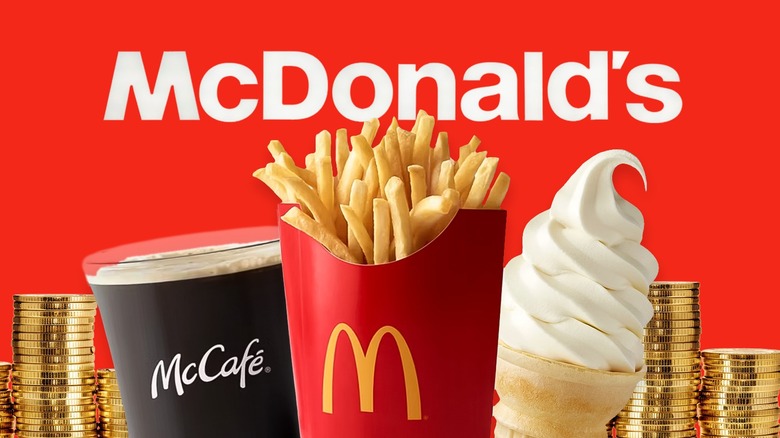
McDonald's is one of the most iconic fast food chains in the United States and is globally praised for its value-driven meal deals and consistent menu across store locations. While everyone has their personal favorite McDonald's menu items, some diners are always looking for better ways to get more for less. To effectively cut costs on your next order, not only do you have to find the cheapest items on the menu, but you also have to identify and avoid items that are overpriced and not worth paying for.
We researched the costs of McDonald's menu items, ingredients, and production processes and compared them with the cost of homemade alternatives to help you choose your next order and get the best value for your money. Whiles prices vary depending on your McDonald's location, this list is based on those in Pasadena, California.
1. Chicken McNuggets
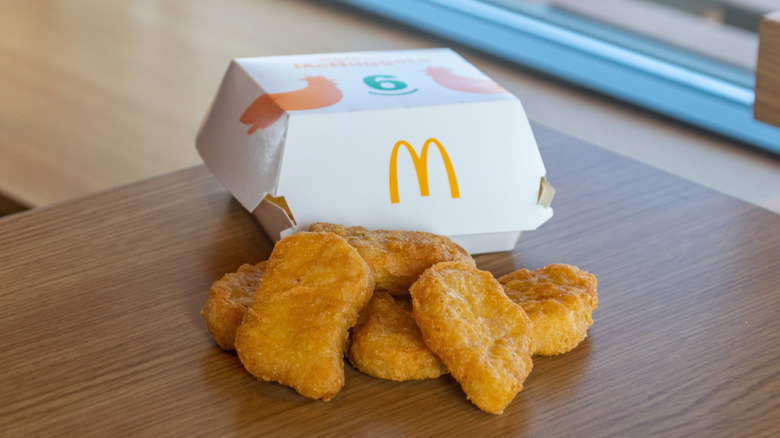
McDonald's Chicken McNuggets are produced at a low cost and sold with a high price markup when compared with homemade alternatives. They cost $4.48 for a four-piece meal and $12.58 for 20 pieces. Per nugget, accounting for all the ingredients and processing including the chicken breast, the crispy tempura batter, frying oil, and packaging, each nugget can be estimated to cost 30 to 40 cents to produce at home. Additionally, McDonald's McNuggets have presumably lower production costs due to supply chain efficiencies achieved by chicken processing companies like Tyson Foods, which supplies the chain's nuggets.
As the ingredients only represent a fraction of the selling price (depending on portion size), the majority of the costs associated with selling McNuggets come from packaging and in-store labor costs/expenses. To create additional profits, McDonald's takes advantage of consumers purchasing larger portions to save money. While a 4-piece meal costs about 75 cents per nugget, a 20-piece meal only drops the cost to around 55 cents per nugget.
2. Sodas
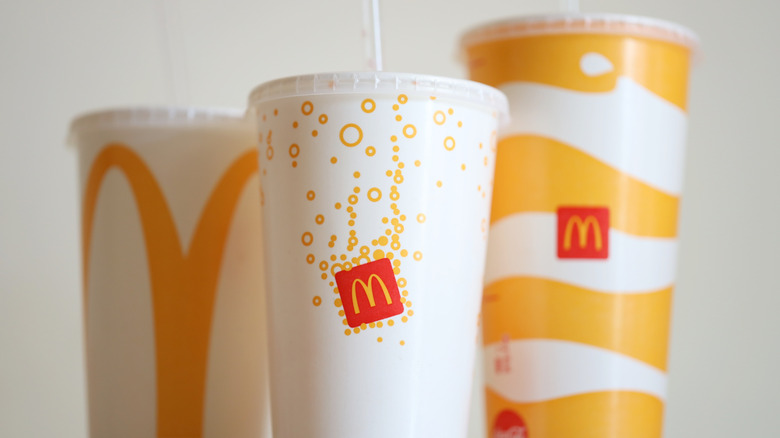
Out of all items on the McDonald's menu, fountain beverages account for one of the highest profit margins per unit. While the cost of syrups are a proprietary secret, workers estimate they cost approximately $0.12 per serving. As the sodas run from $2.49 for a small all the way up to $3.49 for a large, at a minimum McDonald's fountain drinks are marked up between 900 to 1,500% of the price of the actual ingredients. As large beverages are sold using only marginally more syrup, it is presumed that the larger McDonald's beverages are sold at a larger profit margin. This is a classic example of using consumer psychology and belief that upsizing always results in better value for the money. Regardless, fountain drinks at McDonald's are far more expensive compared to a grocery store, where you can purchase 2-liter bottles of soda for $2 to $3.
The company's beverage contracts with Coca-Cola and other suppliers provides McDonald's with syrup at wholesale rates significantly below retail pricing. Additionally, standardized dispensing systems ensure precise portion control and cost management. Large profit margins on fountain beverages is a key reason why McDonald's can offer more value on other menu items, while these overpriced drinks stay under the radar and slip into all of your combo meals.
3. Coffee
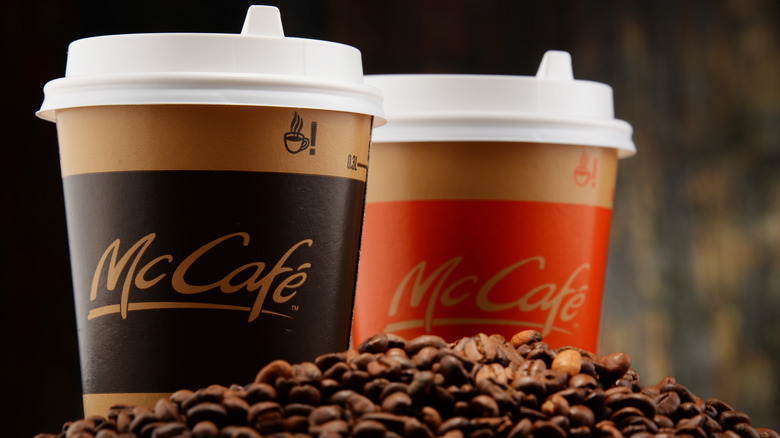
The McDonald's premium roast coffee is another popular beverage sold at a huge markup. With the premium roast coffee beverage costing $3.19 for a small up and $4.29 for a large, this is on par with specialty or upmarket coffee shops that typically charge from $3 to $6. However, like McDonald's soda beverages, the premium roast coffee contains cheaper, inexpensive ingredients that are easily purchased in wholesale, such as coffee beans, milk, and sugar.
Although it is unclear exactly how much it costs McDonald's to purchase coffee beans from its supplier Gaviña Gourmet Coffee, the cost-effective base combination of coffee grounds, hot water, and takeaway cups makes the coffee a profit leader on the chain's menu. As making the drink doesn't require more costly skilled labor, it is a relatively cheap item to produce with only a few more ingredients required to make a diverse range of other coffee beverages. In the world of fast food restaurants, coffee is one of the kings of hidden overpriced items, and it is a powerful driver of profits margins for McDonald's.
4. Vanilla cone
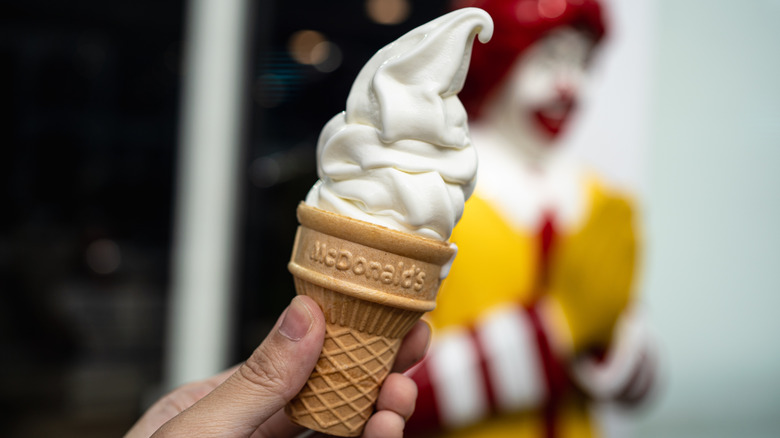
The McDonald's vanilla cone is the perfect demonstration of how simple pricing can encourage impulse purchases and hide markups from unsuspecting customers. Only containing milk, sugar, cream, and stabilizers, the vanilla cone (sold for $1.29) is a highly profitable menu item with cheap ingredients and practically zero labor required to produce it. Even better, many customers purchase them as an afterthought, a clever psychology trick that makes additional purchases feel invisible when added to existing orders. However, you can purchase a 1-gallon tub of vanilla ice cream and 24 cones for less than $11 at Walmart, leaving you with 24 50-cent vanilla ice cream cones and no worrying about whether the ice-cream machine is broken or not.
The most genius thing about the McDonald's vanilla cone, other than the fun hacks worth trying, is how it even outperforms far more expensive dessert alternatives. If you're at a fancy restaurant and you pay $8 for a dessert that costs $3 to make, you are receiving a dessert at a 167% markup of its production cost. While the gross price is eight times higher, per dollar, McDonald's is selling a much simpler, more profitable dessert than these high-end establishments.
5. French fries
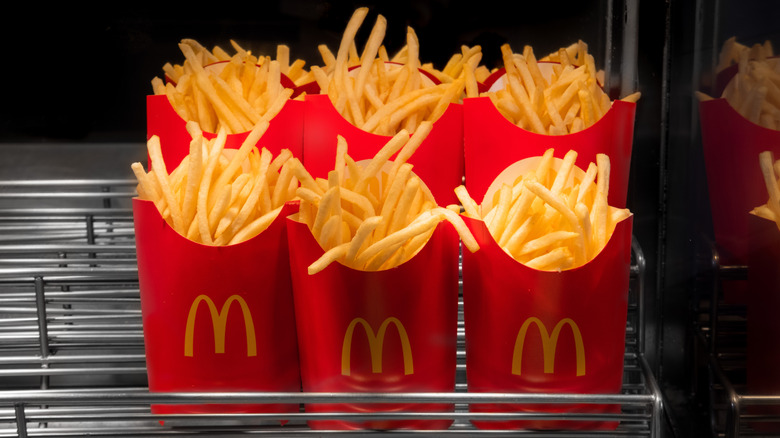
McDonald's french fries are one of the most iconic items on its menu, but while they're included in so many orders, they're also one of the highest profit margin categories after beverages. Regardless of the serving size you order, the ingredients in the french fries themselves only represent approximately 10% of the production cost. It is estimated that each serving only costs 30 to 50 cents to make,accounting for the potatoes, processing, seasoning, packaging, and flavored fry oil the chain uses, while the fries are sold from $4.52 for a small to $6.28 for a large. On the other hand, you can purchase a bag of potatoes and some oil and easily make your own shoestring fries at home for less than $6 for several servings worth.
McDonald's manages to keep the cost of producing its fries low thanks to how it manages its supply chains. From the contracted farmers, to the processing facilities and final preparation in store, the company controls and monitors each step of the way to ensure it is saving costs and delivering consistent quality. Even if it is impossible to know exactly how low McDonald's has driven down the production cost of its golden, crispy french fries, it is certain they're a key profit driver hidden in plain sight. When you consider that McDonald's sells 3.29 billion pounds of french fries globally, you can understand why it maintains its place at the top of the fast food pyramid.
6. Apple slices
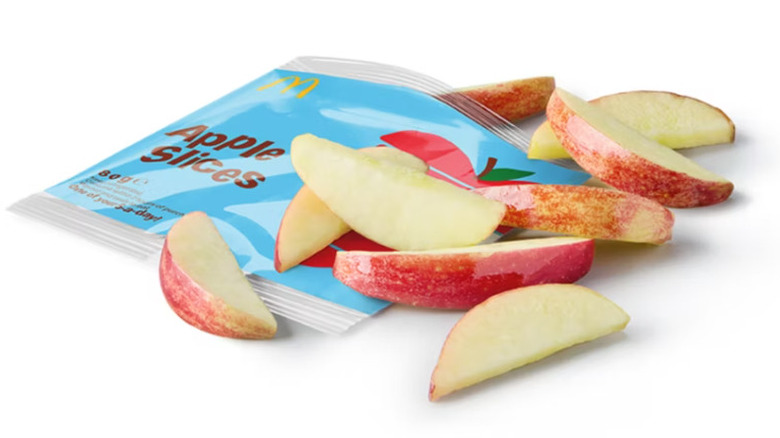
Costing $1.19 a pack, McDonald's apple slicesare overpriced once you consider the minimal production costs involved. As the fruit requires simple processing and only one ingredient, each packet is sold at a large markup, meaning customers pay a high premium for the convenience of a healthy menu item. To highlight how expensive this menu item is sold for, consider that purchasing a 3-pound bag of fresh apples from Walmart will only set you back $3.42. By conservatively estimating that slicing the apples at home will result in 20% wastage, this would mean you could produce around 25 servings of apple slices, with the ingredients costing less than 14 cents per serving.
The success of the apple slices really comes down to the desire of customers wanting healthier options, allowing McDonald's to sell them at a substantial premium. For what is effectively less than one full apple with a small container of caramel sauce, the chain is selling the slices for the same price as several apples purchased from a grocery store. It is also a simple way to cheaply enhance the perceived value of McDonald's popular Happy Meal deals, with children enjoying the variety of food items and parents loving the nutritious value of fruit.
7. Big Mac
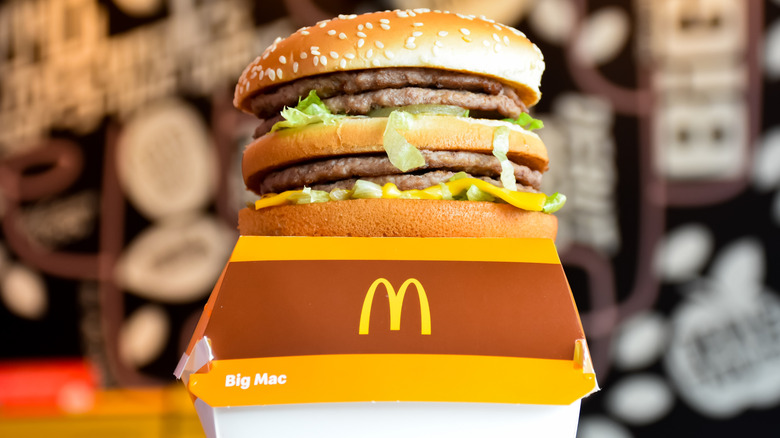
Despite becoming one of the signature items on the McDonald's menu, the Big Mac, which costs $7.92 to purchase, is a prime example of markup efficiency in relation to ingredients. To recreate this iconic burger at home, you would only need to spend approximately $3.50 for the beef patty, bun, sauce, cheese, and vegetables for a single serving, making the McDonald's version 144% more expensive. Additionally, the ingredients used in a Big Mac are bought at consistently low prices from wholesale suppliers like Lopez Foods and Keystone Foods, distributors who have partnered the fast food giant for over 30 years and 50 years respectively.
It is clear that customers are not only paying for the convenience of McDonald's, but also for its iconic cultural status. Even if other burgers on the menu offer more value for the money by including additional ingredients and larger portion sizes, the Big Mac and its famous accompanying condiment attracts customers for its nostalgic flavor. The item serves as a consistent profit anchor allowing the fast food giant to effectively subsidize other items on its menu, which is why it is unsurprising that this burger has remained one of McDonald's mainstay items across the restaurant's 70 years of operating.
8. Sausage McMuffin with Egg
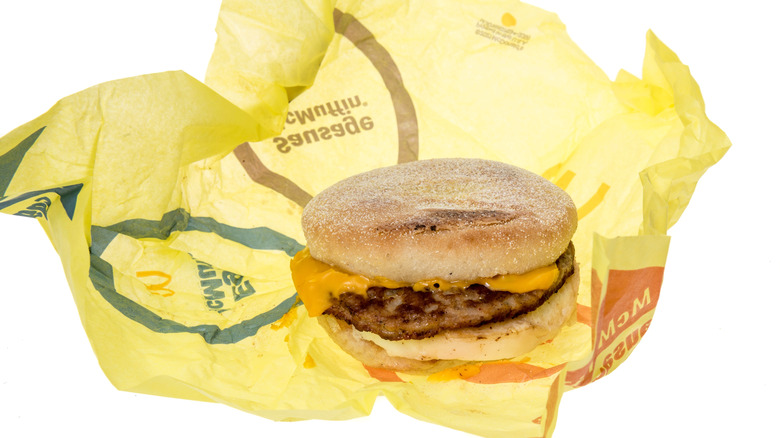
The McDonald's breakfast menu as a cultural phenomena can afford to implement premium positioning on items such as the Sausage McMuffin with Egg. A key profit driver during the breakfast rush hour, this menu item is estimated to cost less than $1.50 to produce, with essentially only an English muffin, sausage patty, egg, and cheese slice required to make it. Sold in store at a price of $6.59, this beloved McDonald's breakfast sandwich has a markup of over 400% compared to the ingredients used to produce a homemade version.
Even with the cost of eggs more than doubling from 2024 to 2025, McDonald's has maintained its hefty profit margins without absorbing these external cost pressures. Rising ingredient costs are typically passed on to consumers in fast food restaurants, while high-margin items like beverages and sides provide additional protection against bottom-line pressures.
9. Hash hrowns
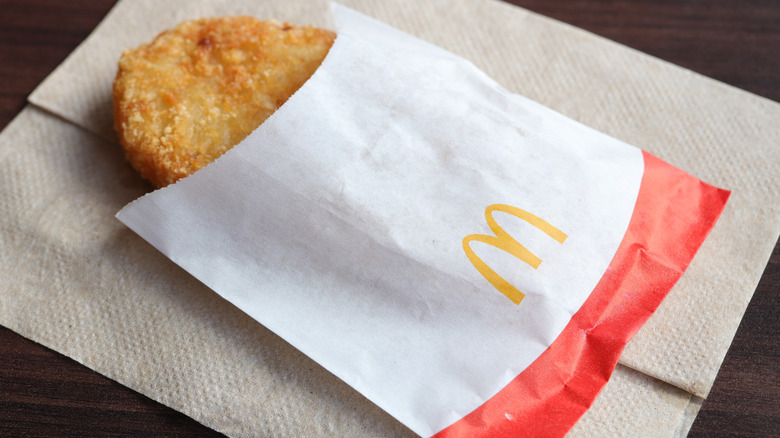
McDonald's hash browns are another example of how fast food restaurants use premium pricing for breakfast menu items. Selling for $3.29 depending on location, the hash browns contain shredded potatoes, vegetable oils, salt, cornflour, additives, and preservatives, which have very low cost points when sold in bulk. If making hash browns at home, it would only cost roughly $1.50 to $2.00 to prepare, meaning McDonald's is charging a significant markup.
The McDonald's hash brown's premium pricing transforms the most basic ingredients into higher profit margin menu items. As a consistent favorite of customers, the marked up pricing of the hash browns takes advantage of them paying less attention to the pricing of sides. During ordering, customers will typically spend time evaluating whether main menu items like the breakfast McMuffins or wraps are a good value for the money, while sides with low ingredients costs like the hash browns or fries hide the juiciest profit margins. The disconnect between actual ingredient costs and menu prices reveals how hash browns are one of the most overpriced items on the McDonald's menu.
10. Chocolate chip cookie
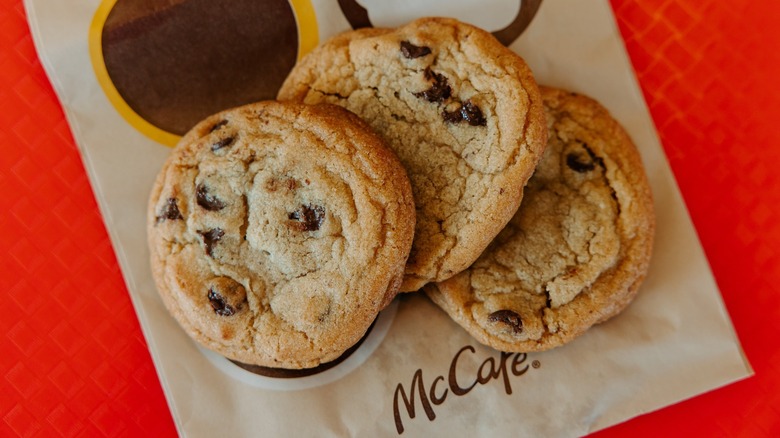
McDonald's golden brown chocolate chip cookie is priced at $1.07 and exemplifies the psychology of impulse purchasing desserts. Homemade cookies typically cost 40 to 60 cents each to make from scratch, as opposed to one cookie for more than a buck. This means McDonald's is selling a mass produced baked good for nearly two times the amount of a homemade alternative. Customers accept this pricing without hesitation because desserts typically occupy a different mental category than regular meals. While $1.07 is expensive enough to generate substantial profits, it is low enough to bypass careful deliberation from customers. This effect is further compounded with the chain's 13-cookie tote, which by costing $9.94 appears to be significantly cheaper than purchasing 13 cookies that are overpriced to begin with.
This pricing is particularly egregious when you consider how simple the ingredients are. Flour, sugar, butter, eggs, and chocolate chips are all standard ingredients you can find at your grocery store, and baking cookies requires no complex preparation methods. As a spontaneous add-on purchase, the chocolate chip cookies represent huge profits for McDonald's through generating incremental sales with a convenience premium.