

15 Secrets Grocery Stores Don't Want You To Know
When you work in a store, you end up learning a few behind-the-scenes secrets that your boss hopes you will keep close to the chest. About a decade ago, I was employed as a cashier at a local supermarket chain, and a few years after that, my mother ended up climbing through the ranks at a local marketplace. While I only ever worked the front end — a fancy way of saying I was a cashier for my entire tenure at the store — my mother began by working in the deli department but ended up being the front end manager for almost three years.
I decided to pool our combined knowledge of grocery stores to present you with some hush-hush information that you can take with you when shopping. This way, you'll be able to get the most out of your local supermarket, or at the very least, you can avoid getting taken advantage of. After all, grocery stores are still a business, so if they can get more out of you, they'll surely try.
1. The freshest items are stored in the back
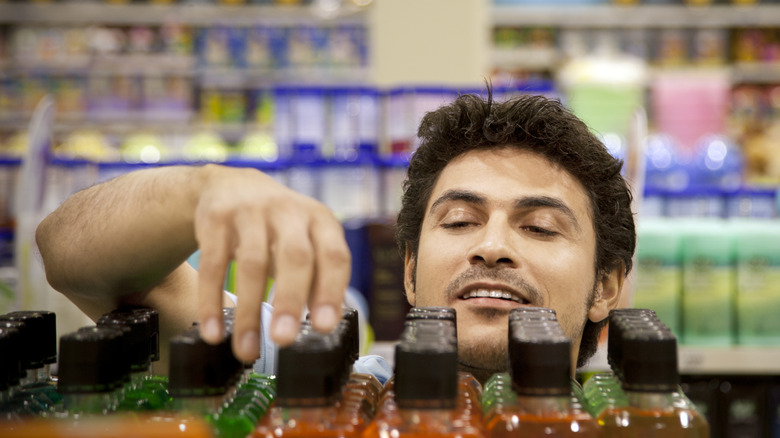
In retail and especially with produce, there is a practice called F.I.F.O or "First In First Out." When you go to restock a shelf, you are supposed to place the newer product behind the older product. This makes the best sense, because shoppers will most likely grab the closest item first and not check the best buy dates on anything beyond that. This grab and go shopping leads to you having to toss spoiled items well before you would want too.
You see why one of the biggest hurdles to stocking up long term is expiration dates. Reaching into the back to avoid the F.I.F.O method will help get around that. So if you're doing a long-term shop and don't want to have to worry about best by dates or want the absolutely freshest produce, then reach into the way back. If you know the right way to store fresh produce, you can make those veggies really last.
2. Store layouts are designed to confuse you
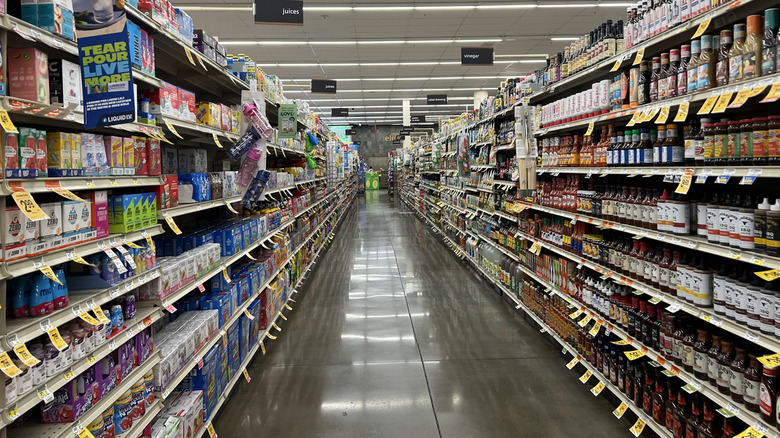
If you've ever caught yourself feeling a little overwhelmed and dizzy by the way your local grocery store is laid out, you're not the only one. Aisles always seem to be an inch too narrow and the music a touch too tinny. Well, you're not imagining things. Everything from the layout of the store to the sensory experiences within are designed to push you through the store as fast as possible. The faster you shop, the less likely you are to actually stop and save yourself money.
You've probably fallen for the trick everyone does while walking down long grocery store aisles. Each end-cap is made to be as enticing and colorful as possible to draw you in. Everything from the moment you walk into the check-out aisle's array of candies and magazines are specifically designed, market tested, and tweaked to prompt an impulse purchase and to stir up hunger. After all, you buy more when you're hungry.
3. Baked fresh does not mean made fresh
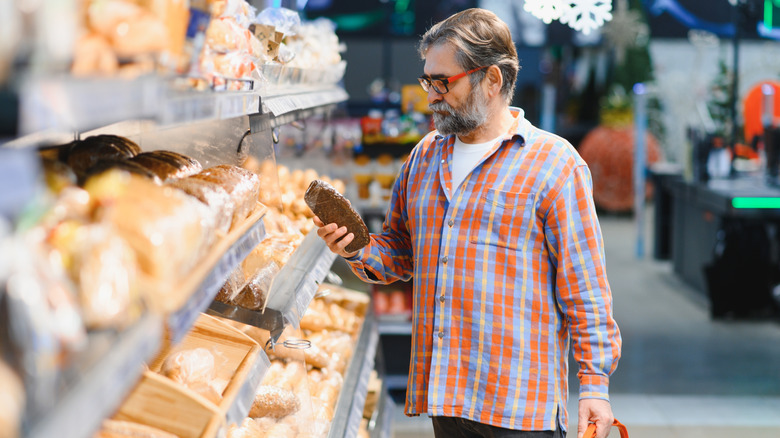
Without fail, the supermarket you're shopping in will advertise that they bake their bread fresh every day. That sort of advertisement has become the norm, and any grocery store that doesn't bake its own bread is seen as an outlier. The exact wording of these advertisements is a technical truth. While there are plenty of grocery stores that offer fresh baked goods, there are very few that actually make their dough fresh on-site.
Saying something is baked fresh just means that it's been baked on-site that day; the only thing artisanal about it will be its name. Practically each loaf, cake, and bagel is baked from frozen. At least the scent of baking bread is as real as it gets, so we can all still enjoy that.
4. Items on discount shelves may be damaged or not as fresh
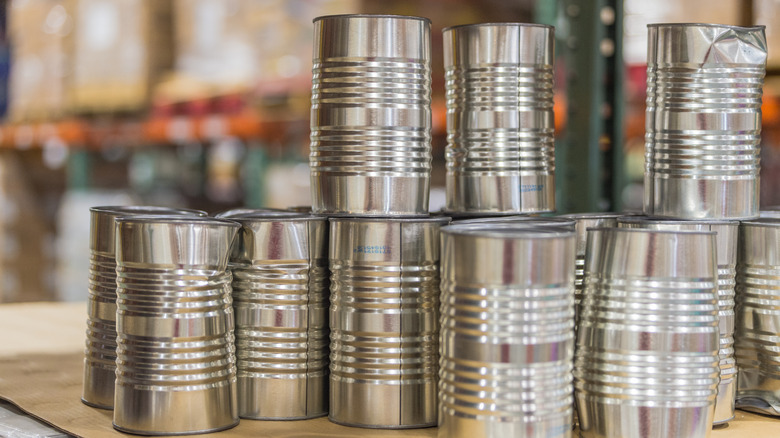
There's no beating around the bush. If an item is on a grocery store's discount rack, there is a reason. Sometimes it is as simple as their bread being a day old despite being perfectly edible, but they cannot sell it for full price because it no longer counts as being fresh. More often than not, the items that end up on these discount shelves are damaged in some way, shape, or form.
Shopping from a discount shelf is a fantastic way to save money, even if the shelves are sometimes difficult to find, as long as you're willing to accept second-hand goods. As long as you know when to avoid buying food with damaged packaging, then feel free to scoop up some good deals among the dented and bruised cans. There's an age-old saying that sums it up well — it all looks the same in your stomach.
5. Couponing is still king
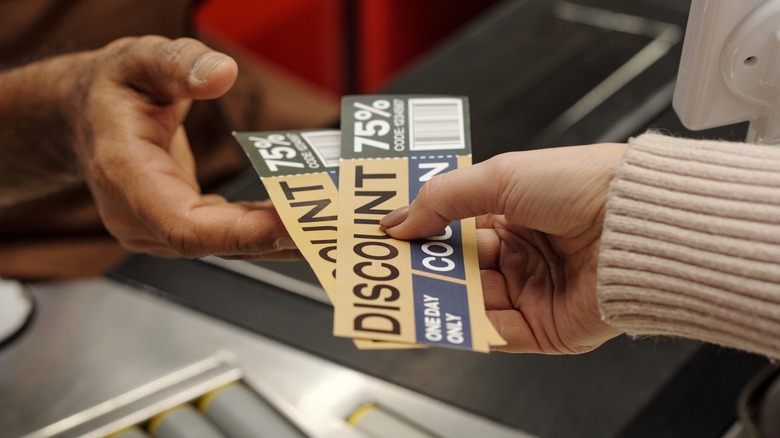
If you have to wonder why coupons still survive, then you are not brushed up on their money saving potential. Coupons are a great way to grab yourself a deal. If you coupon correctly, you can chain together such a steal that you may just be walking away with a tenth of your original price.
The biggest takeaway from coupon books and couponing apps is versatility. They can carry coupons for sales that are not advertised in-store. Either the grocery store was not incentivized to actually put up a sale display, or it is a coupon exclusive brand deal. Whatever the reason if you're not checking the coupons, you're basically letting money fly out of your pocket.
6. You can still get a refund if the customer service desk is closed
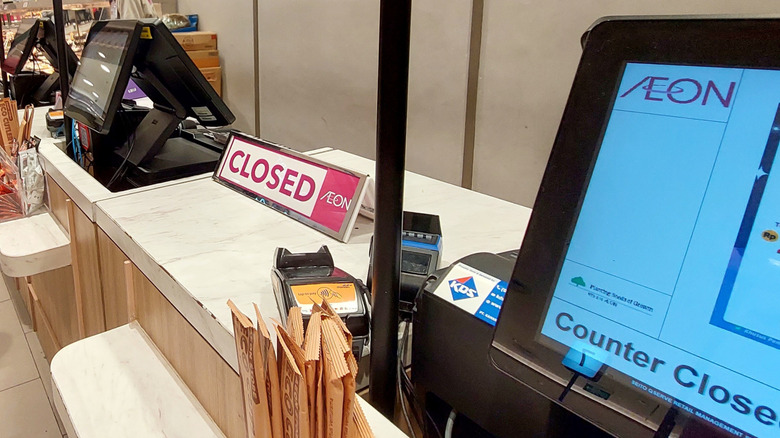
The whole world seems to operate on an 8 a.m. to 7 p.m. schedule. This can be inconvenient for folks who work those hours to try and get anything done outside of work. If you've ever had a banking issue that can't be resolved through an ATM or had to resolve something with an insurance company, you understand this frustration.
Making returns or asking for refunds at a store often rubs up against this issue. You're supposed to do it through the customer service desk, but the customer service desk seems to close at 6 o'clock. It doesn't feel worth it to leave work early or go in late just to ensure you get your money back on a few grocery items. Stores know this, and that's one of the contributing factors to why service desks have such limited hours. Good news! As long as there is a front-end manager working — be sure because they have to actually be a manager and not just a shift lead — you should be able to safely complete your refunds at the store at all operating hours.
7. Some stores offer hidden price-matching discounts
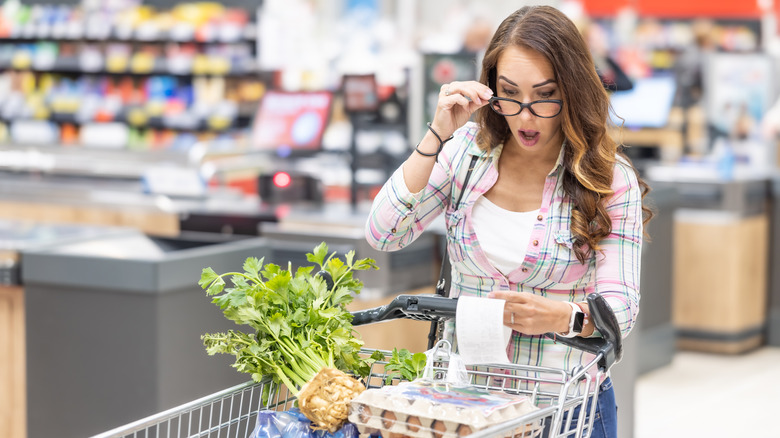
Say it's approaching Thanksgiving and you've gone out to shop for your turkey, or it's getting close to Halloween and you need to stock up on those bulk bags of candy. Well, as you peruse the aisles of your mart of choice, you may realize that the rival store down the road has the item for a few dollars less. Which is a shame since you really prefer to shop here, but your hands are surely tied — or maybe they're not.
Every store has a different policy on price matching and on what items they won't match prices on. It's more likely that a store will match to keep your business if the item you're after is a specific holiday staple. Thanksgiving turkey, Halloween candy, and even fruit cake are all usually eligible. Grocery stores are in pretty stiff competition with each other, so don't be afraid to ask about price matching if you really want to get your turkey from a specific spot.
8. Name brand coupons may be redeemable even if published by a competitor

For those of you who still enjoy a good sojourn through paper media, you may have experienced the frustration of coming across a fantastic coupon only to discover that the deal is for a grocery store outside your usual range. It can be a little demoralizing to feel like you have such a good deal at your fingertips, but then have to weigh it against gas costs and the travel time. There is a light in the dark, though. Check and see if the coupon you have counts as a manufacturer coupon.
Manufacturer coupons are coupons that are distributed not by the grocery store but by the parent company of the product on the coupon. One of the benefits of living in the modern age is that most grocery chains receive goods and services from a lot of the major players in the food game. Some chains like Costco won't accept your coupon, manufacturer or not, with another store's branding on it. However, as a former cashier, I can attest that most of us are not checking that closely. If it scans, it scans.
9. Loyalty programs sell your shopping data
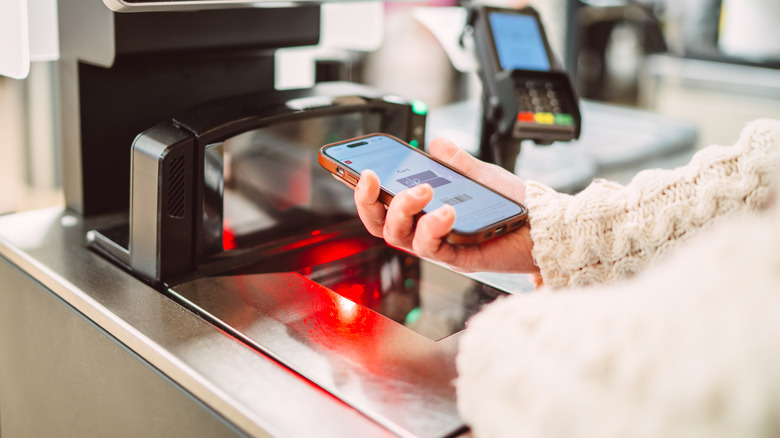
We live in an age where we are progressively getting tracked more and more. This can be helpful when you need to order the same thing week after week. More and more grocery stores are beginning to advertise that they have the best loyalty program with plenty of excellent perks just for signing up. From discounts on groceries to helping with the bill at certain gas stations, they are giving you so many reasons to sign up.
When something seems too good to be true, the question you should be asking is how the person offering you the deal will benefit. What benefit do grocery chains have for giving you access to great deals and shortcuts in shopping? Access to you and your data. While it may not seem important to know that you buy 3 liters of orange juice a week, there are companies and data brokers that do. Grocery chains are all too happy to sell your shopping habits and preferences to the highest bidder to make a little extra money, even when you're not physically in the store.
10. The best deals are strategically shelved outside of your sight lines
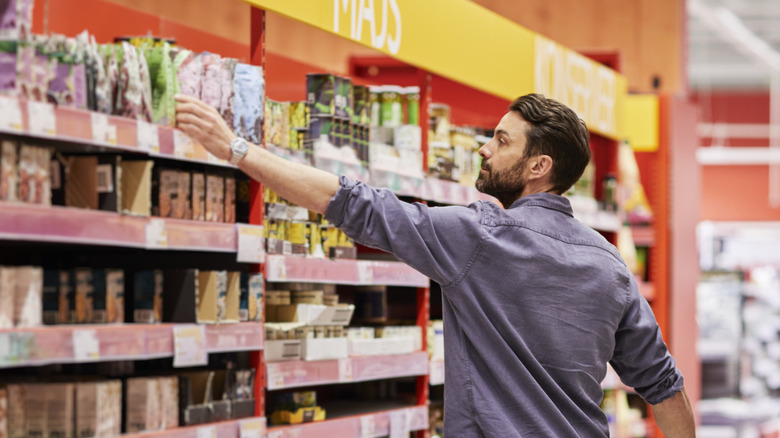
You might assume that in order to keep you interested and focused on impulse purchasing that grocery stores would place the juiciest looking deals right in your line of sight. You are correct that the store wants some juicy-looking deals to be in your direct line of sight. You would be incorrect to assume they are putting the best deals right where you can see them.
Grocery stores are incentivized by big companies to shelve their colorful and eye-catching name brand products at the average eye level to encourage people to buy them more. If you look at the higher shelves — or take a moment to squat down to the lowest — you'll find better deals or simply cheaper products. The only time this money-saving method may fail is in aisles with products that advertise to children. If you pay close enough attention, you'll notice pretty quickly that all those marketable cereal mascots won't be at your eye level. No, they're on the exact right level to catch your child's attention. Same with colorful candies and little toys, and games at checkout.
11. Sometimes, sale prices are the same as pre-sale prices
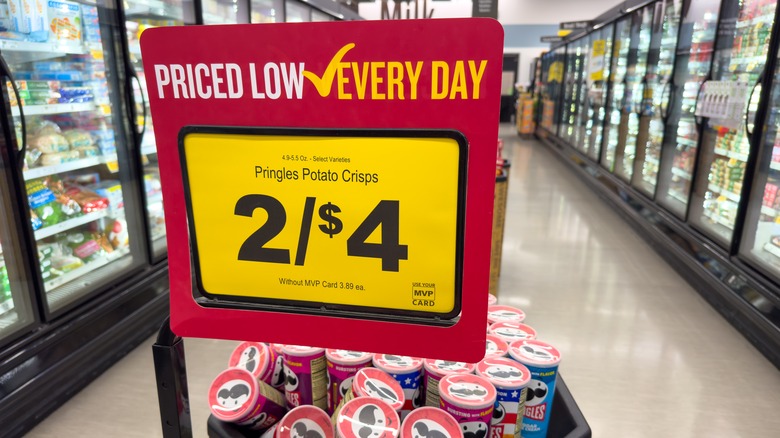
The sad truth about any kind of retailer is that they believe the basic consumer is easy to manipulate. While it's not necessarily true, a surprising number of these money-draining tactics seem to work because people don't know to look out for them. While working as a cashier, I had a pretty good idea of what popular items would cost. So imagine my surprise when, from one week to another, people would gush over the sale on fancy mustard when I could tell from a glance the price had not shifted a cent. All the distributor had done was provide us with a sign announcing a limited-time sale. A sale at the exact same price they had been selling their mustard for, for weeks.
It's a trap that everyone falls for with grocery sales, a big sale sign, products being moved about, or an advertised buy one get one deal. Do yourself a service and keep an eye on these sorts of sales. If you've been considering buying a certain item, make a note of the non-sale price so you don't get taken advantage of when they inevitably start advertising a big blockbuster deal. After all, if the deal was so good, the store probably wouldn't be advertising it as hard. They want to make money, not to lose it.
12. Non-food items may be more expensive at the grocery store
Here's a hypothetical. You're doing your usual shopping trip and checking everything off on your list. You're avoiding being sucked into fake-out deals and have managed to avoid impulse purchasing anything not on your list. That is, until you remember you're out of acid reliever at home. Or that you had just used your last Band-Aid. Well good news is that the grocery store you're in has a pharmaceutical aisle. You'll be able to pick up your acid relief, bandages, and even some vitamins if you need. Except they all seem to be a bit more expensive than you remember.
Grocery stores specialize in food and drink and are incentivized to keep those prices reasonable in order to keep people coming back. After all, unless they're advertising as an exclusive and expensive shopping experience, you wouldn't frequent a chain that feels like it's out to drain you dry. They are less incentivized in their pharmaceutical aisle, their paper goods aisle, their pets aisle — you get the picture. More often than not, anything that doesn't fall under food and drink is going to have a mark-up in a grocery store. If they're an all around retailer like Walmart or Target, you're less likely to run into this problem. However, grocery-specific chains like Stop & Shop, Shaw's, and Aldi usually do. Strategize with your shopping and stick to the stores that will serve you best.
13. The produce has been sitting out for longer than you'd like
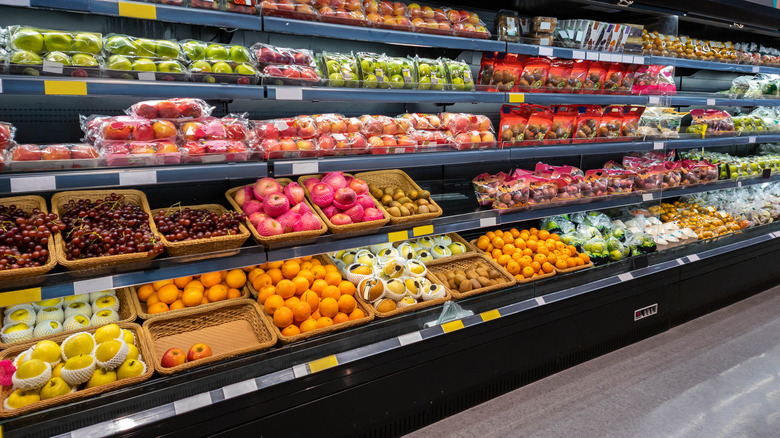
Those beautiful displays of produce that greet you as you walk into almost any grocery store sit there all day and all night. Basically, those displays will sit out for about as long as the store thinks they can get away with. Unlike the meat departments that have strict regulations on sanitation and temperature, and such, the produce, veggies, fruits, etc. can be on display for as long as they don't rot. Don't be fooled by the fresh-looking mist on those produce displays either. Spraying things with water doesn't actually do anything to keep them any fresher.
While the fruits and vegetables you're going to buy will be fine as long as they're still on display, you'll find they will turn a lot faster when you get home. You'd do well to brush up on some red and green flags to look for while buying produce in order to maximize your foods shelf life and keep yourself from that disappointing mid-week shop to replace the veggies that just couldn't hack it. The biggest tip is don't buy perfectly ripe fruits and vegetables unless you're planning on eating them that day. If they're already perfectly ripe, they're just that much closer to the door.
14. Not all the surfaces are sanitized
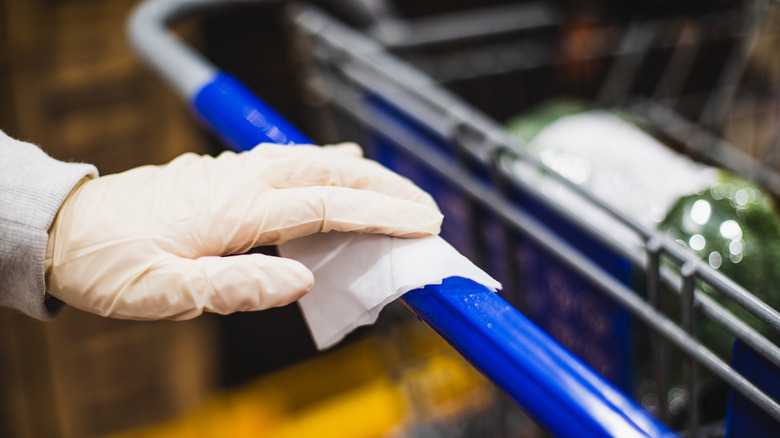
Back during the COVID-19 pandemic, many stores thankfully started pushing hygiene and cleanliness in order to make people feel safe while shopping. Making sure that handles and touch points are sanitized and wiped down if not after every customer, at least hourly. Unfortunately, once the restrictions began to lift, many stores found continuing these practices to be cost-prohibitive. While many stores still wipe down their shopping cart handles, how often does that happen? What about the separators for checkout conveyors and the touch points on a self-checkout?
The gross answer is that all these high-traffic touch points are wiped or sprayed, maybe once per shift. Which means they'll be cleaned four times a day if you're lucky. Those are just the places the store still deems fit to clean. Consider the produce or all the boxes and bottles on the shelf. Everything you can see has been touched and passed around by god knows how many hands, with no one making these stores sanitize all these surfaces. For your own health, bring some hand sanitizer and wash everything you can when you get it home.
15. The store throws out a lot of perfectly good food every day
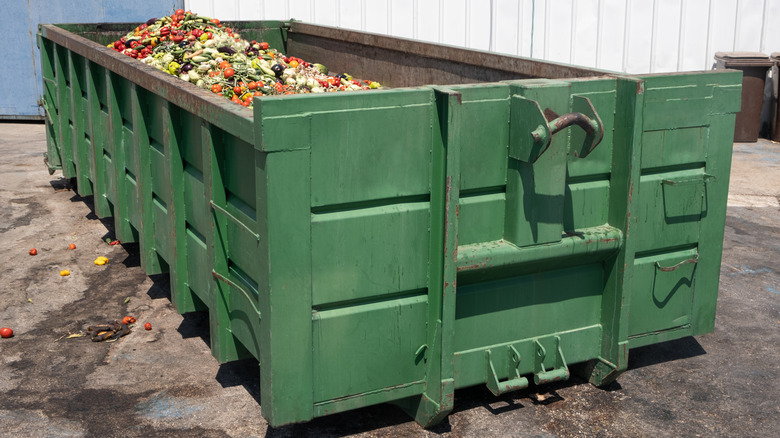
Every single grocery store has at least two enormous dumpsters out back. The dirty little secret for these stores is how much food goes in those dumpsters that are perfectly edible. It's estimated that a solid 30% of produce alone goes to waste daily. Throwing out all this food may seem counterintuitive. These stores have discount racks, and some advertise that they donate food to local food banks and shelters at the end of the day; surely these stores aren't wasting that much food.
Most businesses that donate to local pantries and shelters are only donating a portion of their goods. Some of that is because pantries and shelters require shelf-stable foods or foods that won't spoil too quickly. Bread, canned vegetables, water, and boxed milk are all good options for these outreaches. But fresh vegetables and fruits that are just a little overripe, breads that have overstayed their welcome in the day-old bin, and a host of other items simply get tossed in the bin. It comes down to how much the store would have to spend on labor and gas to get certain items to the places that will even accept their donations, and whether they are legally allowed to donate certain merchandise. Trying to navigate those waters for large chains in multiple different districts across the country is a huge headache, so the company policy comes down to throwing it out.