

10 Unexpected Problems With Butcher Block Countertops, According To Experts
We may receive a commission on purchases made from links.
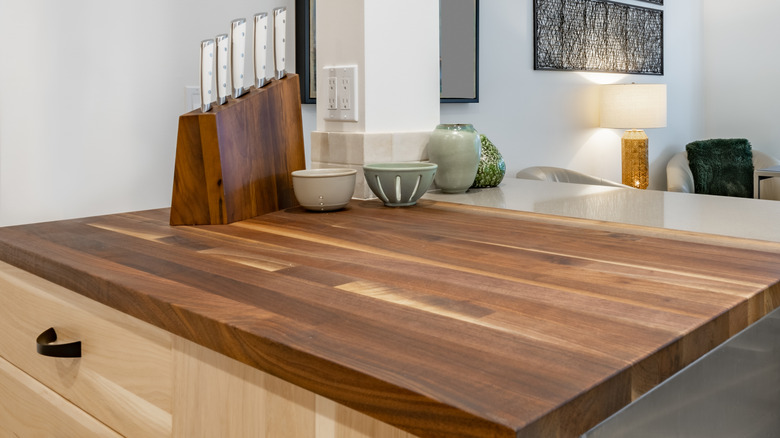
There are so many ways to dress up your kitchen with little to no renovation. However, if you've got some money in the bank and need new countertops, consider butcher block. This material can be beautiful yet understated, rustic yet classy. Not only does butcher block work for regular countertops, it is also a lovely way to decorate a kitchen island affordably.
"I've seen people choose butcher block countertops not just for function, but for feeling," says Ben Harvey, principal designer and CEO at Patio Productions. "There's a warmth to wood that instantly softens a space and makes a kitchen feel lived-in rather than showroom-stiff." He recommends butcher block for clients who love rustic, Scandi, or cottagecore aesthetics. It's a good choice for those who want something warm and tactile.
"Butcher block is having a moment," agrees Rachel Blindauer, principal designer and founder of Rachel Blindauer. "With the resurgence of natural materials and hand-hewn charm, more homeowners are leaning into wood." It's not just the aesthetics, either, but rather how it makes the kitchen feel: warmer, quieter, somehow more human. The problem? "Few realize what they're really signing up for," Blindauer cautions. "It's not a set-it-and-forget-it surface," Harvey adds. "If someone's willing to oil it, care for it, and accept a little wear and patina as part of the charm, it becomes a gorgeous and functional part of the home." That makes it important to understand the unexpected problems you might run into with a butcher block countertop.
Butcher block countertops stain
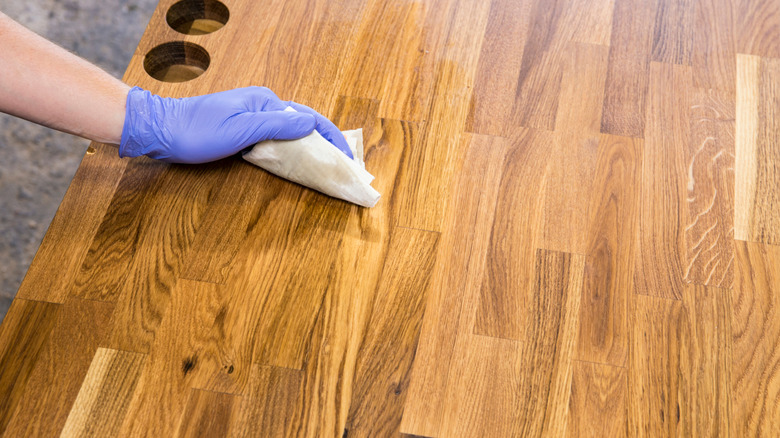
The truth is, no kitchen design is without its issues or potential mistakes. From marble counters to quartz, granite, and cement, they all come with hazards and good-to-knows, so make sure you do your research, no matter which surface material you choose. When it comes to unexpected problems with butcher block countertops, staining is at the top of the list.
"Any red wine, beet juice, or even tomato sauce can leave a mark if not cleaned up fast," Ben Harvey says. "Unlike stone, wood is porous and tends to absorb spills instead of resisting them. I've seen clients panic after just one dinner party."
If you're the type to stay on top of kitchen cleanliness, then butcher block is fine. If you wipe spills up in a timely fashion, your wood should remain relatively unscathed. However, if you're one to leave dishes sitting on the counter overnight, juicy cutting boards unattended, or wine glasses on their own, then you might regret the choice of butcher block. "Sealing helps, but the finish wears over time and needs reapplication," Harvey adds. This means you're really relying on conscientiousness and an ability not to make a mess in the kitchen. For those who have busy work lives, kiddos, or regular parties, it might prove too burdensome to keep watch.
Water can damage them
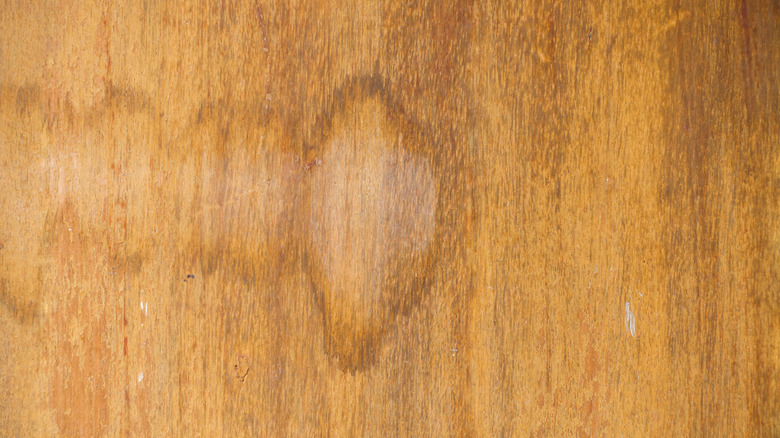
Oh, you thought red liquids were the only culprits? LOL. No. Even water can pose a problem with butcher block countertops. Now, again, butcher block is not alone here. Marble is also at risk of water damage, and even concrete countertops — which you might think were as indestructible as a cinderblock — can get damaged by spills and food stains.
"Wood and water are rarely friends," Rachel Blindauer says. "Around sinks, faucet spray, or dishwashers, moisture can lead to swelling, dark staining, and even mold if left unsealed." For that reason, she never recommends butcher block for wet zones unless the client is meticulous about daily sealing and wiping. For those who don't have that kind of stamina, stone is probably a better approach.
"Water is wood's slow-motion enemy in kitchens," Ben Harvey concurs. He doesn't recommend it for areas around sinks either, unless the homeowner is particularly dedicated to keeping it clean and dry. The only other option, he says, is a marine-grade finish ... you know, one that's made for the literal hulls of boats. However, make sure you read the instructions carefully before applying any products that aren't designed for indoor use and get help if you need it. Otherwise, your counters may not end up with that gleaming, decorative effect that good butcher block is known for.
They get nicks and scratches
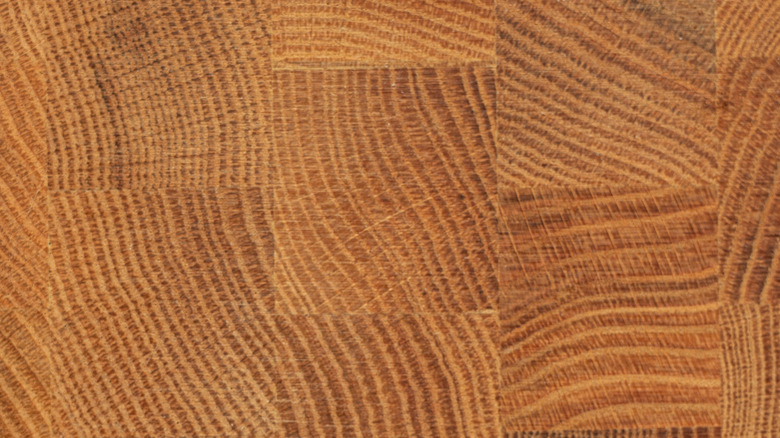
Another unexpected problem that you may encounter if you have butcher block countertops? Nicks, scratches, scores, and divots. In other words, marks that occur when sharp objects encounter soft wood that offers little resistance. "If you drop a knife or drag a heavy pot across the surface, expect it to leave a mark," Rachel Blindauer says. "For some, that wear tells a story. For others, it feels chaotic." If you're the type who likes a lived-in look or feels that scrapes lend an authentic farmhouse patina to your cooking space, go for it. If that's not you, then you'll need to take care or choose another material.
"Either way, you'll want to avoid cutting directly on the surface," Blindauer says. Sure, it's a little misleading that said surface is called "butcher block," but it's still not a butcher's block. You're going to need a cutting board if you don't want the counter to look completely used within weeks. Something like a Royal Craft Bamboo Wood Cutting Board Set could do the trick and keep your countertops protected, while staying in touch with the rustic, natural look.
Wood is less durable than stone
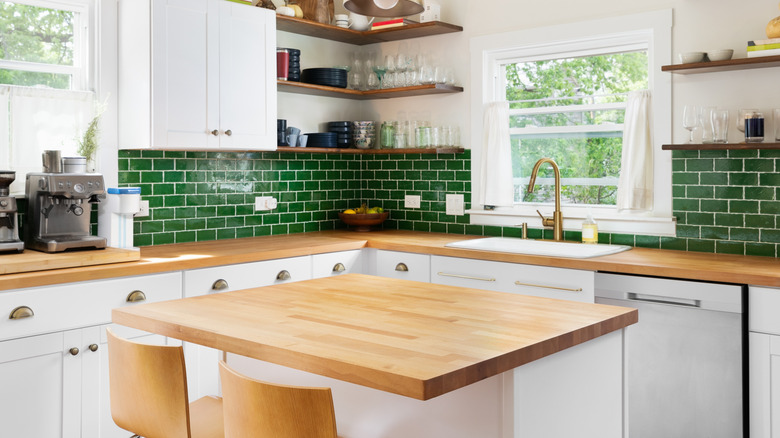
Some deep and unexamined element of the human psyche simply expects countertops to be durable. Like, why would they be there if they couldn't stand up to the demands of a modern kitchen? Yet many materials need care. Wood dents and stains; marble chips and cracks; even laminate (much-billed as tough and affordable), takes on discoloration. However, the fact of the matter is, butcher block is just less durable than stone countertops. You can't expect it to hold up like granite, quartz, or a manufactured stone will.
That doesn't mean you can't take steps to make your counters more durable, though. "Choose a tight-grained hardwood like maple or walnut," Rachel Blindauer says. "And understand this: butcher block isn't there to perform silently. It will age, change, and evolve. But for many of my clients, that's exactly the point." Again, that patina can work in your favor if it's what you're going for. Just make sure it is what you're going for before choosing between butcher block countertops and stone.
They're sensitive to heat
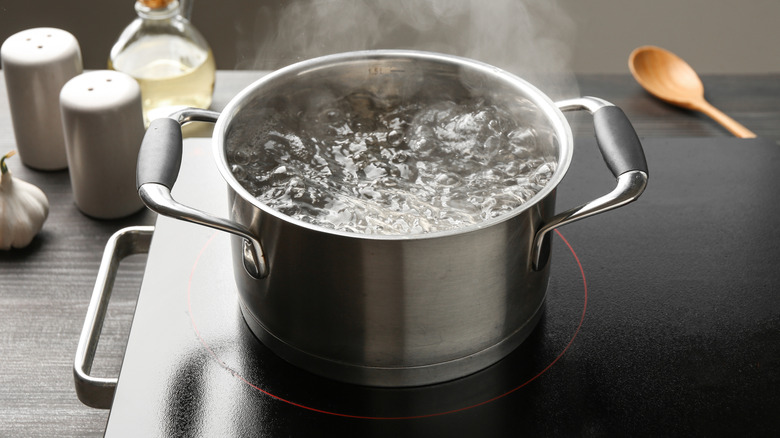
Heat sensitivity cropping up on a list of unexpected problems with butcher block countertops probably doesn't surprise you at this point. Between nicking, scratching, and staining, wood has already proven itself a bit wimpy for those who live hard in the kitchen — but burns are especially concerning.
"A hot pot will leave a dark, permanent mark — like a burn tattoo," Ben Harvey says. "There's no real way to fix that other than sanding the area down and refinishing it." Rachel Blindauer agrees that burn marks are hard to get rid of; short of resurfacing and refinishing, you're going to have to live with it.
Both design experts agree on the importance of a good trivet habit. "Trivets aren't optional," Blindauer says. "They're a lifestyle." Products like KITLAB's High Density Thick Cork Trivets or Heat Resistant Fabric Trivets offer a few stylish options to protect your counters. No matter which ones you go for, though, make sure to train everyone in your household to use them immediately.
They may trap bacteria
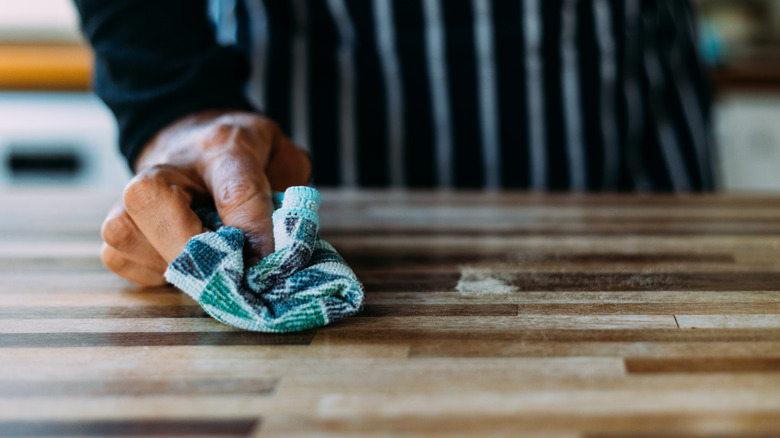
"Ew, germs," thinks everyone who ever reads the word "bacteria." It's gross and off-putting, and no one wants to dwell on how much is already living in their kitchen. And yet, little critters are another problem you may run into with butcher block countertops. "While wood does have some natural antibacterial properties, that doesn't mean it's immune," Ben Harvey says. "Deep knife marks or unsealed areas can harbor gunk."
Again, that's why it's so important not to treat your butcher block countertops like an actual butcher's shop. "I discourage clients from prepping raw meat directly on them or using harsh chemicals that might degrade the sealant," Harvey says. So, while it might be tempting to hack up a side of beef right on the counter and then wipe it all down with bleach, don't do it. Just kidding; you wouldn't do that. (Wait, you're not doing that, right? Right??)
Instead, take the same kind of care you would with any other surface. Use cutting boards on top of the countertop, then wash those boards well with soap and water. Let them dry thoroughly before putting them away to discourage mold growth.
The wood can dry out
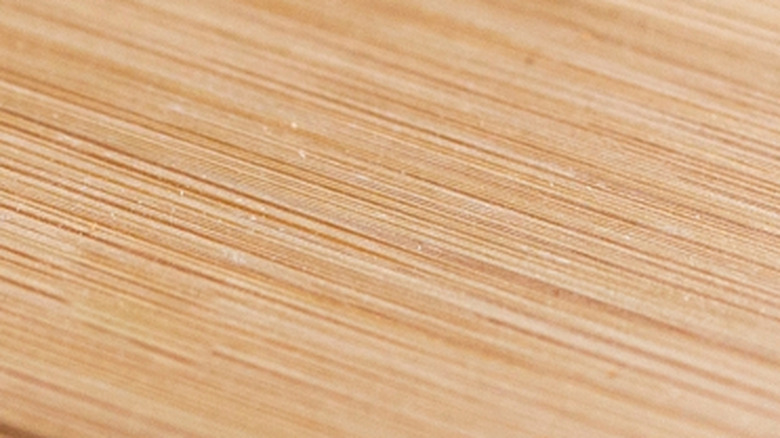
At the opposite end of the spectrum from "Oh no, I got my wood wet and now it's all messed up" is "Oh no, why is my wood totally devoid of moisture and drier than my knees in summertime?" When wood dehydrates, it loses luster and shine, cracks and splinters start to crop up, and it becomes rough and generally looks crummy.
Remember that butcher block is not simply a slab of wood. Although that too can be used for countertops, butcher block is a specific product made by gluing lengths of wood together to form a design. It can take many forms, from long lines of wood to cross-hatched patterns, but the defining characteristic is the glued-together pieces. These seams are weak points, and without regular maintenance, they can start to crack and fray.
You can prevent this, of course, but it takes maintenance. "I recommend a monthly routine using food-grade mineral oil or a beeswax blend," Rachel Blindauer says. "Use a food-safe oil — not polyurethane, which can yellow and flake. Set a reminder, and treat it like skincare: consistency over intensity." Products like Thirteen Chefs Food Grade Conditioner for Wood or Rhoose Point Remedies Premium Beeswax Wood Polish and Furniture Wax can work. The best idea is to ask your installer what type of conditioner you should use at the time of installation. They will know which products complement the type of wood you've selected and its unique construction.
Butcher block expands and contracts
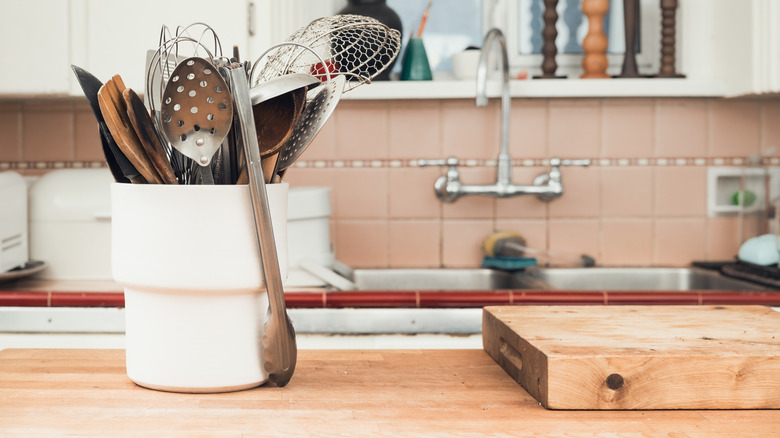
Like all wood, butcher block expands and contracts. "It breathes with the seasons," Rachel Blindauer says. "If not installed properly, with room to expand, you may end up with minor warping or gaps." The good news, she says, is that a quality installer knows how to float the slab during installation to accommodate movement, so that the wood can shift and reshape without ruining the effect — assuming you keep it away from massive influxes of liquid, of course.
Wood may change shape in different ways depending on its construction, too. "Not all butcher blocks are created equal," Ben Harvey says. "Edge grain, end grain, and face grain all wear differently, and some are far more durable and less prone to warping than others." If you talk with your installer about your needs, they can help you find a solution that best meets them.
Happily, butcher block's customizability can also work to your benefit, as long as you're smart about it. "Unlike stone or quartz, butcher block can be shaped and customized on-site more easily, which helps in quirky, older homes," Harvey says. If you have difficult-to-fit counters, you can use butcher block to cover them beautifully.
They require regular maintenance
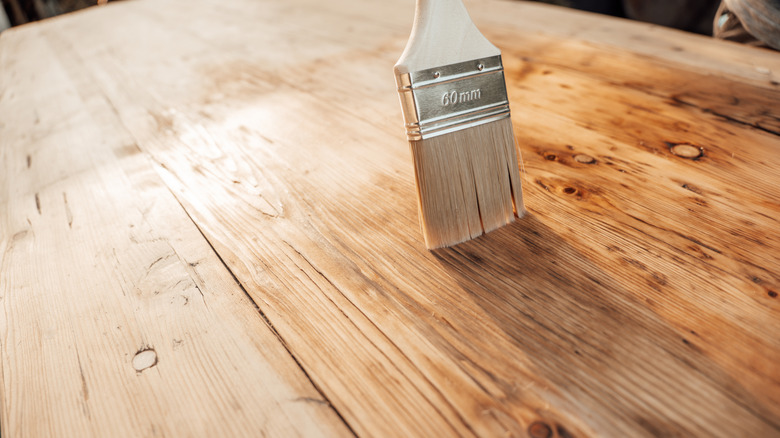
As already discussed, butcher block countertops require a solid maintenance routine. Rachel Blindauer stresses that butcher block is not quartz, and it won't stay pristine with zero effort. "It needs sealing, wiping, oiling, and occasional sanding."
Of course, you don't need to sand it between every meal, but you should plan for routine maintenance to keep it looking fresh. If you decide you want to refinish your counters yourself, you'll need to take care to do it right. First, clean the countertops to remove dirt, stains, and mildew. Next, scrub it with sandpaper, moving from a coarse to a fine grit paper: the higher the sandpaper grain number, the finer the particles and the smoother the end result. Don't scrub across the grain of the wood, but rather follow it so you don't score the surface. Fill any cracks with filler or wax, then smooth on whatever food-safe oil you use to keep the counters shiny between refinishings. If that all sounds like a little much, you can hire experts to do the job for you.
Lighting can change their appearance
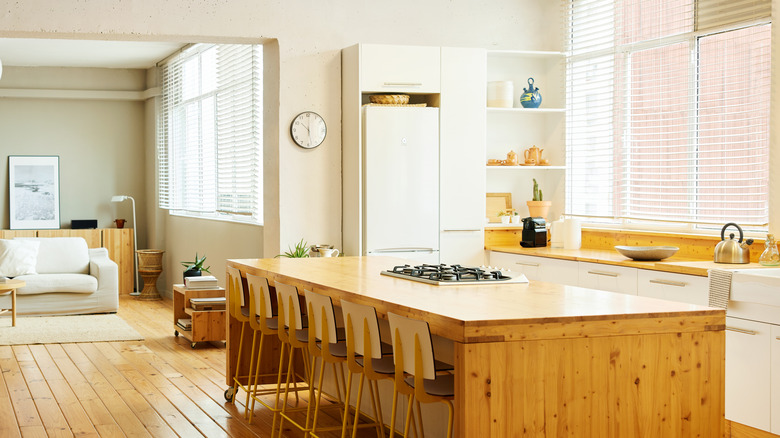
There's a reason museum glass exists, and you're supposed to store your spices in a dark cabinet. Light has the power to fade, bleach, and discolor surfaces, causing some of the most surprising problems with butcher block countertops. It's something that few people consider, Ben Harvey says. "Lighting can dramatically change how butcher block looks over time," he explains. "Sunlight will naturally darken or yellow some woods, while shaded areas might stay lighter — so if your kitchen gets patchy sun, you might end up with a countertop that looks unintentionally ombre."
On a related note, you've got to think about the other design elements in your kitchen if you're going to do butcher block. "I also recommend thinking about the tone of your wood floors," Harvey says. "Too much matching makes a space look flat, while contrast adds dimension." Similarly, make sure you match your butcher block countertops to your cabinets or, better yet, paint your cabinets a different color to make them stand out from the wood. (There are a number of other unexpected cabinet styles you can try, and make sure you're choosing paint colors according to your home's orientation and the way the light falls.)
With all this said, there's a magic to butcher block, according to Rachel Blindauer. "In a sea of marble, quartz, and ceramic, wood feels like an exhale," she says. "It absorbs sound, ages with grace if treated right, and offers an organic counterbalance to metal appliances and tile."