

8 Types Of White Fish Worth Buying, And 2 You Should Avoid, According To Experts
We may receive a commission on purchases made from links.
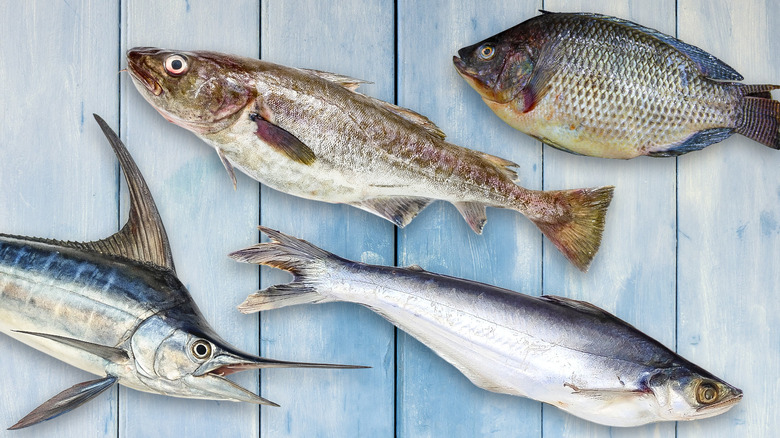
The sea is full of fish. As with any other type of food, there exists a huge range of options: cheap fish, swank fish, gross fish, dank fish — and while you should avoid buying several kinds of cheap fish, there are some types of inexpensive seafood that are totally worth it.
"Seafood isn't just delicious — it's rich in omega-3 fatty acids, vitamins D and B12, and key minerals like selenium and iodine," says Rima Kleiner, recipe developer and nutritionist at Dish on Fish. "Regular consumption of fish has been linked to reduced inflammation, improved mood, and even longer life expectancy." If you feel better just reading about it, no one can blame you. "Plus, white fish is versatile and makes a great substitute for other animal proteins in your favorite recipes." This type of fish is easy to cook as well, she adds.
However, white fish is not one-size-fits-all, says Maricel Gentile, chef and author of Maricel's Simply Asian Cookbook. "The ideal white fish depends entirely on what you are preparing," she says. Some fish are better in fillets, while others are good whole; some are delicate, while others are meaty. "What they all have in common is a mild flavor, white flesh, and lower fat content, which makes them a beautiful canvas for seasoning and sauces," she adds. But which can you count on overall, and which are best avoided? The answer is complicated by the fact that any one fish is only as good as the fishery or farm it comes from, says Alisha Lumea, VP of Marketing and Brand Strategy at Wulf's Fish. Still, there are some basic rules that will help.
Buy: Cod
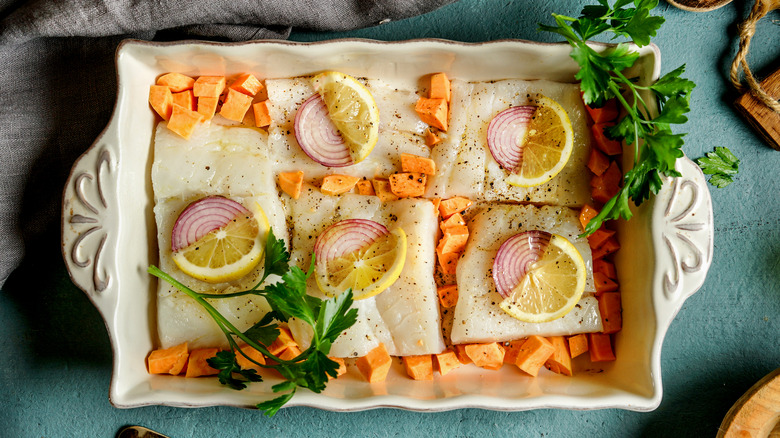
"Cod is my everyday hero," Maricel Gentile says. "It is flaky but firm enough for frying and perfect for dishes like Korean-style braised cod or my fish escabeche recipe. It soaks up sauces and is ideal for beginner cooks because it is forgiving and easy to work with." It's also a go-to for stews, due to its clean flavor and sturdy texture, she says. For instance, cod is a great option for bouillabaisse because it's nice and thick.
Rima Kleiner agrees with its usefulness, pointing out that cod is an excellent source of lean protein, supporting heart health, bone strength, thyroid balance, and brain function. It also has a mild flavor and offers versatile cooking options for busy weeknight dinners. This, Kleiner says, makes it perfect for everything from fish and chips to stews and casseroles, as well as baking, broiling, and pan-frying.
Sustainability is important, though, and should be top of mind when deciding which fish to buy and which to avoid. "Look for Korean cod or cod certified by K-Seafood, especially at Korean grocery stores like H Mart, as they often carry beautifully frozen fillets direct from Korean waters," Gentile says. She recommends species that have been certified by the Marine Stewardship Council. "Cod is harvested from New England if sourcing domestic fish is important to you," Alisha Lumea says, "and there are healthy, well-managed cod fisheries in Iceland and Norway that supply the majority of cod you'll find across the US."
Buy: Haddock
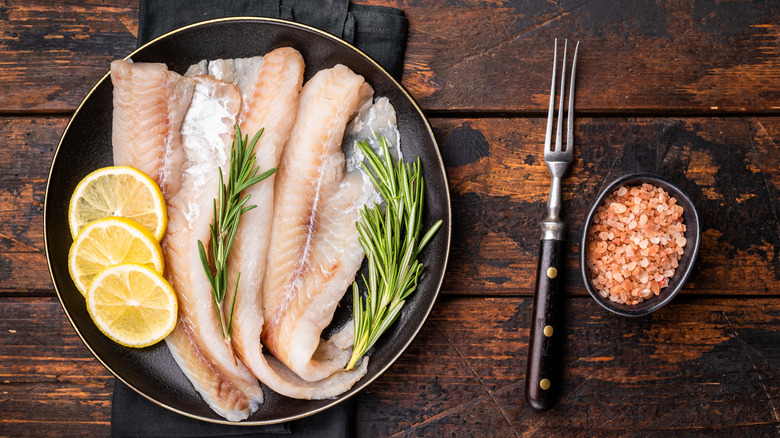
Haddock may not be a fish with which you're overly familiar, but it's a delicious one to add to your arsenal today. "Haddock is slightly sweeter and more delicate than cod and works well in poached or smoked recipes," Rima Kleiner says. "It's packed with B vitamins (especially B12), magnesium, and phosphorus, which aid in energy production, nerve health, and immune support." It also helps the ol' ticker stay healthy. Because it holds up well in cooking, she says, it's a favorite for chowders and soups."
Haddock is a nice choice for those who like the mild taste and flakiness of cod, Alisha Lumea says. Plus, it gives you options for swapping in new species so you're not always putting environmental pressure on the same ones (e.g., cod). "Look for fish that are similar in texture and cooking properties to fish you know," she advises. Then don't be afraid to experiment. If you need advice, your fishmonger can help you.
Haddock is good baked, breaded, dredged or crumbed, and fried, as well as in soups, as stated. If you don't have enough time to whip up fish or seafood stock from scratch, you can try a substitute such as Better Than Bouillon Premium Lobster Base. While it's likely that chefs eschew the shortcuts, we home cooks are allowed to take liberties now and again, right?
Buy: Halibut
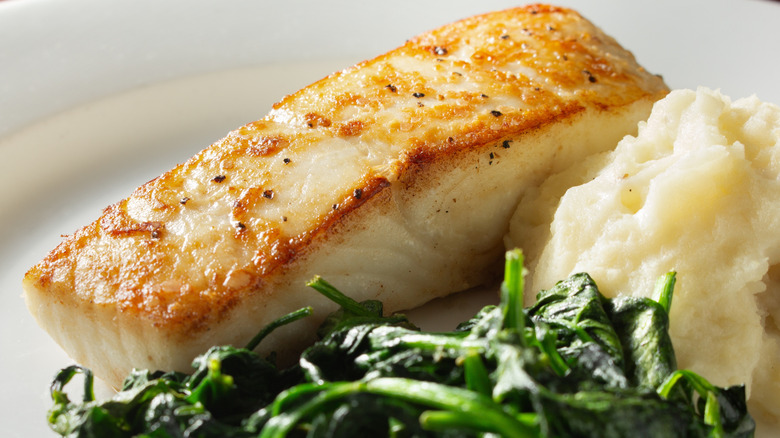
Most likely, no one needs to tell you to buy halibut. This fish is known to be high-quality and delicious, and is often touted as a specialty on seafood menus or in fish and chips recipes. One fish you should buy is halibut, as it is highly sustainable. "Its meaty and moist texture, plus its large flakes, make it worth waiting for its arrival in the spring," says Cathy Whims, chef and Author of The Italian Summer Kitchen. Moreover, it's a sustainable fish, so you needn't avoid it on grounds of environmentalism. Timing does matter, though. "In the fall, as the fish grows, its meat can become firmer and less desirable," she says.
In addition to firm flesh and a meaty texture, Maricel Gentile says, it has a sweet taste. "It holds up beautifully to grilling, pan-roasting, and even stewing without falling apart," she says. "It is more of a splurge, but worth it for special occasions. In Filipino cooking, I love using it as a luxurious substitute in Sinigang na Isda." This delicious combination of sour broth, veggies, and delicate whitefish is both simple and rewarding.
As for its health benefits, well, those can't be overstated. "It's a nutrient powerhouse, full of complete protein and essential amino acids, supporting muscle repair and satiety," Rima Kleiner says. "It is rich in selenium, magnesium, niacin, and omega-3s." The combo is potently anti-inflammatory, supporting the thyroid as well as serving up more than a third of your daily need of vitamin B12 and phosphorus.
Buy: Tilapia
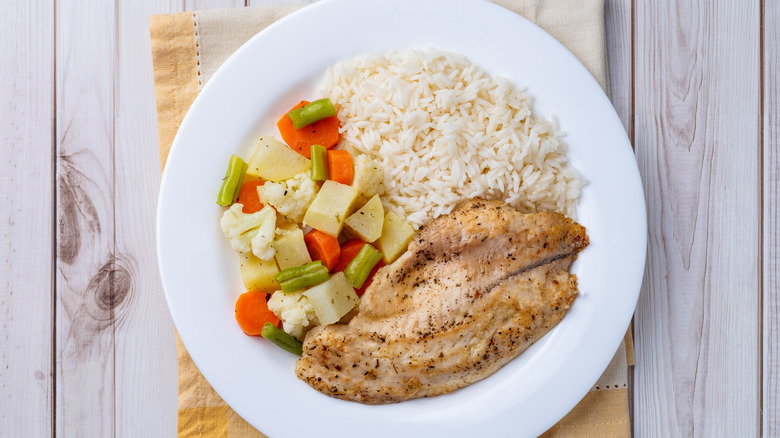
Tilapia is another fish about which you may have questions, mostly due to online advice to avoid it, but this advice lacks the necessary complexity to fully explore tilapia as a white fish option. The main problem is that tilapia is sometimes farmed using low-quality, unsustainable practices, Maricel Gentile says. "But responsibly farmed tilapia, especially U.S.-grown or verified by a trusted store, is affordable, versatile, and great for steaming or saucy dishes." Your goal, she says, should be to seek out the right information by talking to your fishmonger. Indeed, if you find the right fish, you might even be helping the world. "When done well, tilapia is an incredibly sustainable fish to raise," Alisha Lumea says. "There are also many good tilapia farms, particularly in South and Central America."
Tilapia has other things going for it as well. It's affordable, widely available, and mildly flavored. It's also adapted to a wide variety of cuisines, Rima Kleiner says so that you can sub it in for other fish in dishes from across the world. "Its neutral taste makes it perfect for bold seasonings, stir-fries, tacos, and quick weeknight meals," she adds. If you find tilapia slightly boring, as Cathy Whims does, you can avoid it, but give it a try first.
Buy: Cobia
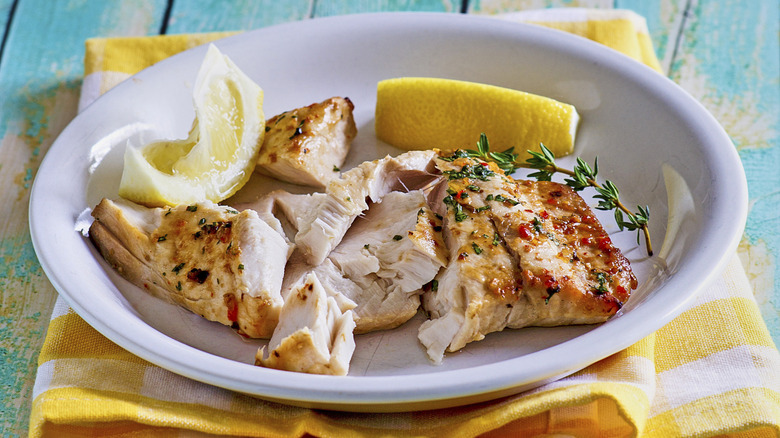
Never heard of cobia? You're not alone, but this fish is a delicious one that you should start experimenting with right away. "Cobia is a meatier type of white fish, firm and steak-like," Cathy Whims says. "It is delicious to grill over an oak fire and served with a condiment-type sauce, like mayonnaise-based salsa, or an olive oil-based sauce such as salmoriglio, Italian salsa verde, or a tapenade-style condiment."
If you enjoy a challenge, find yourself a good recipe and whip up a unique accompaniment for your next dinner party. If you (like most of us) aren't a professional chef, though, there are other options. Try Herdez Roasted Salsa Verde or Chef Ole's Party Olive Tapenades Set for a fun, from-the-jar way to jazz up your seafood. Sure, it probably won't be as good as if you made it yourself, but it's better than the same old salt and olive oil, right?
This is a good species for those who like Chilean sea bass, says Alisha Lumea. "Cobia is equally flavorful and hard to overcook," she says.
Buy: Sole
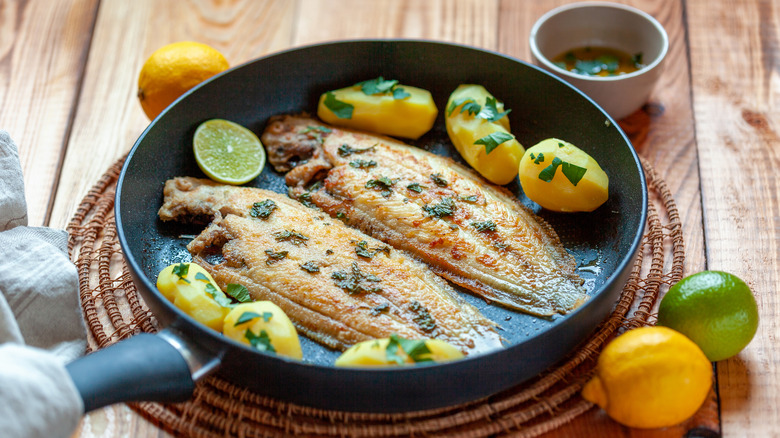
If you've ever had sole meunière — a recipe that involves lightly dredging the fish in flour before serving it with butter, lemon, and parsley — then you understand why some people simply can't get enough of it. It is certainly not a fish to avoid. "I enjoy the delicate, flaky, and moist consistency of sole," Cathy Whims says. "For example, petrale sole in the Pacific Northwest is the meatiest, but lemon sole and dover sole are also quite nice. I recommend pan sautéing the sole in a delicate sauce."
Note that each type of fish has its own best method of preparation, so you have to take care with your recipes rather than simply treating a thin fish, such as sole, the way you would a thick and meaty species like cod. That's not to say you can't make substitutions. "Since I live in the Pacific Northwest, I tend to focus on local fish and sustainable ones like petrale sole, halibut, ling cod, rock fish, and true cod," Cathy Whims says. "All are delicious and can be pretty interchangeable for various cooking methods such as sautéing, baking, frying, steaming, and crudo/sashimi." If you're going to substitute, however, go and look up a new recipe that uses those same ingredients and that specific fish, rather than simply subbing in your sole for a code recipe, say.
If you are going to sub one for another, try to match consistency and texture. For instance, petrale sole is a meatier species, so it would make a better substitute for another meaty fish, such as cod.
Buy: Hake
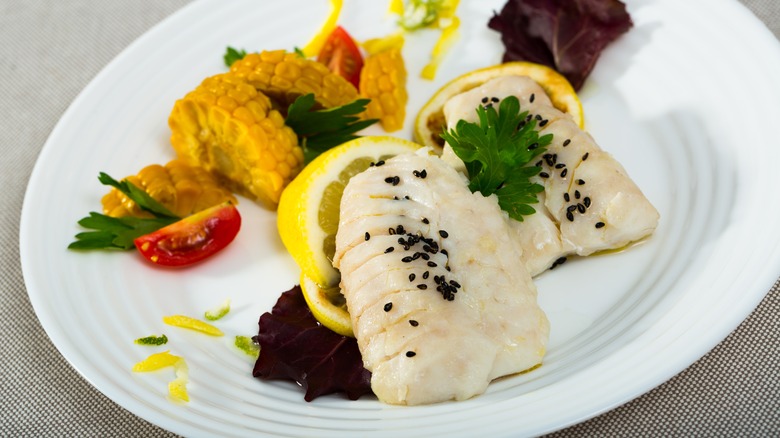
A member of the cod family, hake is more tender and milder in flavor, with a thinner flake than its better-known cousin. Hake, of which there are several species available, are deep-sea dwellers, but can be sourced sustainably. "Hake is a lovely fish, particularly suited to steaming and serving in a green sauce, San Sebastián style," Cathy Whims says. Green sauces often include ingredients such as garlic, parsley, white wine, and lemon, while other recipes add onion, dill, cilantro, and other fresh-tasting elements.
Maricel Gentile concurs that, while underrated, hake is an excellent fish to introduce to your repertoire. "It is great for soups and steamed preparations," she says. "I use it often in my Thai-inspired lemongrass fish dishes because it takes on delicate flavors so well." (If you can't find fresh lemongrass at your nearest Asian market, Cambodian Lemongrass Paste is a good ingredient to keep on hand.)
Many people are unfamiliar with cooking hake, though, so do your research on how best to prepare it so you can avoid the most common hake mistakes. It works well in tacos, fish balls and cakes, baked dishes, with veggies, and many other recipes.
Buy: Pollock
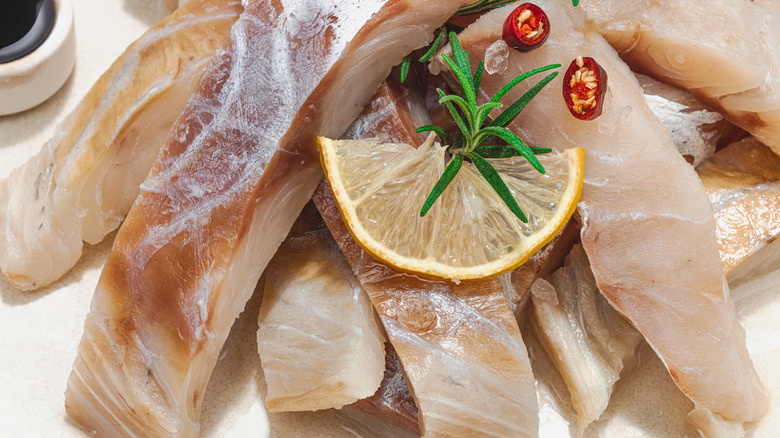
Pollock is another fish about which you may have heard little but have no need to avoid. You'll find species such as Alaskan pollock in American markets from January through April and June through October, which is the majority of the year, and you can get frozen fillets the rest of the year. If you're curious about other species, such as Atlantic pollock, ask your seafood counter, where you can learn more about when to get them and how to seek out sustainable options. Along with cod and haddock, pollock makes for a great homemade fish stick, but also works well in enchiladas, tacos, and sandwiches.
"If you have access to a Korean market, do not overlook Korean pollock," Maricel Gentile adds. "Dried hwangtae (dried Alaskan pollock) is amazing in soups, and fresh or frozen fillets can be used in stews or steamed dishes. It is sustainably fished in cold Korean waters and often carries the K-Seafood certification, which guarantees it meets high safety and sustainability standards." Its taste, both delicate and distinct, makes it among the more beloved fish in Korea. Try K-Seafood Pavilion Hoengseongmak Dried Fish if you're curious.
Avoid: Swordfish
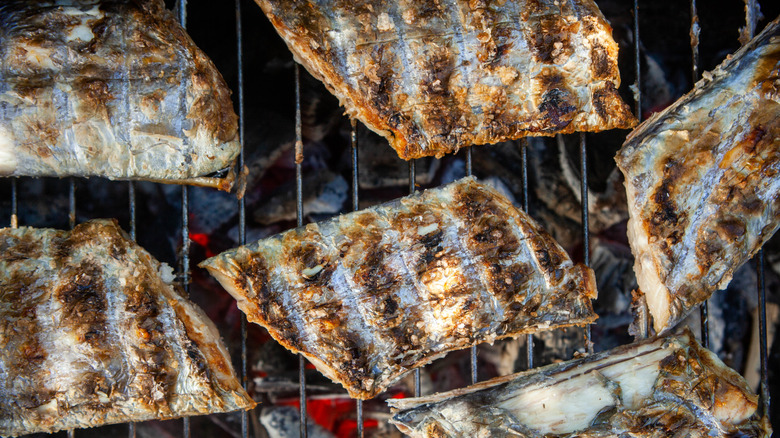
The time has come, unfortunately, to discuss fish options you really ought to avoid. Prime among them is swordfish. "Swordfish contains elevated mercury levels," Maricel Gentile says. "It is dense and oily, and while the flavor is bold, I find it overpowers many gentle seasonings used in Asian cuisine. Plus, it is often overfished."
If you have a swordfish recipe you're dying to try, you can substitute cod, halibut, or mahi mahi instead. Or, as Cathy Whims does, you can look for more sustainable, line-caught North Atlantic swordfish. Swordfish that are caught by hand, using a pole, are actually rated green by Monterey Bay Aquarium's Seafood Watch, so you can feel good about buying it if swordfish is your thing.
Avoid: Swai
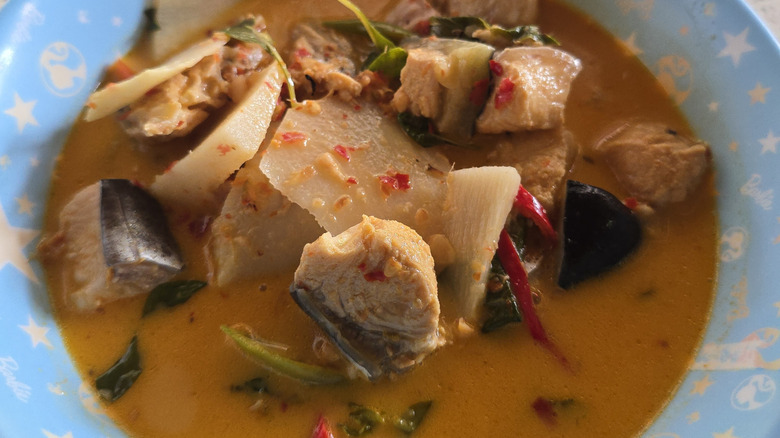
Swai is another species you should avoid. "It is important to avoid white fish that are at risk of collapse or permanent extinction," Cathy Whims says. "I typically avoid swai, which is a fish native to Southeast Asia and imported to the United States, as it is farmed in waters with harmful chemicals and has little nutritional value." Plus, Maricel Gentile says, it is mushy and bland. "If a fish has no smell or no flavor, that is a red flag," she says. "Swai is better skipped."
Of course, there are a few other options of which you might want to steer clear. Basa is another fish you should avoid, for example. The experts also advise against shark, which contains elevated mercury levels, and marlin. On the whole, however, there are far more fish to buy than to avoid, so long as you keep good sustainability practices at the forefront of your mind. In general, though, you should try to get more white fish into your diet. "When it comes to seafood, the real concern is not eating enough," Rima Kleiner says. "Most Americans do not come close to eating enough seafood."