

10 Ways To Upgrade Your Shakshuka Breakfast
We may receive a commission on purchases made from links.
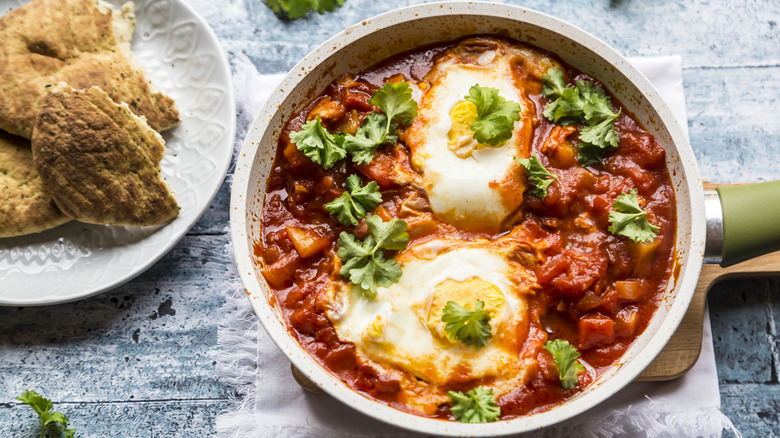
If you have any burning questions about shakshuka, you have come to the right place. This dish, which happens to be a brunch favorite of celebrity chef Duff Goldman, is a specialty that originated in North Africa. Literally translated to "shaken up," shakshuka generally features a highly seasoned tomato sauce that is donned with poached eggs. It is commonly served with hunks of bread that are used to scoop up the luscious sauce and vibrant, orange-hued, runny egg yolks.
While a basic shakshuka is delectable, what makes this recipe so fantastic is how adaptable it is. There are virtually endless ways you can enhance this dish to make it completely your own and to accommodate almost any palate or dietary restriction. From adding meat and cheese to loading it up with vegetables and spices, shakshuka is the chameleon of the breakfast world.
As a professional chef with a background in food anthropology, I have not only prepared many shakshuka recipes, but I have also consumed my fair share of variations of this dish in other countries, including all across Morocco. I consider myself to be something of an expert on the matter. Read on to discover some of the most creative and delicious ways to upgrade your shakshuka breakfast, from my kitchen to yours.
1. Add some meat to shakshuka
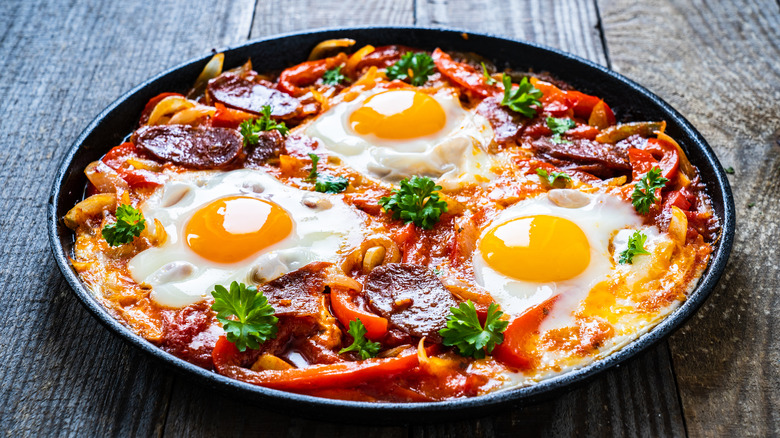
The addition of meat to shakshuka is quite common across North Africa and the Middle East. Lamb, meatballs or kofta, a preserved meat known as khlea or khlii, and merguez sausage all feature prominently in recipes from Morocco to Yemen. While these are common, they are by no means the only meats that work well in this dish. Virtually any meat you can imagine eating for brunch works here, including bacon, sausage, ham, and even chorizo.
When adding meat to shakshuka, it is important to pre-cook the protein before combining it with the tomato sauce base. This dish doesn't bake long enough in the oven to fully cook raw meat — the goal with baking is to poach the eggs. Also, it is crucial to drain any excess fat from the meat before adding it to the tomato base. Doing so will prevent the dish from becoming too greasy and will allow all the flavors to blend together harmoniously. Lastly, make sure to break the meat down into bite-sized pieces. Shakshuka should be easily dippable, so you don't want huge chunks of meat that are hard to scoop in the dish.
2. Amp up the fun with fungi
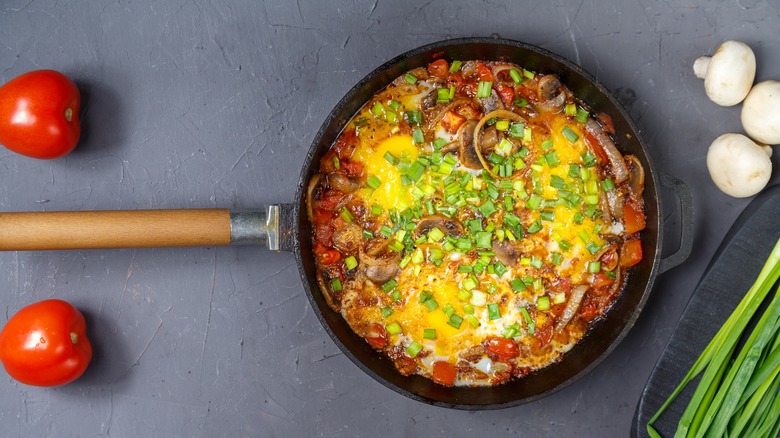
If you are searching for some savory, umami flavor without the meat, look no further than mushrooms to amp up shakshuka. Fresh mushrooms, dried mushrooms, or even mushroom powder can work well here, but it is important to understand how to incorporate each one for the maximum flavor and to prevent them from watering down the shakshuka.
When using fresh mushrooms, I recommend opting for a blend of different types to maximize taste. Each lends a unique flavor profile that can create complexity to the dish. You will also want to cook the mushrooms in advance to eliminate any excess moisture. Again, make sure to slice or chop mushrooms into bite-sized pieces to make them easier to ladle with bread.
Another option is dried mushrooms or mushroom powder, both of which belong in your pantry. Dried mushrooms will need to be rehydrated before they can be added to the tomato base. This can be done by soaking them in hot water for about 30 minutes. Mushroom powder can easily be sprinkled into the tomato base, the way you would add any other seasoning. It will basically melt into the sauce, producing that savory flavor without any residual grittiness.
3. Brighten up shakshuka with verdant greens
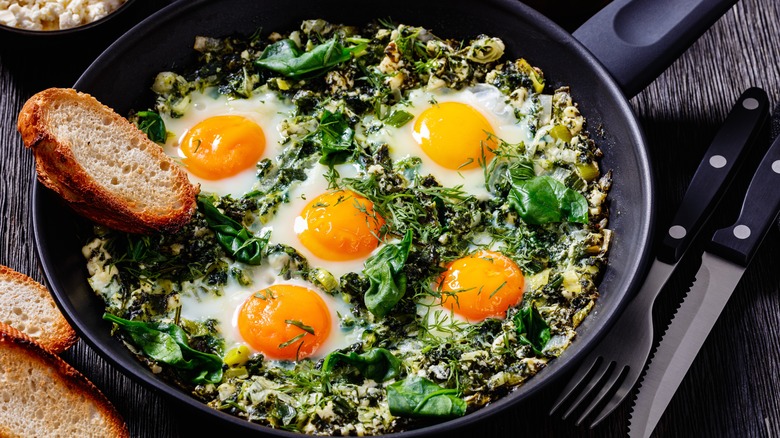
Though shakshuka usually features a tomato base, green shakshuka is a variation that is visually appealing, nutrient-dense, and loaded with flavor. Green shakshuka is typically made using green, leafy vegetables, like kale or spinach, fresh herbs, and green onions or leeks. These are sautéed in butter or olive oil until tender and seasoned liberally with salt, pepper, and typical North African spices, like coriander, cumin, and red pepper flakes. The eggs are added atop the greens before the whole dish is baked to perfection.
When making a green shakshuka, I tend to add a hint of lemon juice to the greens at the beginning of the cooking process. Not only does this help to prevent them from losing their verdant hue, it lends a brightness of flavor that helps to balance the richness of the egg yolks, much the way the acidity in the tomatoes does. Also, keep in mind that greens tend to wilt dramatically when cooked. They lose nearly 90% of their volume due to water loss as they cook, meaning you will need roughly 10 cups of fresh spinach or kale to yield just one cup of cooked greens.
4. Say cheese
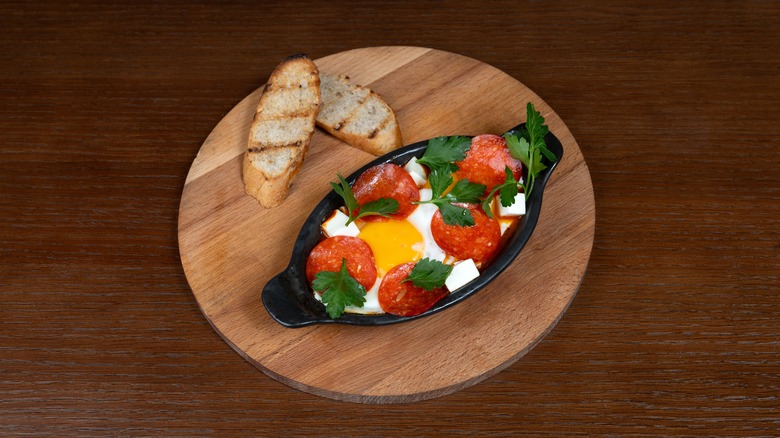
Another great candidate for incorporating some rich umami flavor and a velvety texture to a classic shakshuka recipe is cheese. Though mozzarella is considered the meltiest cheese, according to science, there are plenty of other great options that can really transform this dish. Among my personal favorites are feta, goat cheese, queso fresco, and a smoky blue cheese.
When adding cheese to shakshuka, it can be helpful to do so in stages. First, stir some into the tomato sauce base so that it is melted into each bite. Second, sprinkle it on top of the tomatoes after the eggs have been cracked over the base, but before putting the dish into the oven, taking care not to puncture the egg yolks. The cheese will melt around the eggs, essentially encasing them in melty goodness.
Also, don't be afraid of combining multiple kinds of cheese in this dish. A safe bet is to use up to three different kinds. This can produce a more complex flavor and a symphony of textures, where some cheeses become stretchy and others simply soften, giving the shakshuka a hint of creaminess that makes it even more dippable.
5. Spice up your shakshuka
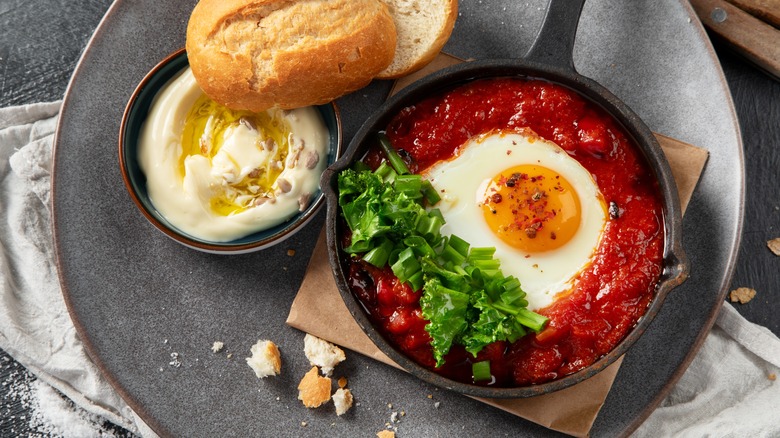
When enjoying shakshuka in Morocco, you will often experience a spicier version of this dish than perhaps elsewhere. This is owing to the addition of a condiment known as harissa paste. This chili paste is similar to many other hot sauces that you can find across the globe, like sriracha, sambal oelek, achaar, and gochujang. These are often added to lend some funky flavor and a dash of heat that helps to elevate any dish, especially something as simple as shakshuka.
Though any spicy condiment can be used, keep in mind that this isn't a place to test your tolerance for spicy foods. The heat in this case is intended to accentuate the other flavors of the dish, not mask them. This means you should use discernment when adding the spice of your choice.
Alternatively, you can also add heat by either tossing in dried or fresh chili peppers. Some of the best candidates for this include jalapeños, serranos, and chipotles in adobo sauce, which lend an added degree of smokiness that completely changes the underlying flavor of shakshuka and helps to deepen the savoriness of this dish.
6. Make shakshuka ratatouille-style
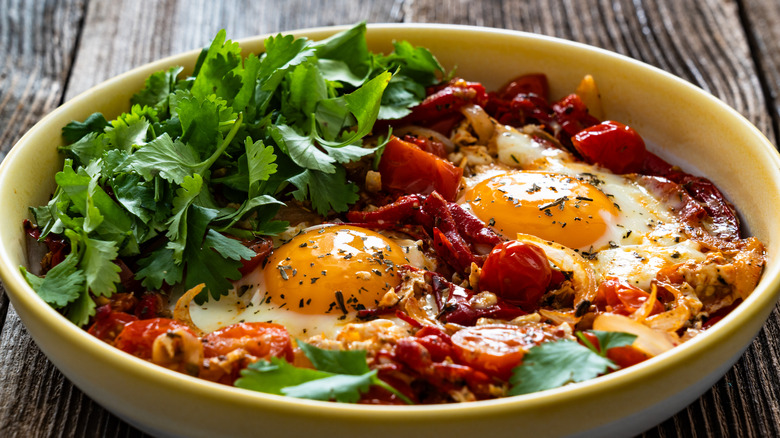
Another way to jazz up a basic shakshuka is to add vegetables to it. Though you could choose any vegetable you enjoy for this purpose, some feel more natural than others. One variation leans on a classic French dish called ratatouille. This stew from Provençe comes in various iterations, but it begins with some of the same basic elements as shakshuka, including tomatoes and peppers. It also features zucchini and eggplant and is seasoned with a classic herbes de Provençe blend. It is a less spicy and slightly chunkier variation of shakshuka that would be ideal to serve for lunch or dinner.
A similar recipe would be a play on an Italian caponata, which is a type of cooked vegetable salad that features eggplant, tomatoes, olives, and capers. It is a dish that is known for what Italians call an agrodolce or sweet and savory flavor profile that is both complex and will brighten up your taste buds. It lends itself to being transformed into shakshuka because the eggs help to meld these sweet and savory components beautifully.
Lastly, Moroccans produce a cooked vegetable salad or dip called Zeilook that would be the perfect spin on a more eggplant-heavy shakshuka. My favorite recipe begins by roasting the eggplant, tomatoes, peppers, and garlic and mashing these together with the seasonings before finishing it off on the stovetop. The blend is spicy, thick, and hearty, making it a perfect base for shakshuka because it is so scoopable.
7. Liven up shakshuka with legumes
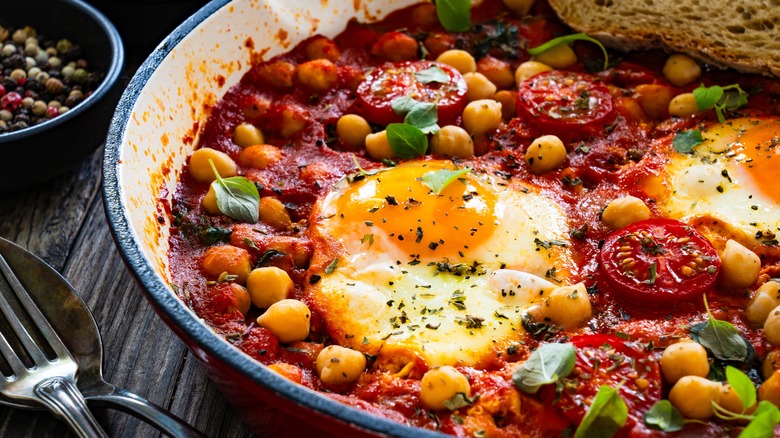
To boost the protein content of shakshuka without adding meat or dairy, consider taking a hint from many Mediterranean cultures and incorporate beans or legumes into the recipe. Among the gold standards in many countries surrounding the Mediterranean are chickpeas and lentils, but any type of bean or legume could conceivably be used, including white beans and fresh peas.
One need look no further than the popularity of hummus across North Africa and the Middle East to know that chickpeas are a big deal. They are not only delicious and versatile, but they are also nutritional powerhouses, loaded with fiber, protein, vitamins, and minerals. To incorporate chickpeas into shakshuka, you can either toss canned ones as is into the tomato base or stir a couple of tablespoons of hummus into it, which will give it a creamy texture. You can also garnish the finished shakshuka with roasted chickpeas, which provide a delightful, crunchy texture.
Lentils are another bedrock of the Mediterranean diet. Again, they are flavorful, versatile, and rich in many vitamins and minerals. Despite the fact that lentils cook quickly, they will not soften enough during the baking time your shakshuka needs to poach the eggs. So lentils should be added to the tomato base already prepared. When cooking the lentils, try doing so in seasoned vegetable or chicken broth. I recommend using the same seasonings that are used in the tomato base to ensure the lentils are adequately flavored before adding them to the shakshuka.
8. Hash it out with potatoes
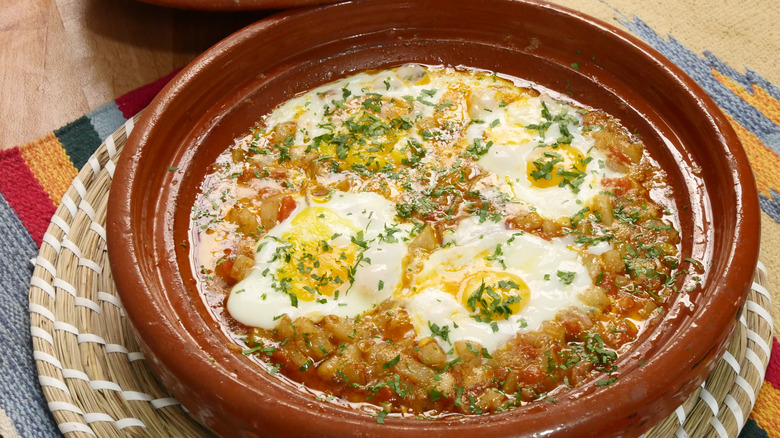
Hash browns or skillet potatoes are a fixture on many breakfast menus. Slightly crispy on the outside and fluffy on the inside, potatoes are the perfect comfort food. While shakshuka is pretty darn comforting as is, layering in some cooked hash browns or skillet potatoes can only make it better. Simply fry them up and place them at the bottom of the baking dish before adding the tomato base and the eggs, then bake the dish.
Another option is to swap regular potatoes with sweet potatoes. While these can also be prepared as a hash or fried in a skillet, a sweet potato mash can be an ideal nest for shakshuka to roost in. Mashed sweet potatoes are a dynamite leftover to repurpose for this dish because they lend a creaminess and an element of sweetness to counteract the acidity of the tomatoes and the richness of the runny egg yolks. When using whipped sweet potatoes, you can either spread them onto the baking dish as a foundation for the shakshuka or you can stir some of them into the tomato base, creating a luxurious sauce that is almost velvety in texture.
9. Give shakshuka a Tex-Mex twist
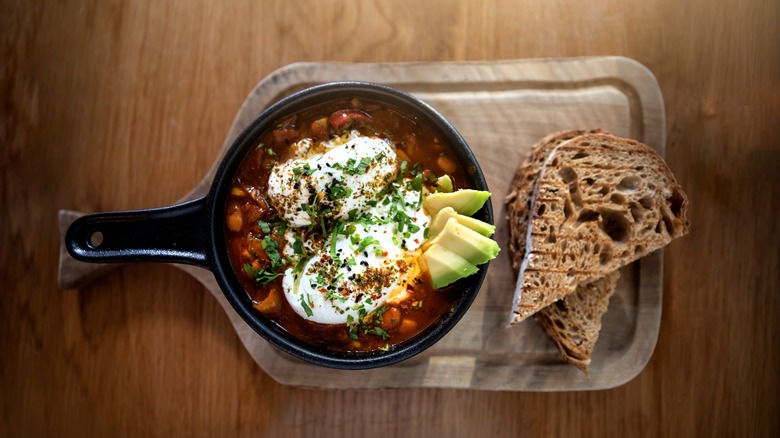
If you love nachos and Tex-Mex flavors, this suggestion is for you. Many of the spices used in a classic shakshuka are reminiscent of the flavors you might associate with a spicy salsa or pico de gallo, so it makes sense to lean into these similarities. Simply augment the tomato base with any of the ingredients you typically enjoy having on nachos, then top these with the eggs before baking the dish off.
Some of my favorite ingredients to use for a Tex-Mex-inspired shakshuka include fresh cilantro, black or refried beans, queso fresco or shredded pepper jack cheese, guacamole or freshly sliced avocado, black olives, and pickled jalapeños. I like to garnish the finished dish with a dollop of sour cream and a dash of salsa verde for some added creaminess and extra heat. Though shakshuka is typically served with hunks of bread, try serving this variation with warm corn or flour tortillas or crisp tortilla chips.
10. Bake shakshuka onto a crust

Though shakshuka is typically cooked and served in a cast iron skillet or similar baking dish, a version that will have pizza lovers drooling involves whipping it up on a crust. This not only eliminates the need to serve bread as an accompaniment to shakshuka, but it also makes a one-dish wonder that would be perfect for any meal of the day.
There are two ways to go about this. One is to purchase a pre-made pizza crust, like the ones from the Boboli or Stonefire brands. The other is to make a crust from scratch. This is rather simple to do and will yield a better result. Before spreading the tomato base onto the rolled-out crust and topping it with the eggs, make sure to rest it at room temperature before baking it. Skipping this step will result in a crust that is uneven and misshapen.
Another key to making the perfect shakshuka pizza is to turn your oven on as high as it will go. Baking pizza at a temperature that is too low is a common mistake that results in a soggy crust. This is especially true when you are using heavy, moist ingredients like the tomato base and eggs of a shakshuka recipe. When your oven is properly heated, the moisture will evaporate more quickly, resulting in a crisp crust and perfectly poached eggs.