

7 Creative Ways To Prepare And Eat Sardines
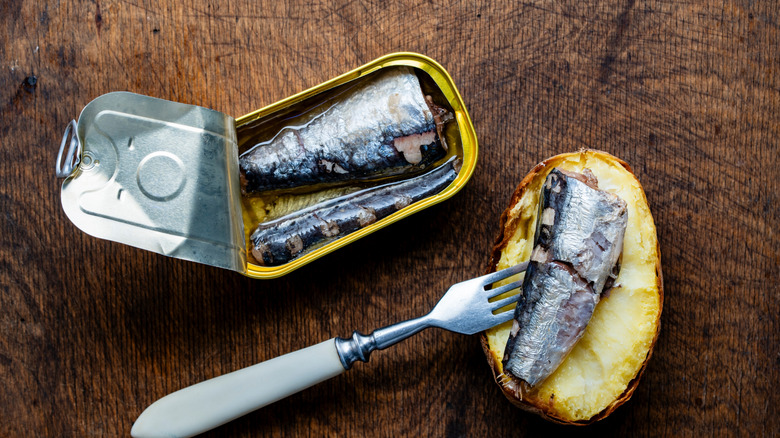
There are many reasons to incorporate sardines into your meals. They're flavorful, versatile, full of nutrients, and — if you find the blue Marine Stewardship Council (MSC) label on the pack — available from sustainable sources. There are a lot of ways to eat tinned sardines and other fish. The most basic is to just peel back the lid and enjoy them straight from the can, but there are plenty of creative takes that make for a meal or snack with a little oomph. That goes double if you're able to get your hands on the fresh version, though canned is much more common in the United States.
Tinned sardines have a reputation among some for tasting too fishy, but plenty find the fishiness level perfect, especially if you buy the right ones (there are canned fish brands to buy and ones to avoid). Generally, sardines are full of savory umami notes, with an unctuously rich mouthfeel due to their status as an oily fish, which they share with the likes of fan favorites like salmon and mackerel. Sometimes they're salty or smoky, and, since sardines can be eaten bones and all, they can have a little crunch to them that (in our opinion) is easy to grow fond of.
There are also nutritional benefits. Sardines are filled with vitamin D, calcium, and omega-3 fatty acids (2 grams per 3-ounce serving of fish), so whatever creative culinary endeavors you grace with these little fishies, you know you're getting several doses of good stuff. Tacos, curries, or a breakfast egg dish are just several out-of-the-box (or tin) uses for sardines that you need to try today.
1. Cast them as the star of fish tacos
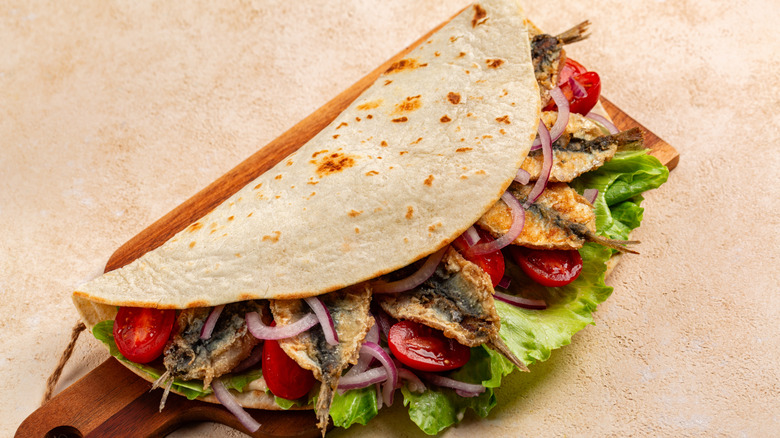
Fans of the fish taco will be happy to know that sardines are another perfect protein for this Cali-Mex specialty, capable of holding its own with the ubiquitous mahi-mahi, cod, or tilapia. The convenience of a canned fish upgrade for tacos means you can either add them straight from the tin to your tacos, or crisp them up by cooking them beforehand, lending extra texture and warmth to the dish.
If you're curious about cooking them, one simple method is to fry them gently with olive oil and finely chopped garlic until they're lightly browned. Or, take advantage of the fact that the air fryer is canned sardines' best friend. A short stint in this handy appliance — just under 10 minutes — also gets them flavorful and crispy, especially if you sprinkle them with blackening spices beforehand. Add whatever you want to your tacos — just some mayo or ranch dressing, if you're feeling simple, but fish taco classics like mango salsa or coleslaw add a tangy, sweet textural element to the dish as well.
2. Fill your belly at breakfast with sardines and eggs
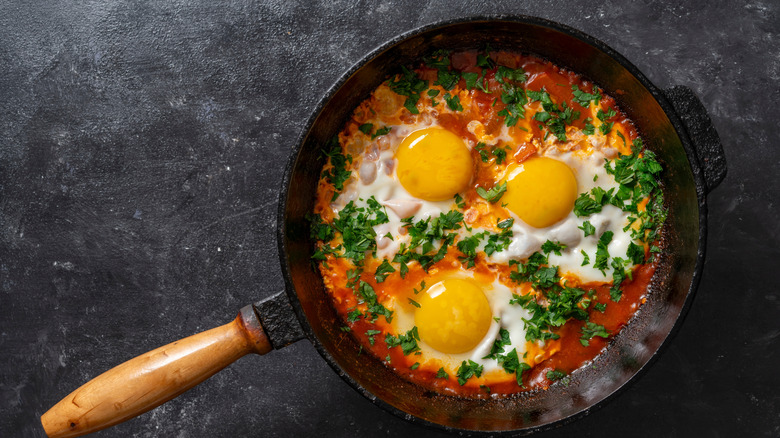
Cooking up a batch of fisherman's eggs is a great way to use fish at breakfast – a meal Americans don't typically associate with the bounty of the sea (unless it's a shrimp omelet, maybe). Unlike dishes such as fish tacos, however, where you'd bring in sardines as a sub for the traditional fresh white fish, fisherman's eggs are meant to include sardines, specifically. A fisherman of years past, intent on fueling the day's labor with this protein-rich dish, would likely have opted for the fresh over the tinned variety, but this version works just as well.
In terms of preparation, a basic fisherman's eggs can't be any simpler; the key idea is that you're baking sardines and eggs with aromatics and a veggie or two until the whites are set. One method is to start off with your aromatics, briefly sautéing onions or shallots with garlic in a cast iron pan along with red bell pepper to unlock the alliums' taste and aroma. Stir in chopped sardines, crack the eggs over it all, and bake.
You can also just start by pre-heating your cast iron pan in the oven while you mix together your sardines, aromatics, and any veggies you want (tomatoes and mushrooms are other excellent additions) in a big bowl. Bake this mixture in your skillet for roughly 10 minutes, add your eggs to it, and bake another 10 minutes or so. No matter how you made your fisherman's eggs, finishing with fresh, peppery arugula is the chef's kiss.
3. Get your stuffing on
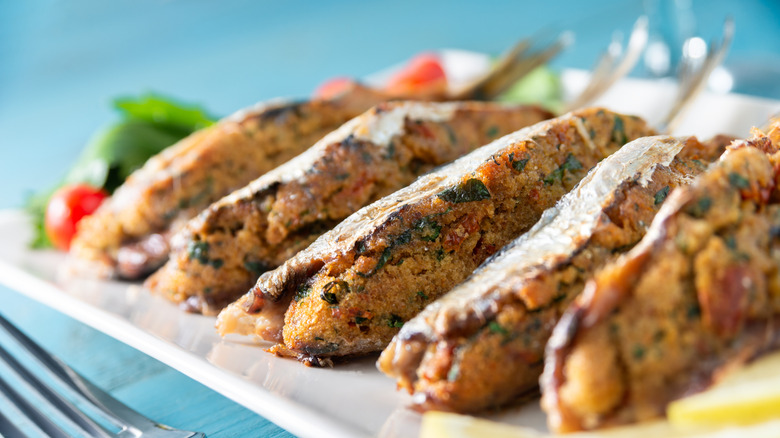
If you're a fan of stuffed bell peppers, mushrooms, and the like, you're going to enjoy this creative sardine take. The fish goes well in pretty much any stuffable vegetable, and an array of potential accompaniments allows you to pinpoint the exact flavor experience you're looking for. This could range from a simple, hearty approach with brown rice, smoked paprika, and other basic spices, to a more decidedly Mediterranean affair with dried cumin, thyme, and oregano, alongside an herby yogurt sauce. You'll find that brighter, more acidic ingredients pair especially well with sardines — think capers, olives, or pickled jalapeños for a kick. For cheeses, tangy cream cheese or goat cheese (chèvre) are typical pairings.
If opting for sardine-stuffed mushrooms, go for the classic baby bellas (large creminis), stems removed to form a cavity. For bell peppers, any color will do, but the mild sweetness of the red variety is a distinctive complement to the strong umami notes of the sardines.
You can also take it the other direction and stuff sardines themselves, though you'll want fresh fish, cleaned and butterflied, rather than tinned for this. For a classic Sicilian sarde e beccafico (sardine roulades), roll the sardines around a stuffing of breadcrumbs, raisins or currants, and pine nuts. For extra umami, include chopped anchovies. Minced garlic would be appropriate as well, and you could top your sardine rolls with bay leaves to add depth while baking.
4. Enjoy beans and sardines (beans and 'dines, if you will)
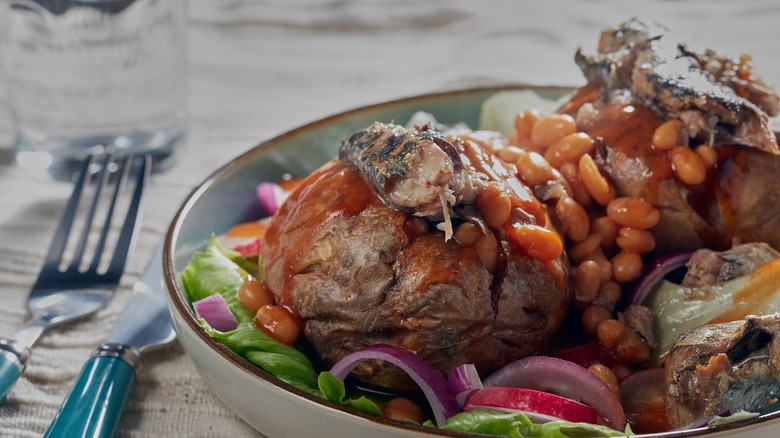
This pairing uses two Mediterranean staples to create a snack or meal full of protein, fiber, flavor, and texture. When combining beans and sardines, though, there's no need to hang out in the Mediterranean flavorscape (though we do find it a fitting treatment for beans and 'dines). In fact, you don't even really need to do much cooking or preparation beyond cracking open their tins and getting busy with your fork. However, for a little more effort, you could also upgrade a steamy baked potato with baked beans and sardines for a simple, filling, rustic dinner. There are even greater rewards in store if you're willing to do some chopping, zesting, and so on.
Whip up a bright, cold salad featuring white beans (cannellinis), chopped sardines in olive oil (no need to drain these), and veggies of your choice. Toss with a zesty, acidic dressing, like a vinaigrette or something with a Dijon mustard base. Alternatively, for a step up in time and effort, combine sautéed kale or other greens with brothy white beans, olives, and just a touch of lemon and its zest for a hot, satisfying meal.
Finally, you could always honor your favorite bean soup recipe by including sardines — go for a broth-based one, not a creamy one. Play around with fresh herbs and veggies to suit your mood. Stick with classics like oregano or thyme, or go with fennel for an intriguing, licorice-like punch. Mint, believe it or not, is sometimes used with sardines in Mediterranean cuisine, so you might try it as a garnish in a lemony, sardine-y, white-bean soup.
5. Dress up a grilled cheese sandwich with sardines
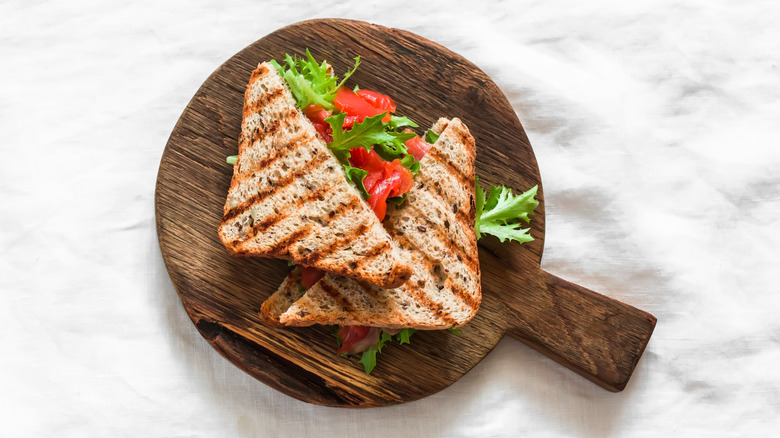
In case your first thought here is, "Really? Fish on grilled cheese?", we turn your attention to the tuna melt — a cheesy, melty, fishy delight. So, with that delicious example supporting this concept, let's discuss what sardines bring to the humble grilled cheese. You might consider a sardine grilled cheese an elevated version of the tuna melt. The sardines' richness far surpasses that of tuna; tuna is low in fat (especially if you buy it water-packed), while sardines are high in it. That richness can complement the fatty flavors in the cheese, as can the fish's savory, umami notes.
When choosing ingredients for a sardine grilled cheese, know that sharper cheeses like cheddar and Pecorino can be just as successful as milder ones like cream cheese or Swiss. That is, you can do a messy, melty, gooey, smokehouse-cheddar affair with onions, pickles, tomatoes, and such, or you can keep it low-key and subtle, perhaps with just a nutty Gruyère, some spinach, and a few capers. Sourdough is a popular bread for sardine grilled cheese sandwiches, but whatever bread you like for a grilled cheese can work (but maybe skip anything notably sweet).
6. Form sardines into patties to use in cute, fish-based sliders
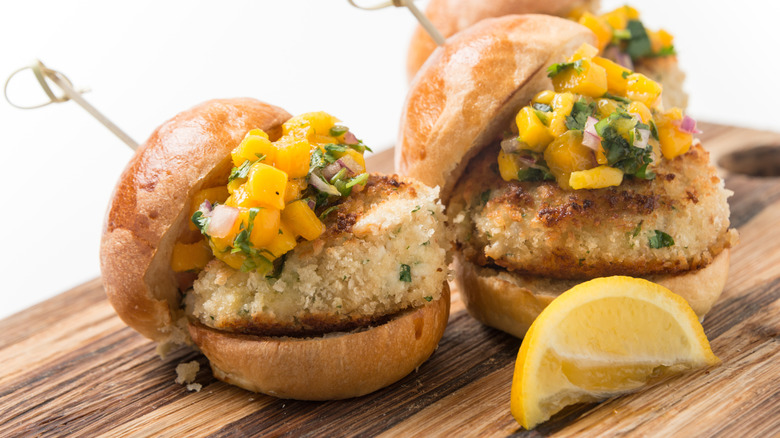
Though beef patties are the usual protein in these cute mini-burgers, sliders can take any form, including fish-based versions. You might dress them like a classic burger, or keep them fish-sandwich style with just some tartar sauce and pickles. But Bang Bang sauce and slaw are a fitting treatment, as well, as is a simpler take with roasted red peppers and an herby yogurt sauce.
For fishy sliders, your best bet in terms of texture and flavor is to get your 'dines into patty form. This offers a robust mouthfeel and a nicely concentrated hit of deliciousness. Making them isn't all that different from forming any meat patty: Mash or flake the sardines, then add your aromatics, seasonings, breadcrumbs, and eggs, mixing this into a paste. Form the patties and chill them for a half hour or so before baking them for around 20 minutes or frying them for a couple of minutes per side. If, after baking, they don't look as done as you like, you can always pop them under the broiler until they're the perfect golden brown.
7. Whip up a sardine curry
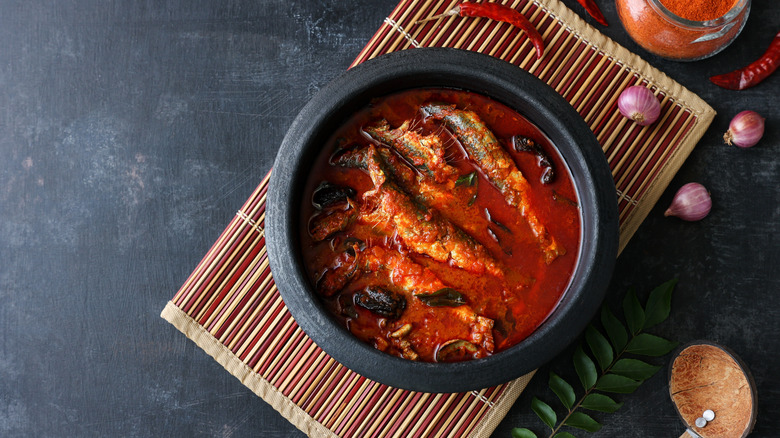
Folks in the coastal state of Kerala, India might not call a sardine curry creative (it's an established dish there), but we don't typically see this specific pairing in the United States. Fresh sardines, one staple of Kerala's economy, are traditional in the dish, but canned ones work as well. If you've cooked Indian food before, you likely have some or all of the spices and aromatics needed to achieve this delectable, tangy, spicy dish; otherwise, if you love fish and curry, it's worth a trip to the store for these.
At the minimum, you'll need red chili powder for its color and vibrant flavor. You'll also need nutty, citrusy coriander powder and turmeric, an Indian staple. Alliums are key, with garlic and onions or shallots offering a pungent foundation, and ginger (or ginger and garlic paste) bringing a little heat and a subtle sweetness. Mustard seeds and curry leaves round out the list of must-have seasonings.
Ripe tomato is a common ingredient in many versions of this curry, but you could also make it without one; the same goes for coconut milk, coconut oil, and tamarind, a distinctively sour, tangy, fruity ingredient also common to Thai cuisine. Green chilies are another potential add-in that will bring heat to the dish. It's worth experimenting with this sardine curry to see which components bring your taste buds the most delight.