

The Simple Ingredient That Ensures Your Tofu Actually Gets Crispy
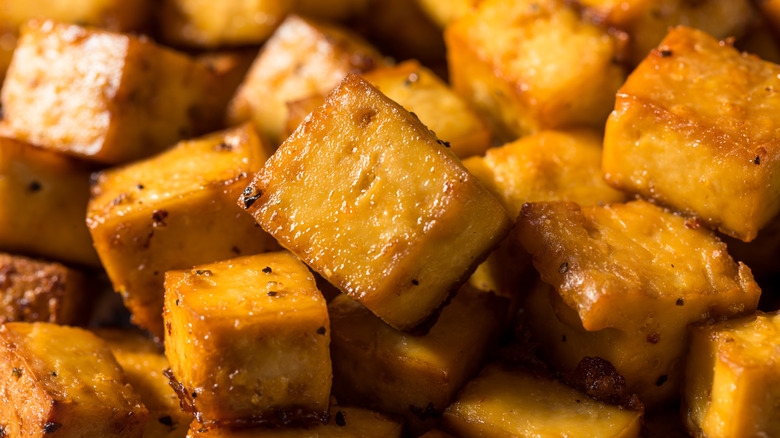
Outside of the plant-based food space, tofu tends to have an undeserved reputation of being boring and unappetizing. If that sounds like something you can relate to, chances are you're preparing it wrong. Tofu is a multifaceted source of plant protein that can be transformed into a replacement for chicken nuggets, scrambled eggs, salmon, and so much more. This versatile, nutritious, low-calorie, soy-based protein has been an integral part of the culinary history of East and Southeast Asian cuisines.
If you've struggled with cooking tofu at home — especially when it comes to developing that satisfying, golden, crispy exterior — there is one handy pantry staple you ought to have on hand to level up your tofu game. The key is to use cornstarch. Not only does it come in clutch to help thicken gravy without using flour or to ensure you get the crispiest serving of roasted vegetables, but it is also the trick to making restaurant-quality crispy tofu in your kitchen.
All you need to do is cut the tofu into half-inch pieces, coat them thoroughly in cornstarch, and pan-fry them in a slightly oiled pan until both sides have developed the desired golden-brown crust. For added oomph, you can even combine cornstarch with a homemade spice mix to enhance the flavors of every bite. Better yet, you can try this cornstarch tip with any type of tofu that suits your taste. Although firmer varieties are great if you prefer a nice chewy bite, soft and silken tofu are fantastic for those who enjoy the contrast between a crispy exterior and creamy interior.
How does cornstarch work?
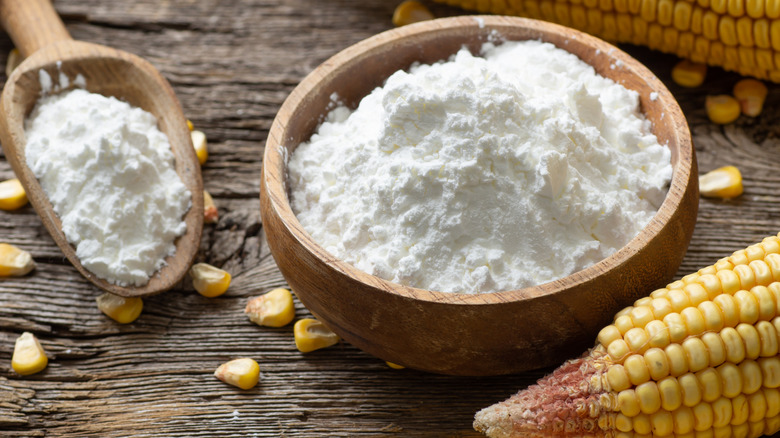
Cornstarch is a resourceful ingredient with many hidden talents, some of which transcend its utility in the kitchen — including being your ally as a surprising kitchen cleaner. In the culinary world, cornstarch functions in two seemingly disparate ways: To help thicken sauces, and to get certain foods nice and crispy. So, how does this unassuming powdery substance have the power to transform the texture of your dish? For starters, cornstarch contains two different types of sugar molecules called polysaccharides. When heated, these cause a breakdown of starch molecules and loss of moisture. As the water makes contact with the starch, a process called gelatinization takes place — this is what is responsible for cornstarch's varied culinary properties.
The two main polysaccharides that facilitate cornstarch's ability to thicken and crisp are amylose and amylopectin. Amylose is a linear chain of glucose molecules. Due to the aforementioned gelatinization of starches, its stackable structure forms a network that helps achieve the crunchy coating that we crave with foods like a crispy ginger-glazed tofu. While other flours and starches contain amylose, cornstarch has a significantly higher percentage — roughly 30% by mass — making it most suitable for crispy foods. On the other hand, amylopectin is a highly-branched molecule. Because of its structure, it helps to make mixtures more viscous and less runny. So, if you're looking to thicken up a sticky sesame sauce to enjoy alongside your crispy tofu, it's the branched amylopectin in cornstarch that's coming to the aid.