

Avoid Ordering These Overpriced Restaurant Menu Items That Are Rarely Worth It
Lately, I'm sure you've heard many people uttering the phrase "in this economy" in response to the rising cost of goods and services. This includes experiences like going to a restaurant. For some, going out to eat is a luxury or maybe even a lifestyle, but for many, the frequency of dining out may be slowing these days.
Restaurants can, of course, offer indelible experiences — something Carmy, the chef character from FX Networks' "The Bear," tries to articulate in season 4's opening scene when he says, "Restaurants are special places, right? People go to restaurants to be taken care of, right? They go to restaurants to celebrate, to relax, to not have to think about anything else for a minute. People go to restaurants to feel less lonely." It sums up why many restaurateurs press on, despite rising costs, in the hopes of soothing and nourishing their guests.
Sometimes, though, it all goes wrong for restaurant-goers. You wind up spending tons on a meal and regret it, wishing you hadn't ordered that insanely expensive edamame side at your fave sushi spot. Appetizers, certain drinks, and specific mains can drive up your bill and may not be worth their price. To help you maximize your next night out for dinner and keep your bill relatively low, we've compiled a list of restaurant foods we think are rarely worth ordering.
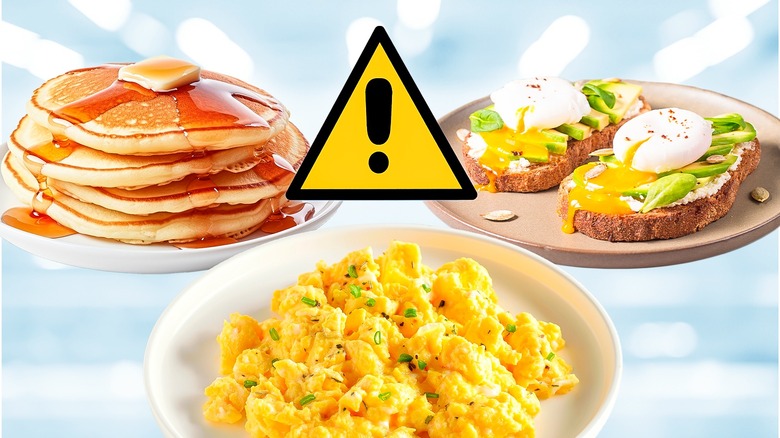
Egg dishes at brunch
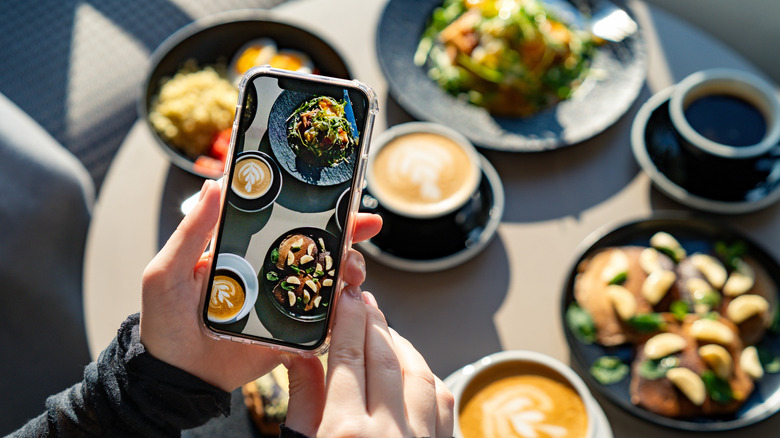
Going out for brunch is fun and always a great excuse to get together with friends on a weekend. It can be a nice way to spend a few hours while enjoying some Instagram-worthy plates of food, but if you knew the true value of most egg dishes versus what it costs to make at home, the mark-up might be hard to swallow. Of course, we all know restaurants source their ingredients wholesale while factoring in food waste and other costs to remain profitable. However, egg dishes really push the margins in their favor.
Dishes like scrambled eggs, fried eggs, frittatas, and — if you're adventurous, eggs Benedict — can all be made at home much cheaper. These menu items are rarely going to wow you or remain on your mind days later — or hours later, even — like an epic meal might. If you find yourself at a brunch, go for something else that would be hard — and more expensive — to replicate at home. There are lots of easy brunches you can do at home as well if you're planning on hosting soon and don't feel like footing a steep restaurant bill for overpriced eggs.
Avocado toast
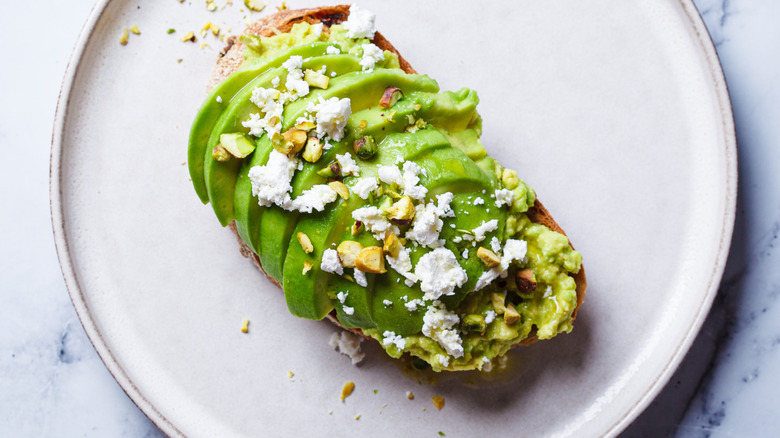
Thought to have originated in Australia, the gussied-up sourdough brunch staple known as avocado toast was one of the first foods to go viral in the early days of Instagram. Back then, it was not uncommon to see countless bright green-smeared toasts show up on your feed. It was a more innocent time: Instagram was ad-free and full of sunset pics, President Obama was in the White House, and Anthony Bourdain was still around dishing out hot takes.
Of course, avocado toast is still a thing, but the trend factor has died down while the prices remain obnoxiously high. A slice of decent sourdough, mashed avocado, a pinch of flaky sea salt, microgreens and pistachios for garnish — and maybe an egg on top — is rarely worth $20. This becomes even more apparent when recreating avocado toast at home, where you can get away with something restaurant-quality at a fraction of the cost. If you're obsessed with this dish and have a decent amount of disposable income, go for it. However, we think this menu item is rarely worth it.
Side salads
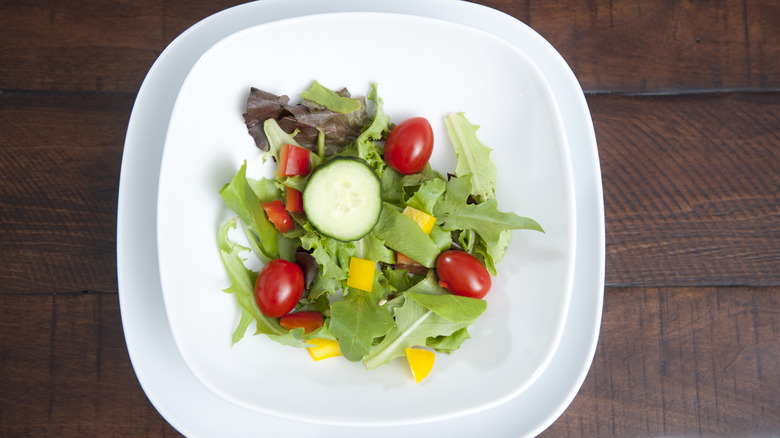
For some foodies, salads are a non-negotiable must-have for dinner, where greens quotas are met and a sense of healthiness is there to offset indulgent main courses. Restaurant salads can taste better than those that we make at home, and also act as a safety net for vegans who may only have a few good options. However, if you really think about the cost of a head of romaine lettuce at the grocery store, combined with a few tablespoons of dressing, a basic restaurant salad can be made quite cheaply.
Even if a restaurant's vinaigrette is better than your go-to, that $16 garden salad with the fancy croutons actually costs very little. But it could serve as a buffer to other low-margin dishes, helping a restaurant stay profitable. After all, unlike large chain restaurants that rake in millions, many urban restaurants struggle to stay afloat financially. If you want to support your favorite local bistro and are eating clean these days, go ahead and grab that side salad. But we think they are, on the whole, rarely worth it.
Edamame
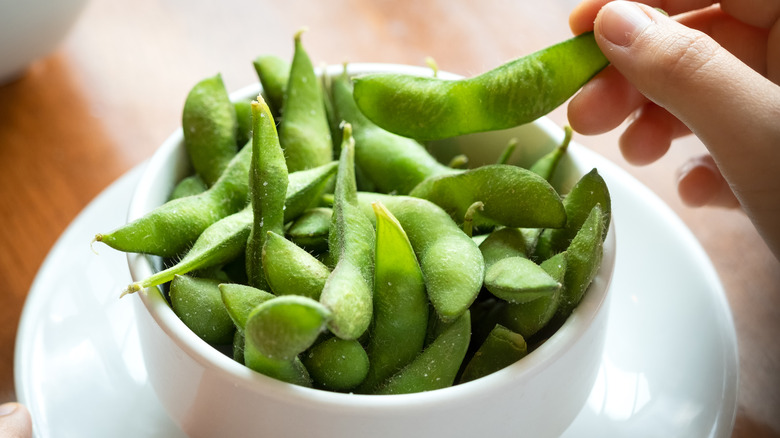
If you're out for sushi and want to have some variation besides rice and delicious seafood prepared gorgeously, then you might find yourself ordering some sides. Edamame is a Japanese restaurant side staple — you'd be hard pressed to find a spot that doesn't offer these earthy yet fresh steamed and salted beans. If you're unfamiliar, edamame is a specific type of immature soy bean in its pod, often boiled or steamed gently, to be eaten from its shell by hand. It's a fun and healthy side to have during a sushi dinner, typically eaten as an appetizer.
However, we all know that sushi dinners aren't cheap, and when you factor in multiple rolls, some crispy tempura, alcohol, dessert — and that edamame appetizer that your friend insisted on — the bill can skyrocket. Edamame is inexpensive when sourced at your favourite grocery store's frozen aisle, coming in at $2.29 for a 12-oz bag of Whole Foods Market brand beans. As far as restaurants are concerned, edamame beans are low effort and easy to execute, but as far as dinners are concerned, they're rarely worth it.
Bread
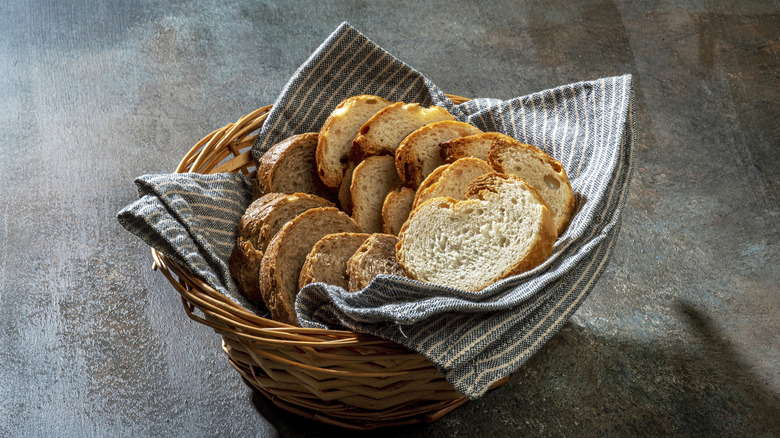
Unless the restaurant in question is offering free bread, ordering some on the side to help sop up that residual sauce can be pricey. And while many high-quality restaurants go out of their way to source really tasty bread — or, if you're lucky, bake it in-house — it's nothing more than flour, salt, and water. Sure, baking a good loaf of bread is an art, per se, but the actual cost of the ingredients is incredibly cheap.
At the renowned Four Horsemen restaurant and wine bar in Brooklyn, with a single Michelin star to its name, a side of bread with butter is $10. That's the cost of a whole loaf at many bakeries, and if you ordered two of them, all that bread can start to eat into your budget fast! Skip the bread and spend your hard-earned money on more substantial menu items that are actually worth it.
Baked potato
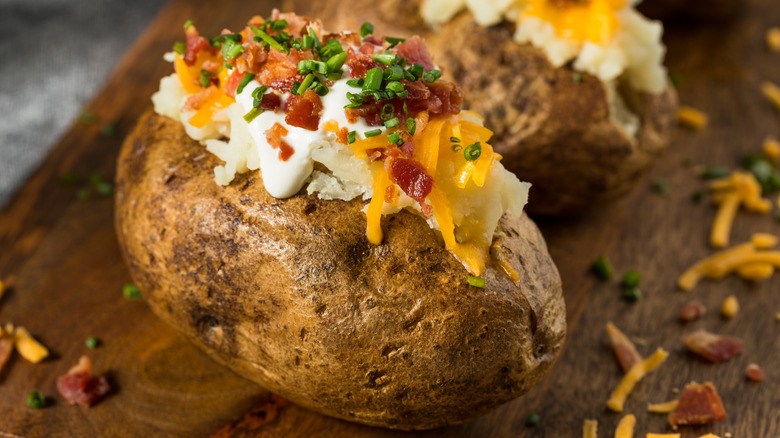
You may be asking yourself, "Who orders a baked potato at a restaurant?", but we assure you, many do. It's a staple at those old-school steak spots, also making appearances in big chain menus under the "sides" section. Perhaps considered an appetizer, these little carb bombs can become almost a meal in and of themselves when fully dressed with all the fixings. But at their base level, with just some butter, they fall short of what could be considered a worthwhile restaurant purchase.
Beyond that, factoring in the cost of a single potato at less than $0.50, the idea of paying around $10 for one at a steakhouse seems silly. They are not complicated dishes that can only be learned in culinary school; quite the opposite, they're one of the easiest imaginable. Add to the fact that Wendy's still makes one for $2.49, it's pretty hard to think about paying double digits for a tuber at a steakhouse. Considering all of this, we say skip restaurant baked potatoes.
Chips and salsa
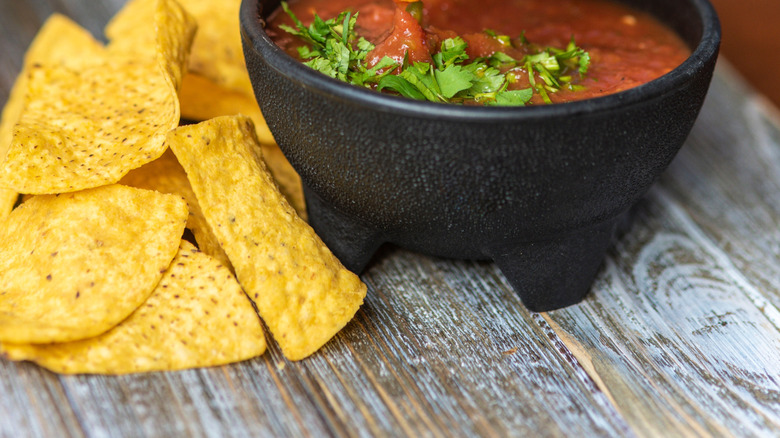
It doesn't get any more classic than chips and salsa as an appetizer in casual restaurants, especially those with a Tex-Mex flair. If you're lucky to have a stellar Mexican restaurant in your city or town, you might have access to complimentary chips and salsa; however, restaurants and bars may be phasing out free chips in this economy, and who could blame them?
The actual cost of tortilla chips and tomato-based salsas is low for restaurants; heck, they're even cheap for consumers at full retail price. A nice jar of salsa and your favorite chip brand won't break the bank, and if you're a savvy home cook like we know many of our readers are, making your own can be even better. Ordering this in a restaurant will only jack up your bill in the end. The bottom line is that whether the chips are fried fresh or the salsa is made hours before, this side menu item is rarely, if ever, worth it.
Side of rice
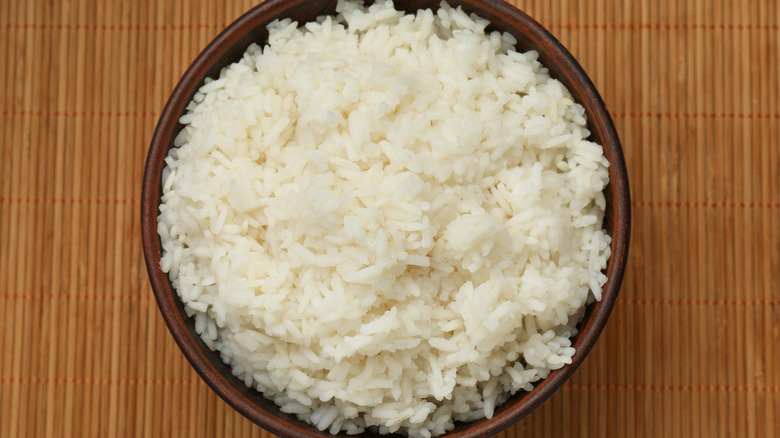
When out at your favorite Asian restaurant, whether it's a banging Szechuan spot, hip sushi hole-in-the-wall, Thai take-out, or Korean BBQ, a side of rice is quite common. Similar to a side of bread, it can serve to soak up all of those mouth-watering sauces, and goes so well with proteins like chicken and pork.
Because it costs restaurants so little, they send out heaping servings of rice, which rarely get finished because rice is quite filling on its own. So you end up paying quite a bit for a half-eaten bowl of rice that likely cost the restaurant pennies. Sure, it's not a cost-prohibitive side dish, but more often than not, it seems to be unnecessary or maybe even wasteful, especially at big dinners with multiple mains. White rice is also so easy to replicate at home for most people, meaning you're not paying for access to a chef's masterful skill with this dish. We think it's rarely worth it!
Tea
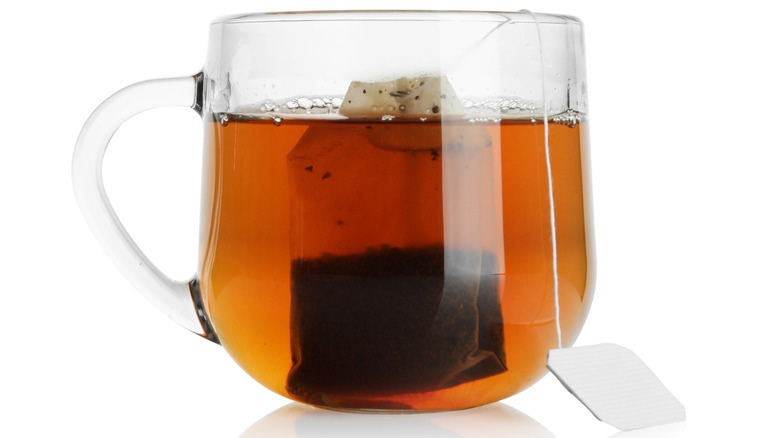
After a nice long meal, many like to finish with dessert, and of course, a hot beverage. Those who are caffeine-adverse might order a herbal tea after eating to settle the stomach, before attempting that food coma waddle to the car. Tempting though it may be, paying $5 for a cup of tea at a restaurant verges on negligence. Because if you think about it, a cup of tea is just flavoured hot water, usually a forgettable drink.
The cost to a restaurant is also very low; there's essentially no labor involved, and when sourced from a wholesale supplier, tea costs pennies per bag. Unlike making coffee, which requires getting filters out and grinding beans, starting up a machine, and waiting for it to brew the whole pot, tea couldn't be easier. But that extra $5 on your bill is unquestionably not getting you the highest quality, freshly harvested, complex, first flush Darjeeling. It's probably a low-quality, tasteless, commodity-grade, grocery store-style tea bag. Bleh. Unless you're nursing a cold, this one is rarely, if ever, worth it.
Basic pasta
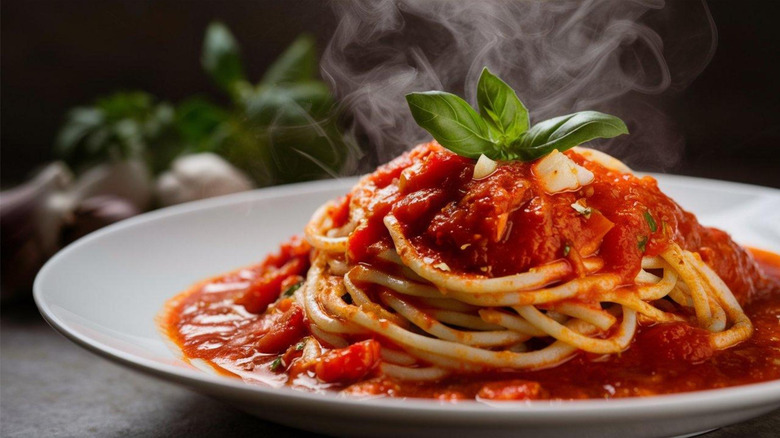
Making pasta from scratch is a special thing. It's one of those daunting recipes that scares home cooks. Meanwhile, progressive restaurants stateside try to go toe-to-toe with the calibre of pasta found in Italy, leaving guests satiated and maybe inspired to try their hand at it. The world of fresh pasta encompasses many styles, with stuffed pastas like tortellini and agnolotti, made with that yellow-ish dough and fillings to die for, usually being worth restaurant prices.
But basic pastas of, say, dried spaghetti with a simple tomato sauce and some basil, cacio e pepe, or mac and cheese, are a whole other thing. Unless you're dining at a renowned Italian restaurant, these types of pasta are hastily whipped up by line cooks, without much fanfare, and with ingredients found at any old market. Unlike those aforementioned hand-made fresh pastas, these types of appetizer or side dish pastas are not. What's more, they can fetch a pretty penny, driving up the total cost of a night out. They also have very little protein to fill you up, but they will bloat your bill. We think basic pastas are rarely worth it.
Grilled cheese
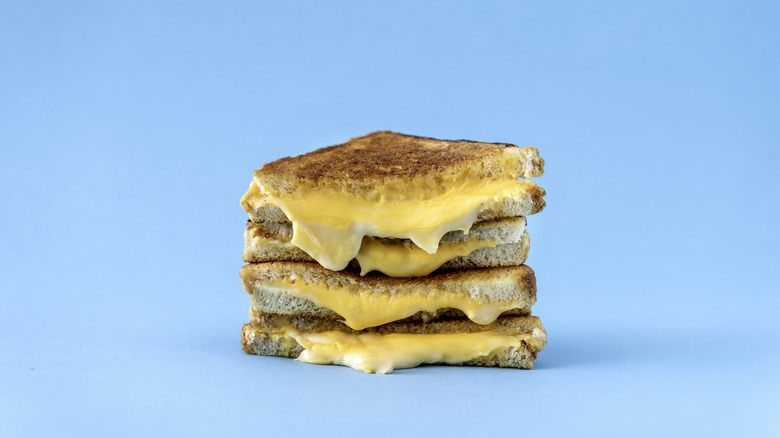
Grilled cheese is the ultimate comfort food and one of the first recipes many teenagers master. It's an open canvas, allowing for fun experimentation with unique condiments, different cheeses, and even swapping butter for mayo. But when out for lunch, unless you're getting a super deluxe, triple cheese between two thick slices of premium sourdough grilled cheese, you're probably paying too much.
More often than not, cafes and run-of-the-mill restaurants use cheap, tasteless white bread and Kraft singles — which is fine — for their grilled cheese option. But paying double-digit prices for this type of sandwich is rarely worth it. With a trip to your local bakery and cheesemonger, you can easily whip up a grilled cheese that destroys most run-of-the-mill versions available at local cafes — ones that are worth documenting on social media — making your friends jealous with epic cheese pulls. Unless you're out in the world and you're starving, avoid this often mediocre menu item.
Sparkling water
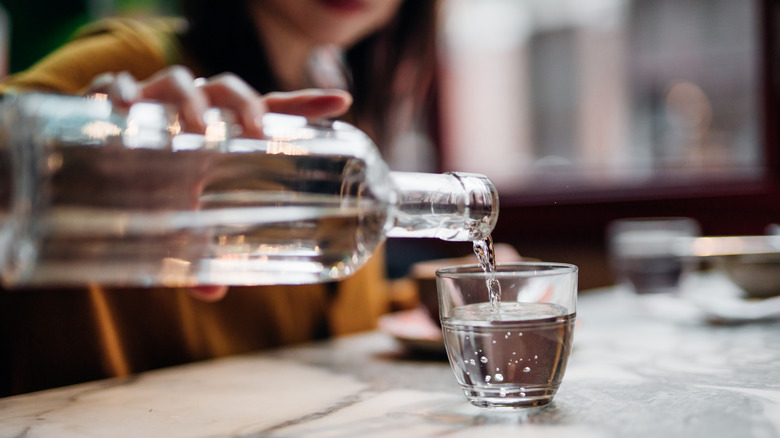
We've all been there: you're at a nice new restaurant, getting settled while peering at menus, and your server comes over to ask about the water situation, tempting you with a bottle of sparkling water. The fancier cousin to still water, a nice mineral water is always nice to have with a meal, but unless it's on the house, paying restaurant prices for a 750ml bottle of sparkling water can often be a regrettable choice. Reddit users mention 300% markups on bottles of sparkling water, which can bring the price to around $7 in some cases, whereas the same bottles would typically cost a few dollars at a supermarket.
The simple fact of the matter is that it's an easy item to gouge customers on, as a lengthy dinner often entails multiple bottles, with servers sometimes gently pushing you to order more. As such, sparkling water is just another easy way to shift the balance of your check towards a costly night out. Unless you simply can't fathom having dinner without some bubbly imported mineral water, we think you should skip it and get tap water.
Pancakes
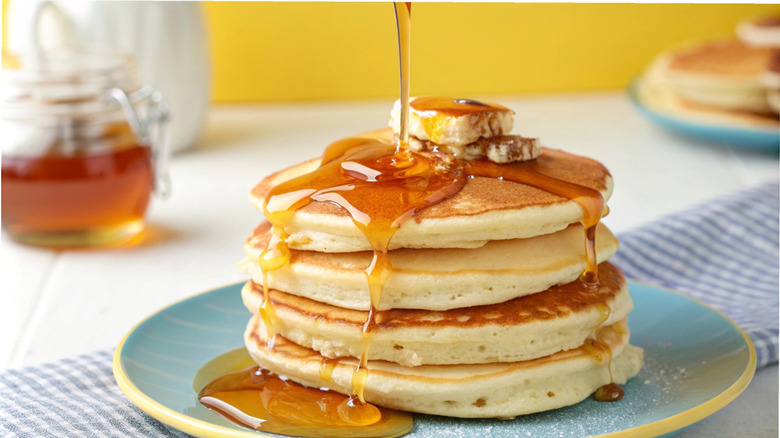
Pancakes are a classic and comforting breakfast choice. Served at many diners and breakfast restaurants, they provide a filling and reliable carb-forward breakfast, easily fuelling you until lunch. But if you factor in the cost of the ingredients to make this dish — a pancake mix, water, salt, and eggs — it runs dangerously close to too expensive for what it is. This gets compounded by the low effort and minimal labor involved for line cooks, requiring mere minutes to whip up.
Some brunch spots will try to lure you in with menu pictures of massive pancake stacks, covered in fresh fruit and pats of melting butter. They also look so enticing. But unless you're getting those fancy Japanese soufflé pancakes, which require some finesse and skill, most of the time, standard restaurant pancakes are rarely worth it. We say skip these and get something more hearty, with better value.
Chicken wings
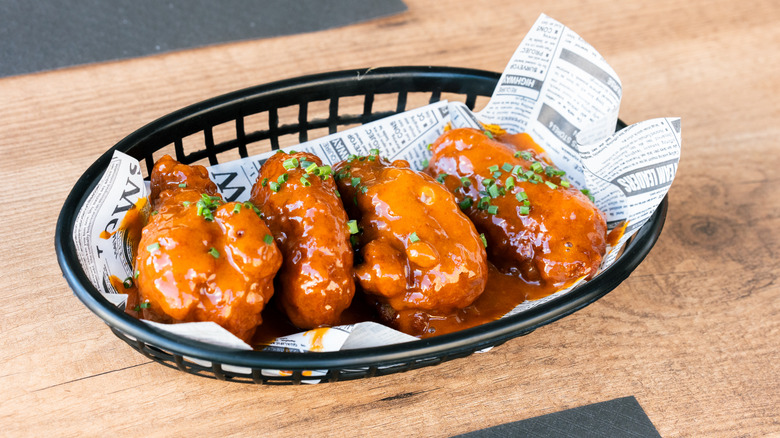
Chicken wings are a quintessential bar food that shapeshift between a tasty, quick snack and a full-blown meal. They are also a carrier of hot sauces, acting as a vehicle for every type under the sun, and the theme behind First We Feast's wildly popular "Hot Ones" show. Who doesn't love a chicken wing? But, unless you have a bar or restaurant in your neighborhood with a wildly cheap wing night, ordering a basket of them is usually pretty lacklustre and can be pricey for what you get.
Many wings are doused in basic, uninspired hot sauces, leaving your hands greasy and wallet lighter for it. Considering how cheap they are at the supermarket and how easy they are to make at home, we think wings are rarely worth full restaurant prices. Grab a bottle of artisanal hot sauce and a giant pack of frozen wings from Costco, and save your hard-earned money.
Alcohol
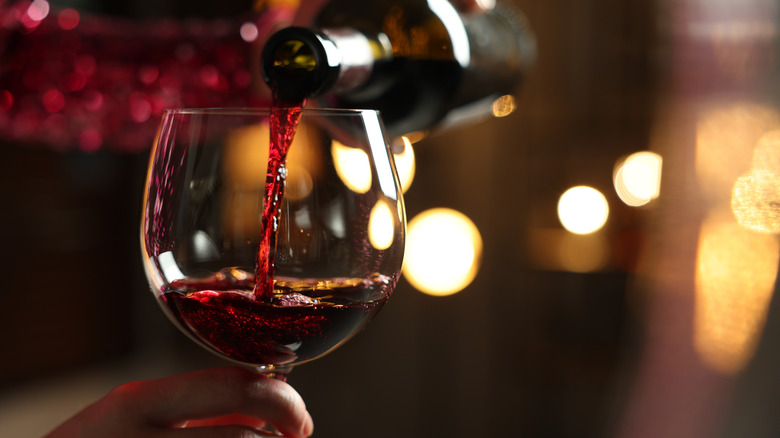
This one might seem obvious, but the markup on booze in most restaurants borders on absurd. Just one glass of wine might cost the same as a whole bottle from a store, and adding two or three drinks to your bill can blow your budget up fast. This gets tricky considering the more you have, the less inhibited you become, allowing servers to tempt you with another glass. Fancy cocktails and craft beers equally entice, and certain drinks almost go hand-in-hand with some cuisines — a Corona with tacos or an Asahi with sushi just makes sense.
And sure, you're also paying for the experience of being out — this is part of the reason why many of us go to restaurants in the first place. But unless you're going out to celebrate a very special occasion, or you've had the day from hell and simply feel like indulging, we think most restaurant drinks can tend towards being regrettable purchases.
Soda
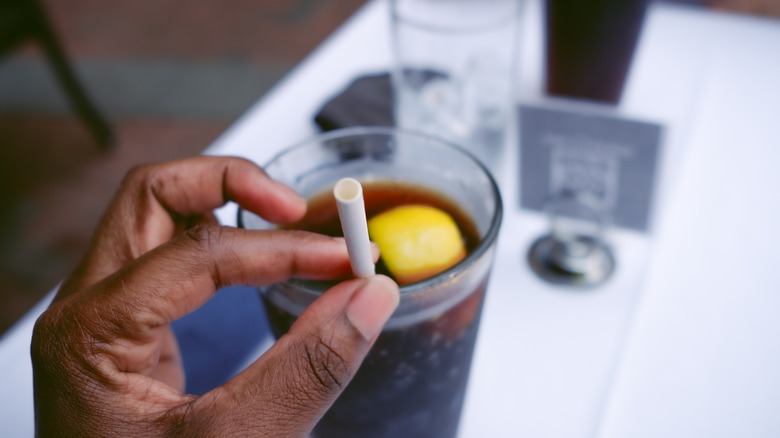
The price of a Diet Coke in a restaurant isn't going to cause you to go bankrupt, and for many, it's not even a cost consideration when out for dinner. Ordering a soda is also a de facto move to appease children, or a no-brainer option for those who don't drink alcohol. It's ubiquitous, refreshing, and helps wash down bites of a meal. Ordering soda may even come with free refills, further justifying this fizzy drink.
But if you think about what you're getting — a concentrated sugary syrup, diluted with water — it's really nothing special. And unless you're grabbing a diet version, all of that sugar and corn syrup is just empty calories. Barring a Pepsi addiction, casually ordering a few sodas could actually push what should have been an economical and easy lunch over the edge. We say stick to water and save your money, as fountain soda in restaurants is rarely worth it.