

The Affordable Alternative For Expensive Caviar In A Pinch
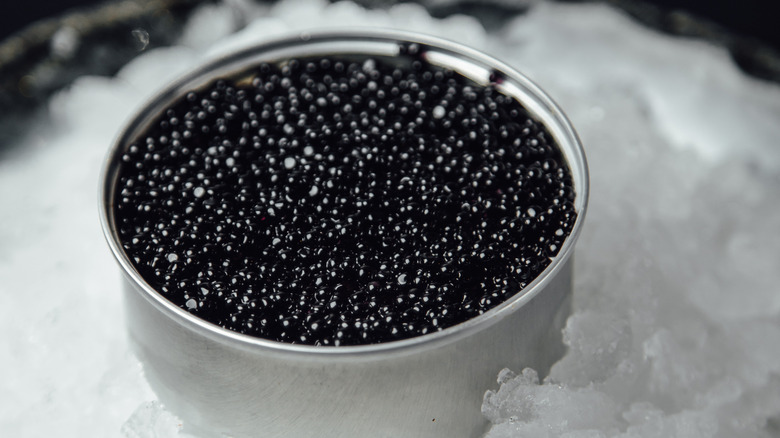
In a perfect world, we'd all be sitting on a private jet or a luxury yacht with a glass of chilled champagne in one hand and crème fraîche and caviar-topped toast points in the other. But, alas, the world isn't perfect, and caviar isn't always in the budget. In the meantime, though, there are alternatives that are just as delicious and that won't break the bank.
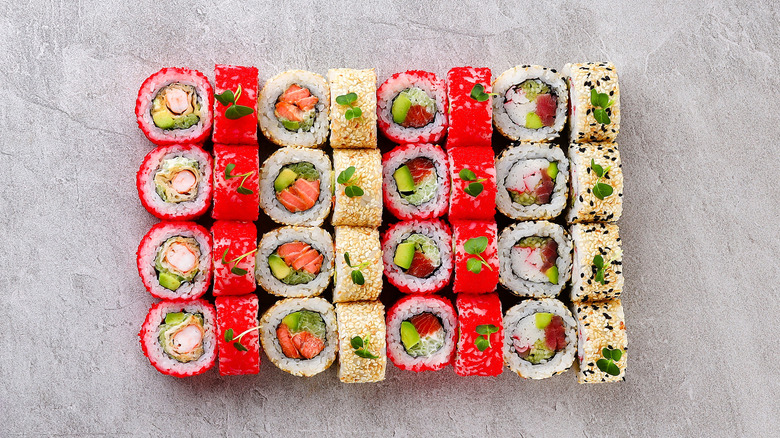
Our favorite? Tobiko — a type of fish roe. Whether you realize it or not, you've probably already eaten tobiko before, especially if you're a sushi or sashimi fan. (If you've ever wondered what those bright, shiny orange pearls were on top of your specialty sushi roll, we've got news for you — it was probably tobiko.) Not only is tobiko more affordable than caviar — it's harvested from flying fish, not sturgeon — it's also got a subtle briny flavor with a bit of sweetness. And we can't forget the characteristic crunch that the eggs have when eaten. So, before you get too sad about not being able to dine out on caviar, join us in exploring this affordable alternative that can make even budget meals taste unforgettable.
What is tobiko?
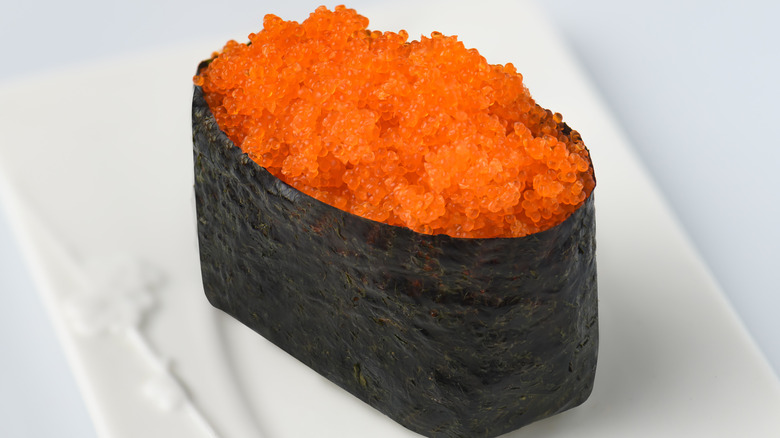
Tobiko is the Japanese word for the unfertilized fish roe that comes from various species of flying fish. These fish live in the ocean in large numbers, and are known for their "wings" that help them to glide through the air following a jump from the sea. Flying fish often live in tropical or temperate marine climates, including the Atlantic and Pacific, as well as the Indian Ocean. And, while the tobiko harvested from these fish might get the spotlight, flying fish is considered as much a staple and delicacy as the roe in some parts of the world.
Tobiko eggs are similar in shape and color to masago, which is another fish roe used in sushi. The primary differences between the two lie in tobiko's larger size and the type of fish that they come from (capelin fish for masago, rather than flying fish). While a dark reddish orange is a typical color for tobiko, dyes and other flavors can be added to the eggs to create pops of striking color and alter the taste, making it an incredibly versatile and varied food.
How is tobiko made?
Harvesting flying fish eggs — and fish eggs in general — can be done in several ways. With caviar, sturgeon are traditionally killed before the roe is removed. The same can be done with flying fish if the plan is to eat the meat after, but there are other options that don't require harming the fish. Some fishermen will take advantage of the animal's natural habit of laying eggs on floating seaweed to harvest the roe from the ocean.
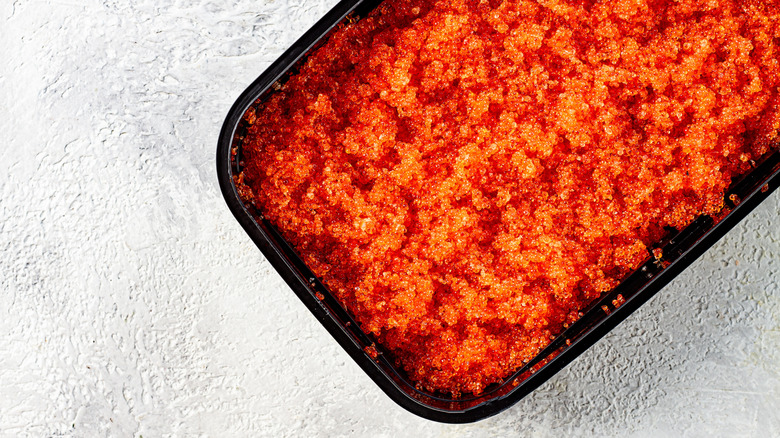
Once the roe is harvested, whether taken directly from the fish or from seaweed, the cleaning process can begin. This helps to remove any impurities or "bad eggs," so to speak. Tobiko is fragile and, depending on how it's harvested, can still be connected to the reproductive membrane. In this case, it requires the use of a strainer to remove the eggs from any remaining tissue. After a proper cleaning, a salt cure is applied to the eggs to make sure that the tobiko keeps longer. This also inevitably alters the flavor and further amplifies the briny taste. From there, tobiko is packaged in airtight containers to be shipped.
What does tobiko taste like?
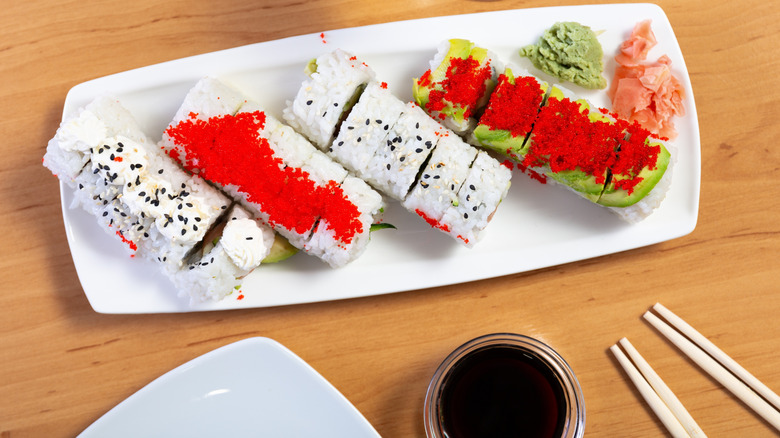
Since tobiko is so small — each egg is less than 1 millimeter in size — the taste doesn't register when eaten one at a time. That's why you often see tobiko placed around the exterior of sushi rolls or heaped onto salads, crackers, or seafood plates. Most describe the taste to be (understandably) salty. After all, it does come from saltwater-dwelling fish and is further cured with salt. Beyond that, there's also a subtle sweetness and even a hint of smokiness that is reminiscent of smoked sea salt.
Overall, tobiko isn't an overpowering ingredient. The taste is quite delicate, meaning that it naturally complements other flavors, rather than overwhelming them. But what we really love about tobiko is the versatility. Beyond the traditional, the unique tastes of tobiko can also be modified depending on what flavors are added. For example, tobiko can be infused with potent green wasabi to further change things up and add some intense heat.
Tobiko vs caviar
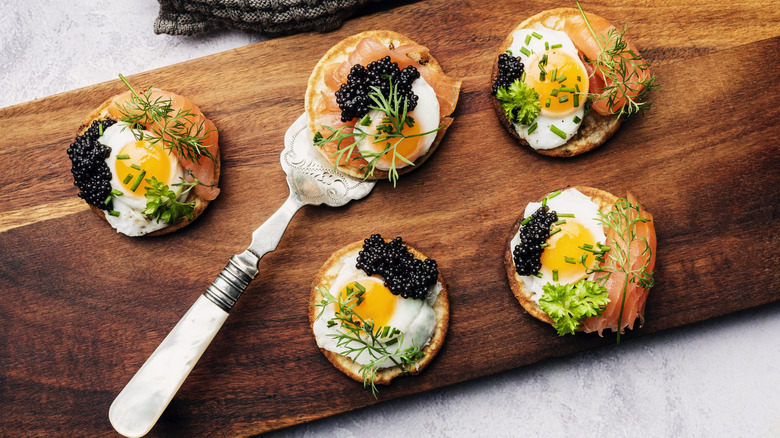
While we certainly think that tobiko will do in a pinch, there's really no substitute for caviar. Because of that, you'll need to set your expectations for what tobiko is and what it isn't. Caviar comes from sturgeon and, unlike flying fish, sturgeon can grow to be massive. The Atlantic sturgeon can grow up to 14 feet in length, compared with the average 7 to 12 inches for a flying fish. Not only that, but the female sturgeon must be fully mature before harvesting the caviar, and that can take up to 15 years. All in all, caviar is a time-intensive labor of love. Flying fish, meanwhile, only live about five years, so maturation occurs much sooner.
From a taste standpoint, there are some distinct differences. Caviar has a rich, buttery flavor and produces a smooth bite. Then there's the cost. To put things into perspective, the world's most expensive caviar can cost over $100,000 (hard to believe caviar actually used to be considered peasant food). Tobiko, meanwhile, costs upward of around $56 for about 17 ounces. So, while tobiko is not an everyday splurge, it certainly isn't the investment that caviar is.
Since there is a high cost to consuming caviar due to the painstaking procurement method, there is considered to be a proper way to eat caviar. It is often served with as few other ingredients as possible and eaten with a mother-of-pearl or glass utensil (never metal) to allow its flavors to stand out. Meanwhile, tobiko is usually served as an accompaniment to enhance the flavors of other ingredients.
How to use tobiko
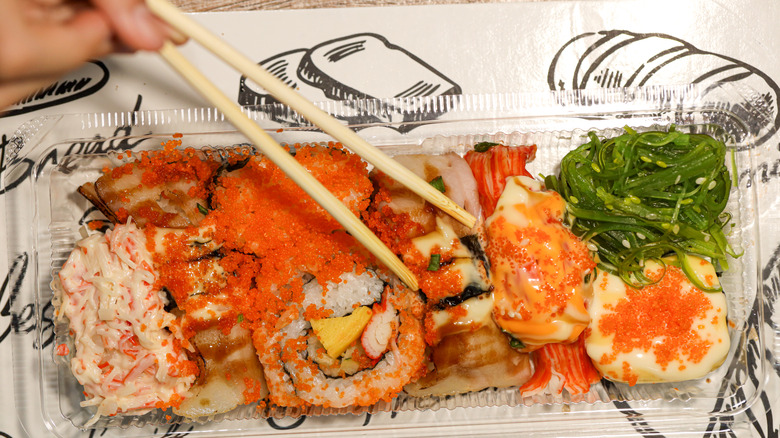
We'll start with the most obvious use for tobiko: sushi. There are a handful of mistakes you can make when attempting homemade sushi, but using tobiko isn't one of them. Once your roll is constructed — filled with crab, tuna, shrimp, etc., and wrapped — you can top it with as much tobiko as your heart desires. But you'd be mistaken to think that tobiko only has a place in sushi dinners. One of the great things about home cooking is the ability to unite international flavors.
Since we're on the homemade train, try a simple, 2-ingredient pasta and incorporate your tobiko into the dish. Once the noodles are freshly cooked and strained, you can add in your Asian ingredients. Think of this like a deconstructed sushi roll, but with pasta as the starchy base instead of rice. For creaminess, you could add cream cheese, like that found in the Philly roll, as well as crab, shrimp, soy sauce, and salty seaweed. Top it all off with bright, crunchy tobiko for texture.
Where to buy tobiko
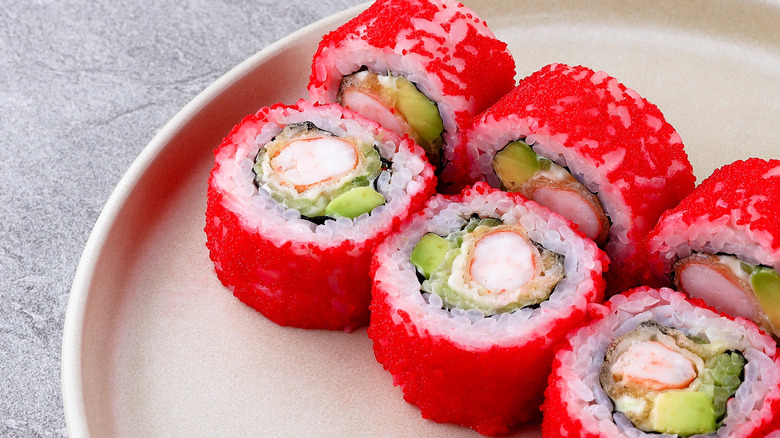
Unlike caviar, finding good tobiko isn't too difficult. In fact, a lot of Asian food stores will likely stock some sort of fish roe. But, for the times when you can't find tobiko in-store, there's always the internet. Before you buy tobiko, you'll want to make sure that the seller is reputable. That's because, like any food item, tobiko that isn't properly harvested or packaged not only might taste bad, but could be potentially harmful.
Reviews are a good place to start when comparing brands, as well as determining what kind of tobiko you want, since there are a handful of options to choose from. This orange tobiko from Bemka is a great choice for sushi adornment or to eat as an elevated side with your next charcuterie board. But if you can't find the tobiko you want on a general marketplace website, consider looking into specialty food sites.
Types of tobiko
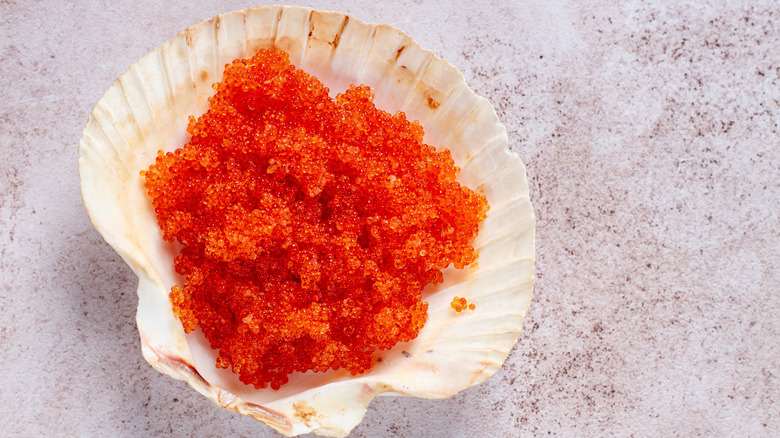
There are about 40 different species of flying fish, but only six types of tobiko. To break it down, all flying fish roe starts out the same. It's a reddish-orange color with a distinct sweet and salty taste and a popping texture. The differences come when chefs soak the roe in food coloring or additional flavorings and infusions. As well as plain tobiko, wasabi, a popular Asian herb, is often used to flavor the roe by utilizing the natural extract of the wasabi plant to give it some heat and a vivid green color. The coloring and taste of chili peppers can also be used to give tobiko an added spice level, but the options don't all have to be tongue-scorching.
For those looking for a more muted flavor, beetroot and yuzu can both be used to flavor different types of tobiko. Beetroot shades the tobiko's color redder while yuzu extract leaves behind a yellowish tint and refreshing flavor. Finally, there's squid ink tobiko. Squid ink can be used to make colorful pasta at home, and the natural dye also does the same for tobiko. Not only does it shift the color and make it darker, but squid ink also has a distinct umami taste that lingers on the tongue.
Nutritional information about tobiko
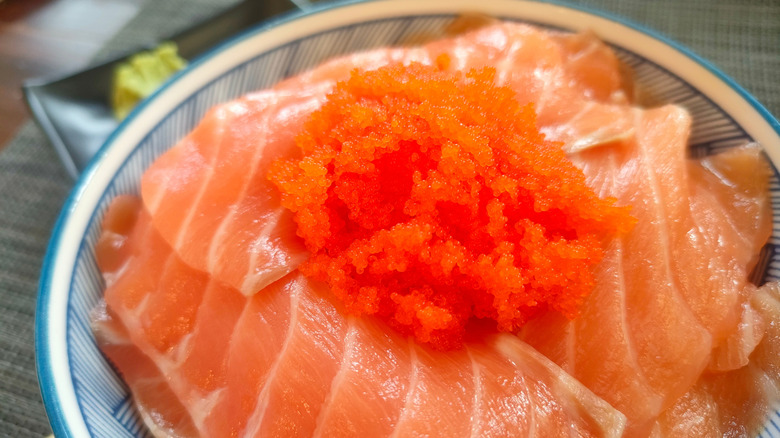
Tobiko is a fairly straightforward ingredient with pretty great health benefits. This comes down to the vitamins and minerals found in it, as well as the (limited) protein content. Omega-3s are present in tobiko, though only in small amounts. Omega-3 fatty acids are anti-inflammatory, which is why some people are encouraged to take fish oil supplements for heart health. Alongside omega-3s, tobiko contains other vitamins and minerals such as vitamin A, vitamin B12, iodine, and vitamin D, to name just a few.
But don't be fooled. In general, tobiko isn't considered a health food the way salmon might be. That's because tobiko often isn't eaten in large enough quantities to make a huge difference one way or another. And, while tobiko is only fish eggs and not the meat of a fish, you should know that tobiko is still considered a seafood. That means if you have an allergy to fish or seafood more generally, you should refrain from eating it.
How to store tobiko
Like any other food, you'll want to know the best ways to safely preserve your tobiko for maximum freshness and taste. Tobiko should be refrigerated, whether it's been opened or not. Think of fish roe like any other meat — it should be kept cold so that it stays safe to eat. Extended periods at room temperature can alter the flavor and texture and can potentially lead to bacterial growth.
Once your tobiko has been opened, you'll want to consume it within 3-4 days. If that's not feasible, consider freezing your tobiko. This can extend the shelf life for up to six months, but it does inevitably alter the texture. Once thawed, you may miss out on some of that crunchiness that tobiko is known for. Freezing can also lead to freezer burn, so be sure to store your tobiko in an airtight container with as much air as possible removed.
You'll know tobiko has gone bad if it starts to smell overly fishy (think of a fishing dock and the strong odor found there). Not only that, but the texture may change and become mushy, losing uniformity and structure that allows you to see the individual eggs.