

How Much Does It Cost To Renovate A Large Kitchen? Here's Everything You Need To Know

We may receive a commission on purchases made from links.
There are oh-so-many mistakes you can make when you renovate a large kitchen, from messing up the backsplash to falling for trendy designs that won't stand the test of time. Perhaps the biggest error of all, however, is to miscalculate the cost of the remodel. This will leave you either holding a much larger bill or having to scrimp and pinch to finish the job. Choosing between those options is something we'd all rather avoid.
"Kitchens are by far the most complicated room in the home to remodel," says Courtney Batten, owner and lead designer of Paige Studio. "It's not a DIY weekend project, particularly if you're changing the layout. Having a well-developed plan, ideally with a professional guiding you, is critical to keeping your project on budget, on schedule, and compliant with code."
There is, of course, no way to tell you how much your individual kitchen will cost, because it depends on a variety of factors. However, there are ways to keep costs down. Understanding how layout, size, materials, area, permitting, and labor play into your project is the best way to make sure it stays on track and scope-creep-free.
Layout
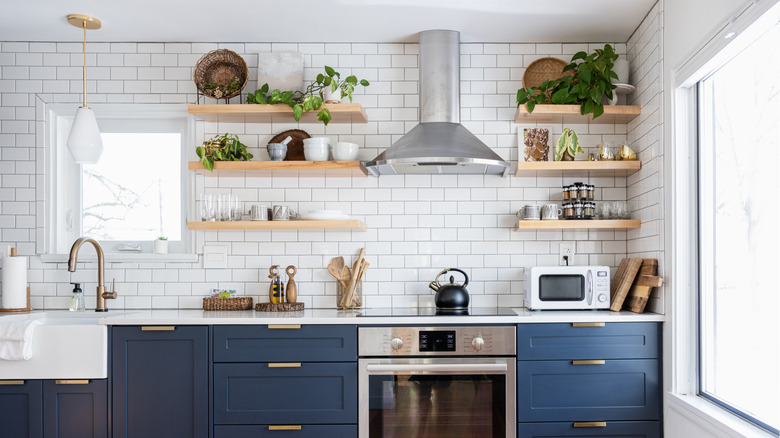
First and foremost, determine your layout. When you renovate, you can take a variety of approaches. You could just change out the finishing elements (e.g. paint, cabinet doors, and countertops), or you could gut the room and redesign it entirely. "Are you moving walls? Are you expanding?" asks Colleen Bennett, principal designer and founder of CBB Design Firm. "If you're using the existing shell, it's not as expensive." If you're breaking down walls, enlarging the room, or moving plumbing lines, though, you're going to pay for it.
"More square footage usually means more labor and more material, but complexity of the layout and what you're changing matters just as much," says Brett Johnson, owner of New Era Home Buyers. "If you're keeping the footprint the same, even a larger kitchen can stay budget-friendly." If you're worried about keeping costs down, therefore, one of the best ways to do it is to avoid changing the layout, walls, gas and plumbing lines, and anything else that's structural. Focus on the facades and you'll save major buckaroos.
Kitchen size
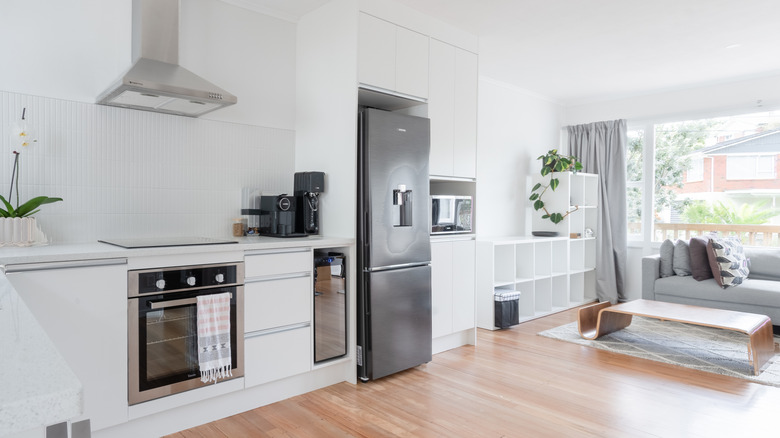
"Size matters, but not in the way most people assume," explains Maksim Sauchanka, remodeling expert and owner of BMR Belmax Remodeling. "A large kitchen gives you more surface area to renovate, sure, but a tiny kitchen can still rack up big costs if it is packed with custom cabinetry, high-end finishes, or complicated layout changes." It's not just the square footage you're looking at when calculating renovation costs, but also the materials, labor, and general decision-making for each square foot.
Of course, there are some unavoidable truths when you renovate. "Larger kitchens require more flooring, more cabinetry, and more lighting, which naturally increases material and labor costs," Sauchanka acknowledges. "But again, it's about scale — doubling size does not necessarily double cost unless the finishes and layout also change significantly."
Where you're likely to get stuck with real cost differences is in the finishes. "Clients with larger kitchens are more likely to select premium materials, whereas it is easier for a smaller kitchen to get away with things like stock cabinetry and less expensive countertops and tiles," explains Thomas Borcherding, owner and lead designer of Homestar Design Remodel. It's that difference, rather than simply the size of the kitchen, that is likely to widen the gap significantly. This may result in a large kitchen costing tens of thousands of dollars more than a small one.
Where you live

Location, location, location, right? It's just a fact that where you live is going to impact how much you pay. "A renovation in California versus Missouri varies wildly in permitting fees and labor rates," says Rachel Blindauer, principal interior designer at Rachel Blindauer. "In coastal cities, code compliance and subcontractor demand can inflate costs by 20 to 30% or more." You may even see numbers double for the exact same design, depending on whether you're in a high-demand area or a small town, Maksim Sauchanka says.
Teri Simone, head of design and marketing at Nieu Cabinet Doors, agrees that higher-cost areas constrain your budget more. "In metropolitan areas, everything from delivery fees to contractor rates can be higher, so the renovation could cost more depending on your zip code," she says. Thomas Borcherding adds, however, that you'll see wildly varied rates within the same zip code — it may jump tens of thousands of dollars from one bid to the next. "There is no true standard in kitchen pricing," he explains. "Things such as company overhead, as well as the profit margin a company wishes to apply to their expenses, change the final price."
It's not just zip code, either. "If you live in an apartment building, keep in mind that you may also require special delivery arrangements, which can also increase fees," Simone says.
Quality of materials
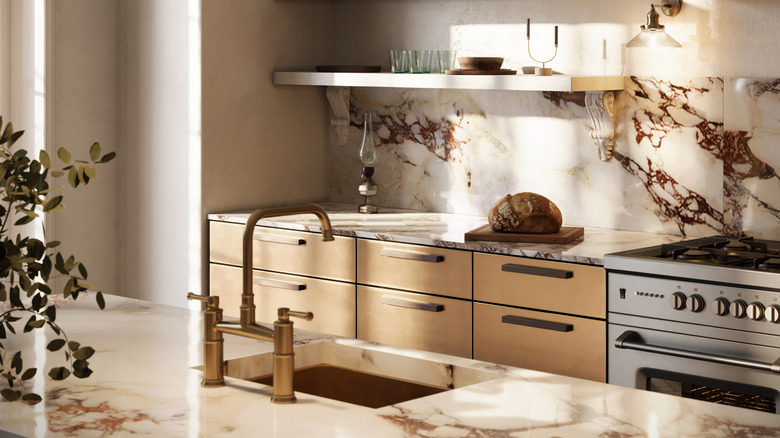
Assuming you're not going to change the layout, the main costs for your kitchen are in materials. Their costs do correlate with kitchen size, though, explains Tammy Cailliau, owner of Tampa Bay Granite: "You'll likely have more cabinets, more square footage of flooring, and potentially a bigger island when renovating a larger kitchen." Barring a major layout change, she says, the subcontractor costs probably won't increase much, though. "There isn't really much that will change for plumbing and electrical," she adds. "The only exception would be if you plan to have a wet island."
That's not to say materials costs are necessarily low, but they do range widely. A square foot of ceramic tile can cost $5, says Rachel Blindauer, while a square foot of marble slab can cost $100. That being said, you have considerable power in pricing your renovation low if that's your main driver. "I always walk clients through finishes early because material choices are one of the few places you can control both cost and aesthetic impact," Blindauer says.
If you want your remodel to stand the test of time, make sure the materials you choose are guaranteed. Cabinet lines, countertops with sealers, and other aspects of the kitchen should all come with a guarantee from the manufacturer, Colleen Bennett says, so make sure you ask your contractor about it.
Labor costs

A larger kitchen will require more labor — pretty simple. For instance, says Jonathan Klemm, founder and CEO at Quality Builders, cabinets are priced and sold per linear foot. If you want them to run the length of your wall, you will need to buy more or larger cabinets. Buying more or larger cabinets means paying your labor more to install them — labor correlates directly with the amount of material that has to go in. That's true for countertops, backsplash tiles, flooring, and paint as well.
Larger kitchens will in some cases require more lighting. While a small kitchen may have just one overhead light and a pendant above the sink, a large kitchen may need lighting above the sink, stove, and island (Hello, additional labor). You can apply the same logic to cabinet hardware, faucets and pot fillers, larger stove hoods, and anything else that might inflate along with the size of your kitchen.
Permitting

"Permitting can be a surprise expense, especially in cities where moving plumbing or electrical requires full inspections," Brett Johnson says. You'll have to check the rules in your area to see if permitting is light or extensive. Either way, you're going to have to pay for some permitting when you renovate an entire room.
"Your municipality or state will likely require design drawings to be made and signed off on," Thomas Borcherding says. "You will have to show electrical, plumbing, mechanical, structural, and floor plans among other possible requirements." Not only will this add in costs due to design labor hours, he says, but you'll be required to contract with licensed tradespeople, increasing costs due to the current labor shortage.
You should also note that updates may have a waterfall effect. "In some cities, simply removing a wall can trigger code upgrades for the entire kitchen," Maksim Sauchanka warns. "Budget accordingly."
Complexity of the renovation
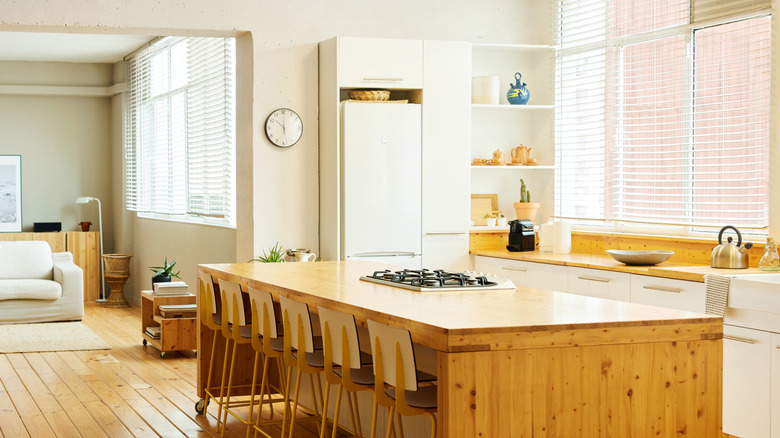
It should come as no surprise that with greater complexity comes greater cost. "A refresh (paint, hardware, fixtures) costs far less than a gut remodel," Rachel Blindauer points out. "Once you start moving plumbing, altering walls, or redoing electrical, the budget must include both labor and the unexpected." This is no joke, as even single updates can run up huge figures. Thomas Borcherding says that even just changing the location of a sink's center line can end up costing you hundreds of dollars, depending on the local labor market.
Still, it's structural changes that are going to run you the most money. Moving walls, dealing with HVAC, and making behind-the-wall upgrades such as electrical work will always cost more than cosmetic changes. "Hidden work like upgrading old wiring or correcting floor slope can eat up contingency funds fast," Maksim Sauchanka adds.
What appliances will cost you
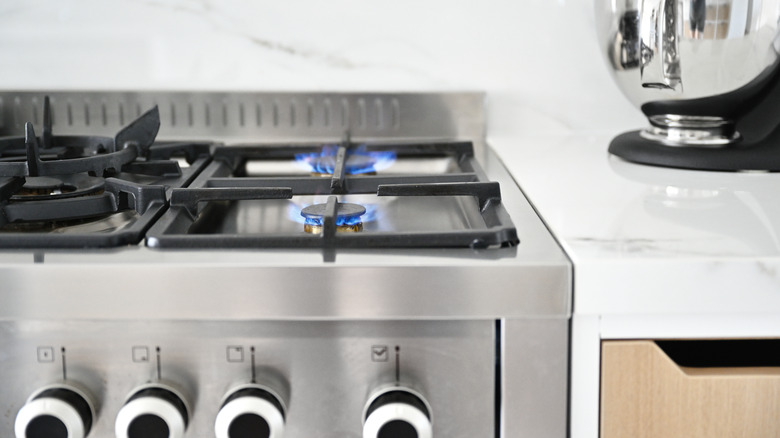
The decisions you make about your appliances have wide-reaching ramifications. "Appliances are where your planning should begin as that dictates the aesthetic of the kitchen and how you want to proceed," Colleen Bennett says. Not only do they inspire form throughout the room, but they govern function as well. "The size of the appliances is important to take into consideration for your planning." They will determine the dimensions of your countertops and cabinets, for example, as well as decisions about flooring.
The types of appliances you get may also change structural elements. A gas range, for example, requires thinking through many different elements, Maksim Sauchanka says: gas lines, reinforced flooring, and upgraded ventilation.
As for cost, that's up to you. "Appliances are a category that can balloon depending on if you go basic or high end," Brett Johnson says. "I always tell homeowners to plan for the install, venting, and electrical work too, especially for range hoods or wall ovens." It's worth noting, Teri Simone says, that integrated or panel-ready appliances tend to cost more upfront. However, they offer a clean, high-end finish that's often worth the investment and adds resale value.
Countertop renovation costs
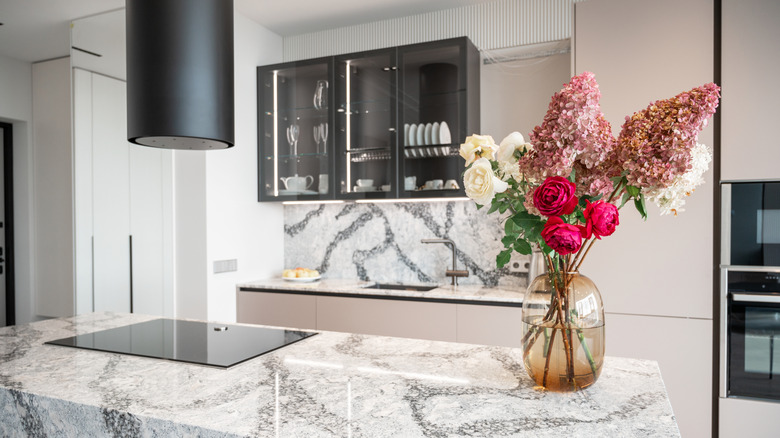
You can't have a kitchen without counters, so when you renovate, you're going to have to include the cost of those countertops. In some cases, you may keep the same counters you have, especially if they're a lovely stone that still has a lot of life left, but there will still be costs. Moving them to install new cabinets, working around them, and refinishing can all add to the tally.
If you're going to buy them new, that's another cost to consider. "Choosing a lesser-priced granite or quartz, as opposed to a premium countertop is a great way to save money," Thomas Borcherding says. "You would be surprised at how beautiful some of the lower-tier countertops are." If you want a top-tier option, such as luxury marble, expect to pay for it. "Don't forget templating and edge treatments," Maksim Sauchanka says. "They add up fast."
Cabinet prices and installation costs
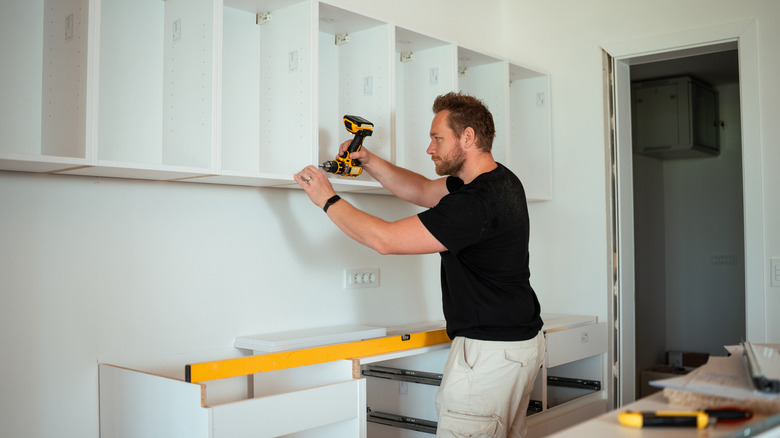
"Cabinetry is typically one of the biggest line items of a renovation," Teri Simone says. Think about it: you'll usually find cabinets on three or even four walls of a kitchen — from the floor to right up near the ceiling — so you can expect it to cost a lot. Prices vary wildly for stock cabinets versus semi-custom or custom ones, starting at $300 a cabinet, Tammy Cailliau says.
That doesn't mean you can't save money, though. "If the boxes are in good shape, we provide a refacing instead of replacing service," Simone says. "It's faster, less invasive, and far more budget-friendly. New custom doors give a kitchen a fresh facelift and luxury-look finish without the high cost and waste of often still solid materials." If you're going full-bore when you renovate your kitchen, you can still save money by combining IKEA bases with custom fronts and drawer interiors, she says.
Renovating a large kitchen floor

Floors: you walk on them every day, but nobody thinks about them until it's time to renovate and suddenly you're seeing dollar signs everywhere. Those costs range widely, from pricey hardwoods to standard tiles to luxury vinyl plank options that are more budget-friendly and can handle wear and tear.
Unfortunately, material is only one factor you have to consider when it comes to cost, despite being the most straightforward one to boot. "Installation method and subfloor conditions matter, too," Maksim Sauchanka says. "For example, removing old tile and leveling the floor for hardwood can cost more than the wood itself."
Oh, and let's not forget the interplay between flooring and cabinets. "Is your flooring underneath your cabinets? Is your flooring not underneath your cabinets? All of that will dictate what you're going to be doing," Colleen Bennett says. This is because it plays into the balance and function of the room and its materials. "It's really important to understand how your home was built prior to getting into the renovation."
Fixture and faucet prices

Faucets and fixtures must also be factored in when you renovate your kitchen. "These may seem like small items, but designer fixtures can make a big difference in the look and feel of the kitchen," Teri Simone says. While it's tempting to go for the most beautiful ones first, she recommends durability. "This is one of the hardest-working parts of your home!" Don't forget to include installation costs when running your totals.
Pot fillers may also float your boat. "If you're doing a full gut remodel a pot filler is a surprisingly budget-friendly feature that delivers a luxury feel and adds tremendous convenience," Courtney Batten says. "It's relatively easy to rough in when you're already opening up the walls." Whatever you decide on, fixtures and faucets are a reasonable place to splurge, since they don't cost much but make a huge visual impact.
A fresh coat of paint
"A fresh coat of paint is a given for almost all kitchen renovations," Jonathan Klemm says. "This is something that I feel many homeowners can do themselves and save money." On average, he says, you're looking at a cost savings of between $800 and $1,000 for most kitchens. If you're already paying tens of thousands for a full gutting and remodel, you might not care, but if you're on a tighter budget, this is worth it.
Painting isn't hard, either. It's a skill that needs little teaching, and if you've never done it before, you can learn all about the prep work, number of coats, and drying times from a YouTube tutorial. If you have questions about color-matching or primer, someone will be able to answer them at your local home improvement store. As for supplies, all you need in addition to paint is a few supplies: tape, brushes, rollers, and a tray. You can purchase them separately or get a 17-Piece Paint Roller Kit, along with a drop cloth.
Lighting a large kitchen
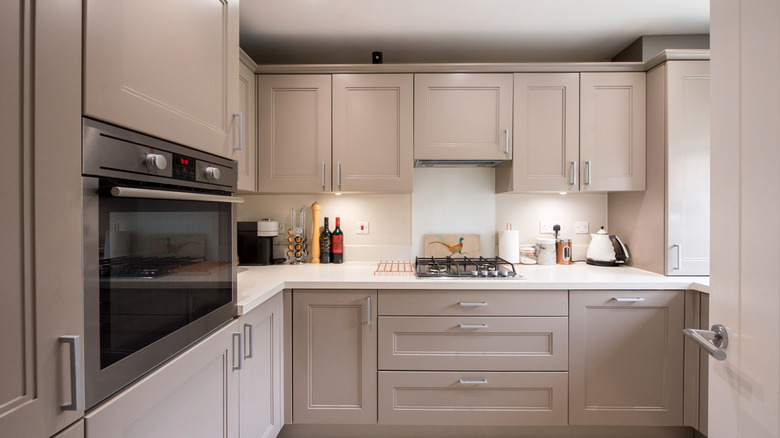
Don't forget when you renovate your kitchen to plan for new lights. "Lighting is another piece that often gets overlooked but it completely changes how the space feels and works," Brett Johnson says. There are many considerations to keep in mind. Where do you get natural light? Where is the kitchen dark? What spaces do you use most, and therefore need the best lighting for? From pendants above the sink to large statement pieces above the island and under-cabinet lighting for prep work, you want to make sure the entire room is properly lit for both safety and ambiance.
That doesn't mean you need to spend a million bucks for the room to look like a million bucks, though. Simple online options such as this Globe Electric Matte Black 1-Light Pendant or this Globe Electric Frosted White Brushed Steel 1-Light Plug-in Pendant can work well, too.
Ways to keep costs down

There is a number of ways to keep costs down when you renovate your kitchen. First, see if you can keep your cabinet boxes. "A lot of the time, cabinet boxes are in far better shape than the doors, which are used every day and may be dated in style or general wear and tear," Teri Simone says. On that note, don't replace anything you don't have to. Aspects of the kitchen that still work — appliances, flooring, lighting — are totally fine to leave in place. Voilà: instant frugality.
Also, make sure to choose your materials well ahead of time so that they're ready to go when your workers get there. "What people don't realize is time costs," Johnson adds. "A kitchen that takes eight weeks instead of four means more holding costs, lost rental income, or just more stress if you're living through it." Make sure you get your ducks in a row, and this won't happen.
Lastly, always get quotes for a range of materials and scenarios, not just from a range of contractors. That will help you choose the approach that fits your budget best.
Preparing for unexpected costs

There are many ways to save money on a kitchen remodel, and if you're smart, you'll put most of the above to work. However, no matter what you do, you will end up with unexpected costs. Maybe you have to deal with an unfortunate design choice, for instance, or you accidentally underestimate the cost of new kitchen hardware. Renovations can extend beyond the original timeline, requiring you to spend more money on takeout, or you can find nasty surprises behind walls and cabinets. It's best to be prepared.
To do so, Teri Simone says, reserve 10% to 20% of your total budget for unexpected issues. "Discovering hidden water damage, a delayed shipment, or a surprise code upgrade can be an unplanned cost that throws off your project," she says. "Planning for the unknown from the start makes the process smoother and much less stressful."