

13 Subtle Ways To Make Your Kitchen Backsplash Look More Expensive
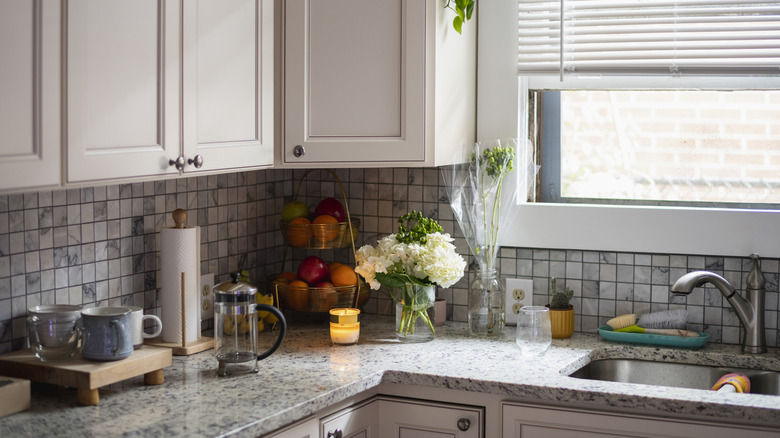
Your backsplash is critical to your kitchen's overall design aesthetic, especially since it's a necessary update when selling a home. The good news is that it presents a number of opportunities. It sits right below eye level, brings class and light to the space, and doesn't have to be that expensive ... if you know what you're doing and you avoid the most common backsplash renovation mistakes. Considering the number of smart hacks you can use to make your backsplash look even more expensive than it is, there's no reason not to get an excellent end result.
"Backsplashes are one of the fastest ways to fake a custom look, and there are tricks to make that pop on any budget," says Danny Niemela, vice president and CFO of ArDan Construction. Alex Smith, co-owner of Render3DQuick, agrees: "After visualizing so many kitchens, I can assure you that backsplash is not only a protective covering; it is a potent design tool that can turn the value of a kitchen upside down without the need to spend the budget on a complete remodel."
The question becomes, then, how do you upgrade the look of your backsplash without inflating the budget, due either to materials or labor? It's absolutely possible. "Whether it's warm grout with wood accents or marble-look tile paired with stone surfaces," says Malek Nassereddine, operations manager at KJP Select Hardwoods, "thoughtful design choices can make even modest materials feel elevated." Chowhound rounded up the experts for a look at 13 of the most effective ways to make your kitchen backsplash more expensive with ease.
1. Coordinate your backsplash with the rest of the kitchen
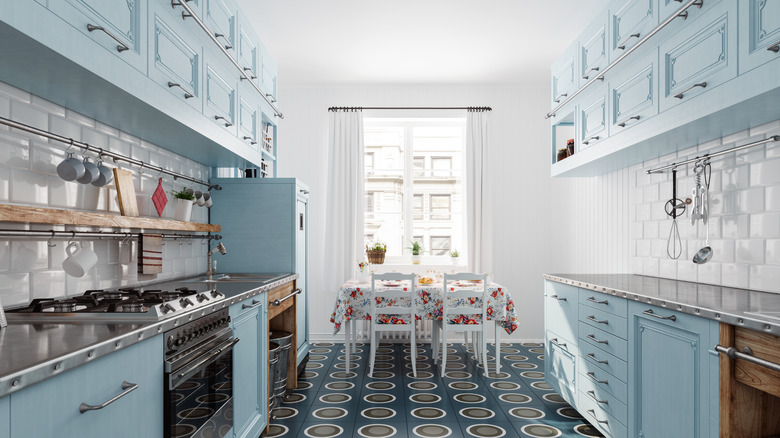
Your backsplash should both look nice on its own and coordinate well with the rest of the room, such as your kitchen countertops. This is a great way to make your kitchen backsplash look more expensive with basically zero effort, whereas a backsplash that sticks out of the main design will actually have the opposite effect: dragging your entire kitchen down and making it look tawdrier.
"The most important thing to remember is palette consistency," explains Courtney Cole, interior designer and tile expert at TileCloud. "I love to tie backsplash choices to the other parts of the home, e.g. a dusty pink tile that echoes timber tones. It gives the whole space a designer feel." We're not just talking wood, though; your tiles should also play nicely with the colors of your paint, countertops, hardware, plumbing, and backsplashes, says Amanda Hickam, owner of Harper Harris Design.
Don't forget subtler colors that might play into your backsplash design, such as veining. When you match veins (if applicable) and meld colors well, you create an actual piece of art, says Colleen Bennett, principal designer and founder of CBB Design Firm.
2. Choose beautiful ceramics or porcelain
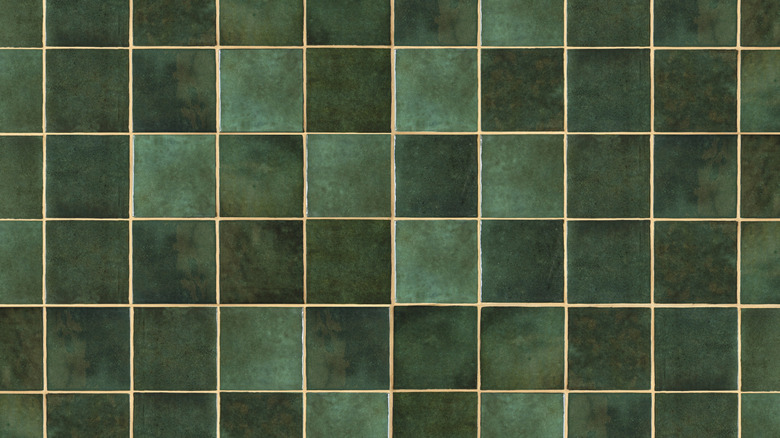
One easy way to make your kitchen backsplash look more expensive is to use ceramics or porcelain that are themselves simply lovely, but don't break the bank. "Hand-pressed tile, with uneven edges or a subtle crackle glaze, adds character for $3 to $6 per square foot," Danny Niemela explains. "Lay them vertically for a curtain effect or offset for a brick look. Even with white tile, the irregular finish gives it a handmade feel. You get depth and shadow without buying stone."
Courtney Cole agrees with the worth of ceramic and porcelain products: "They have this gorgeous tactile quality that makes them feel artisanal. Handmade-looking tiles are just gorgeous because they catch the light differently." The best part is that they don't actually have to be handmade, saving you big bucks.
3. Use natural stone materials
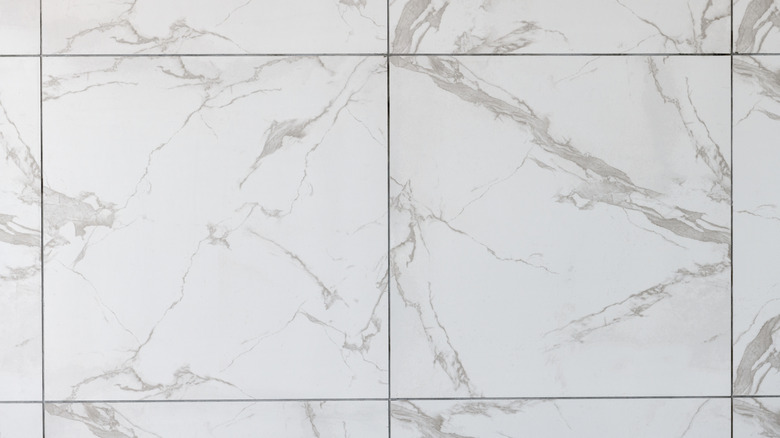
If you're willing to spend a bit more, natural stone materials also make your kitchen backsplash look more expensive. "A slab backsplash in marble or quartz is a statement surface," says Rachel Blindauer, principal designer at Rachel Blindauer. "It adds luxe texture and visual depth — with the benefit of flow between countertop and backsplash." She always advises book matching where possible, which is when you take two slabs cut from right next to one another and then fan them open, like a book or butterfly's wings, to create a right-to-left echo. "When everything feels intentionally aligned, it reads as high design."
While this definitely costs more at the outset, with materials such as marble starting at about $40, you do get some cost-saving benefits down the road. "Countertop stone does not require grout lines, making it easier to clean and maintain," says Mackenzie Couto, design consultant at Kitchens by Good Guys. "Grout can be hard to clean and eventually cracks, which can make your kitchen look older. Material that is easier to maintain looks brand new for longer."
If you're going for natural stone, Colleen Bennett says, go with Cambria quartz or Consentino marble. They'll give you a bold and gorgeous look, but aren't the most expensive products on the market.
4. Use glass to reflect light in your kitchen
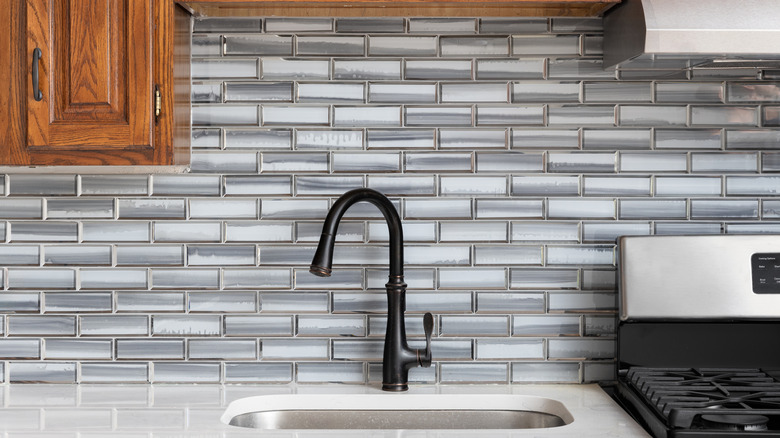
"Glass tile or high-gloss finishes are another great way to make your backsplash feel more expensive," says Malek Nassereddine, operations manager at KJP Select Hardwoods. "These surfaces reflect both natural and artificial light, adding brightness, depth, and a subtle shimmer — similar to the way mirrors enhance a room's size and elegance."
Plus, says Courtney Cole, the way they bounce light around makes smaller kitchens feel larger. If you've got a hole in the wall or a galley kitchen, this can be a real game-changer, effectively doubling your visual space, Danny Niemela says. "A 3x6 glass subway tile in a soft green or smoky grey adds depth and tone," he explains. "It costs more per square foot, but you use less of it if paired with a simple field tile." One way to save money but make your kitchen backsplash look more expensive is to install the tile behind the cooktop, but leave the rest neutral.
5. Consider reclaimed or exotic wood for your backsplash
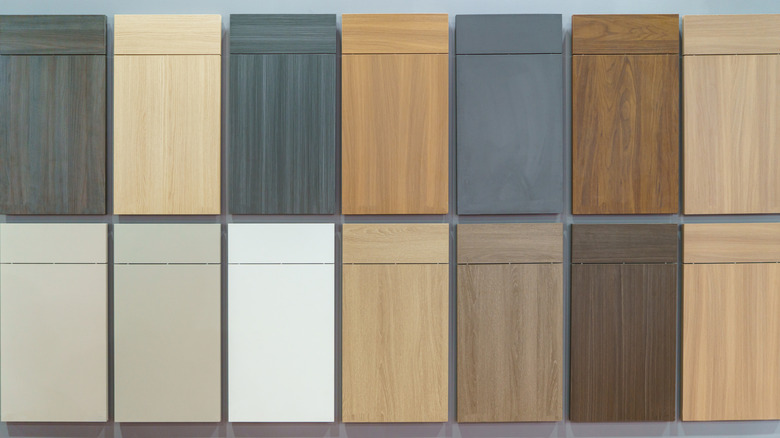
Too few people consider woods for their backsplashes, but this is a unique twist that will make your kitchen stand out from the hoi polloi and is a great way to make your kitchen backsplash look more expensive. "For something bold and distinctive, consider using exotic wood species like teak or zebrawood as a backsplash," Malek Nassereddine says. "Their rich tones and natural grain patterns add warmth, texture, and a designer-curated aesthetic that feels both luxurious and inviting, especially when paired with complementary lighting and cabinetry."
This is also an excellent way to throw Mother Earth a bone. While reclaimed woods tend to be spendier than freshly milled lumber, they tell a story that can be fun. If you have old buildings on your property, you might even have a free source.
6. Mix higher- and lower-cost tiles
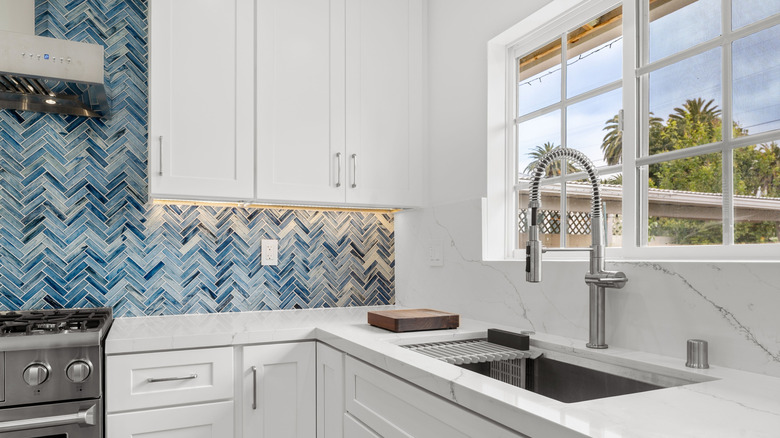
Too many homeowners erroneously believe when putting in a backsplash that they have to use the same tile throughout. This couldn't be further from the truth. "There's nothing stopping you from mixing it up, e.g. a feature tile and a basic tile," Courtney Cole says. "A bold tile for behind the cooktop, and something simpler throughout the rest of the kitchen (or vice versa) lets you play around with giving your kitchen a high-end look." You can also use plain tiles with feature tiles used as insets. Best of all, she says, it's a good way to make your kitchen backsplash look more expensive without blowing the budget.
Some people even consider peel-and-stick tile for their backsplash. The benefits include a low-impact, low-commitment design choice, and they're certainly lower cost. The thing to keep in mind with peel-and-stick tile backsplash is, however, that it has a limited lifespan. You should use it when trying to decide if a certain pattern, color, or shape works for you, or if you're renting, but not in place of real, time-honored materials.
7. Create a mosaic effect
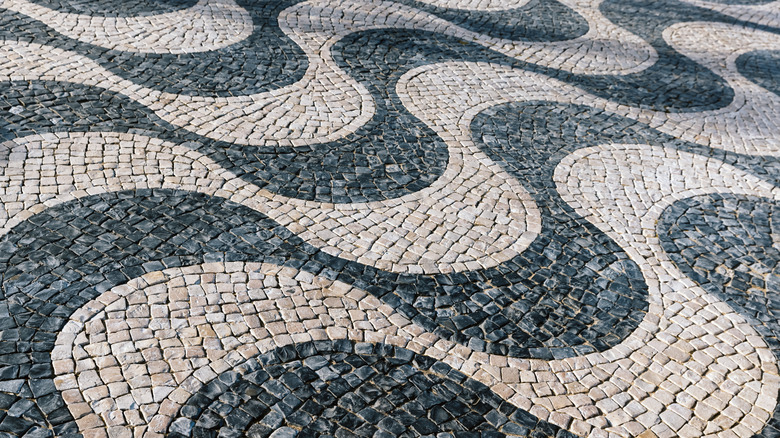
Humans have been in love with mosaics for thousands of years. The oldest ones found by archeologists are at least five millennia old, so why not use this time-honored trick to make your kitchen backsplash look more expensive?
"Mosaic effects are trickier to pull off but deliver bold results," Danny Niemela says. "Try combining square and rectangular tiles in a controlled ratio, like 3-to-1, to create layered movement." It's important not to go too crazy when creating your mosaic, though. "Stick to one or two color tones to keep it grounded. The complexity draws the eye without overloading the space." Niemela especially favors areas to which the eye naturally gravitates, such as behind open shelves or underneath hood vents.
If you have the budget, you can even create mosaics using higher-end materials, such as marble. "Nothing says luxe like a marble backsplash," Amanda Hickam says. "A beautiful marble mosaic is always fabulous."
8. Skip the grid for a more expensive look
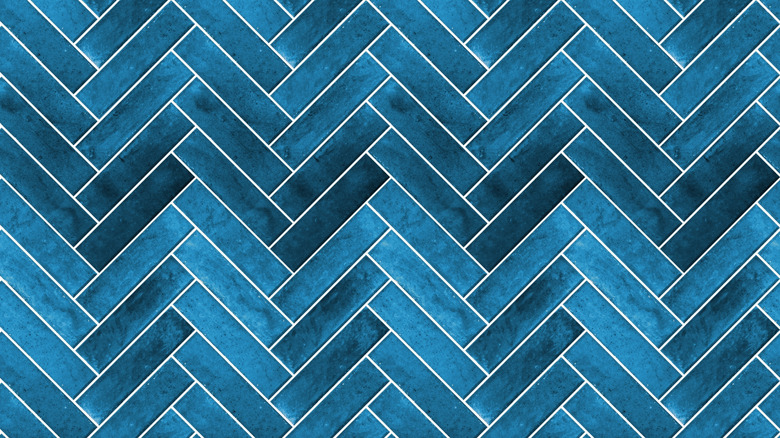
Grid patterns are a standard approach to backsplashes, but they're not necessarily the most luxe in appearance. Upgrading to a more detailed pattern can make your kitchen backsplash look more expensive without raising costs all that much. "When I specify a herringbone or hexagon pattern, it's less about premium tile and more about layout," Rachel Blindauer says. Basketweave is another good approach. "The material cost often remains the same, but the patterning adds visual intrigue, drawing the eye and elevating the look." It's a clever way to employ strategy rather than money for stunning composition.
Folks tend to worry about the cost of labor for more complex designs, but it's not as much of an issue as you might think. "The difference in price between simple subway tiles and those cut to form a herringbone or hexagon pattern is usually very small, say 10 or 20% higher per square foot," Alex Smith says. "These patterns have a wow factor to their visual dynamism that generates a custom, high-design aesthetic that instantly takes the kitchen design out of the realm of standard straight-lay options."
9. Make the backsplash taller
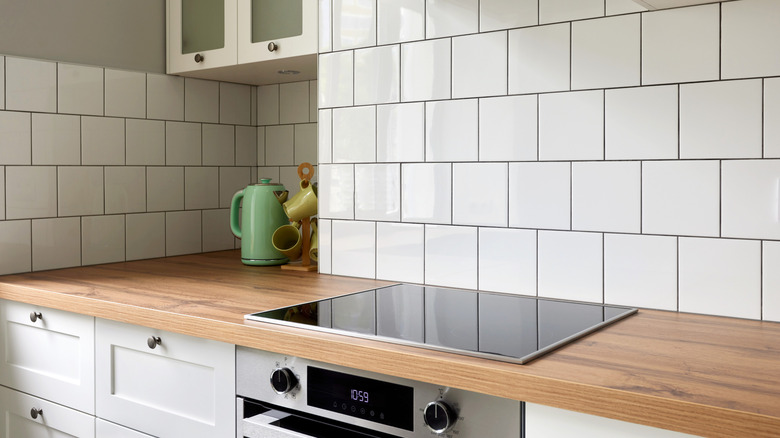
One of the easiest ways to make your kitchen backsplash look more expensive? Simply raise its height. "Tall backsplashes change proportions," Danny Niemela says. "If you raise it from 18 inches to 24 or 30 inches, it elongates the walls." This usually ends up meeting the cabinets on the underside, which is a very natural look that offers dramatic appeal without leading to budget overruns. "Material costs increase slightly, but you are adding maybe 6 to 8 square feet, which is $40 to $60 extra tops," Niemela explains. "The effect is cohesive and custom."
Don't stop at the cabinets, though. If you can afford to and have the space for it, bring the backsplash up higher in some parts of the room. Wrap the pattern around a large window — such as the one over the sink — or place it behind the range, says Mackenzie Couto. Here, the increased height will correlate directly with an increased appearance of investment. "Much like full-height wood paneling adds richness to a space, expanded backsplash coverage gives the impression of a designer-level investment, even when using budget-friendly materials," Malek Nassereddine says.
10. Bring it around the whole kitchen
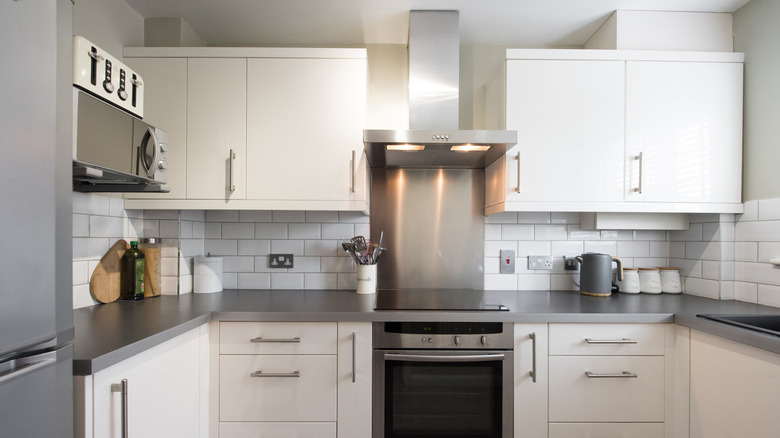
Another way to make your kitchen backsplash look more expensive, though it does admittedly lead to a cost bump, is to bring the backsplash around the entire kitchen, as close to 360 degrees as your kitchen allows. "Generally, the more material you use of something, the more impact it will have," Amanda Hickam says. Courtney Cole agrees: "Wrapping backsplash around the kitchen makes it feel like everything's tied together and not just slapped on behind the stove." This pairs well with tiling up to the underside of cabinets and adding extra in open spaces.
There are a few caveats with this technique, however. "Inherently, more material means more cost," Amanda Hickam says. That means you'll have to budget it into your plan from the outset, which may require compromises vis-à-vis the type of material or pattern you use. Additionally, she says to beware of overactive designs. "If the material or pattern of the backsplash is very busy or small scale, it can feel overwhelming if there is too much of it," she says.
11. Create an accent over the range

The stovetop always presents a lot of opportunity. It is the one place in almost anyone's kitchen where you can guarantee an open patch of wall that's several feet to a side. This gives you lots of room to play with pattern and/or color, which makes it a great space for an accent to make your kitchen backsplash look more expensive.
"For instance, the rest of the kitchen backsplash might be horizontal subway tile, but over the range, you can use a diagonal pattern or a different color or shape," Mackenzie Couto says. "We see this over the range frequently, and it looks great." You could also do a lovely mosaic here or use a different type of tile and pattern entirely. Just make sure you're still matching colors to the palette in the rest of the room, otherwise it may look jarring.
12. Use interesting grout colors
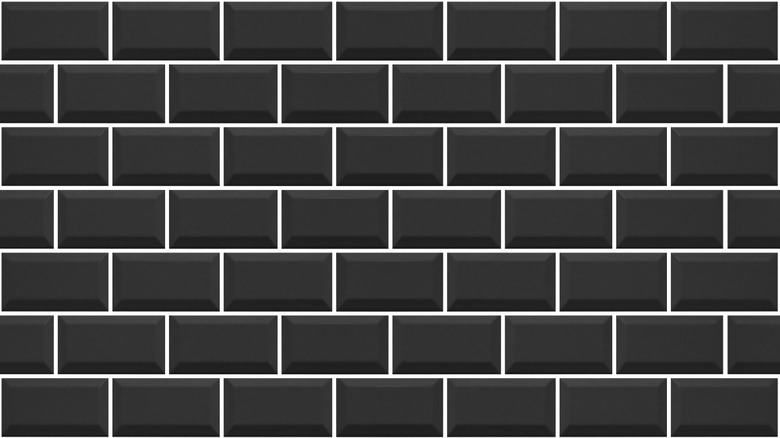
Grout is an inexpensive material, making it an excellent way to bring your backsplash alive without spending much — or any — more money. Contrasting grout works well to define the shapes of your tiles and emphasize the overall pattern. "This approach adds depth and a tailored look, much like how dark wood trim stands out against lighter walls," Malek Nassereddine says. "It's a small detail that makes a big impact."
The technique is especially effective with geometric patterns, Courtney Cole says, and it hides messes more effectively than monochrome approaches. That being said, you have to be careful, so always seek an expert designer's help. "If you get it right the contrast will suit the overall vibe of the kitchen, so be careful not to make the contrast jarring," she says.
As far as colors go, you have options: either dark grout against a light tile, or lighter grout surrounding darker tiles. "Gray grout with white tile, or deep brown with sand-colored stone, makes patterns snap," Danny Niemela says. "Each edge looks crisp, almost hand-drawn." He likes to think of this trick as a cheat code for design: reliable, inexpensive, and always beautiful.
The classic combo includes white subway tile with a charcoal gray grout for a high-contrast, vintage look. "The darker lines instantly conjure up visions of a Parisian bistro, while the plain white subway tile with white grout has no personality and fades into the background," Amanda Hickam says. She loves this when she wants to highlight a different feature of the kitchen. Think a sexy La Cornue range or a very bold countertop material, she says.
13. Shine the right light for a more extensive look
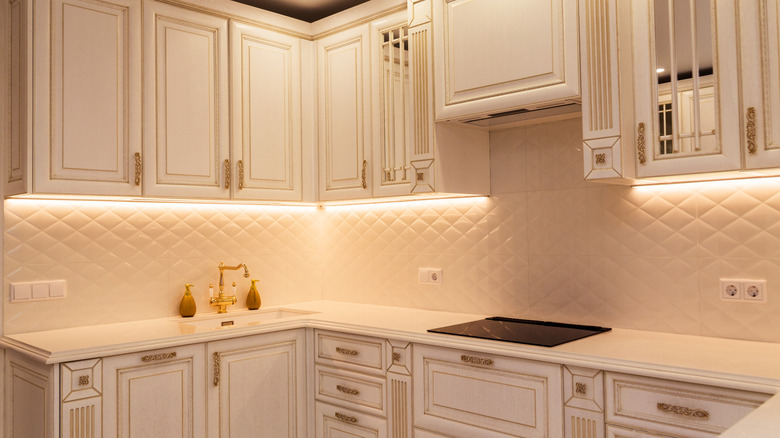
No matter what type of backsplash you use, you're going to want the right lighting to bring it to life. "It matters because light bounces off the tile more and gives your kitchen more dimension," Mackenzie Couto says. That depth can come in many forms, including shapes, tones, and colors, she says. "Light is an essential tool for creating that added dimension."
Don't just use any lights, though. The color of your tile dictates what types of lights you should choose. "The same way different lighting affects how people look in pictures, it changes how tile textures and colors look," Courtney Cole says. "For example, a tile with a matte finish looks totally different under warm lighting versus cool LEDs." This is a good reason to have a designer on hand, because they can advise you on such choices.
The good news is that it's not super expensive to employ this trick and make your kitchen backsplash look more expensive. Grab some easy-to-install under-cabinet lights and call it good. Amazon carries options, such as McGor 10-Inch Under Cabinet Lighting or Star-Spangled 2.8-Inch Touch LED Puck Lamps, that are simple to put up and start using. "You can spend $100 on under-cabinet LEDs and make a $2 tile glow like polished marble," Danny Niemela says. "Without lighting, even premium tile looks dull by dinner. With it, cheap tile steals the spotlight."