

13 Genius Hacks For Better Tasting Whiskey
The world of whiskey is a vast space steeped in history and craft, with numerous styles and flavor profiles to suit all tastes. But some who imbibe find this brown spirit to be harsh or hard to appreciate, perhaps writing it off as an "acquired taste" or a stuffy, old-fashioned booze. It often ends up used in a myriad of cocktails, from classics like an old fashioned to whiskey sours, where its sharpness is softened by other ingredients. And then there are all the whiskey terminology and classifications, which can also confuse and further turn drinkers off from exploring this storied liquor. But if you're adventurous and want to be able to appreciate this beverage (or perhaps give it a second chance) there are ways to make whiskey more approachable.
Here, we'll explore 13 different hacks to help whiskey-adverse drinkers learn to love it, and for those who already do to love it even more. We've enlisted the help of a renowned Scottish mixologist, Jack Jamieson, to advise us. He was the 2022 Scottish Drinks Influencer of the Year, and shares his expertise online with over 70,000 Instagram followers. Additionally, we had the help of Lynn House, Portfolio Mixologist for Heaven Hill Distillery, which includes the brands Elijah Craig, Old Fitzgerald, and more, to share some killer tips. The tricks they shared offer fresh perspectives on appreciating this amber elixir, ultimately leading to better-tasting whiskey and a richer overall experience. Cheers to that!
1. Swap your Glencairn for a rocks glass

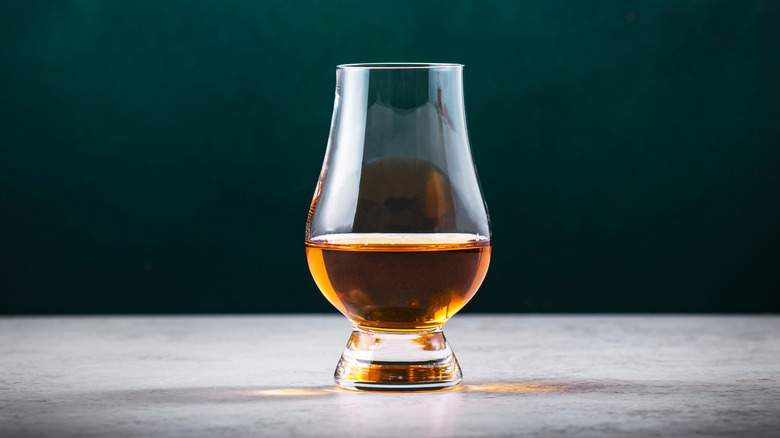
As with many types of alcohol, there's often a specific type of glass that gets used by purists, some of whom may argue that it brings out the best in their drink. Often, you'll notice that whiskey is enjoyed in bulbous glasses, called Glencairns, which accentuate and concentrate the aromas up into the nose through the narrowing top of the glass, much like wine glasses. Glencairn glasses are often said to be the best type of glassware for having your whiskey neat, that is to say, in its purest form without anything added. However, this may not be the case for all palates, and a rocks glass might suit some better.
"I think air is really important, so when I'm doing a straight whiskey pour at home for enjoyment, I prefer something that lets a little more air hit it," Lynn House tells us. "I like a rocks glass, as opposed to a Glencairn; Glencairns are great for whiskey tastings, because they help you capture all of the esters and aromas that make it so specific," she explains. "But, when you're at home, having a rocks glass is really nice." House also emphasizes patience here, saying, "The time with air and the time to let it come to temperature will help a straight whiskey pour release the esters and aromas that make whiskey so characteristically beautiful." This hack is especially easy, considering most kitchens have rocks glasses rather than those specialized Glencairns.
2. Add a dash of spice‑forward bitters
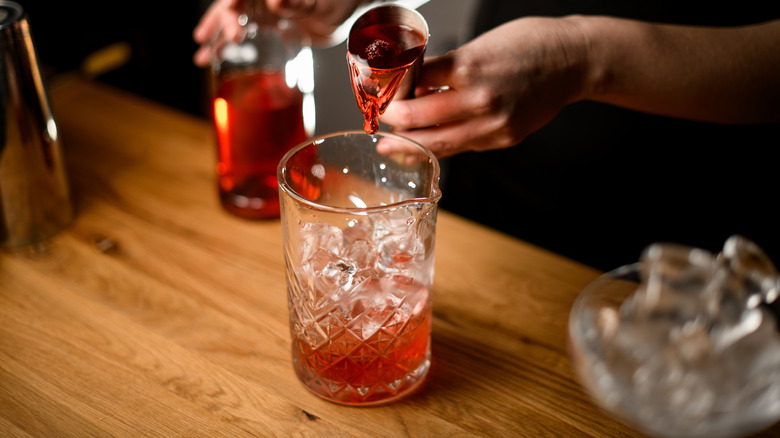
Sometimes, it seems like a whiskey is missing something. You may find it tastes hollow, too intense, too harsh, or lacking in overall character and complexity. Whatever the case may be, you can easily address the issue here. This hack may seem obvious, but it's easy to do, especially for the cocktail enthusiasts out there who likely have bitters on hand. Simply adding a small splash of bitters to your neat whiskey might be exactly what is needed to get beyond any initial hesitation, acting as the key to unlocking that warm, comforting flavor whiskey is known for.
"I'm a huge bitters person; bitters are like the salt and pepper of a cocktail," Lynn House tells us. "There are so many different types of bitters out there: spice bitters, chocolate bitters, fruit bitters, and aromatic bitters," she says. "Sometimes a little splash of water and a dash of bitters to open up and complement the flavors of whiskey are great." When it comes to zhuzhing up a whiskey that needs some help, House usually reaches for specific bitters. "Personally, I tend to lean towards bitters that have more spice to them, like cinnamon and anise, because they reinforce the flavors of the whiskey," she explains. Yum!
3. Try a birch water boost
Many people reach for a water jug when looking to ease into a punchy Scotch or assertive rye, where the harsh edges of the whiskey get softened by a splash of water. With a neat whiskey, or one poured over ice, it might simply seem too strong at first sip. The age-old technique of adding a small amount of water to one's whiskey is said to "open it up," allowing more nuance and layers of flavor to come into focus. It's cheap, it's easy, and it's an ingredient found in every home. The key is to take the advice very literally, and to only add a splash — around one tablespoon — lest you risk significantly watering your drink down and missing those intricate flavors.
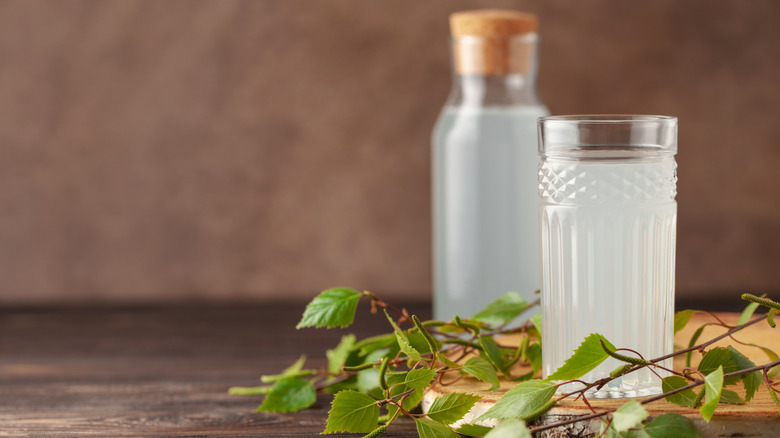
Did you know, though, that different types of water can be used as substitutes, with some unique choices adding a new way to gently dilute your whiskey? "Birch water is both an innovative and ancient technique to enhance the flavours in a dram," Jack Jamieson tells us. "I liken it to an audio equalizer which accentuates the vocals and reduces the noise." As Jamieson poetically states, this is a really fun way to add water to a whiskey, reframing and reimagining its character. And given that whiskey is aged in wooden barrels, birch tree extract as a pairing makes perfect sense here.
4. A micro‑spritz of soda water takes the edge off

Adding a splash of water again — this time a micro-spritz of soda or seltzer water — is a hack that may get overlooked. Whiskey enthusiasts may lean more towards plain water for this type of flavor enhancement, while others may associate soda water with the classic whiskey soda drink. Diluting whiskey with soda water is usually done as a cocktail, to drastically water down the spirit, making it more approachable and easier to drink for those who may not care as much about tasting notes. However, if you're someone who has a nice bottle of whiskey in your collection that you want to enjoy but can't find the right way to approach, then why not try a tiny splash of soda water?
"Soda water is a great way to explore whiskey," Jack Jamieson tells us. "The bubbles add great depth to the flavour and can really elongate the finish, particularly for smoky whiskies," he says. Next time you find yourself at odds with a potent and peaty Scotch, try adding a tablespoon of soda water, and adjust to taste. The carbonation will help to gently aerate the whiskey, coaxing out hidden notes that may not be apparent when drinking it neat. This one is also cheap and cheerful, with the cost of a soda water can being easy on the wallet.
5. Do a blind‑pour tasting
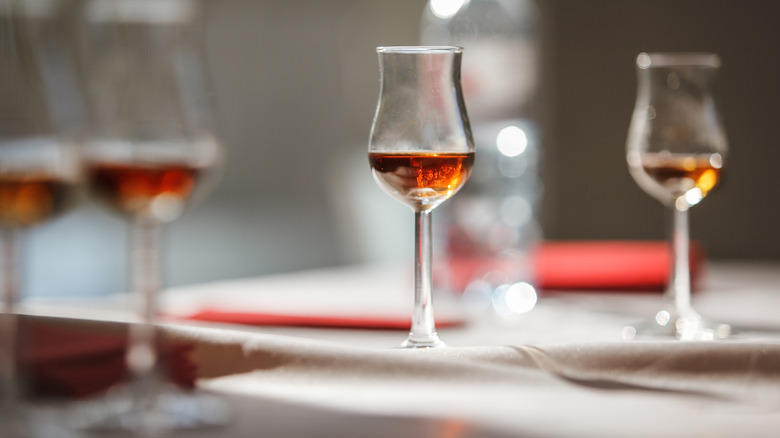
It's no secret that we all have inherent biases when tasting food or drink, especially when we see it in front of us. If you see a very cheap bottle of whiskey on a table, and are given some to try, you may harshly judge it as bad due to a presumption. But if you taste said cheap whiskey blind, perhaps a whole other opinion — one devoid of your confirmation bias — would emerge. You may even find you enjoy it.
Jack Jamieson elaborates on this hack for tasting whiskey in a whole new way. "Get someone else to pour it and close your eyes before they give it to you — it's amazing how many people enjoy whiskey without knowing what they're drinking," he says. "There's many preconceived notions about what whiskey should taste and look like, and seeing the liquid in a glass already dictates much of this interpretation," Jamieson explains. "But if you're simply blindfolded and given it in a taste test, your palate can fully appreciate what it's been given to try." This blind-pour tasting hack could be fun to try with some friends, challenging your ideas of brand, price point, and whiskey style.
6. Explore the oxidation rest method
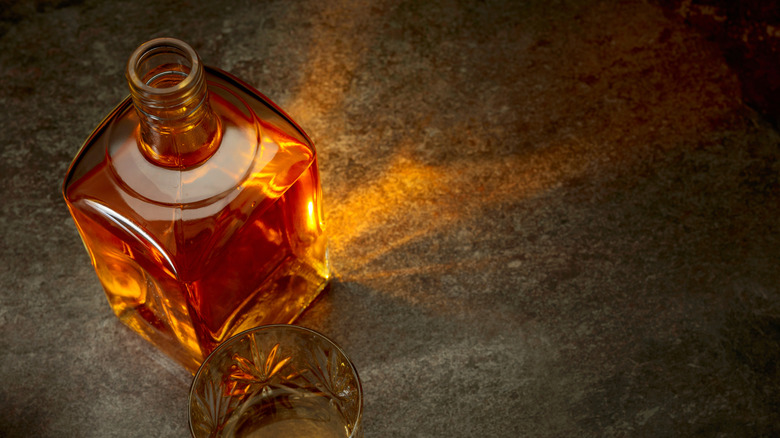
Many wine aficionados will open a bottle of wine an hour in advance of dinner, to "let it breathe," sometimes even transferring the wine into a decanter to aerate the precious liquid. It might seem pretentious, but swirling wine or whiskey aggressively helps to aerate and open it up, giving drinkers access to locked-in flavors with the help of oxygen. And while most whiskey enthusiasts won't be caught dead decanting a whole bottle into a weird-shaped glass jug, a similar approach can be taken here.
Jack Jamieson elaborates on the process, saying, "On first pour, some [whiskies] can be a bit aggressive to the palate, especially at higher proofs, but after leaving the bottle for a few weeks and returning, I've found it a much more enjoyable dram." He continues, explaining, "That slight oxidation mellows the notes in the same way a slight solution would, but without needing to trial drops of water." This particular hack also helps with some cask-strength, higher ABV whiskies, where they mellow out after being opened, over a matter of weeks. Patient whiskey fans will be rewarded here as the drink's aromas and flavors modulate, getting tamed by the air, and ultimately improving.
7. Have fun with the grain‑and‑glass pairing ritual
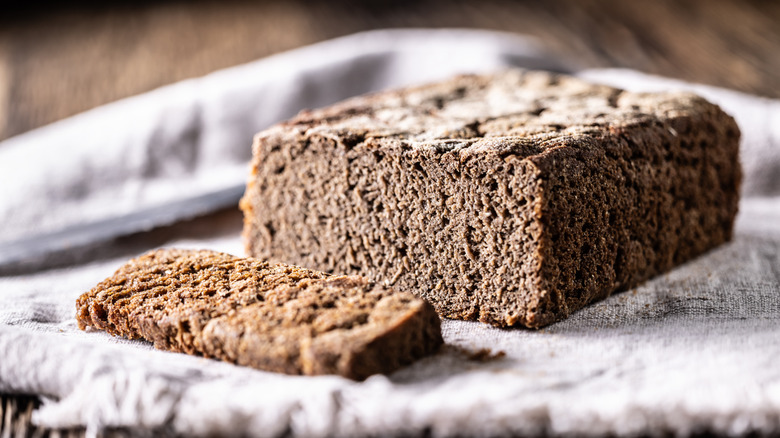
At wine tastings, it's a common sight to see small slices of white bread — perhaps some baguette — laid out, for the express purpose of cleansing one's palate between wines. The mellow flavor of the bread serves to hit the reset button, acting as a sponge and brush, sopping up lingering wine on the tongue, readying it for the next sip from a different bottle. Similarly, serving some bread with whiskey can also help, while allowing for overlaps in those yeasty, bread flavors you can taste in some whiskies.
Lynn House mentions that she does "whiskey and bread trainings, where we eat the corresponding bread first — corn, wheat, rye, barley — and then taste the whiskies," noting, "It makes it more interactive." Having cornbread with bourbon, or a dark rye bread with some Pennsylvania Rye, would not only be delicious, but the two could complement each other nicely. In turn, it can help to coax out flavors of the whiskey between bites. This carb fest of a hack definitely sounds like a fun and tasty way to explore whiskey profiles!
8. The chew and swirl technique

If you've ever been to a whiskey tasting, you may have seen people swishing this golden booze around like it was mouthwash, brows raised, as they try to unpack the flavor notes. The technical name for this is the "chew and swirl" technique, employed by both professionals and enthusiasts alike. Rather than simply taking a sip of a dram and swallowing it down, swirling with your tongue and cheeks, combined with a chewing motion, spreads whiskey all over your soft palate, helping to hone in on flavors.
Sometimes referred to as the "Kentucky Chew" by bourbon bros, this technique might seem silly at first, but it works. It can help some drinkers to actually taste those green apple or cinnamon notes listed on the bottle. "Swirling and chewing, I feel, are ways to train your brain to like it once you've learned what you're consuming," Jack Jamieson tells us. By slowing down and forcing the alcohol to linger on your palate a bit longer, you get to know the whiskey better and, in turn, hopefully appreciate it more.
9. Take slow and careful sniffs to protect your nose

From a young age, many learn quickly that alcohol can smell harsh, with a chemical-like aroma that may burn the nose, making children wonder why any sensible adult would consume such a volatile substance. And it is indeed true: Alcohol can burn your nose — and throat — at any age because of its strength. During an objective whiskey tasting, those vapors can overwhelm the nasal passage, so it's important to be careful. "We taste from our nose, so I really work with people to protect their olfactory systems," Lynn House says.
"What I suggest is that you open your mouth a little bit to allow oxygen in and cool the olfactory system," House tells us. "Then, you raise the glass to your nose and when you start to pick up aromas, you stop, because high-proof spirits can burn your olfactory system — you don't want to stick your nose into the glass, because then it will take 20 to 30 minutes to reset your olfactory system," she advises. "Once I start to get the top aromas and the esters and get an idea of the flavors, I sip, chew, swish, and spit. After the second sip, I inhale and exhale, and that's where I get the flavor of the whiskey." Take it slow, and follow House's advice to carefully assess the aroma of your favorite Irish whiskey — you'll thank us later.
10. Ease your toes into the pool (of whiskey)
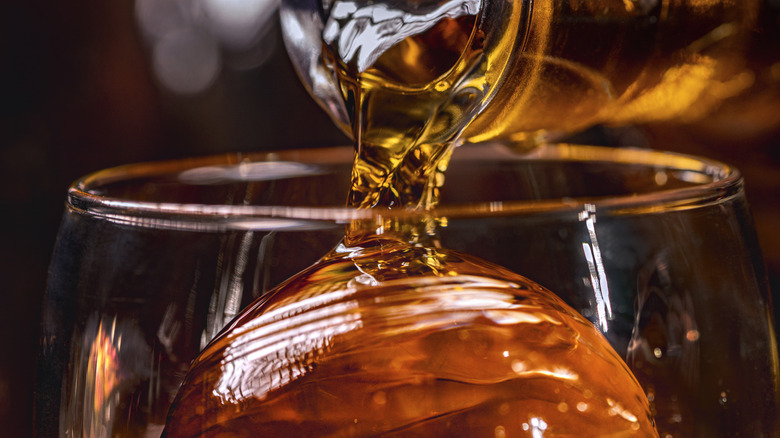
If you've ever ordered a high proof whiskey — something sitting near 100 proof of 50% ABV, to upwards of 120 proof — and didn't enjoy the taste, it's possible that the drink was too strong for your palate conditioning. A cask-strength single malt Scotch with a super-high proof, when imbibed out of the gates, could overwhelm a whiskey novice. You may fare better to ease your toes into the pool, starting slow with a more approachable alcohol strength, rather than baptism by burning bourbon.
"I always start people off with a lower-proof whiskey, especially something wheated because it's a softer grain," Lynn House says. "86 to 92 proof is really palatable for beginners [and] it's also completely acceptable for whiskey beginners to add a splash of water or ice to temper it down, in order to appreciate it," she advises. It's not about impressing a bartender with a scorchingly strong Scotch order, but rather finding something tasty that won't burn an unseasoned palate. This might sound like common sense, but it can really help newcomers better appreciate the world of whiskies.
11. Bubbles are your friend: palate refresh
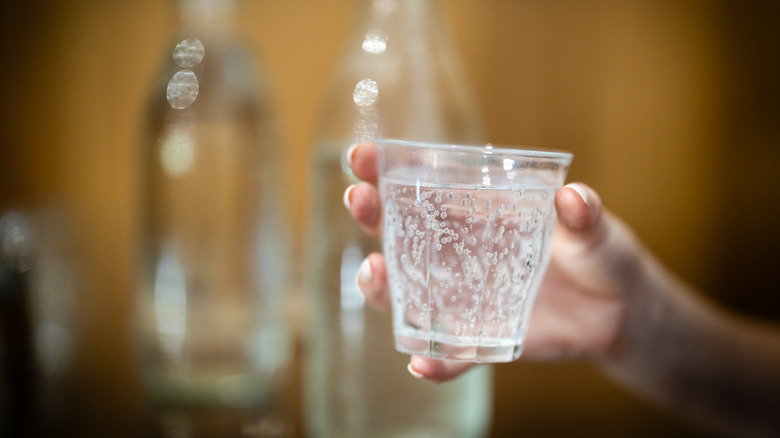
Not only is a seltzer your friend when it comes to diluting — and opening up — your whiskey of choice, but it also helps to cleanse the palate. Between sips of a nice blended Japanese whiskey, as you search for those elusive notes of basil, grapefruit, and honey, a quick sip of soda water can help you see them more clearly. Considered a palate cleanser, those bubbly drinks are great to have on hand when you're looking to get a firm grasp on whiskey tasting notes.
"Many whiskies and other spirits have an oily palate that remains on the tongue long after you've finished the drink," Jack Jamieson says. "Whilst not a bad thing, palate cleansers can help in a tasting from letting one whiskey influence the perception of another," he tells us. Lynn House's advice here overlaps with Jamieson's. "When I'm tasting whiskies in succession, I like to use seltzer because the bubbles help lift that coating," she explains. "When I'm walking people through a flight [of whiskies], I recommend that they have a full glass of water without ice, because cold shuts down your tastebuds," she tells us, adding, "it also hydrates you!" Staying hydrated is never a bad idea!
12. Mind over matter: The power of environment

Sometimes, the environment you're in can influence your entire experience — whether it's a dinner, watching a movie, or sipping on a 12-year-old Scotch from Islay. If you're not comfortable, if the space is uninviting, too loud, too bright, or just feels "off," you may not enjoy what would otherwise be a tasty dram. It might sound silly, but Jack Jamieson agrees. "The environment in which you consume food and drink has an amazing impact on the enjoyment," he says. "From the comfort of the chair to the audio you hear, each influences the flavours identified by the palate."
If at home or in an environment you can control, making sure you're comfy is key. "For me, to enjoy a whiskey to its full potential, I dim the lights, find a comfy chair, put my feet up, phone away, and ensure the whiskey glass I choose is dainty with a narrow rim and slightly chilled," Jamieson says. "This sets an easy benchmark to compare all whiskies I try against." For those who choose to imbibe in a bar, finding the coziest one on the block may help you to let your shoulders down, relax, and stay in the moment, as you indulge.
13. Trial and error: Build your palate up
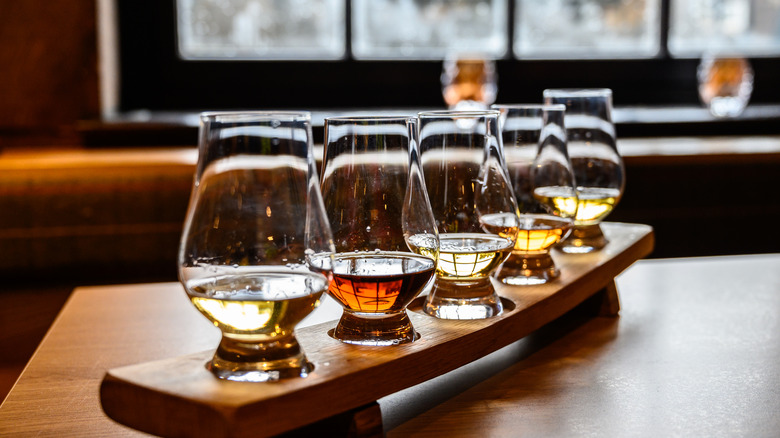
It may sound counterintuitive, but sometimes the best way to deeply get to know a whiskey is to drink a different one. Comparing and contrasting two or more whiskies side-by-side, switching back and forth, can help you see one of them in a whole new way. This extends beyond tasting, where you can qualitatively assess its looks as well. "I look at the legs, which tell me about the natural chemical compounds of the whiskey," Lynn House says. "I also look at the color, and whether it is cloudy — sometimes whiskies can cloud when you add chilled water to them."
Tasting groups of different whiskies at once will also help to build up your palate. "When tasting a flight of whiskies, it is important to have varying proofs, and it's really fun to taste different kinds of whiskies together, because then you can decide what you like," House says. Different types of whiskey, whether a wheat whiskey, wheated bourbon, or rye whiskey, can have subtleties you might not notice without anything to compare them against. Then, as House explains, "When you taste them side-by-side, you can start to develop your own personal palette." Enjoy, and drink responsibly!