

13 Tasteful Ways To Hide Your Microwave In Your Kitchen
We may receive a commission on purchases made from links.
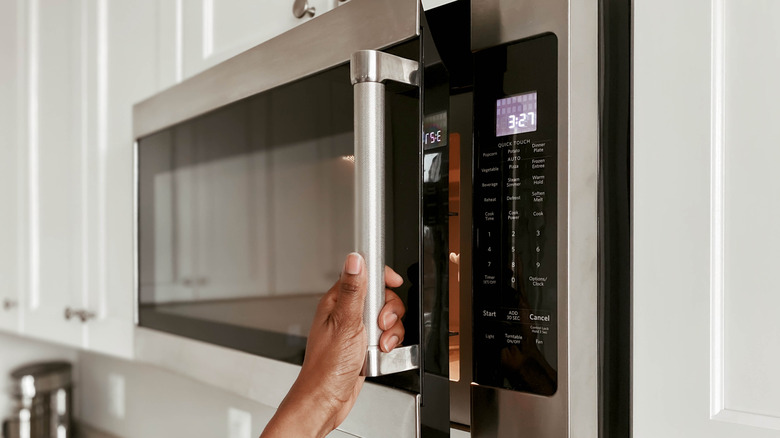
The microwave is a polarizing device. Some love it, expounding upon the many microwave hacks that exist to make life easier, with the appliance earning rave reviews from such luminaries as David Chang. Others dislike it, with Julia Child famously disdaining it for all but a few tasks.
Wherever you fall, chances are excellent you have a microwave in your kitchen ... and that you're at a total loss for how to hide it. "When I work with clients to elevate or renovate their kitchen cabinetry, the microwave is often the most difficult appliance to style into the overall design," says Teri Simone, head of design and marketing at Nieu Cabinet Doors. "Unlike panel-ready dishwashers or counter-depth fridges, most microwaves have bulky fronts and come in white or stainless steel, which can disrupt a cohesive look."
This clash of form versus function is one that troubles most homeowners. The good news is with the right advice you can keep a microwave on hand for those quick-fix heat applications while maintaining a streamlined kitchen design. Chowhound sat down with the experts to find out how.
1. Build your microwave into your cabinets
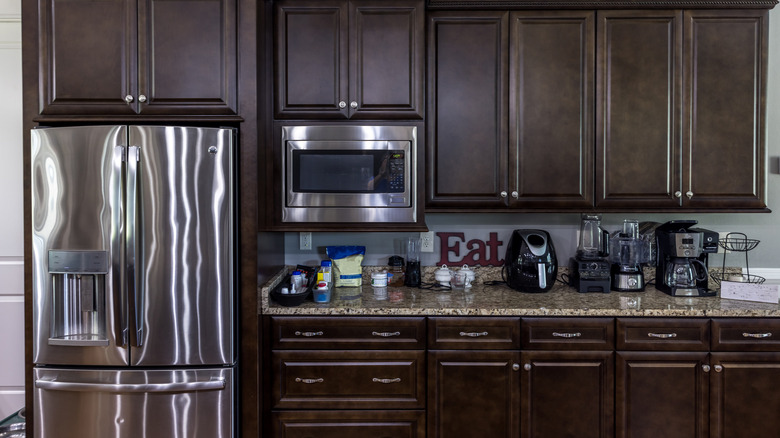
Of the many ways to hide your microwave, some involve truly stashing it where no one can see, while others "hide" it in plain sight by helping it blend into your kitchen's design more effectively. This strategy falls under the latter umbrella. "This is my default when designing a streamlined kitchen," says interior designer Rachel Blindauer. "I rarely install them at eye level anymore; it feels like the equivalent of putting a fax machine on your marble countertop." Instead, she recommends integrating them into a tall pantry cabinet or appliance wall, maintaining a flush front and matching the surrounding millwork. "The result feels polished — never like an afterthought."
The approach does take a bit of doing, but the end result is much more satisfying. "If you install a built-in microwave with matching paneling and custom-built surround it can flow seamlessly with the rest of the appliances," says Jacob Naig, owner of We Buy Houses in Des Moines. "This method can be especially effective in kitchens that are streamlined with contemporary or modern features, consistency becomes important to the overall look." Looks aside, this also helps keep the counters clear ... and does anyone have enough space on their kitchen counters? We think not.
If you really want to go for it, says Courtney Cole, interior designer at TileCloud, match the color of your microwave to your cabinetry. It might take some doing, but you can absolutely hunt down these futuristic little ovens in earth tones, pastels, or retro hues. This softens the industrial feel of the microwave itself, Cole says.
2. Hide it in a cabinet
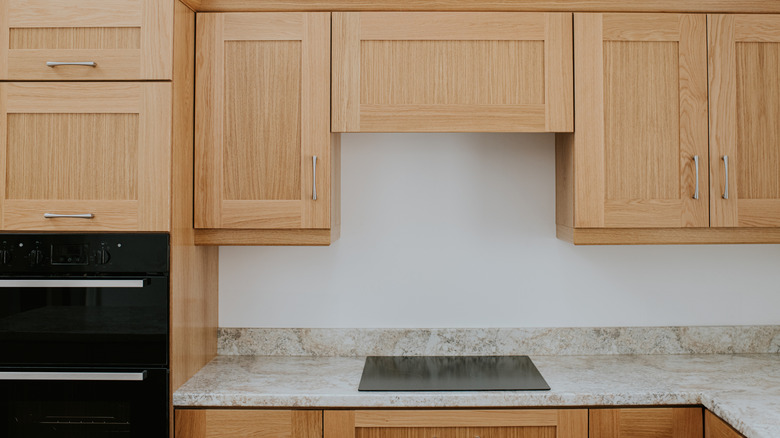
Looking for a more complete way to hide your microwave? Not a problem. "For my clients who are after a clean look, tucking it behind a cabinet door will keep it completely out of sight," Courtney Cole says. "This is great for small kitchens that aren't spoilt for space." There are several ways to do this.
Jacob Naig favors custom cabinetry wide enough to hold the microwave, with a door that matches the rest of the cabinetry in the room. "The microwave can fill the whole wall from side to side with custom cabinetry constructed to match the rest of the kitchen's style," he says. "Push-to-open cabinets will make it just as simple to get out the microwave, all while letting the lack of clutter speak for itself." The trick, he says, is that you want to make sure the cabinet disappears into its surroundings but is still easy to reach when you need it. "This philosophy is perfect for more traditional or classic kitchens," he says.
You have other options for doors as well. Teri Simone loves both pocket and bifold doors, and a swing-up door will work as well. Ideally, those doors stay out of the way the entire time you're using the microwave, then you can put them back to hide the appliance as soon as you're done. This works for coffee makers, tea kettles, toasters, and other items you'd like to keep off your countertops as well.
3. Use a sliding door cover
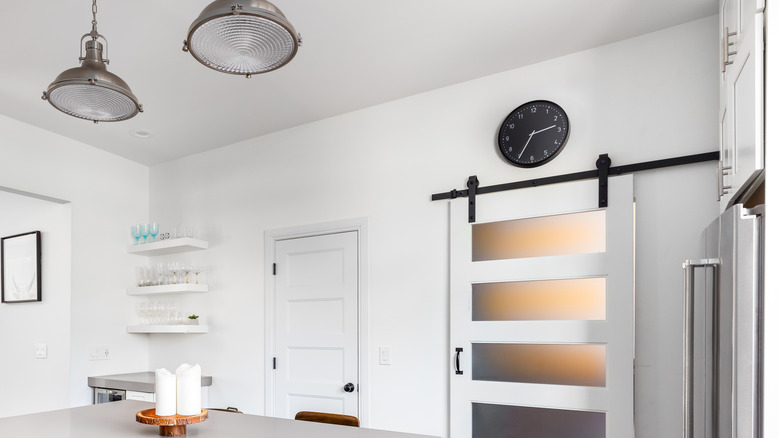
Find pocket doors annoying? (What exactly is going on in there, anyway, and why the heck is it so easy to break them?) In all seriousness, you can achieve a similar but more upscale look with a sliding door cover to hide your microwave.
"I love a sliding panel in kitchens," Courtney Cole says. "Not only does it add architectural interest, but it easily hides the less pleasing appliances like microwaves. In this case, try installing a shallow barn-style door. This will make it easy to slide it open when you need your microwave."
If barn doors aren't your thing, try tambour fronts. Those are the slatted kind that bend roll upward and bend, disappearing into the side or top of the space. Think a rolling garage door or an old-fashioned writing desk. These are not only fun to use, but they can also add a beautiful design element to your kitchen in place of an ugly, functional appliance.
4. Put your microwave in the pantry
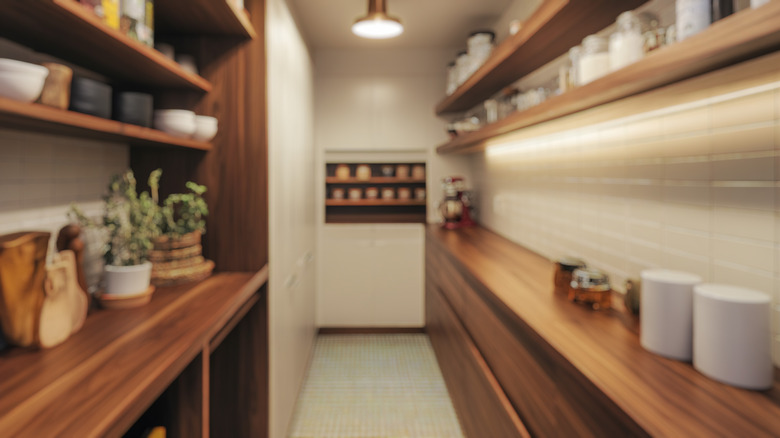
Here's an easy idea: Hide your microwave in the pantry. "When clients have a walk-in or tall pantry space, we often relocate the microwave there," Teri Simone says. "This frees up prime kitchen real estate and helps keep sightlines clean in open-concept layouts."
Jacob Naig agrees with this approach. "The pantry organizing solution helps keep all your kitchen gadgets in one place, so your kitchen feels orderly and integrated," she says. "If space permits, it's a pragmatic approach without sacrificing the kitchen's architectural integrity."
Other spaces work, too. Rachel Blindauer likes to run power into butler's pantries or other walk-in storage areas, the better to keep the microwave out of the main space, where families gather and you might even entertain, assuming you have a large island or big table in the center of the room. It makes the whole thing feel cozier and classier, while still keeping your cooking space functional. "It keeps the kitchen feeling like a design-forward zone, not an appliance showroom," she says.
5. Integrate it with the stove hood
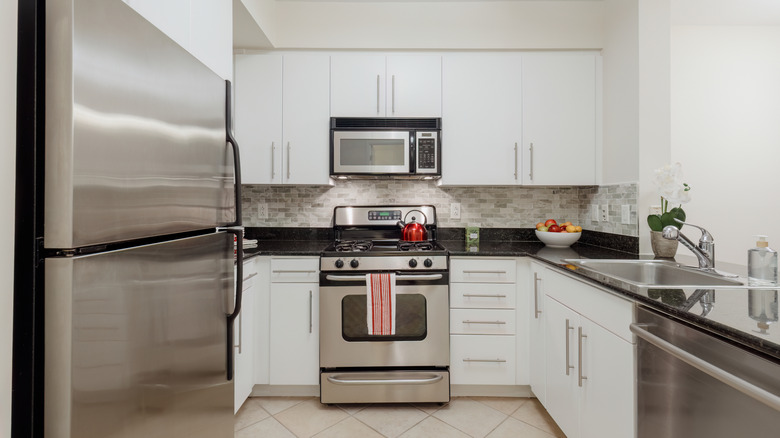
Another cute way to "hide" your microwave is to build it into the wall underneath your stove hood. "Hanging the microwave below the hood allows for a nearly invisible appearance," Jacob Naig says. "This shortcut is common in compact kitchens where there is a need for efficiency as well as a sense of design continuity." Plus, it's available right near the cooking area.
The only caveat here is you absolutely must get professional help when installing it, unless you yourself are a knowledgeable contractor. Why? Because when you put the microwave under your stove hood, steam and soot from the stove must funnel through the fan in the bottom of the microwave rather than right up into the hood. Proper venting becomes a key issue that only experts should tackle.
6. Tuck the microwave into the island
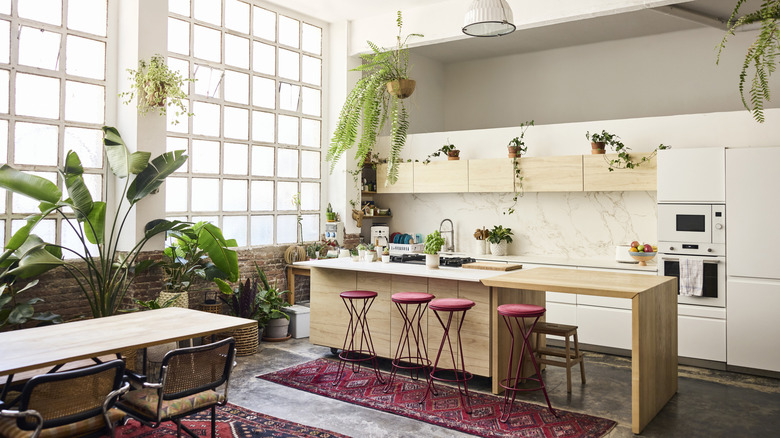
Have an island? First of all, way to go. Islands are an adorable and useful kitchen feature, and there are tons of ways to decorate them with intention. Even better, they offer a great opportunity to hide your microwave easily. "When I work on compact kitchen layouts, tucking the microwave into a kitchen island is a great use of otherwise awkward space," Teri Simone says. "It keeps the appliance accessible but discreet, especially when placed on the backside of the island where it's out of sight from the main cooking view."
While you could place a traditional front-facing microwave in a spot below the counter and bend down to use it, a microwave drawer is more ergonomic, Simone says. You simply press a button and the microwave opens up, giving you a top-down space into which you insert items to be heated from above. This is a great solution for younger kids, who are old enough to use the appliance but too short to reach above the stove or too young to be trusted near a hot cooktop.
7. Keep it in a hutch
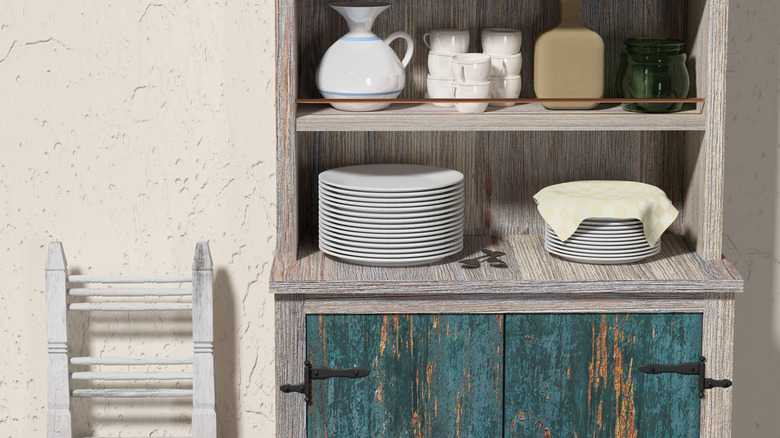
What's cuter than a hutch? These freestanding or built-in chests are usually made of wood, which you can match to the rest of your cabinetry, floors, overhead beams, or furniture in the dining room to create a transition point. It offers a ton of design potential as well as a seamless way to hide your microwave, because many hutches have both open spaces and closed doors or drawers.
"For more traditional style kitchens (e.g. cottage-style), tuck your microwave into a built-in hutch," Courtney Cole says. "By doing this, you can preserve the 'old school' charm of the room." Rachel Blindauer loves this strategy as well. "I've designed custom hutches with hidden compartments that lift or pull out for small appliances," she says. "It's a more traditional solution that still feels fresh when paired with updated materials or reeded glass."
8. Mount it on top of a wall oven
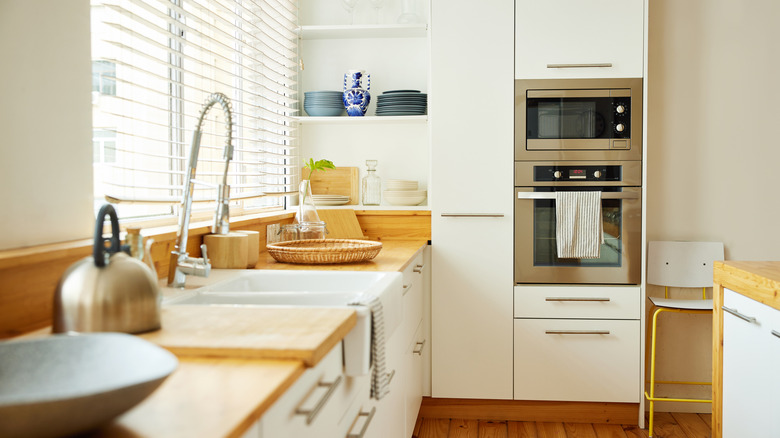
The main problem with microwaves, Jason Naig explains, is that they're visually out of step with the rest of the room. "It has a modern, sometimes industrial appearance that won't work as well with traditional or more muted kitchen design themes," he says. "As kitchens develop into sleeker, more cohesive areas, there's often a sense that the microwave just doesn't belong, particularly in spaces where clean lines and concealed storage are top of the agenda."
There's a solution for this, though: Place it in an area of your kitchen that already hosts appliances with similar lines and intentions. Just as you can hide your microwave in plain sight above a cooktop, you can also pair it with an oven within your kitchen's design to create a more appealing visual effect. This maintains the clean lines and free-flowing sense of space you're going for in the rest of your kitchen.
9. Install a drawer microwave
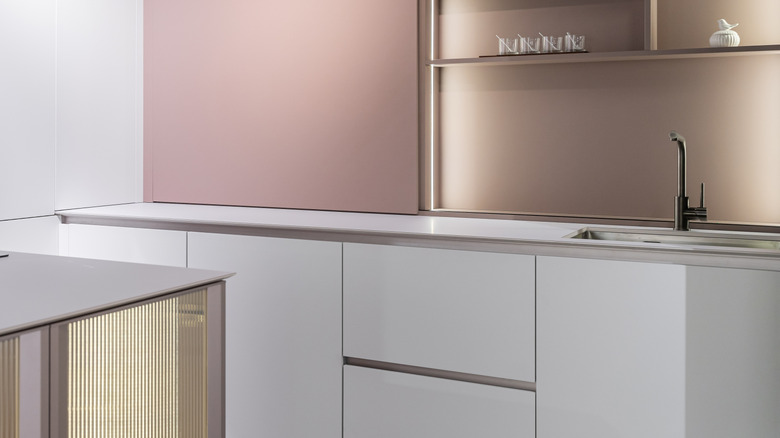
As discussed, drawer microwaves are an excellent solution for storing the appliance totally out of sight, but without placing any obstructions between you and it. They work well in islands, but you can also place them anywhere along your lower cabinetry, hidden among the rest of your drawers.
"Drawer microwaves are one of my favorite recommendations for clients seeking a seamless and modern look," Teri Simone says. "They sit flush with lower cabinets and open like a drawer, which is great for both aesthetics and accessibility. Just make sure you've got the clearance needed to open them fully." This not only provides easy access, but it removes the need to lift hot bowls of soup above shoulder height, Rachel Blindauer points out.
Jacob Naig loves them, too. "Mounted below counter level, these microwaves are simple to use without distraction from the flow of the kitchen, or adding to countertop clutter," he says. "With its modern look, cleverly hidden mechanism, and pared-down form, it's perfect for the kitchen that wants to keep things looking stylish and contemporary."
New microwaves range widely in cost, but drawer microwaves tend to be more expensive than other types because you have to build them into the cabinets, and they have a number of features that their simpler countertop or wall-mounted cousins don't, prime among them that fancy drawer that pulls out from the counter. Still, they're not prohibitively spendy. Check out the COSMO 24-Inch Built-in Microwave Drawer, for instance.
10. Hide it on a pull-out shelf
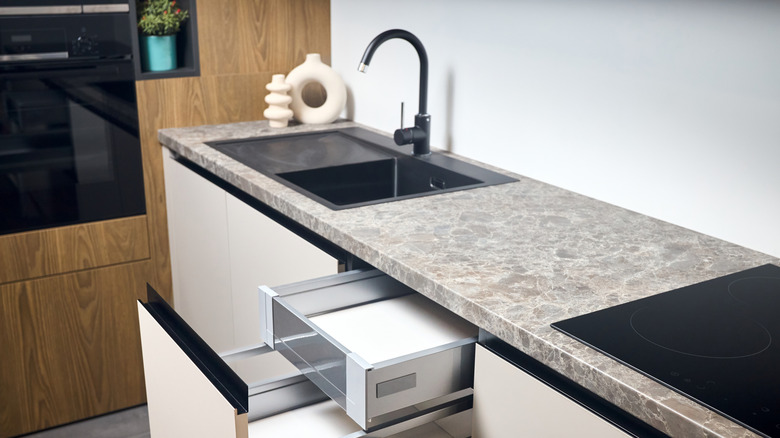
"Another good technique for disguising a microwave is as part of a pull-out shelf, hidden in a corner or under the counter," Jacob Naig says. "This approach gives you the advantage of being able to keep the microwave hidden and out of sight and yet still provides the quick accessibility that you might count on." It's the perfect balance of design and practicality, he says, because you simply open a cabinet door and pull it toward you, then put it to work.
Before you pursue this solution, though, think about how often you use your microwave. If the answer is "absolutely all the time," this might not be the best solution. Sure, it's handy, but you still have to complete multiple steps before you even get to the microwave, Teri Simone points out. It's a better solution for those who still want it handy, but only use it occasionally.
And don't forget about ventilation, she adds: "When integrating or hiding a microwave, especially inside cabinets or drawers, make sure there's proper airflow or built-in venting. Without it, you can end up with heat or moisture buildup that damages cabinets or shortens the microwave's lifespan."
11. Recess it into a wall
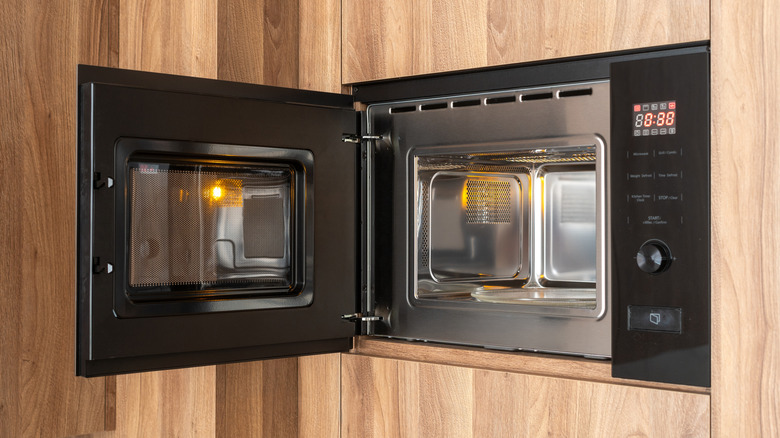
If you have the space and can plan ahead, recessing your microwave into a wall is a great way to hide it and keep the kitchen flow functional and pretty. "This option requires more planning, but when space allows, I'll recess the microwave into a stud bay or bump-out wall," Rachel Blindauer says. "It reads more architectural than appliance, especially if framed cleanly with millwork or stone."
This obviously won't work with a wall that is only 6 inches thick, such as the main exterior wall or one that divides kitchen from dining room. You'll need a false wall, therefore, which means you have to have a certain type of kitchen — or plan on remodeling. Still, it's often worth it. "It can be especially successful in open-concept kitchens or when you have some extra room for the built-in styling," Jacob Naig says. It is effective when you're going for clean kitchen design.
12. Use a trim kit
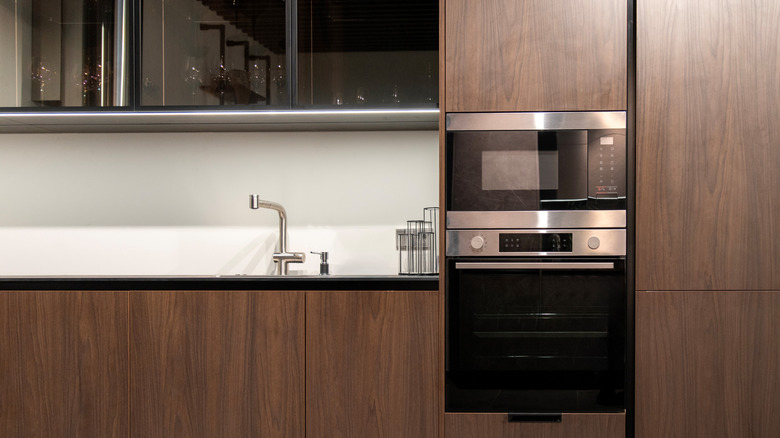
Trim kits don't hide a microwave, per se, but they do help you homogenize the look of your kitchen without having to shut the appliance behind doors. This is a great option for those who don't have a false wall, lack the space for a hutch, have limited cabinetry, or are otherwise unable to hide it for real. While there are any number of common microwave mistakes and any number items you should keep out of the microwave, foremost among them being metal, there's nothing saying you can't trick your microwave out with metal on the outside.
Trim kits, which come in both metal and wood, fill the space around the edges of a microwave so there are no gaps between it and the wall or cabinetry. "These are a really great way to fill in the dead space around the microwave, given the look a more 'cohesive' and 'symmetrical' look," Courtney Cole says. "If you're looking for a built-in (but polished) look, use a trim kit."
Overall, this makes it look less like a plug-in appliance and more like an intentional kitchen feature, Rachel Blindauer says. "I often pair this with matching cabinetry paint or metal finishes to downplay its presence." Just make sure to match the trim kit to your microwave's make and model. For instance, your microwave might call for a Panasonic 30-inch Trim Kit for Panasonic 2.2 Cubic Feet Microwave Ovens.
13. Store all your appliances in a drawer
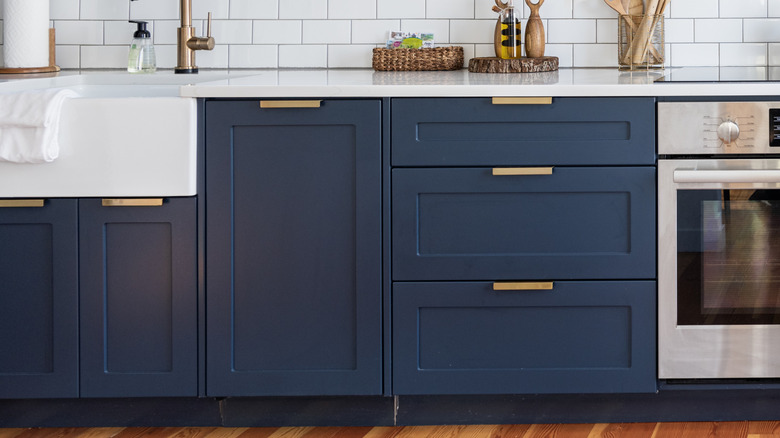
If you don't do much microwave cooking, you might be happy keeping it in a drawer. It's a more prosaic way to hide it, and it does require unplugging it from the wall, which could create inconvenience down the road. However, if you really only need it once in a while or to please guests who rely on it, then it might prove an effective solution.
Before you make the call, ask yourself a few questions. "For instance, how does concealing appliances alter the rhythm of the space while cooking? Are there design or style elements that complicate daily routines or make the kitchen feel less orderly and efficient?" Jacob Naig queries. "These are all things that will be addressed in a good kitchen design that aren't always given the consideration they deserve when discussing a design or remodeling project."