

How Much Have Hershey's Chocolate Bars Changed Since 1900?
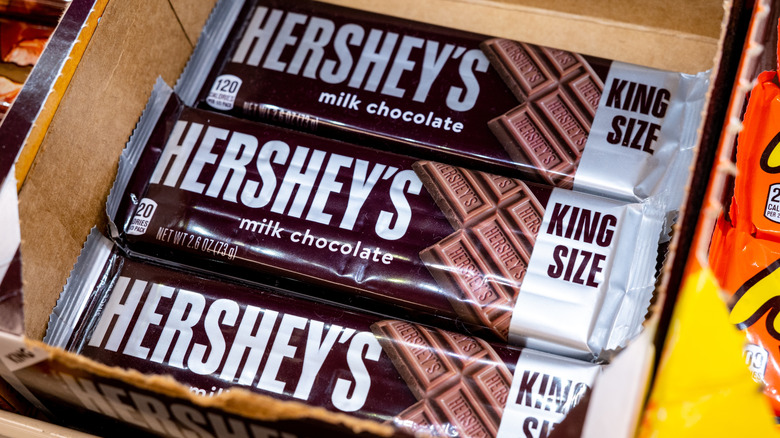
Hershey's is the classic chocolate bar everyone knows, though the love for it may not be the same as it was decades ago. While the brand still sees considerable demand and continues to release new products, producing more than 373 million chocolate bars annually, chocolate lovers have noted that recent iterations have tasted waxy and more sugary. Over the years, the ingredient list has seen various changes to roll with the punches of changing supply chains and market conditions. Some of these modifications include the addition of the ingredient polyglycerol polyricinoleate (PGPR), which popped up on Hershey's labels around 2010, and the introduction of genetically modified ingredients.
The 1900 Hershey's recipe consisted of only milk, sugar, cocoa butter, and chocolate liquor, the latter of which was cocoa butter and cocoa solids. When Hershey started printing nutrition facts on its labels in 1973, the bars had added soy lecithin and the artificial flavoring vanillin. Lecithin creates that desired smooth texture, similar to the role of PGPR, an emulsifier that enhances chocolate consistency and flow for better molding.
Around 2010, milk fat and lactose started showing up alongside PGPR. In 2015, Hershey promised to remove PGPR and other artificial or genetically modified ingredients — like GM sugar and milk — from its bars and Kisses. But as of now, its bars still contain PGPR. Hershey also attempted to swap the artificial vanillin for natural vanilla, but both are now absent from the recipe, replaced with an unidentified "natural flavor."
The current state of Hershey's chocolate bars and what the future holds
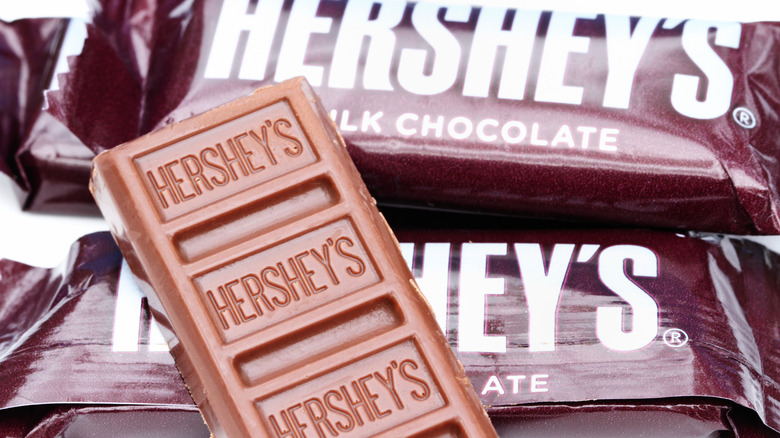
Amid ingredient modifications, cocoa prices increased in 2024 due to climate struggles in West Africa, the leading supplier of cocoa. Many chocolate makers lessened the chocolate content in their recipes or added palm kernel oil to replace cocoa butter. This move had the biggest impact on other Hershey brands such as some Reese's products and Mr. Goodbar, which changed labels to comply with the decrease in milk chocolate. According to the Food and Drug Administration, brands can only label products as "milk chocolate" if they contain a minimum of 10% chocolate liquor. This means fans of the classic Hershey's bars have less to worry about, as the candy's packaging still retains its familiar milk chocolate labeling. Still, the other changes in the bars' recipe over the decades have made customers eager to branch out and try chocolate bar alternatives with simpler ingredients.
Recent nostalgia pushes have prompted Hershey to offer its bars at the original 5-cent price and return to vintage packaging designs, though the company has forgone the original foil packaging and made no move to reintroduce its four-ingredient recipe. Hershey also plans to incorporate its original Reese's and Hershey's recipes into other chocolate products in its portfolio starting in 2027 for a more consistent brand experience. The company maintains that it isn't making any changes to the classic recipes, and customers can count on tasting authentic milk and cocoa in Hershey's bars. However, this messaging leaves something to be desired for fans who insist the bars aren't what they used to be.