

15 Oldest Candy Bars You Can Buy In The US
We may receive a commission on purchases made from links.
The food world is always innovating, and there's no telling when the next viral sensation will hit. Social media trends sent everyone scrambling to figure out where they could find Dubai chocolate in the U.S., but we think the classics deserve a moment in the spotlight, too. That means going back more than a century, and some of these vintage candy bars might surprise you when you discover just how long they've been on shelves.
And yes, we're talking about candy bars you can still pick up today. We'll tell you where to find them, share a little history, and put their age into perspective. After all, dates can mean very little without a little context.
First, a caveat. We're looking at candy bars that have been around the longest, but we're not limiting the list to chocolate. Any kind of candy bar is fair game, and we're not just sticking to American brands, either. While all of these treats are available in the U.S., Europe has a long candy-making history of its own, so we'll be checking out some international favorites, too. And if you happen to spot one of these old classics? Maybe it's time to revisit it.
1. Fry's Chocolate Cream
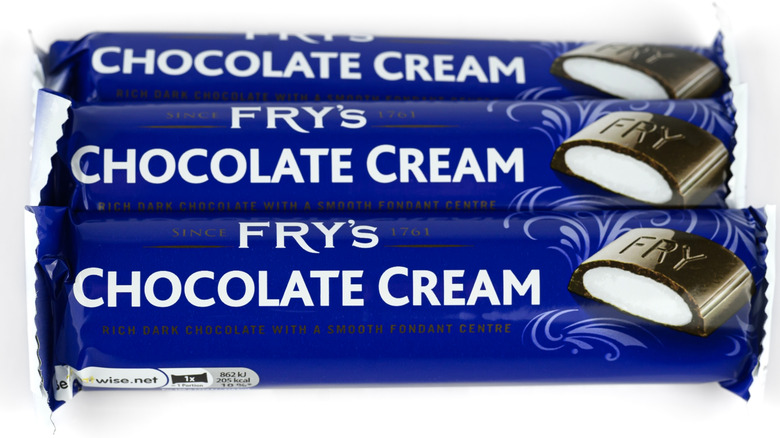
The history of Fry's Chocolate dates back to the late 18th century, when it was a family-owned pharmacy that touted the medicinal benefits of chocolate. A series of steam- and water-driven technological advances allowed the family to produce increasingly better chocolate over the years, until third-generation owners developed a process for molding chocolate. After introducing a few different products, Fry's Chocolate Cream debuted in 1866 — making it the oldest chocolate bar still available today.
Interestingly, it was also the first chocolate bar to be mass-produced, and let's add some context here. We'll skip across the pond to the U.S., where 1866 was the year of the first train robbery in history, the debut of the pedal bicycle, and Ulysses S. Grant's arrest for speeding — in his horse-drawn carriage.
Fry's bars are manufactured by Cadbury today, and that merger is also pretty old, dating back to 1919. The bar pairs dark chocolate with creamy fondant in a treat that's still wonderfully old-school. The good news is that anyone wanting to try this vintage treat doesn't have to look far: You can order a three-pack on Amazon for $9.99, or find it at at retailers like Walmart.
2. Goo Goo Cluster
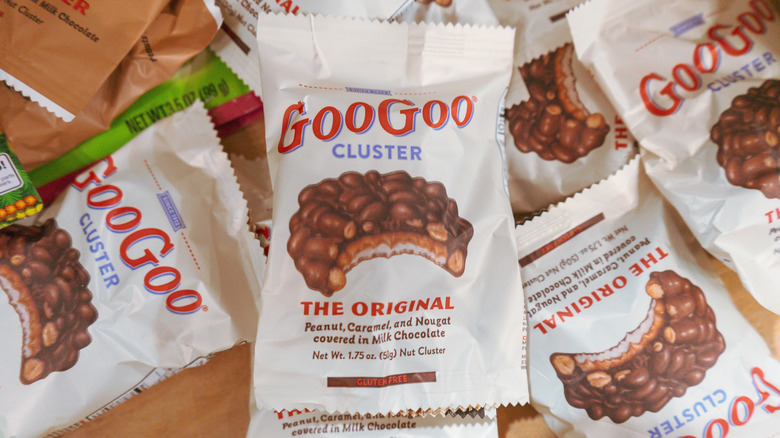
There are a ton of Goo Goo Cluster varieties out there today, and it's been a favorite for a long time: the original hit the market in 1912. That's the same year the Titanic sank, and New Mexico became a state.
In Nashville, though, sweet things were afoot. Candy pioneers Howell Campbell and Porter Moore were blending not only chocolate but also caramel, nougat, and peanuts for a clear winner. It also marked the milestone debut of what would become known as the combination candy bar. As for the name, inspiration came from Campbell's son: His first words were "Goo goo!"
The result is a candy bar that's still firmly part of the city's foodie landscape, and anyone visiting Nashville should totally check out the storefront, which features demonstrations, classes, and kiosks where you can customize your own bar. Not in Nashville? Don't worry, you can order a variety pack of six from Amazon for $16.98.
3. Mountain Bar
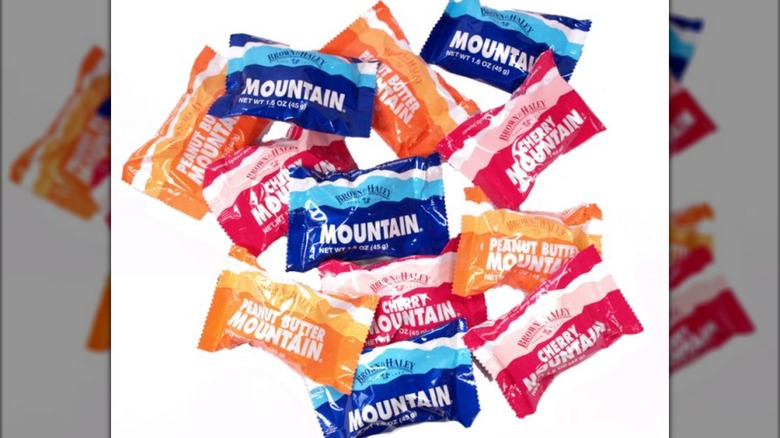
Today, you can find Mountain Bars still being sold by confectioners Brown & Haley. The Tacoma, Washington-based company traces its lineage back to 1912, and an early product — the Mountain Bar — followed in 1915.
The official story is that the company drew inspiration from the surrounding mountains, and it became incredibly popular largely thanks to the neighboring military base. The original was basically a vanilla center covered with peanuts and chocolate, with cherry, peanut butter, and hazelnut varieties joining the lineup decades after the OG. You expect products this old to have undergone some serious changes, but fun fact: they're still coming out of the original factory.
You can pick them up at Brown & Haley or specialty candy shops like the Pacific Northwest Shop, which is selling a 12-piece assortment for $27.99. As for what headline people were reading when they tasted these downright delightful bars, the news included the sinking of the Lusitania and the first American death of World War I.
4. Hershey's
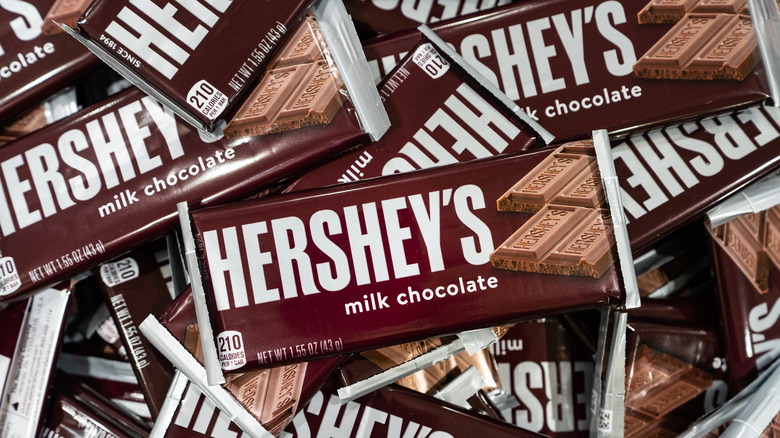
It might be faster to list the stores that don't sell Hershey bars than to highlight the ones that do, as there are a staggering number of Hershey chocolate bars made each and every year (yes, it's in the hundreds of millions). That's even more impressive when you consider the longevity of Hershey's flagship Milk Chocolate bar: Milton Hershey sold the first ones in 1900. That's the same year Temperance activist Carrie Nation famously destroyed a Wichita bar.
Hershey was committed to experimentation and perfecting his craft. Business was going so well that the company kicked off large-scale production in 1905, and added another core product to the lineup in 1908. That was the almond version, which you can still purchase, of course. A lot was happening for the company in that decade: Hershey, Pennsylvania, was founded in 1903, with Hersheypark following three years later. And three years after that came an orphanage, which is still around.
Hershey now oversees a shocking number of brands, and in 2026, it is continuing to introduce new chocolate bars. If you think nothing hits quite like the original, though, we'll point out that you can pick up a one-pound bar of Hershey's Milk Chocolate on Amazon for $14.99.
5. Cadbury Dairy Milk
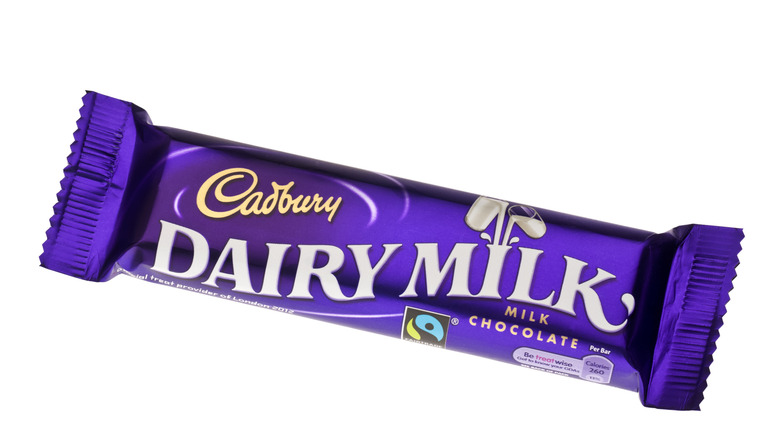
We're heading over to the UK for this one, where Cadbury has a significant lead over America's Hershey for the title of oldest chocolate company. It's Cadbury by a mile — Milton Hershey was born in 1857, but Cadbury's grocery store roots go all the way back to 1824. Pioneering techniques and serious innovation put Cadbury at the forefront of chocolate, but let's jump ahead to 1904. That's when candy maker George Cadbury Jr. started experimenting with ways to increase the milk content of his chocolate, and the resulting bar — Cadbury Dairy Milk — was released the following year. (That, incidentally, is also the year the first nickelodeon theater opened and a murder was solved using fingerprints for the first time.)
Today, American and British Cadbury chocolates do taste different — which is why we recommend looking for the real deal. Look closely at the Dairy Milk you'll find at many American retailers, and you'll see it's made by Hershey. Head to import shops, though, and you'll find the UK version. Stores like the Massachusetts-based British Food Supplies sell bars for $7.80 each.
6. Cadbury Flake
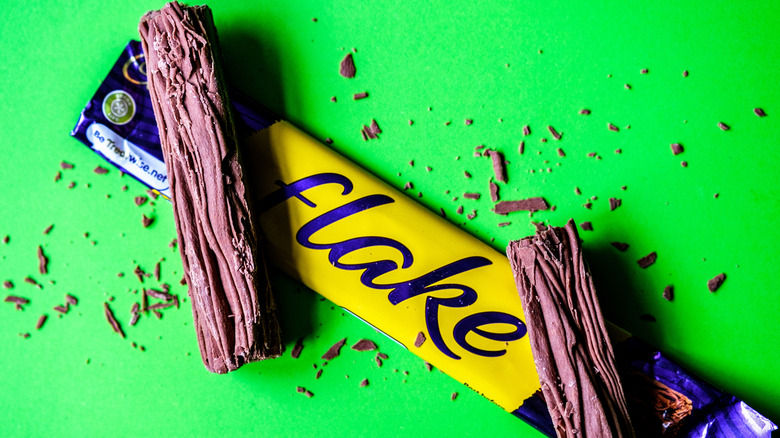
If you've never had a Cadbury Flake, go ahead. Get one. We'll wait. Seriously. (You can order a pack of four from Amazon for $7.20, and it's the real deal, a U.K. import.) For those still holding out on trying one, it's basically made from layers and layers... and more layers... followed by some more layers of ultra-thin, folded chocolate. It crumbles rather than breaks, and somehow turns into something blissfully smooth as you eat it.
The story goes that the Flake was born when workers noticed that excess chocolate created something magical when it ran over surfaces in thin streams, and Cadbury recognized the potential. It officially joined the product line in 1920, the same year U.S. women were awarded the right to vote, and headlines were filled with news of a groundbreaking new bit of tech: music being broadcast by radio waves.
If you do happen to pick up some Flakes, enjoy them in the true British way by tucking them into a vanilla soft serve cone. You're welcome!
7. Clark Bar
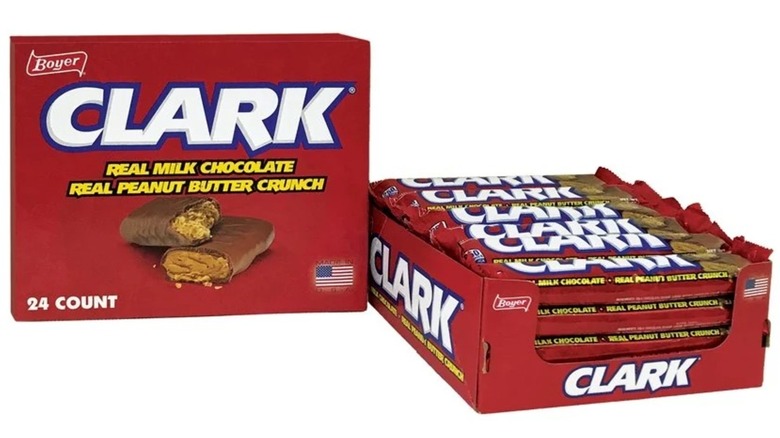
Few things go together better than chocolate and peanut butter, and when that peanut butter is a little crunchy and a little sweet, it's a total win. Clark Bars are precisely that, and while they're still being made by the Boyer Candy Company, there's a caveat: the company itself regularly sells out. You can still find them at various specialty shops — such as the Candy Warehouse, which is selling a 24-count box for $86.50 — so there's clearly still plenty of demand for this nostalgic treat.
Clark Bars originally launched in 1917, and they looked a little different than they do today. The OG version — created in Pittsburgh by native Irishman David L. Clark — included a caramel layer, and the candy bar quickly became a pretty big deal. History buffs will know that this was the same year the U.S. entered World War I, and candy bars were sent overseas in the millions as a critical wartime foodstuff.
They remained popular in the years following the war and got a 1960s-era makeover, becoming the peanut-forward version many fondly remember today. Clark Bars disappeared for a while, but don't worry — they're back.
8. Toblerone
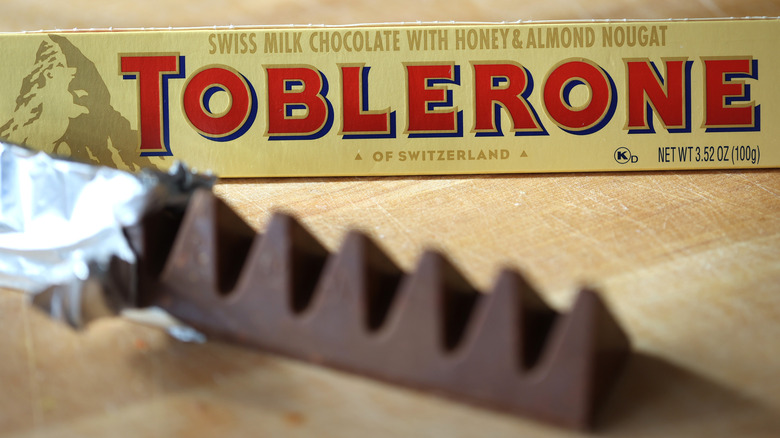
Today, the distinctly shaped Toblerone is part of the parent company Mondelez International, but that wasn't always the case. It has quite an impressive history, dating back to 19th-century Switzerland. That's when Theodor Tobler took off on his own, building on his family's experience in the confectionery industry and setting his sights on creating something revolutionary.
That was the Toblerone: little pyramids of nougat-filled goodness. It was released in 1908 — the same year as Ford's iconic Model T — and was created with the goal of changing what the industry thought chocolate could be. Strange fact: although the connection to Switzerland's mountains seems obvious, Tobler's family has suggested he had something else in mind: a human pyramid formed by cabaret dancers.
Yep, that definitely took a surprising turn. The candy was so iconic that World War II-era fortifications were nicknamed after it because they resembled the candy. And if you've always passed on this one, we highly recommend giving it a try. They're widely available, and you can pick up a 12-pack from Amazon for $27.98.
9. Oh Henry!
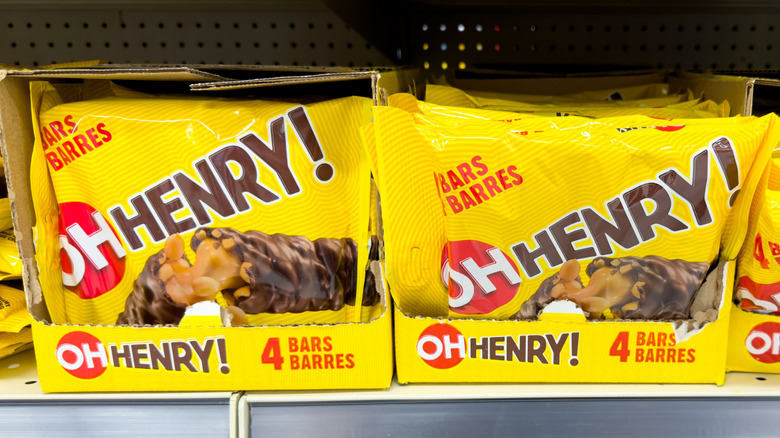
A lot was going on in Chicago in the 1920s: it was famously the home of gangster Al Capone, one of the most famous figures of the Prohibition era. Prohibition kicked off in 1920, the same year another thing was released in Chicago. The Oh Henry! candy bar pioneered a combination we take for granted today, marrying chocolate, caramel, and peanuts in blissful union.
Our reference to love and romance isn't accidental. According to the official story behind the name, it came from a frequently heard sigh from the girls working at creator George Williamson's candy shop. It was reportedly frequented by a charming young gent named Henry, and the rest is history.
Henry's namesake candy was almost history, too. It went from wildly popular to changing hands multiple times before Blair Candy brought it back from the brink. It's available once again, and a 24-pack on Amazon will set you back $30.
10. Zero Candy Bar
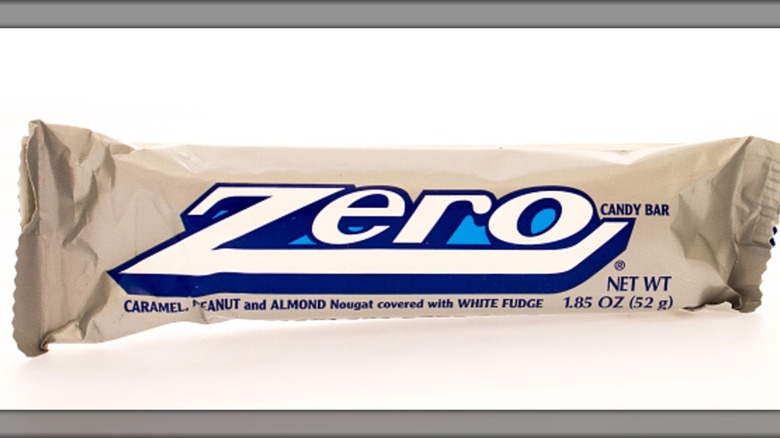
If you've ever found yourself wondering if white chocolate is even chocolate, you're definitely not alone. It's probably not the first thing that comes to mind when you think about candy bars, and that makes the Zero Candy Bar an outlier. Order a 24-pack off Amazon (for $28.35), and you'll find a pretty interesting combination inside. Almond nougat, caramel, and peanuts get covered in a fudgy white coating, and it's older than you might guess.
It first hit the market in 1920 — the same year a youngster named Walt Disney kicked off his artistic career. It was originally called Double Zero, a name it kept for its first years. It was rebranded in 1934 but continued to stand out thanks to its unique reliance on something other than your standard chocolate.
Perhaps surprisingly, it's now owned by the American pioneer of milk chocolate: Hershey. The Zero joined the Hershey portfolio back in 1996 after a pretty complicated history, but the candy bar itself is pretty much the same one that debuted more than a century ago.
11. Fry's Turkish Delight
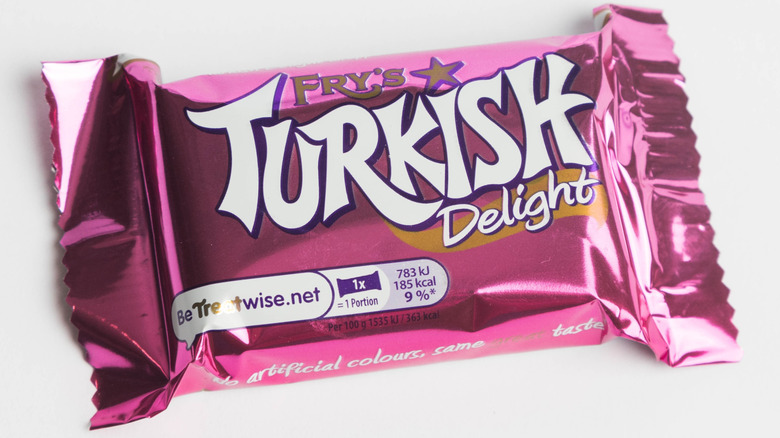
Those of a certain age might remember reading "The Lion, the Witch, and the Wardrobe," and wondering what candy was so delicious that it lured one of our erstwhile heroes away from his siblings and into betrayal. The real Turkish Delight is something quite different from the Fry's candy bar that bears its name, but that certainly didn't stop some of us — this writer included — from giving in to temptation.
The flavor of Fry's Turkish Delight is 100% old-school, and the center hidden beneath those layers of chocolate is rose-flavored. Not a typo. Polarizing? Yes. It makes sense, though, as this candy debuted in 1914, and you can still find it if you have the urge to experience this chocolate-covered bar with its gelatin-like center. It's a uniquely floral candy released the same year as Archduke Franz Ferdinand's assassination (which led to World War I).
The rose flavor might make it stand out in America and Europe, but there's no denying it remains wildly popular in places like India and the Middle East. Anyone wanting to give it a try can pick up a three-pack of Turkish Delight from Amazon for $7.83, or look for it in British import shops.
12. Peanut Chews
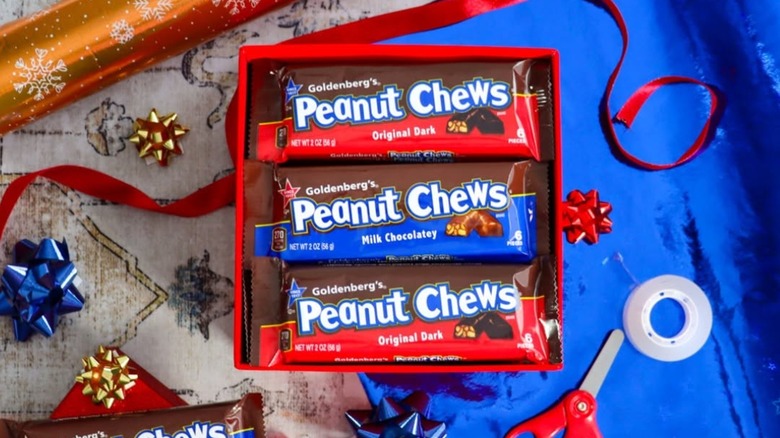
Headlines in 1917 were — of course — dominated by World War I, but let's stop over in Philadelphia, Pennsylvania. That was the year that the family-owned Goldenberg Candy Company debuted Peanut Chews, the heavy, peanut-packed candy bar that gets its chew from molasses ... kind of. It actually didn't go public until 1921, because it spent those first few years being used not as a sweet treat, but as a ration bar for Allied soldiers.
That's one reason the OG bars were made with a more durable dark chocolate coating, to hold up better in unforgiving wartime conditions. You can still find them pretty readily, so if you'd like to try that World War I-era ration bar, you can order a 24-pack on Amazon for $11.99.
There's a milk chocolate version as well, and the company has also released retro packaging options. Fun, right? Don't worry if you've never heard of this one — it's definitely the sort of regional favorite that didn't necessarily get the nationwide love that some other bars of the era did.
13. Mounds
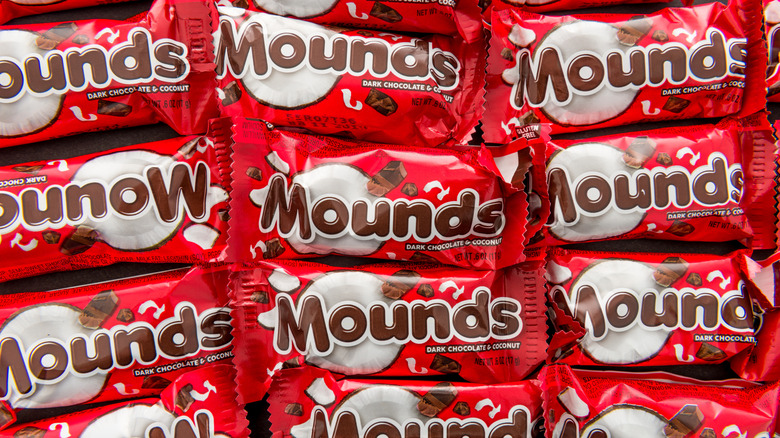
Mounds is another candy bar that stands out for its unique coconut filling. It's widely available these days — you can pick up a 24-pack on Amazon for $27.00 — and it's such a staple in convenience stores, gas stations, and checkout lines that you might not think twice about it. But what if we told you that it was once connected to an unusual World War II espionage operation?
Let's back up first. The Peter Paul Candy Manufacturing Company was formed in 1919, and eventually — dates vary — the company began producing the Mounds bar. The candy bar itself, however, is credited to Connecticut resident Vincent Nitido, Sr., who introduced his creation in 1920. That was the year the Ottoman Empire officially ended. Nitido eventually sold his creation to Peter Paul, which acquired the Mounds line in 1929. Let's fast forward to World War II. The oceans were a veritable battlefield, but Peter Paul's small schooners carrying coconut supplies were allowed to travel relatively unbothered by the German forces. They weren't considered a threat, so their crews took advantage of that freedom to gather intelligence about German naval activity and report it to the Allied military.
Who would have thought, right? Next time you have a Mounds bar, take a moment to appreciate that rather unusual history.
14. Baby Ruth
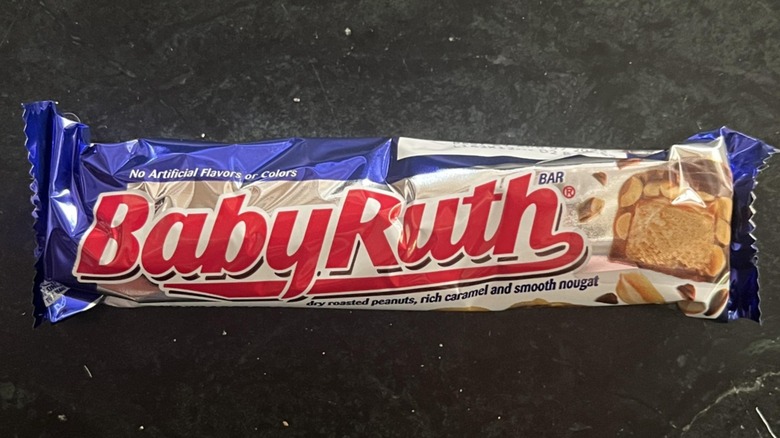
Baby Ruth is another oldie but goodie that's hiding in plain sight in pretty much any place that sells candy, first showing up in 1921. And it has a surprisingly weird story involving its name and a major controversy.
We've been talking about history, and in 1920, Babe Ruth joined the New York Yankees, setting the stage for the 84-year World Series championship drought for the Boston Red Sox. The following year, a candy company located a stone's throw from Wrigley Field debuted the Baby Ruth bar, and the Curtiss Candy Company saw massive success with it. The baseball connection seemed clear, but when things descended into lawsuits over patents, names, and copyright, Curtiss claimed the candy had actually been named after Grover Cleveland's daughter, Ruth.
Sure, but... she died in 1904. If you're giving a bit of a side-eye at the explanation that the name came from a girl who had died tragically 17 years prior to the candy's release and had nothing to do with the massively popular baseball star, you're in disagreement with the courts. The court ruled that Ruth-the-baseball-player was seeking a share of the profits from Ruth-the-candy-bar, and there's your weird history for the day.
15. Milky Way
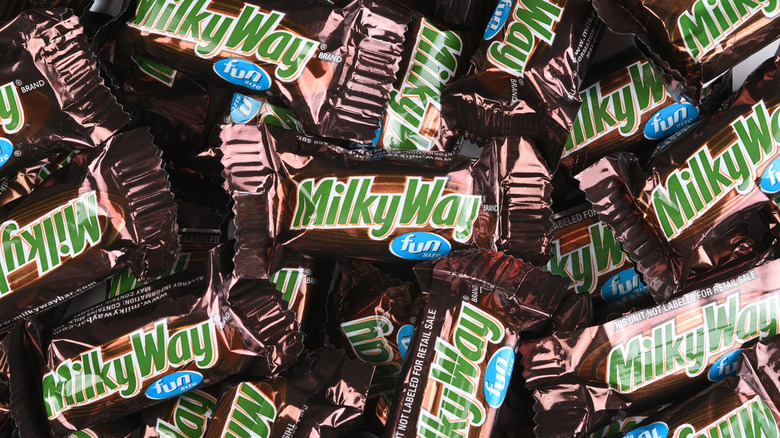
Another ubiquitous staple of candy bar aisles, Milky Way has aged incredibly well. While some of the candy bars we've been talking about have a vintage, old-school feel, Milky Way seems like it could plausibly have popped into existence in the 1980s. That's absolutely not the case, though. Father-and-son duo Frank and Forrest Mars came up with the idea for the candy bar back in 1923.
The inspiration came from malted milkshakes, and the combination of malt-flavored nougat and chocolate was an immediate hit when it debuted the following year. That's no exaggeration: adjusted for inflation, the Milky Way earned Mars around $14 million in 1924 alone. Different versions followed within the next few years, and in 1932, the Mars bar was introduced into the European market.
Fun fact: the caramel we know and love today was added later, and the chocolate? That came from Hershey. Bonus fun fact: the Milky Way Dark that debuted in 1989 wasn't the first time the company released a dark chocolate and vanilla nougat version of the bar — that original version had existed in 1926, lasted until 1979, and was rebooted a decade later.