

Why Do American And British Cadbury Chocolates Taste Different?
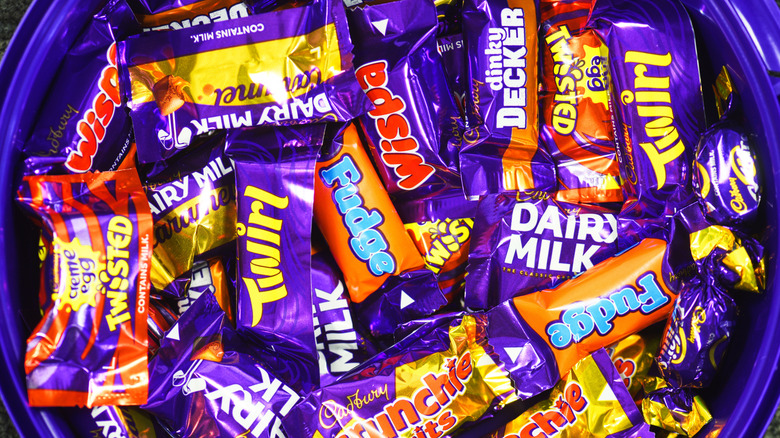
Along with the proper way to make a cup of tea and whether scones need cream or jam first, few foods inspire as much transatlantic debate as Cadbury chocolate. If you ask an American and a Brit to describe the familiar purple-wrapped Dairy Milk bar, you probably get very different answers. British fans are likely to wax poetic about the creamy texture and nostalgic associations with childhood. Meanwhile, Americans often find it noticeably richer and less tangy than the Hershey bars they grew up on. Neither is imagining things. Although it's easy to find a bar bearing the golden Cadbury logo on either side of the pond, different recipes and manufacturing processes from a split in licensing and ownership mean the chocolate inside isn't necessarily the same.
Founded by a grocer in 1824, Cadbury grew and expanded over the next two centuries from a handmade cocoa powder purveyor to one of the best-selling chocolate brands in the world. That history involved changing hands multiple times. In the late 1960s, Cadbury merged with Schweppes (yes, the ginger ale that beat out Canada Dry in our ranking). In 1988, Cadbury Schweppes granted a license to The Hershey Company to manufacture and sell Cadbury chocolate in the United States, which the Pennsylvania-based company continues to do today.
British Cadbury took a different turn. Kraft Foods acquired Cadbury in a contentious 2010 takeover. Just two years later, Kraft split into two independent companies, one of which is the snack and confectionery business known as Mondelēz International. Today, the global snack giant continues to oversee Cadbury production in the U.K. and other countries around the world.
American Cadbury treats are sugary and often contain additives
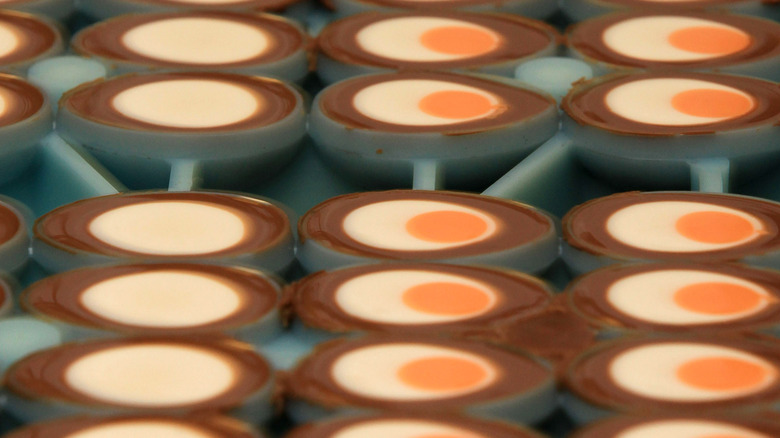
Hershey has hoarded its piece of the Cadbury pie, even taking British candy importers to court over the sale of certain U.K.-made sweets in the United States. The so-called "Chocolate Wars" help explain why it can still be hard for Americans to get their hands on a Curly Wurly, Flake, or Wispa bar. Hershey manufactures and markets a more limited selection of Cadbury products under its license, but not every treat comes from one of its domestic factories. While American Dairy Milk and Caramello bars are made in Pennsylvania, Cadbury Creme Eggs, one of the most popular Easter candies, is made by Mondelēz in Canada.
Different manufacturing facilities aren't the only reason these chocolates taste different from their British counterparts. The recipes and ingredients vary, too. For example, an American Dairy Milk bar starts with sugar instead of milk, which gives it a grainier texture. The same goes for the classic Caramello. The caramel concoction is coated in a sugar-forward chocolate, which also incorporates natural and artificial flavors, and PGPR, a flavorless castor oil-derived synthetic additive that lacks the subtle chocolate aroma of real cocoa butter primarily used in the British equivalent Dairy Milk Caramel bars.
For treats like the Cadbury Creme Egg, the different taste is about more than just the chocolate. The ingredients are also markedly different. The American recipe substitutes high fructose corn syrup for invert sugar syrup, neutral vegetable oil for fragrant cocoa butter, and nutty soy lecithin for milky dried whey. It also relies on chemical Yellow 6 instead of mildly sweet paprika extract to give the fondant center its yolk-colored center.
British Cadbury chocolate relies on cooked liquid milk
Perhaps the most significant example of how the candy giants' chocolate recipes differ can be found in their approach to one key ingredient: milk. British Cadbury chocolates are made by combining fresh liquid milk with sugar and cocoa ingredients before cooking and drying the mixture in a process called crumbing. This extra step triggers the Maillard reaction, browning the milk solids, which gives British Dairy Milk and other Cadbury confections their warm, caramel-like flavor.
Because the companies' manufacturing processes are proprietary, it's difficult to know exactly how American Cadbury's milk is treated, but it's believed that the U.S. recipe starts with powdered or evaporated milk rather than the "glass and a half of fresh milk" that British Cadbury promises you find in every bar of Dairy Milk. Hershey's own chocolate-making tradition is associated with lipolysis, a process in which enzymes break down milk fat and produce butyric acid. While many Americans tend to prefer the slightly sharp and tangy chocolate this produces, Brits have been known to compare the smell of it to socks and the taste to sawdust or vomit.
The difference is a dividing line between chocolate connoisseurs, and, of course, taste is personal. In a BBC taste test, although some participants could immediately pick out the British bar, others couldn't tell American and British Cadbury chocolates apart. American and British children who participated in the test actually preferred each other's chocolate, suggesting that the best Cadbury depends more on who's eating it than where it's made.