

9 European-Style Butters That Are Worth Buying In 2026
We may receive a commission on purchases made from links.
If you're serious about baking, then you have undoubtedly heard about the superiority of European butter over American. But what is European-style butter, and what makes it better? And which ones are worth your hard-earned cash? We have spoken to five expert bakers and chefs, gathering their input and coming up with the 10 European-style butters that are worth buying in 2026.
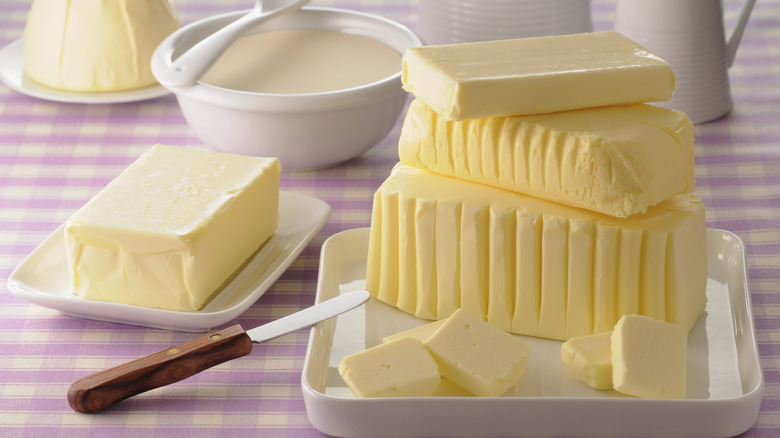
The answer comes down to which has more fat. The USDA sets the American butterfat minimum at 80%. The difference between Irish, American, and European-style butter is that the latter has at least 82% fat content. Interestingly enough, place of origin doesn't matter when it comes to this distinction, and this butter does not actually have to be made in Europe. And while some European butter tastes better than American because it has extra cultures added to give it a nuttier flavor, this is also not a rule. "Not all European-style butters are cultured or imported," says Kristina Lavallee, CEO and Founder of The Cake Girl and Crave'n Cups. She adds there are plenty of American companies making excellent versions of the European standard.
But why does this matter? Higher butterfat percentage means less water in the product and better melting capabilities, texture, and flavor. That 2% can completely change the way butter behaves in the oven. "Fat equals flavor! More butterfat means more butter flavor," says Anna Stockwell, a food stylist, recipe developer, writer, and video host, who authored The Butter Book. "It also means the butter spreads more easily and smoothly than a lower fat content butter," she adds. To know when to splurge for a fancier butter and which are worth the extra dollars, read on for our recommendations.
1. Kerrygold Unsalted Pure Irish Butter
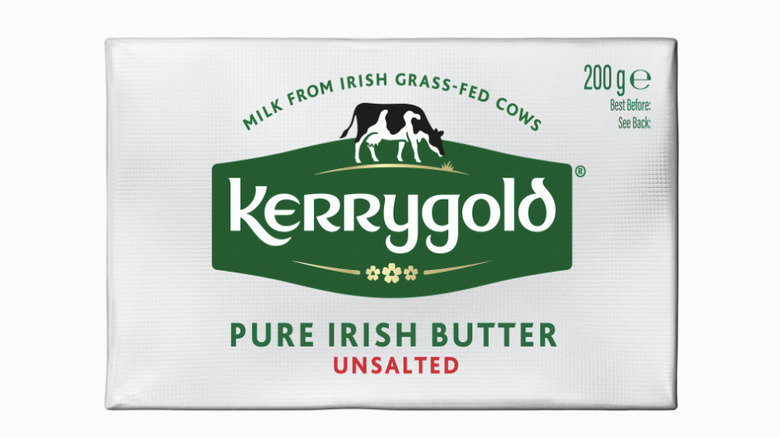
One of the most popular butters mentioned by our experts is the Kerrygold Irish Grass-Fed Unsalted Butter. Kerrygold is the product most American shoppers think of when they hear the phrase "European-style butter," and there's more to this than just plain marketing. The unsalted version of this Irish butter really is worth the money.
"I almost always work with unsalted butter because it allows me to control seasoning with precision," says Riccardo Menicucci, executive pastry chef at the Four Seasons Los Angeles at Beverly Hills. Of course, you should know when to use salted versus unsalted butter, like when spreading it on bread for your morning toast. It's also something of a debate when it's worth using Irish butter or not, so choose your recipes wisely.
Baker Katherine Sprung, an award-winning pastry chef and the founder of Squish Marshmallows in New York City, is also a fan. "I think they're just good products that have a nice flavor and give good results in my baking," she says of Kerrygold's butter products. She recommends stocking up on it at Sam's Club, though it's also available at Costco.
2. Isigny Sainte-Mère Unsalted Churned Butter
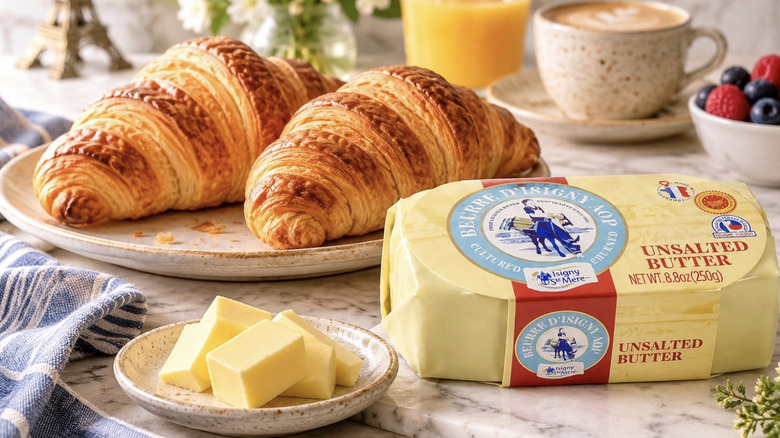
European-style butter originates from all over the continent and beyond, so it's no surprise to find traditional French butter on this list. The Isigny Sainte-Mère Unsalted Churned Butter is another common go-to for the pros.
"Isigny Sainte-Mère is our workhorse for pastry production, from doughs and cakes to ganaches and other preparations," says Riccardo Menicucci. This range makes it appealing to home cooks that may want one butter to rule them all, whether that's for cutting into a pie crust, spreading over a piece of toast, or melting into a ganache. "It delivers consistent quality, excellent flavor, and versatility across a wide range of applications," he adds.
Anna Stockwell has a different use in mind for the salted version of Isigny. "This is my special occasion butter," she says. "Serve it like cheese as an appetizer with bread and radishes." But for baking, where bakeries and restaurants consistently use high-quality products that stand out, go for the unsalted churned butter so you can manage the seasoning.
3. Elle & Vire All Purpose Butter 82% Fat
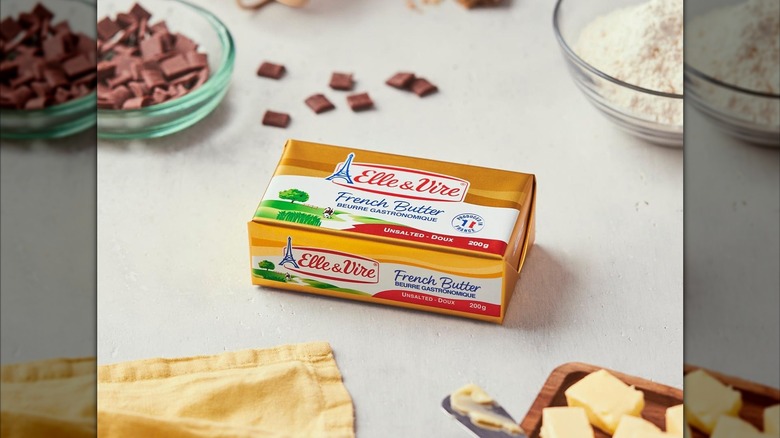
For the serious croissant project, there's the Elle & Vire All Purpose Butter 82% Fat. The professional version, the Elle & Vire Professional Extra Dry Butter 84% Fat Sheet, is used in many French bakeries.
"Butter is at the heart of a great croissant," says Riccardo Menicucci. "Elle & Vire is our butter of choice for croissant lamination. It has excellent flavor, remarkable elasticity, and performs beautifully throughout the laminating process." Elle & Vire's professional extra dry butter designation is a special French class that isn't readily available in the U.S., which refers to its extra-high butterfat of 84%.
But that dryness comes at a cost. "It's certainly an investment, but when it comes to producing exceptional croissants, I believe it's worth every penny," says Menicucci. In general, most bakers agree that butter is one of the most important factors in achieving bakery-style croissants at home. A specialty butter like Elle & Vire can be hard to source in North America, but it's available at select online retailers and by special order.
4. Plugrà Unsalted European-Style Butter
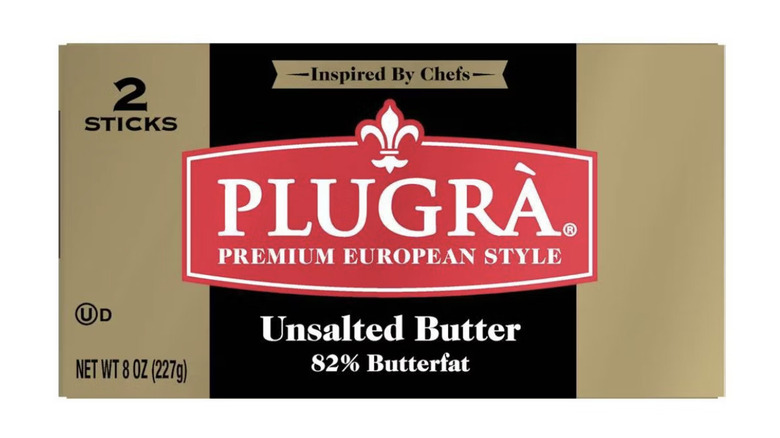
The Plugrà Unsalted European-Style Butter is proof that you do not necessarily need to import to get a European-style good of a high caliber. This Plugrà butter is made in the U.S. with American milk and has managed to become the product of choice for many chefs and serious home cooks thanks to its butterfat content. "I really like Plugrà, and it is a very good option for baking since it has 82% butterfat," says Kristina Lavallee. "It also comes in an unsalted version, which works well for some baking recipes."
Riccardo Menicucci agrees, saying you don't have to go for European products for European-style quality. "Geography alone doesn't guarantee quality," he says. The brand's name is an alliteration of "plus gras" (French for "more fat"), and its 82% butterfat content sits right at the European butter threshold, making for a more tender dough. So, like Lavallee, it is one of the brands professionals recommend for baking, and it's a relatively affordable homegrown alternative to some niche European-style butters.
Lavallee also recommends using European-style butter like Plugrà for frosting. "Buttercream is a good example of where you want to have a really high-quality butter, as it is one of your main ingredients," she says. With nothing else in the bowl to cover it up, the flavor of a good butter like Plugrà would be front-and-center.
5. Danish Creamery European Style Unsalted Butter
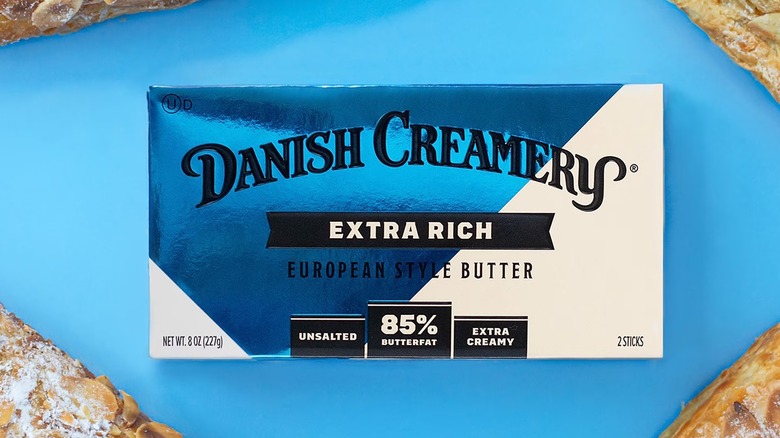
Another favorite European-style butter that is widely available across the U.S. is the Danish Creamery European Style Unsalted Butter. It's Katherine Sprung's favorite alongside Kerrygold. "They'll yield a flakier and more tender bake, in part due to that higher butterfat," she says.
Unlike many butters on our list, the Danish Creamery butter has 85% butterfat, which is an even higher threshold than most. It's been made in the U.S. since 1895, when Danish immigrants in Fresno, California, formed a dairy cooperative similar to those back home. Years later, the butter is still made from milk gathered from cows grazing in open pastures in California. Recently, its rise to YouTube fame has propelled it from being a heritage bakery to a popular household brand.
Sprung's favorite use for this butter is in holiday baking. "If you're making shortbread cookies for the holidays, I would say go for the European butter, which will cost a bit more, but won't break the bank!" she says. As cookies like shortbread are made of almost nothing but butter, flour, and sugar, a better butter can make a real difference here.
6. Vermont Creamery Cultured Butter
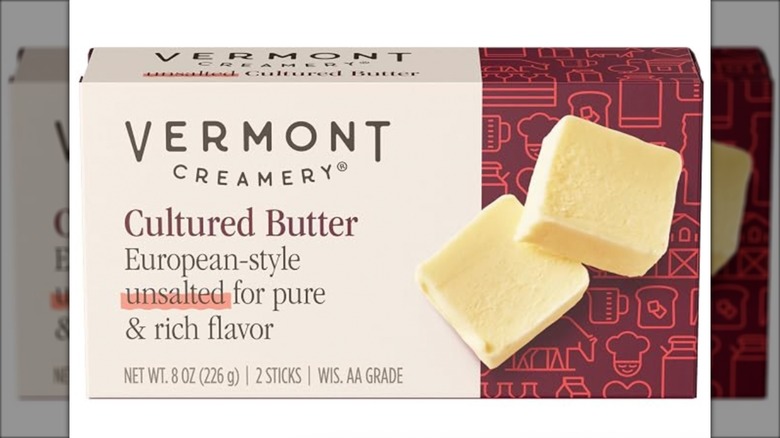
The Vermont Creamery Cultured Butter is the butter to pick if you want a tangy, nutty flavor. It's an award-winning product with 82% butterfat, where healthy bacterial cultures have been introduced to the milk before churning. There is also an unsalted butter variation that works well in sweet bakes.
"Sweet cream is going to be a mild dairy flavor, while cultured is going to be tangy and have complexity to it," says Kristina Lavallee. "Its cultured flavor will give a different dimension to your baked goods."
Anna Stockwell is another chef who reaches for it for its distinct flavor and affordable price. "When I want a cultured butter flavor in my baked goods, or just want to pay less for a European-style cultured butter, I buy Vermont Creamery butter," she says. Though she notes that it's not as richly flavored as some other butters, Stockwell still says it's excellent when used in her regular bakes or spread on toast.
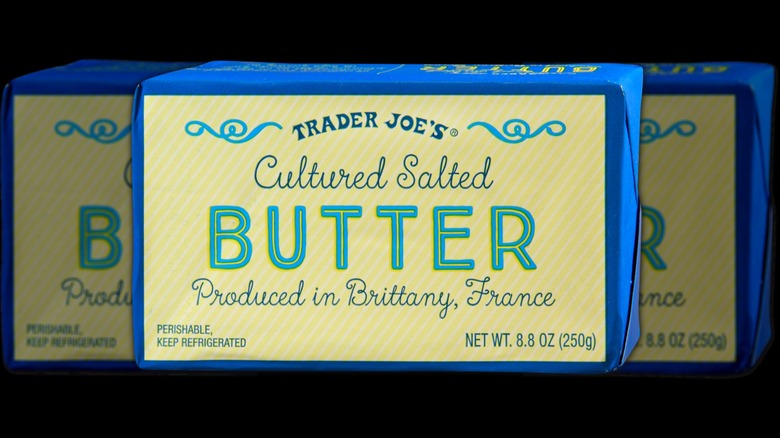
7. Trader Joe's European Style Cultured Butter
The tang of cultured butter on a slice of warm bread is an experience many of us relish. Luckily, the rising popularity of European-style butters means there are now plenty of options to choose from in this category as well.
Another option for a tangy product on a budget is Trader Joe's, with its Cultured Salted Butter. It's Anna Stockwell's go-to alongside Vermont Creamery. "Trader Joe's sells a good European cultured butter for around the same price," she says.
In general, unlike some bakers on our list, Stockwell recommends separating the fancy butters from your everyday butters, even when it comes to European-style products. This means that many baked goods can make do with a cheaper option, such as this one. "Keep the fancy, expensive imported or locally made specialty butters for enjoying as butter!" she advises.
8. Land O' Lakes Extra Creamy Butter
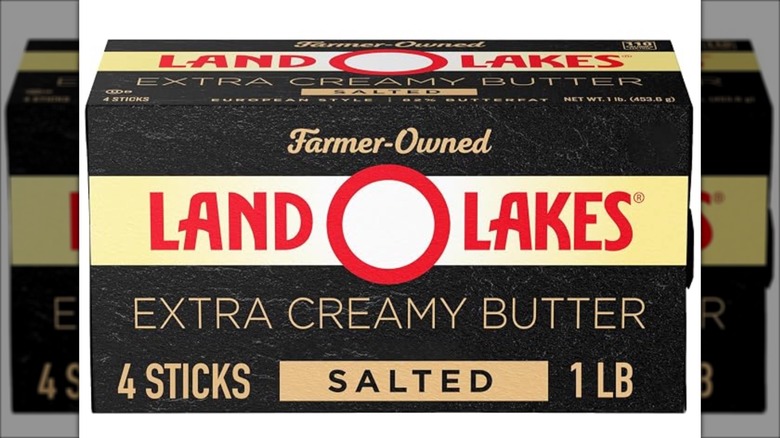
If there's one European-style butter that should be familiar to most American cooks, it's the Land O' Lakes Extra Creamy Butter. While Land O' Lakes is no stranger to those who frequent the dairy aisle, the Extra Creamy line is the "premium" European-style version, first launched in 2015. It's widely available in many supermarkets and online and just might be the easiest European-style butter to find on our list.
Kristina Lavallee recommends it as a baseline butter. "I have found that Land O' Lakes is a good one to compare with specialty brands, as [it has] an option that has 82% milkfat. This would have less moisture and more fat." she says. It's good for regular baking for most home cooks. "For everyday baking needs, store-brand salted or unsalted stick butter can be a good option," Lavallee adds.
Katherine Sprung agrees. Even as a professional cook and baker, she often reaches for common European-style butters, like Land O' Lakes, or even regular grocery store American butter brands. "I'm honestly not [picky] when it comes to butter in my baking; I regularly buy the grocery store brand!" she says. If you want to judge for yourself, bake one batch of cookies with the Land O' Lakes Extra Creamy and one with a specialty brand, and see if you can spot the difference yourself.
9. Président Unsalted Butter
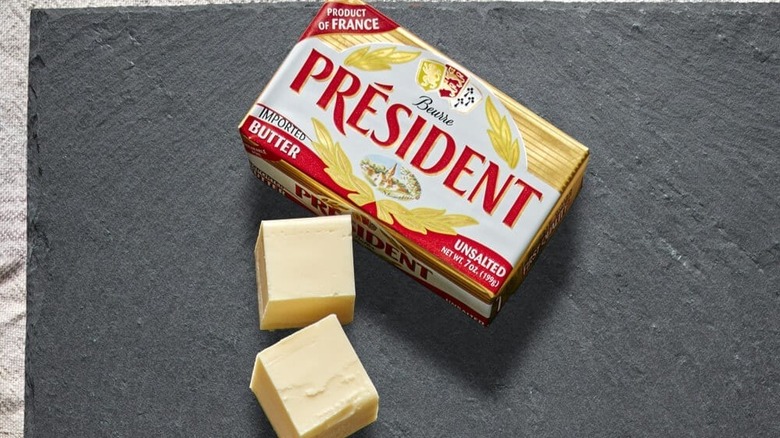
The Président Unsalted Butter is a value pick from France that is widely available in Canada and, as such, is the choice for frugal home bakers across the border. Le Croissant Chaud is a French bakery in Victoria, BC, a city known for its tea time and pastries. Its croissant master is Gwendoline Machet, a French-born and classically trained pastry chef and head baker. Machet's bakery imports a specialty butter from France, but at home, she uses Président. "It's the more economic choice for good quality for the price," says Machet. She spreads it on bread but also uses it in her homemade laminated doughs. "For the croissant, the butter is going to make a big difference in the taste and the lamination."
But like other professionals we spoke to, Machet wouldn't waste her European-style butter on cake. "If you make a cake, it's not worth the price," she says. Save it for croissants and puff pastries, and use a cheaper stick of American-style butter for batters.
When shopping for butters, Machet has a few words of advice that go beyond brands. "Look for a high fat quantity and the color, it's a good indicator," she says, noting that European-style butter should be very yellow. But the real test for her is how well the butter spreads on bread. "The texture needs to be easily spreadable and not pull or go everywhere in small parts."