

Why European Butter Always Tastes Better Than American
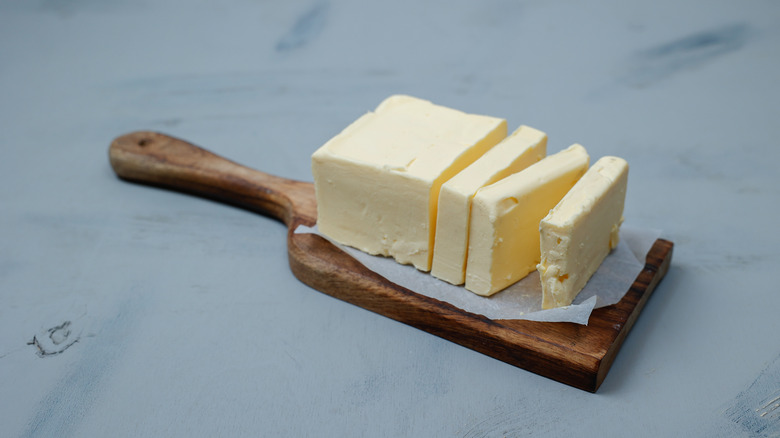
Whether you've returned from Europe, are heading off to Europe, or are just dreaming of Europe, you're not wrong to think that a lot of things taste better over there. And it isn't just cheese and coffee — even butter tastes richer than it does back in the United States. The reason for this is a legitimate one as well: American butter only has to contain 80% butterfat to meet federal standards, whereas many European butters contain between 82% and 86% butterfat.
While it may not sound like a big difference, every percentage point means more fat, which gives European butter a richer mouthfeel, a creamier texture, and a fuller flavor. If you were wondering which is better for baking, the higher fat content in European butter makes for flakier pastries and more tender baked goods. In fact, many chefs and bakers call for European-style butter in their recipes, especially if the goal is to make bakery-style croissants at home.
But it isn't just about the butterfat. Some European butters — particularly French varieties — are also cultured, meaning live bacterial cultures are added to the cream before churning. And that fermentation is what develops subtle nutty notes that are less common in standard American sweet cream butter.
Europe doesn't have just one type of butter
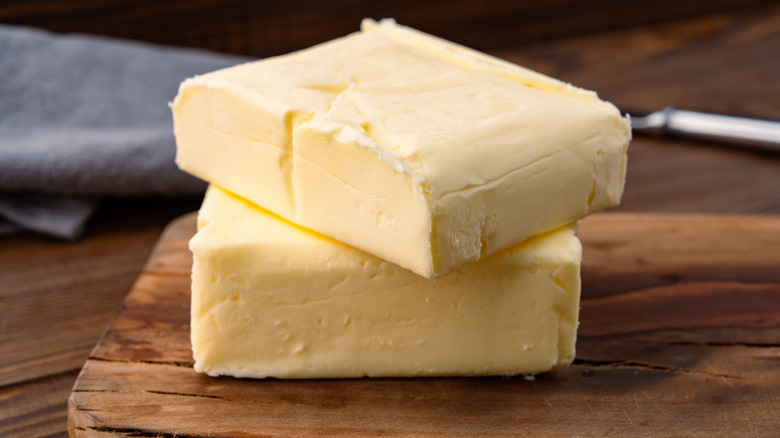
Of course, "European" is a bit of a catch-all, and the differences between Irish, American, and European butter go beyond just geography. Generally speaking, Irish butter is known for having a rich yellow color (thanks in part to cows grazing on lush grass all year), whereas French butter is more likely to be cultured, which can give it a deeper, slightly tangy taste. Elsewhere in Europe, butter styles vary by region and tradition — for example, Italian butter tends to be milder because much of the country's cream is a by-product of cheesemaking.
In contrast to the regional variety found in Europe, most American butter is produced within a more standardized commercial system. USDA criteria control for elements like flavor, texture, and color, so you are less likely to find a different style of butter from one brand to the next. None of this is to say American butter is bad. It just generally follows a different standard, giving it a different flavor profile, one a little less rich and less varied. That said, there are some premium and European-style American butter brands that offer higher butterfat percentages and a richer flavor than standard supermarket varieties.