

7 Store-Bought Asian-Style BBQ Sauces, Ranked
We may receive a commission on purchases made from links.
Asian-style barbecue sauces offer a different taste from traditional American barbecue sauces. Rather than relying on a sweet ketchup or molasses base, many draw on the savory, umami-rich flavors of soy sauce and tamari, often with additions like garlic, ginger, sesame, and chili. They also vary considerably in consistency, from thin, pourable sauces to thicker options that work well as glazes.
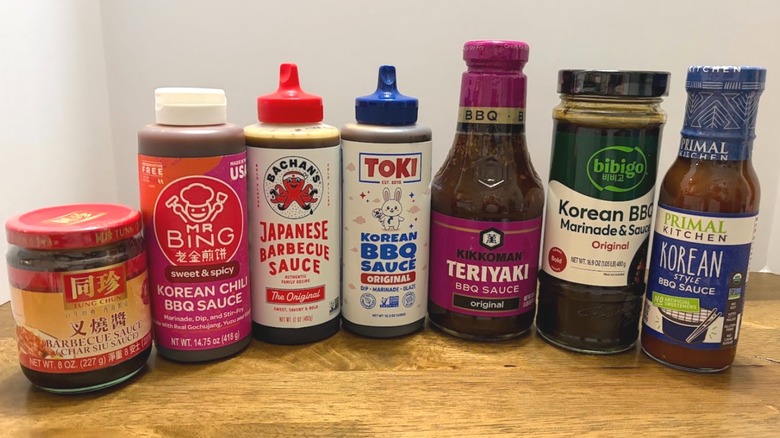
These sauces can do more than dress up grilled meats. They're useful for marinades, stir-fries, dipping sauces, and even a finishing drizzle over cooked vegetables. Some are versatile enough to use straight from the bottle, while others work better when heated or paired with other ingredients. I gathered seven popular store-bought Asian-style barbecue sauces for a head-to-head taste test, evaluating their flavor, texture, versatility, and price to determine which ones are worth adding to your pantry.
Prices are as of the date of publication and may vary based on region.
7. Tung Chun Barbecue Sauce
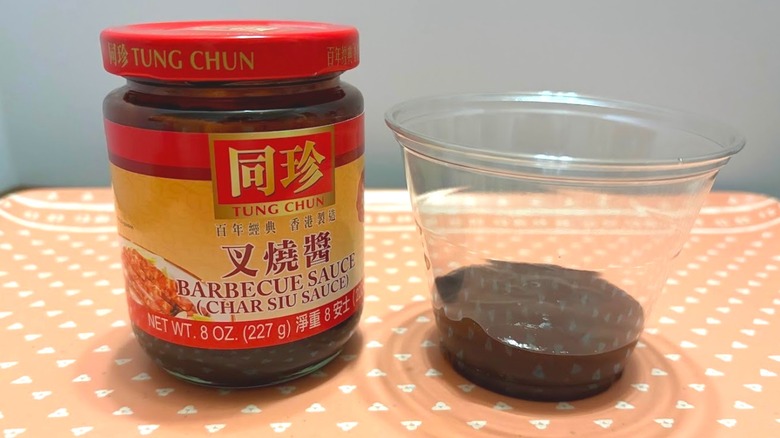
Tung Chun Barbecue Sauce's high sugar content and thick consistency make for a serviceable glaze, but its intense flavor combo overwhelms the palate. Cooking tames that intensity somewhat, but I wouldn't recommend it straight from the bottle as a dip or dressing.
Even as a glaze, this sauce ranked below the other brands in my taste test. While some of the brands offered nuance and complexity, this one lacked balance. Its sugary notes competed with the savory soybean flavors, while hints of red chili pepper and garlic got lost in the mix. I would even hesitate to recommend it to those who prefer sweeter sauces.
A little sweetness can complement savory flavors, such as when using brown sugar to create a crispy crust on steak, but Tung Chun takes that balance too far. At around $4 at my local grocery store, it's inexpensive, but other sauces on this list offer considerably more for the same price.
6. Primal Kitchen Korean Style BBQ Sauce
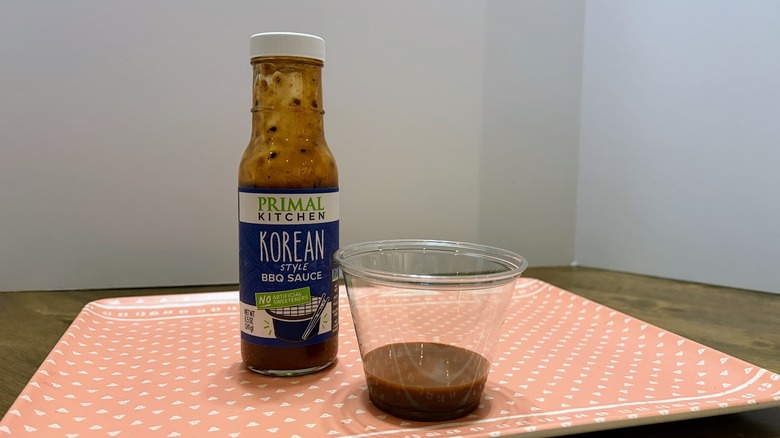
After my first bite of Primal Kitchen's Korean Style BBQ Sauce, I immediately thought of chicken wings. Its acidity and spiciness would make it a great non-traditional sauce for buffalo wings. The tomato-and-vinegar-forward flavor reminded me more of traditional Buffalo sauce, with just a hint of sesame. It wasn't bad, but I found myself wondering where the Korean flavors were.
Like other sauces in the Primal Kitchen lineup, this is a serviceable sauce and marinade. I preferred it as a glaze, although it would also work for dipping chicken nuggets. Its acidity gives it enough punch to stand up to richer foods, and the mild heat makes it approachable for those who don't want an especially spicy sauce. At around $5 a bottle, the price isn't unreasonable, but the lack of recognizable Korean BBQ flavors is ultimately why it ranked lower in my taste test.
5. Mr Bing Korean Chili BBQ sauce
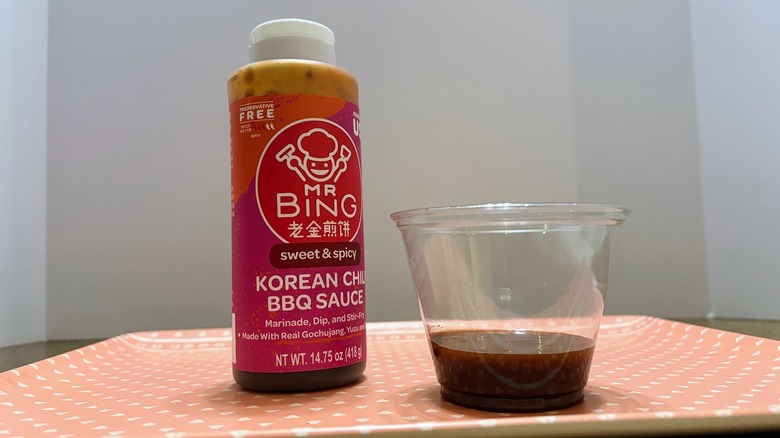
Co-owned by celebrity chef Jet Tila, Mr Bing Korean Chili BBQ Sauce is one of the brand's many Asian-style condiments. Right out of the bottle, it delivers a combination of sweet, spicy, and tangy gochujang flavors. The acidity reminded me of Buffalo wing sauce, but the gochujang added a welcome smoky depth. If you're looking for an Asian-inspired wing sauce, Mr Bing's is a good option.
I liked it best as a dipping sauce for potstickers. Their existing flavors helped balance the acidity and bring out the gochujang notes. It's also a handy condiment for adding chili heat to a dip or drizzle, and this was the spiciest sauce in my taste test.
Mr Bing is more balanced than Primal Kitchen, but it isn't as versatile as some of the higher-ranked sauces. At around $8 a bottle, it's also on the pricier end of the spectrum. It's a decent marinade, but it would be less successful in stir-fries, where its flavors would get lost.
4. Toki Korean BBQ Sauce
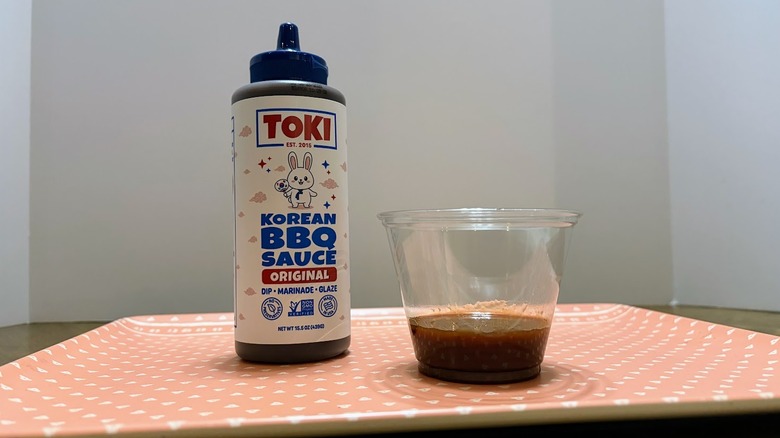
Ranked in the middle of the pack, Toki Korean BBQ Sauce does a decent job of delivering the flavors I was looking for. It leans toward savory, smoky, soy-forward notes without becoming too intense, and works well as both a glaze and a dip. I'd welcome a bit more heat, but it strikes a nice balance between flavor and versatility. The top three on the list simply do a better job of combining the two.
I think Toki would work best as a dip or drizzle, since the savory flavors are subtle. I enjoyed it on grilled chicken and as a glaze for stir-fried veggies, but I liked it best as a dip for potstickers and nuggets. At about $8 a bottle, it's also one of the more expensive options on the list. A lower price would make it an easier choice as a flavor-boosting addition to my pantry.
3. Bachan's Japanese Barbecue Sauce
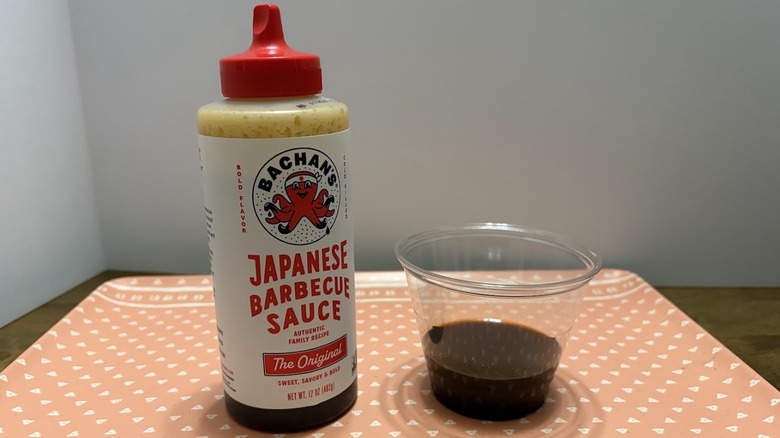
Bachan's Japanese Barbecue Sauce is perhaps the best-known of the brands I tried, and it's an Asian-style barbecue sauce that has rightly earned its hype. The Original version blends soy sauce, garlic, ginger, and mirin into a versatile condiment that adds depth to many dishes. Its thin consistency makes it particularly well suited to glazes and marinades, although it also works as a finishing drizzle over cooked proteins and vegetables.
Bachan's versatility is one of its strengths. It brings the familiar savory qualities of soy sauce while adding layers of garlic, ginger, and mirin, making it useful in everything from marinades to stir-fries. It's hard to find much fault with the sauce itself — I loved the taste. So its $8 price tag is the main reason it landed in third place. Bachan's is a quality product, but the top two sauces deliver comparable flavor at a better price.
2. Kikkoman Teriyaki BBQ Sauce
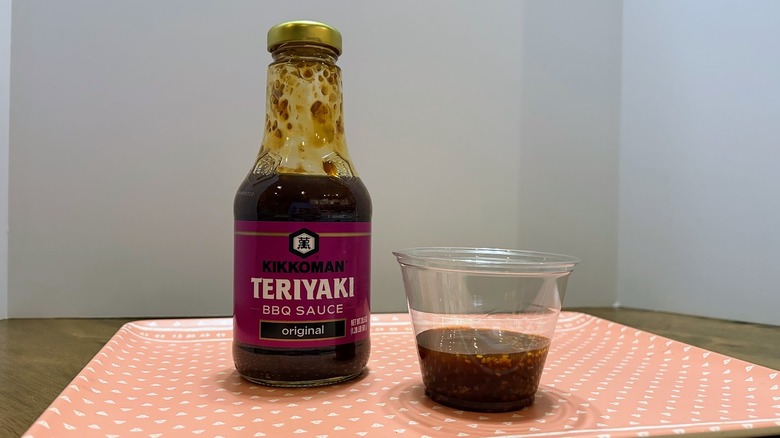
Leave it to the soy sauce masters at Kikkoman to make their mark on the Asian-style barbecue sauce market. Kikkoman Teriyaki BBQ Sauce builds on the savory flavor of its soy sauce with ginger, mirin, and garlic. It was also the only bottle in my taste test with visible sesame seeds, which added flavor and texture and gave each bite a subtle nutty quality that complemented the other savory ingredients.
Honestly, I expected Bachan's to take the top spot, so finding two sauces that could compete with the popular brand surprised me. Kikkoman's slightly thicker consistency gives it an edge as a dipping sauce, while its soy flavoring makes it a good marinade and glaze. At around $5 for a 20-ounce bottle, it's hard to argue with the value. It delivers balanced flavor and plenty of versatility without the higher price tag of some of the other competitors.
1. Bibigo Korean BBQ Marinade & Sauce
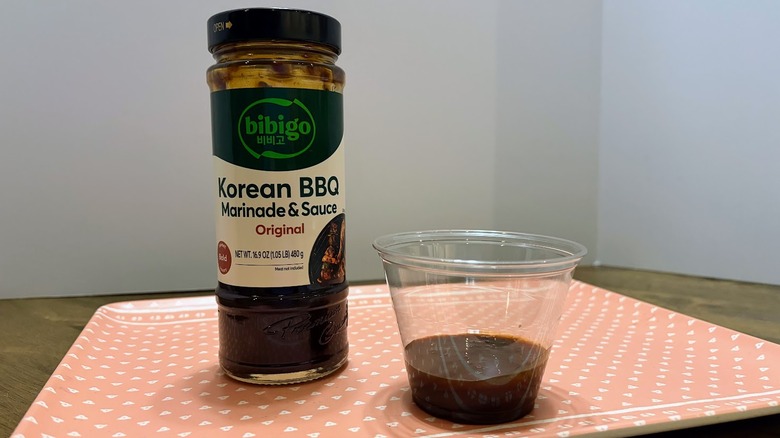
By a narrow margin, I had to give first place to Bibigo Korean BBQ Marinade & Sauce. I only knew the brand from its line of frozen dumplings, which took the bronze medal in our store-bought dumplings taste test. Like Kikkoman, Bibigo offers good value, with a 16-ounce bottle costing around $5. What ultimately gave it the edge, though, was its balance of flavors.
I knew that the best sauce in my taste test would need the right combination of umami, sweetness, and acidity — and Bibigo delivered on all three. True to its name, it worked equally well as a glaze for proteins and vegetables, as a marinade, and as a dipping sauce. I particularly liked that its flavors remained balanced across all three uses, making it the most versatile option and earning it the top spot, even if it was by a narrow margin.
Methodology
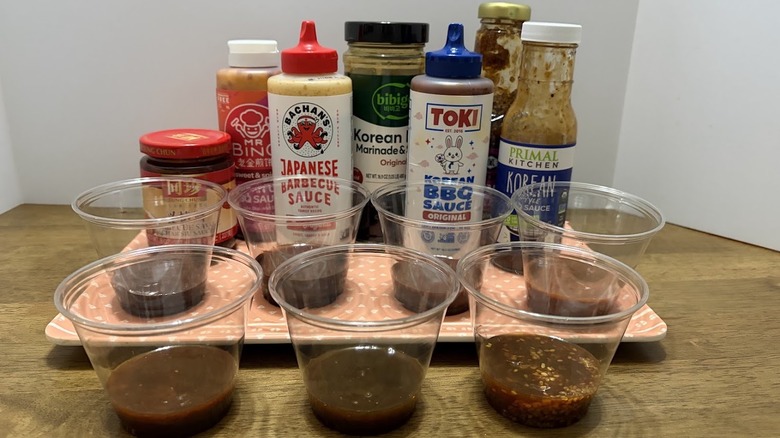
My methodology focused on several factors, chief among them overall flavor. I looked for sauces that delivered the savory, umami-rich profiles associated with Asian-style barbecue while also offering enough versatility to work in different applications. I tasted each sauce straight from the bottle, then tested it as a marinade and glaze to see how its flavor held up. I also considered whether the sauces maintained their character when paired with different foods or whether their flavors became more pronounced in certain applications.
Texture and price also factored into the rankings. The sauces ranged from almost jam-like to as thin as soy sauce, and consistency influenced both their intensity and how well they worked in different applications. While texture wasn't a major factor in the final rankings, it was worth considering. A thicker sauce might cling better to food, for example, while a thinner one could be easier to incorporate into marinades or use as a finishing drizzle. I also compared prices to determine which products offered the best value for shoppers.