

Thanksgiving Turkey Is 10x More Flavorful With These Easy Upgrades
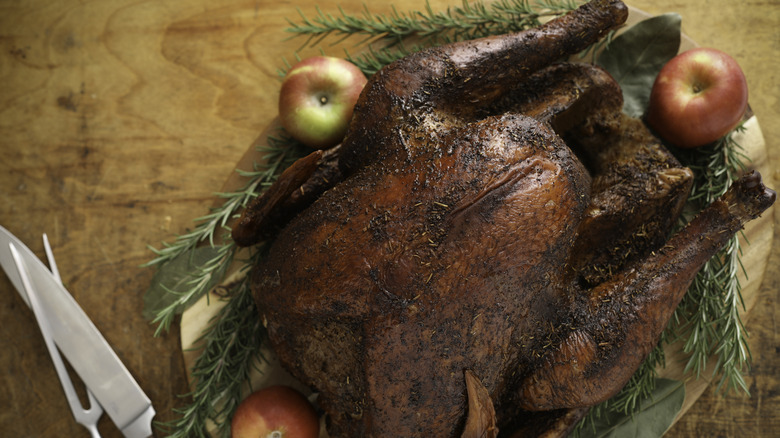
Despite living in a world of Tofurkeys, turkey-less tables, and alts-givings, we'd argue that no Thanksgiving spread is complete without a bird in the center. It doesn't just add visual splendor; it also anchors the whole spread. It's just kind of unfortunate that a bird with this much importance can taste so, well, bland.
Even with a basic roasted turkey recipe, it can be hard to perfect. If you're only sticking to the bare-bones salt-and-pepper combo (or whatever dusty poultry seasoning is hanging out in the back of your spice cabinet), you could be missing out on fantastic-tasting turkey that will make you wonder why anyone would ever choose ham.
To give you some advice on easy ways to give your bird a flavorful drumstick (err... leg) up this Thanksgiving, we spoke to the experts: Nancy Gannon, marketing director of Reynolds Wrap & Bakeware; chef Glenn Rolnick of Carmine's NYC; Mary Cressler, cookbook author and recipe developer of Vindulge; Steve Sabicer, former butcher shop owner and creator of Enlightened Omninvore; Angelo Sosa, executive chef of the Grand Hyatt Indian Wells Resort & Villas; Stephen Greer, executive chef of The Rally Hotel; Tobias Burkhalter, assistant general manager of The ART Hotel; and Brandon Sloan, executive chef of Pendry San Diego.
1. Incorporate miso
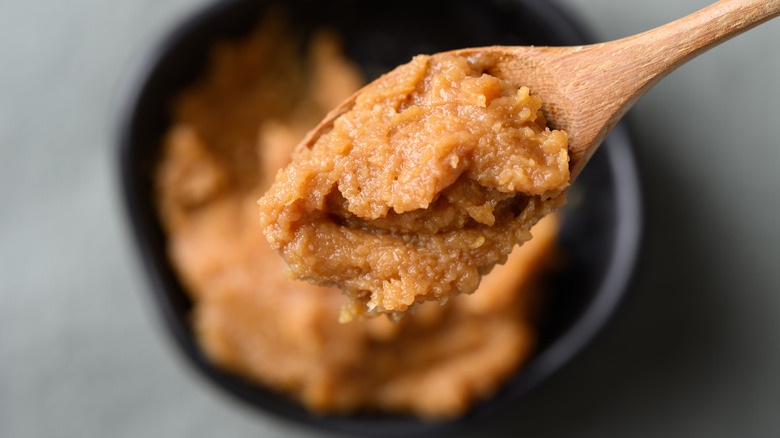
Miso paste is a delightful ingredient you can use in so many ways. While your knee-jerk reaction may be to put it in soup, pairing it with your Thanksgiving turkey may not have ever crossed your mind. But once you consider its delectably fermented, funky flavor and punch of umami — a flavor turkey historically lacks — it'll make much more sense.
"White miso adds a savory and sweet depth of flavor without overwhelming the turkey-ness," says former butcher shop owner Steve Sabicer. "Mix [a 2-to-1 ratio of] unsalted butter to miso and spread it under the breast skin to give that white meat a bit of an umami bomb." He prefers to add this spread to turkey because it offers savoriness without being too funky — meaning your guests may not be able to pinpoint what it is.
Executive chef Angelo Sosa also loves white miso — the mildest variety of the ferment. "White miso is an extraordinary ingredient for turkey. It has this beautiful savory depth and subtle sweetness that enhances the natural flavor of the bird," he says, noting that he also smears it underneath the skin, along with softened butter, citrus zest, roasted garlic, and herbs.
2. Brine it with pickle juice
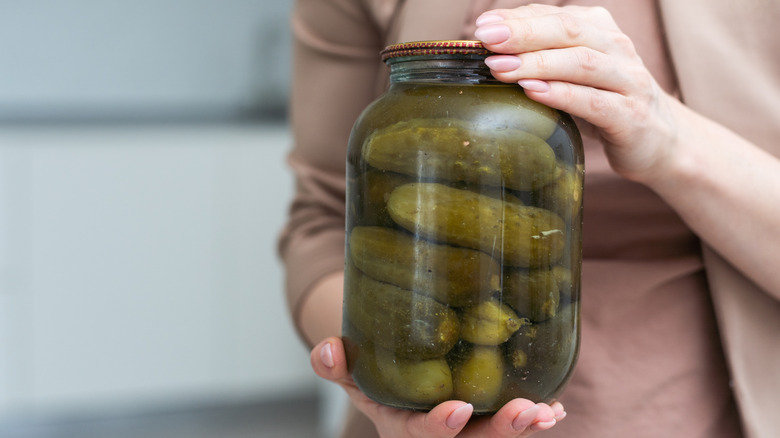
Pickle juice is a favorite among many, and your Thanksgiving turkey can also benefit from its herby base, punch of acidity, inclusion of alliums like garlic, and saltiness. Marketing director Nancy Gannon suggests brining turkey the night before with a mixture of dill, garlic, mustard seeds, peppercorns, and pickle brine. This is a smart move for both flavor and texture; the vinegar and salt in the brine tenderize the turkey, ensuring a moist, flavorful result. You can brine your bird in any pickle brine, though we recommend sticking with a basic dill.
If you want to lean into the flavor more, you can create a pickle rub with dried dill, garlic, onion powder, mustard powder, and pepper; this will enhance the seasonings already found in your pickle brine. "It's a combination of ingredients many home cooks probably already have in their spice cabinets, but together, they give turkey a really delicious pickle-inspired flavor," she says. You can add the rub after the turkey has been brined and dried, and you can even follow Gannon's suggestion of preparing a pickle-inspired gravy for serving.
3. Pair it with chili crunch
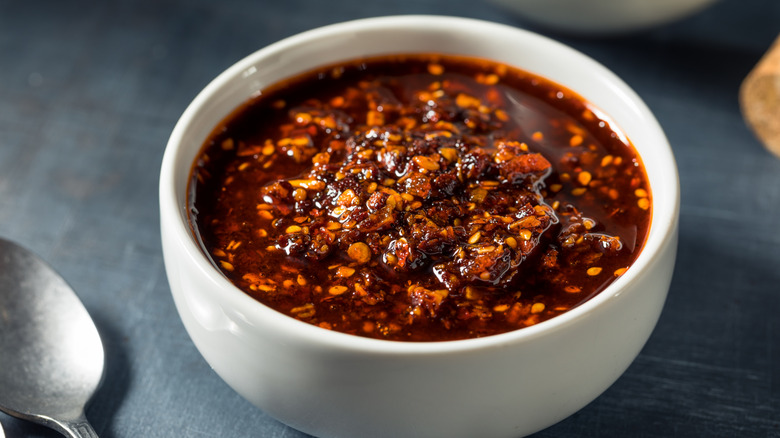
Chili crunch (aka chili crisp) is such a fantastic condiment. It's piquant first and foremost, though depending on the brand you choose, you can also add more savory or salty undertones to your bird. This complexity can do wonders for a bland turkey.
Angelo Sosa recommends seasoning the bird with a homemade chili crunch. "Think toasted dried chilies, crispy garlic, shallots, nuts, and seeds, finished with a touch of sherry vinegar, orange zest, and honey. You get heat, acidity, sweetness, and this beautiful contrast in texture," he says. If you want the brightest, boldest chili-crunch flavor, you may want to follow his suggestion and serve the carved bird with this condiment rather than add it as the bird cooks. "It brings warmth, texture, and a completely different dimension to the turkey," he says. If you don't want to make your own condiment (after all, Thanksgiving is a notably cooking-heavy holiday), take a gander at our ranking of the best store-bought chili crisp brands and select accordingly.
4. Add preserved lemons
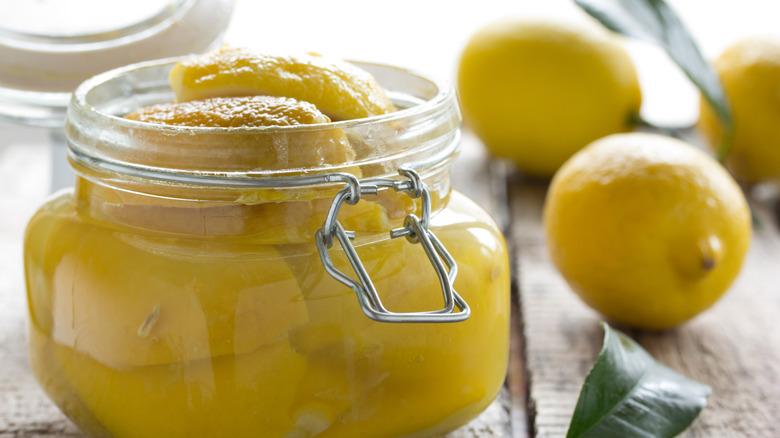
Preserved lemons aren't the tangy citrus you'd normally use for a glass of lemonade; instead, they undergo a Moroccan-style preservation, yielding fruits that are salty, funky, and unlike any lemon you've ever had.
These qualities make preserved lemons a great addition to your holiday turkey. Steve Sabicer describes preserved lemons as a "fragrant, salty citrus that won't sour your bird." He suggests adding a few wedges of preserved lemon to the turkey cavity, or mincing a few pieces and adding them to a compound butter with herbs. "[It's] more complex than raw lemon or ordinary lemon juice, [and] the cured rind goes perfectly with herbs and butter," he says. Alternatively, you can also add preserved lemons to your wet brine alongside an acid like buttermilk. Their funkiness can be overwhelming, especially for folks who are unfamiliar with their flavor, so we recommend using them sparingly here.
If you are hesitant about using preserved lemons altogether, we have good news: You can also stick to using plain lemons as well. Assistant general manager Tobias Burkhalter adds the citrus to the bird's cavity along with onions, garlic, celery, and herbs. "They release their aromas as the turkey roasts," he says.
5. Be generous with alliums
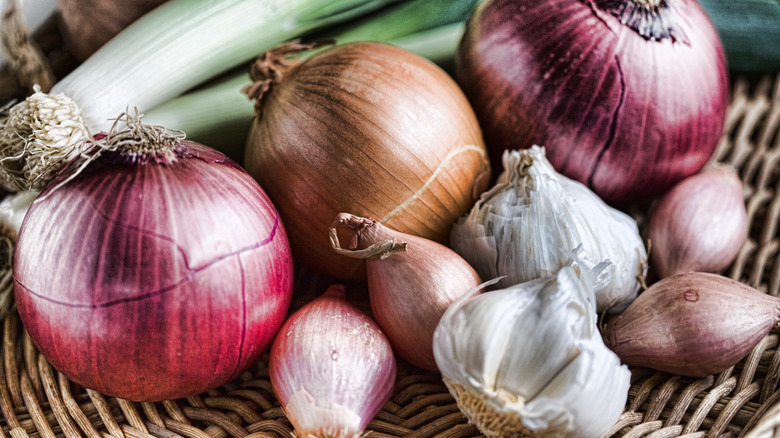
Members of the allium family are a home cook's best friend. Garlic, shallots, and all kinds of onions are alliums that belong both in your kitchen and cozied up with your Thanksgiving bird.
There are so many ways to use alliums to flavor your bird, and the type you use will depend on the flavor you're trying to impart and how you're adding them. "Roasted onions and whole garlic cloves in the pan add sweetness and flavor to the drippings. Garlic and onion powder are also useful because they distribute evenly and are less likely to burn," says Tobias Burkhalter. Executive chef John Marchetti, meanwhile, prefers to set shallots and garlic cloves underneath the turkey. Cookbook author Mary Cressler prefers to add onions to the brine with some citrus, peppercorns, and bay leaves, noting that this allium creates a fantastic aroma.
Another less-talked-about allium that goes well with turkey? Leeks. "I like to add some lightly olive-oiled, large-diced leeks, carrots, celery, onions, garlic cloves, and apple quarters into the cavity, which adds much-needed flavor to the turkey as well as provides the base for the gravy," says chef Glenn Rolnick.
6. Play with unique spices and seasoning blends
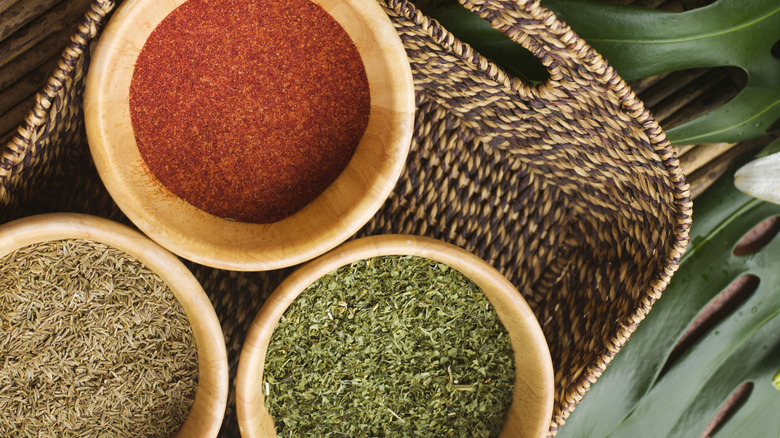
Bland meats like turkey can use a lot of help from spices and seasoning blends. Luckily for us, our experts had plenty of ideas for which ones to use. "Turkey is a great canvas for spices, and you don't have to stick to the traditional Thanksgiving flavor profile. My own turkey seasoning leans savory and herbal, with black pepper, mustard powder, garlic, sage, thyme, and fennel," says Mary Cressler.
Spice blends, which are already pre-mixed and portioned, are also a slam dunk for turkey; they eliminate the tinkering and ratio-ing you'd normally have to do if you made one yourself. "Ras el Hanout added to a traditional savory turkey rub gives it an aromatic pop and adds floral, savory, and slightly sweet notes that pair beautifully with turkey," says John Marchetti. This seasoning contains a warming blend of cinnamon, cumin, coriander, pepper, allspice, cloves, nutmeg, and more. Cressler's other suggestions are also in the "warm" camp. "Curry or berbere could also be interesting directions for cooks who want to take the meal somewhere different; I'd start with a restrained amount and pair the spices with complementary aromatics rather than layering on too many competing flavors," she says.
Steve Sabicer, meanwhile, is a fan of both fennel seeds and za'atar. "Wake up dried seeds by lightly toasting and crushing them before incorporating into a dry seasoning blend," he suggests. Sabicer recommends Lebanese za'atar specifically, which is comprised of thyme, sumac, toasted sesame seeds, and salt.
7. Add a splash of bourbon to the brine
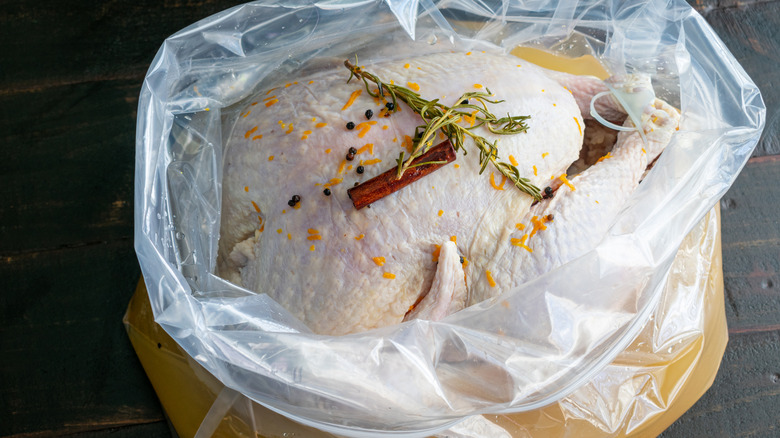
You may not look at your bar cart, eye a bottle of your favorite bourbon, and think "turkey," but it's high time that you do, according to Mary Cressler. She especially loves pairing this spirit with whole cloves. "The bourbon adds a subtle caramel warmth and the cloves bring a holiday spice note that people can't quite place," she says. She recommends using a cup of bourbon for every two gallons of brine. Before you start, consider which whiskeys are best for cooking; you might not want to use something top-shelf, but like wine, choose a bourbon you enjoy drinking.
Cressler doesn't stop there; she also adds fennel and mustard powder to this bourbon-spiked brine. "Fennel gives a savory, slightly sweet herbal note, and mustard powder adds depth without tasting like mustard." The pièce de résistance, though, which elevates the flavor of the oaky bourbon in particular, is wood smoke. "A little apple or cherry wood adds a layer of flavor no oven can replicate," she says.
8. Use fresh fruit juice
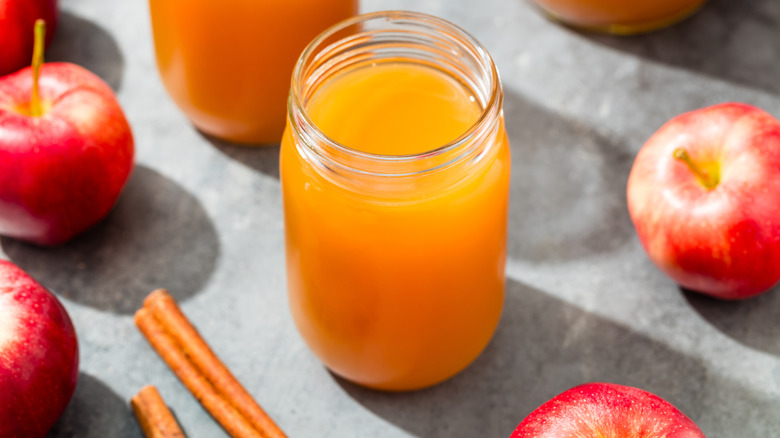
Turkey — and poultry in general — can use some waking up. This is where fresh fruit juices come in handy.
"I like to brine our turkeys overnight in an apple cider solution. It [adds] another layer of flavor to the turkey and keeps it tender [and] juicy while sugar helps crisp the skin," says John Marchetti. This is also a great place to add complementary herbs and spices like whole cloves and rosemary. Simmer the spices in a small portion of cider, then add a few quarts of water, cool the solution, and submerge your bird. Executive chef Stephen Greer, meanwhile, recommends preparing a cider and sage reduction sauce to serve with your bird; the sauce's sweetness would play beautifully against the earthy sage. Cider, though, is far from the only juice you can use. "I enjoy putting natural fruit juices in the bottom of the roasting pan during the cooking process for added flavor. Fresh-pressed apple cider is my #1 choice, followed by [orange juice] or pineapple juice as #2 and #3," says Glenn Rolnick.
Another way to integrate fruit juices into your recipe is to prepare a glaze. However, do this with caution. "It is important to add the glaze during the last 30 minutes of cooking so the sugars don't get too caramelized as it cooks," says executive chef Brandon Sloan. To make your glaze, simmer the juice of choice with sugar until reduced, then apply it to the bird with a pastry brush.
9. Use mushrooms for an umami punch
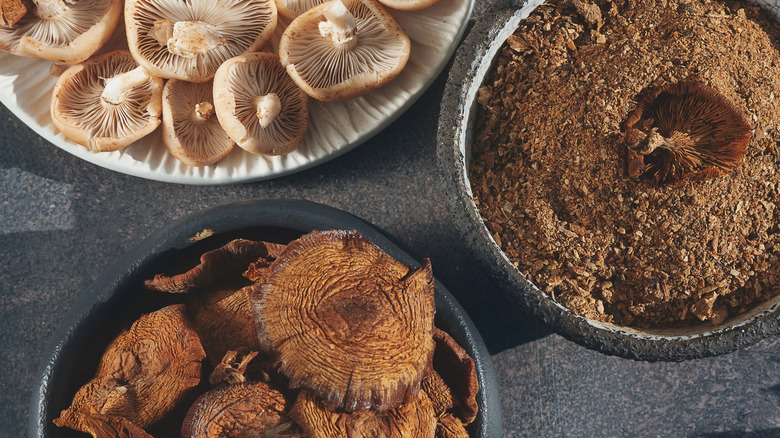
Miso isn't the only way to build an umami profile in your turkey. Mushrooms are a woodsy ingredient that can enhance its complexity. "My go-to is mushrooms for umami. I like to sauté them and use the butter to baste the turkey," says John Marchetti. He also suggests serving it with a mushroom cream sauce, which gives you the richness of a gravy paired with the earthy overtone of mushrooms.
Glenn Rolnick also likes to add porcini and shiitake mushrooms to the pan, though he notes another way to use them: "They also come in natural powders that add awesome flavor to rubs," he says. You can rub your turkey with your favorite woodsy herbs and spices, like rosemary and thyme, then add mushrooms to your stuffing.
10. Serve or cook it with compound butter
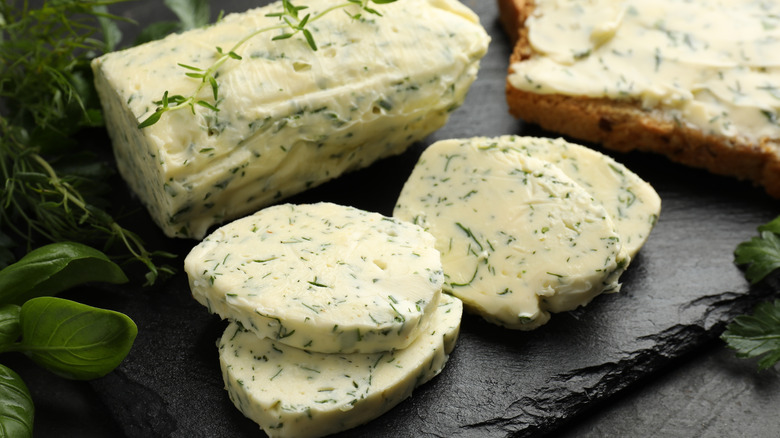
What can't compound butter do? For most of our experts, compound butter is a highly recommended way to add flavor to Thanksgiving turkey. "Compound butter is one of my favorite ways to add flavor to turkey because it's easy to customize and helps distribute seasonings evenly," says Nancy Gannon. You make it by simply whipping add-ins into butter.
"When making a compound butter to coat your entire turkey, make sure to use softened sweet butter. Cut it into small cubes and leave it out at room temperature for at least one hour," says Glenn Rolnick. He recommends adding fresh sage, garlic, salt, pepper, hot sauce, and fresh citrus juice to the butter, then coating the bird in it the night before you plan to cook it. The butter will melt as the turkey cooks, infusing the entire bird with a spiced, buttery sheen.
Beyond infusing your bird with seasoning, compound butter can also carry ingredients like herbs that would otherwise burn if you rubbed them on your bird's skin. "One of the biggest mistakes people make when roasting a bird is to put herbs on the outside of the turkey where they can dry out and burn," says Steve Sabicer. "I always fold mine into a compound butter that I ... tuck between the meat and skin. This makes sure the aromas get infused into the fat and stick to the bird."
11. Dry-brine your turkey instead of wet-brining it
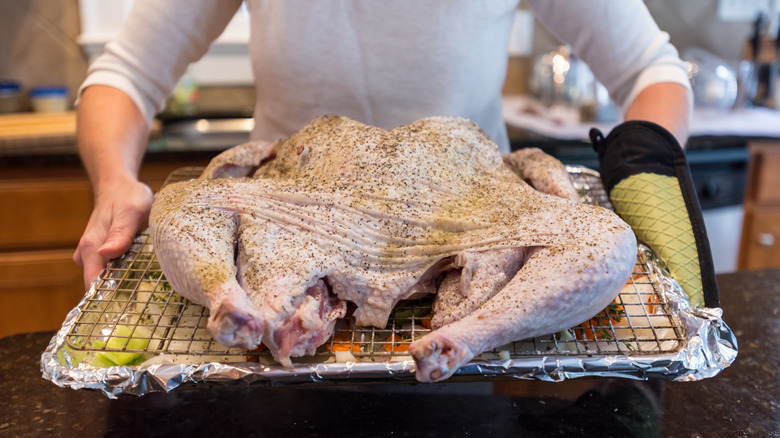
Most people are used to wet-brining their bird: submerging it in a salt solution to make it more flavorful and juicy. However, another brining method is worth trying, and it's a lifesaver for anyone who doesn't want to meticulously blot away residual moisture before cooking.
"I dry-brined my first turkey more than a decade ago, and I've never considered another option," says Steve Sabicer, who notes that the resulting meat reminds him of deli turkey. He uses a tablespoon of salt per 5 pounds of turkey, liberally coating both the inside and outside before refrigerating it in a bag for a week. "At first, you'll notice a lot of moisture building up inside the bag, but by day five or six, osmosis will send that seasoned juice back into the bird, effectively injecting your turkey with salty goodness," he says.
Mary Cressler does a much quicker dry-brine, using kosher salt and refrigerating it, uncovered, for 12 to 24 hours. She stresses checking whether the bird has been pre-brined or injected with saltwater beforehand, since you don't want to over-salt your turkey.
12. Reverse sear your turkey, if you dare
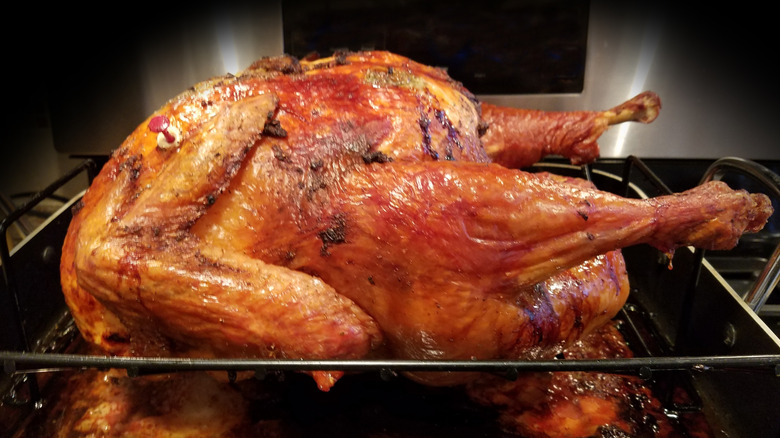
The reverse sear method is popular for some cuts of steak, and it can make a difference for your turkey, too — if you know how to do it correctly. Reverse searing calls for cooking the cut low and slow before finishing it over high heat to develop a delectable crust and toasty flavor. Even though you won't get the same dramatic effect as reverse searing a well-marbled ribeye, it's still worth trying.
"The reverse-sear approach is worth considering for individual turkey parts, particularly if you want to develop smoke flavor before finishing with higher heat," says Mary Cressler, who uses a similar technique for turkey on the pellet grill. She smokes the meat low, then cranks up the temp to crisp the skin and enhance the smokiness built during the slow-cook stage. "For a home cook, I'd focus on controlling the internal temperature and finishing with enough heat to improve the skin without overcooking the breast," she says — hence the delicate balance of this cooking method.
Stephen Greer recommends arming yourself with a meat thermometer, rather than trusting the cooking time to ensure success. Breaking down the bird can also help. "I find individual cuts easier to manage than a whole turkey because the breast and legs cook at different rates," says Tobias Burkhalter.
13. Serve your bird with something other than cranberry sauce
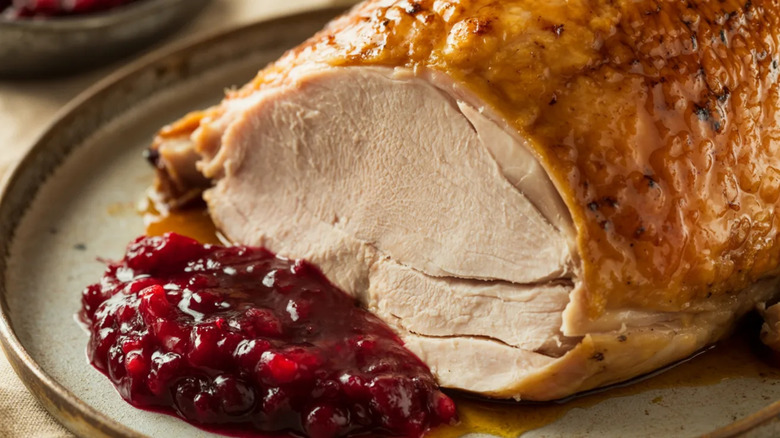
Turkey usually cozies up with its friends, gravy and cranberry sauce, on the Thanksgiving plate. However, other pairings can enhance your turkey's flavor even more. Self-proclaimed "gravy man" Stephen Greer recommends a cranberry-orange barbecue sauce — an excellent bridge between classic and modern Thanksgiving, if you ask us.
Several of our experts also recommended an unconventional sauce, especially for turkey: chimichurri. Brandon Sloan lauds it on a Thanksgiving leftover sandwich, while Tobias Burkhalter appreciates the freshness that it, and sauces like it, provide. "Salsa verde with parsley, capers, garlic, and lemon is a great option ... for spiced turkey, a lemon-yogurt sauce works well," Burkhalter adds.
Sometimes, your Thanksgiving menu needs an entire overhaul — that's when you look to other cuisines for inspiration. Angelo Sosa draws on his Dominican heritage, suggesting a mojo verde-topped bird. "Think fresh lime zest, olive oil, garlic, rosemary, cilantro, parsley, and a touch of bay leaf vinegar. The combination creates this vibrant, herbaceous sauce with incredible freshness and acidity that cuts right through the richness of roasted turkey," he says. Sloan, meanwhile, brought ideas from the Pendry San Diego's Chefsgiving, where they will serve a bulgogi-inspired bird marinated in a soy-gochujang sauce, which we think would pair well with kimchi and bachan. Who said Thanksgiving — and its signature protein — had to be bland and boring?