

3 Bakers' Tips For Making The Perfect Pumpkin Pie
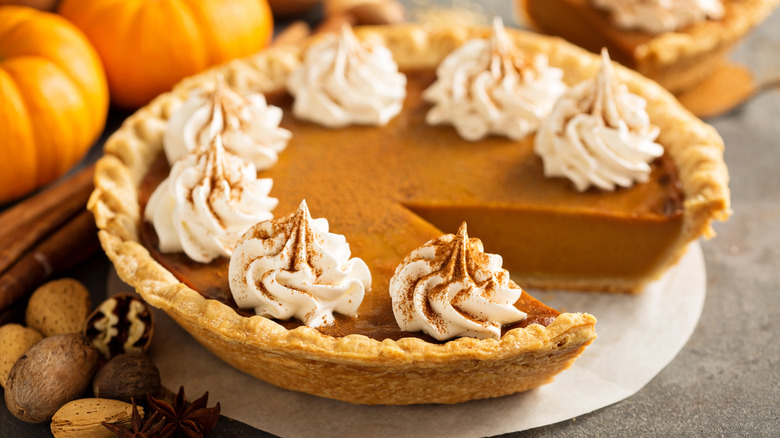
Pumpkin pie, in theory, should be an incredibly simple pie to make. Unlike fruit pies that require peeling, slicing, and par-cooking fresh fruit, pumpkin pie comes together with just a handful of ingredients. Despite the simplicity of ingredients, though, pumpkin pie can be surprisingly hard to perfect.
From soggy crusts and watery fillings to cracked surfaces and underwhelming flavor, there are many mistakes to avoid when making pumpkin pie. The difference between a good pumpkin pie and an exceptional one, then, isn't necessarily the ingredients used but the technique; and even the smallest adjustments can make a noticeable difference.
To help home bakers master this holiday classic, we turned to professional pastry experts for their advice on making the most perfect pumpkin pie. Odette D'Aniello, founder and CEO of Celebrity Cake Studio and Dragonfly Cakes, brings more than 25 years of experience in the specialty food industry, while Riccardo Menicucci, executive pastry chef at the Four Seasons Hotel Los Angeles at Beverly Hills, draws on his experience in Michelin-starred kitchens. Joining them is Katie Kaplan, a Michelin-trained chef and founder of the New York City pie shop Fillings, where every miniature pie is made from scratch. Each chef has shared advice on everything from choosing the right spices to incorporating unexpected ingredients; so that whether you're baking your very first pumpkin pie or perfecting a longtime family recipe, these approachable techniques can help you make your best pie yet.
1. Add winter squash for a more complex flavor
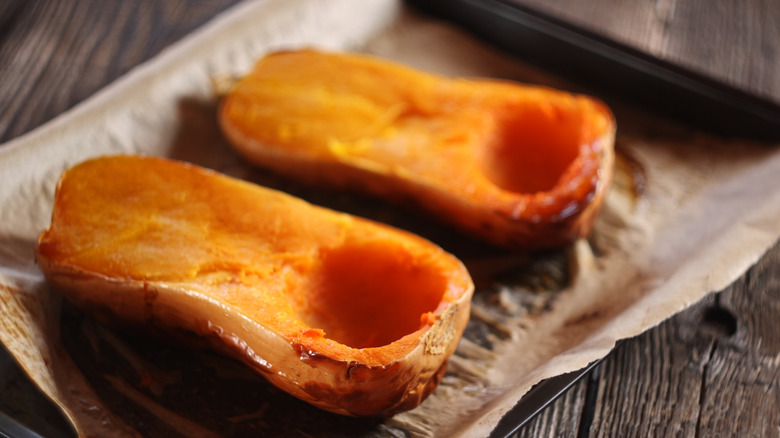
One way to add complexity to pumpkin pie is to incorporate other varieties of winter squash into the filling. Katie Kaplan, founder of Fillings, recommends combining pumpkin with winter squash to introduce new layers of sweetness, nuttiness, and earthiness. The idea came about while developing a pumpkin pie recipe with chef Chanah Willis, a James Beard Award semifinalist, founder of Last Call Baking Company in Alabama, and a member of the Fillings team. After extensive recipe testing, Katie and Chanah discovered that incorporating winter squash was one of their favorite ways to elevate the traditional dessert.
Different varieties of winter squash have their own distinct flavors, so it's worth exploring to find your favorite gourd to use in pies this fall. Butternut squash, for example, has a smooth texture and a naturally sweet, nutty flavor, while kabocha squash has a richer, earthier taste and dense flesh that works particularly well in pies. To try the technique at home, roast the squash until tender, then purée it until completely smooth before incorporating it into your pumpkin pie filling. Start by replacing a portion of the pumpkin purée with an equal amount of squash purée, adjusting the ratio to suit your tastes.
2. Strain your pumpkin purée before making the filling
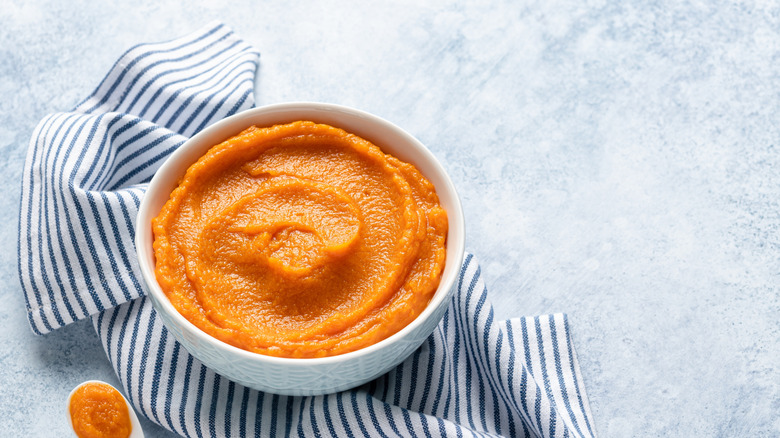
One of the biggest challenges of making pumpkin pie is achieving the perfect custard consistency, which needs to be set firmly enough to slice without becoming dense or rubbery. According to Kaplan, one of the most important factors in achieving that texture is controlling the moisture content of the pumpkin purée. "Pumpkin naturally contains a significant amount of water," she writes, "and too much moisture can prevent the custard from setting properly, resulting in a loose or watery filling." To avoid this, Kaplan recommends straining the pumpkin purée through cheesecloth before incorporating it into the filling, removing excess liquid without sacrificing the pumpkin's flavor.
For an even smoother consistency, Kaplan recommends taking an additional step after combining the filling ingredients. Using an immersion blender, thoroughly blend the pumpkin purée, eggs, dairy, sugar, and spices until the mixture is completely smooth and homogeneous. "Then," she writes, "pass the entire filling through a fine-mesh strainer before pouring it into your crust. This helps remove any remaining fibers, lumps, or bits of unmixed ingredients," which could affect the final texture. Together, these simple techniques help create a silky, uniform custard that bakes evenly and slices beautifully.
3. Don't be afraid to use canned pumpkin purée
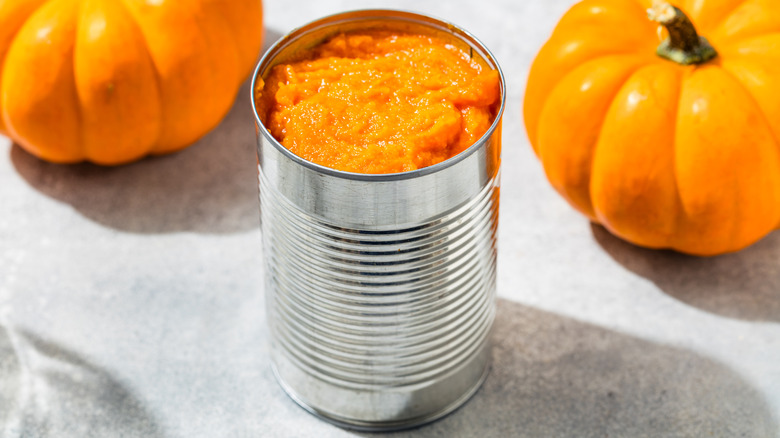
While homemade ingredients are often considered better than store-bought alternatives, pumpkin pie is one dessert where taking a shortcut can actually work in your favor. In fact, after more than 27 rounds of recipe testing at Fillings, Katie and her team found that using high-quality canned pumpkin purée produced results comparable to roasting and puréeing fresh pumpkins. The key, she discovered, was controlling the moisture content of the purée rather than whether it came from a can or a freshly roasted pumpkin. "Consistency is incredibly important," she notes. "Fresh pumpkins, even of the same variety, can vary in ripeness, natural sugar content, flavor, and water content." Using canned purée eliminates much of that unpredictability, making it easier to achieve the same delicious results every time.
Odette D'Aniello offered the same advice, writing that "Canned pumpkin is an excellent option for home bakers because it takes away a lot of the guesswork." She emphasizes that "there's absolutely no need to make your own purée to make a delicious pumpkin pie," though she personally enjoys using pumpkins grown in her own garden. If you're reaching for a can, be sure to choose plain pumpkin purée rather than pumpkin pie filling, which already contains added sugar and spices that could throw off your recipe's balance. For those who prefer using fresh pumpkin, D'Aniello recommends choosing a small pumpkin, roasting it until tender, and puréeing the flesh until smooth. Be sure to drain away any excess moisture before measuring the purée to help ensure the filling sets properly.
4. Use heavy cream for a richer, silkier texture
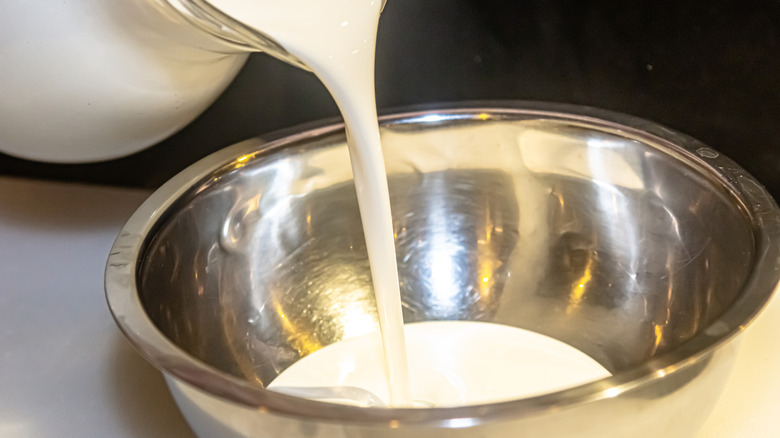
The secret to a silky, luxurious pumpkin pie filling might be as simple as choosing the right dairy. While many pumpkin pie recipes call for evaporated milk, half-and-half, or even sour cream, Katie Kaplan recommends using heavy cream for a richer, smoother custard. At Fillings, Kaplan writes that the bakers "prefer heavy cream with approximately 40% milk fat. The higher fat content creates a richer, smoother, and more luxurious custard and cream contributes to that silky, delicate mouthfeel we're looking for." The higher fat content helps create a luscious filling without sacrificing the smooth texture of a traditional custard.
According to Kaplan, the goal is to achieve a filling that is beautifully set but never overly firm or heavy. Heavy cream lends richness to the custard, helping create a soft, creamy texture that contrasts with the crisp, flaky pie crust. If your usual pumpkin pie recipe calls for a lighter dairy product, consider trying one formulated with heavy cream for a more indulgent result.
5. Make your own pumpkin spice blend with fresh spices
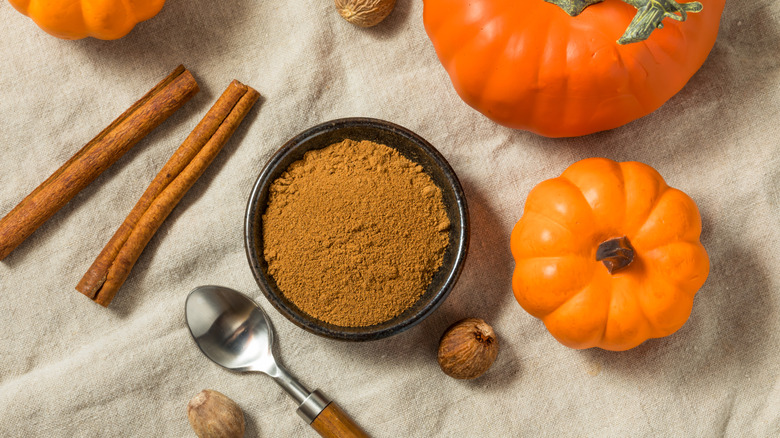
Pumpkin spice is responsible for much of the warm, comforting flavor associated with pumpkin pie, but finding the right balance of spices is essential to letting the pumpkin's natural flavor shine. Rather than relying on a premixed blend, Katie recommends making your own pumpkin spice blend to have greater control over the proportions. At Fillings, Kaplan and Chanah use a combination of cinnamon, ginger, cloves, and nutmeg, adjusting the ratios to create a balanced flavor profile. Both Kaplan and Riccardo caution against using too much nutmeg, which can easily overpower the filling. Menicucci prefers a simpler spice blend that emphasizes cinnamon and avoids nutmeg altogether, while Odette D'Aniello considers cinnamon, ginger, and nutmeg essential, with just a touch of clove for added warmth. The goal, Riccardo notes, is "to let the pumpkin shine while adding just enough complexity."
Just as important as the proportions is the quality and freshness of the spices you're using. Kaplan particularly recommends investing in high-quality cinnamon, noting that "investing in high-quality cinnamon is one of the biggest game changers for any home baker," and that Fillings exclusively uses Royal Cinnamon from Burlap & Barrel for its rich, complex flavor and aroma. D'Aniello also suggests checking the freshness of your spices before baking, especially if they've been sitting in the pantry since last Thanksgiving. Odette writes that "replacing them can make a bigger difference than adding more of an old spice," so give each spice a quick smell before adding it to your filling; if the aroma is faint, it's probably time for a replacement.
6. Brighten the filling with citrus
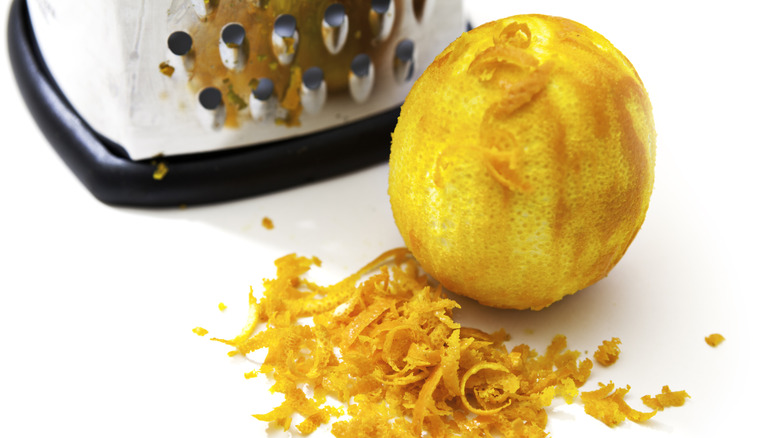
Pumpkin pie is known for its warm spices and rich, earthy flavor, but a little brightness can help balance the sweetness and make those familiar flavors even more pronounced. According to Riccardo, one of the easiest ways to elevate a traditional pumpkin pie is to incorporate fresh orange zest and a splash of orange juice into the filling. He notes that it's his favorite way to elevate a pumpkin pie, explaining that "Citrus brings brightness and balance to the richness of the pumpkin, helping all of the flavors come alive without overpowering them."
Orange zest is particularly effective because it contains fragrant essential oils that lend a concentrated citrus aroma without adding much liquid to the custard. A small amount of fresh orange juice or even orange blossom water can further brighten the filling, cutting through its richness and bringing the other flavors into focus. The goal isn't to make the pie taste distinctly of orange, but to introduce a subtle contrast that makes each bite taste more balanced and flavorful.
7. Blind-bake your crust in an aluminum pan to prevent a soggy bottom
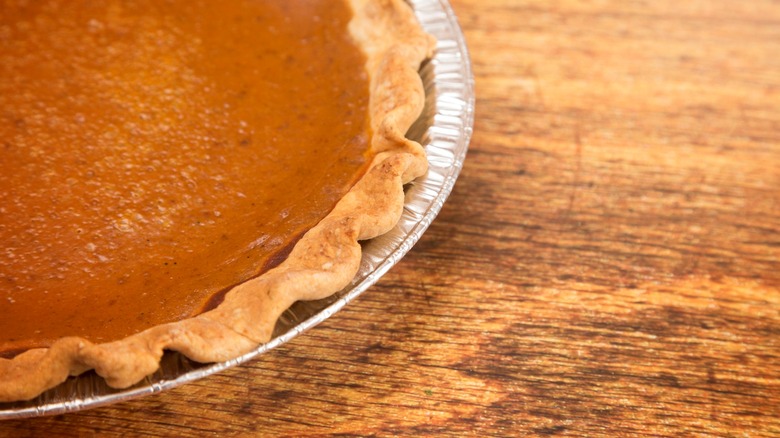
One of the biggest challenges of baking pumpkin pie is achieving a perfectly crisp, flaky crust beneath the creamy custard filling. Because pumpkin pie filling contains so much moisture, pouring it directly into an unbaked crust can result in a soggy bottom, even after the custard has fully set. To prevent this, both Menicucci and Kaplan recommend blind-baking the crust before adding the filling. Menicucci suggests baking the crust until it's about 70% done, giving the pastry a head start without overbaking it during the final bake. Kaplan takes a similar approach, recommending that home bakers freeze their prepared pie crust before lining it with parchment paper and filling it with pie weights. Bake until the sides are set, then remove the weights and continue baking until the bottom looks dry and begins to turn golden. D'Aniello agrees that blind-baking can help prevent sogginess, though uniquely she notes that it isn't strictly necessary for every recipe.
The type of pie pan you use can also make a noticeable difference. At Fillings, Kaplan prefers aluminum pie pans because the material conducts heat efficiently, helping the bottom crust bake evenly without requiring additional time in the oven that could overcook the delicate custard. While glass and ceramic dishes can also produce delicious pies, thicker ceramic pans in particular take longer to heat through, potentially leaving the bottom crust underbaked. For the most reliable results, consider using an aluminum pan and following a recipe specifically designed for a blind-baked crust. If the edges begin browning too quickly during the final bake, D'Aniello recommends covering them with a pie shield or strips of aluminum foil to prevent burning.
8. Look for a gentle wobble to know your pie is done
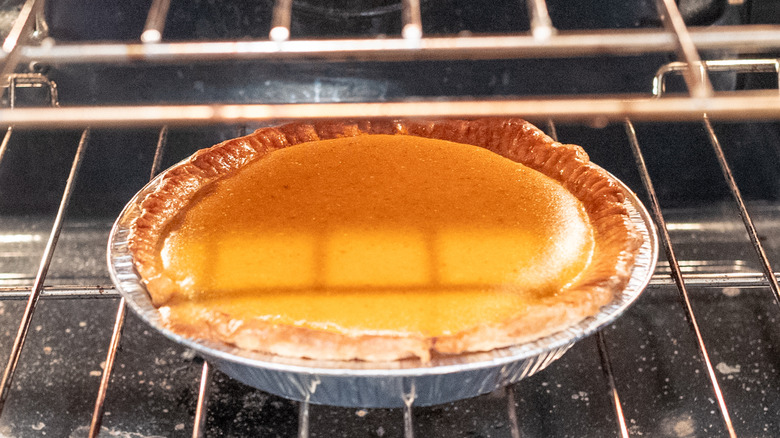
Knowing exactly when to remove pumpkin pie from the oven can be tricky, especially since the filling may still appear slightly underdone when it's actually ready. Unlike cakes or other baked desserts, pumpkin pie is a custard, meaning it continues to set as it cools. According to D'Aniello, one of the most common mistakes home bakers make is waiting until the entire filling looks completely firm before removing it from the oven. Instead, she recommends gently nudging the pie pan to check for movement. The edges should appear set, while a small area in the center should have a soft, controlled wobble, similar to gelatin. If the center ripples or sloshes like liquid, the pie needs more time. Kaplan agrees that a slight jiggle is the best visual indicator of doneness, while Menicucci notes that the center may also begin to puff slightly as the custard approaches the end of its baking time.
For an additional measure of accuracy, both Kaplan and Menicucci recommend checking the filling with an instant-read thermometer in the center of the pie. Because ovens can vary in temperature and performance, D'Aniello also suggests checking the pie before the end of the recipe's recommended baking time rather than relying on the clock alone. Removing the pie while the center still has a gentle wobble allows the residual heat to finish setting the custard, helping preserve its smooth, creamy texture and reducing the risk of overbaking and cracks across the surface.
9. Make your pie ahead of time
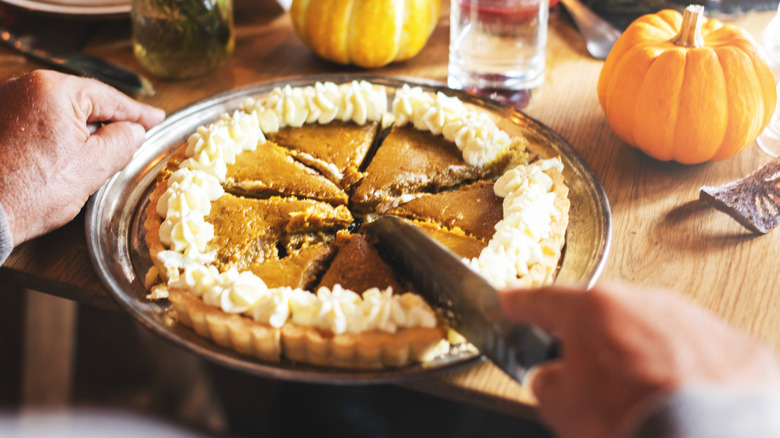
Thanksgiving dinner requires plenty of planning and preparation, and fortunately, pumpkin pie is one dessert that benefits from being made ahead of time. According to Odette, giving your pie enough time to cool and set is essential to achieving the perfect texture. Because pumpkin pie has a custard filling, slicing into it while it's still warm can result in a soft, loose filling that doesn't hold its shape. Rather than rushing to finish dessert just before dinner, consider baking your pumpkin pie the day before Thanksgiving. Allow it to cool completely — for less than two hours, for food safety — before refrigerating it overnight, giving the custard plenty of time to firm up for clean, beautiful slices. "Make pumpkin pie part of your advance preparation so it has time to set," Odette writes, "and you have one less dish to worry about on Thanksgiving!"
For home bakers trying a new pumpkin pie recipe, Katie recommends taking preparation a step further by making a test batch before the holiday. At Fillings, Kaplan and her team test recipes repeatedly, because "even small variables, such as the oven, baking vessel, or moisture content of an ingredient, can affect the finished product." Making a practice pie gives you an opportunity to find any potential issues and adjust your technique before the big day.
10. Finish with a tangy topping
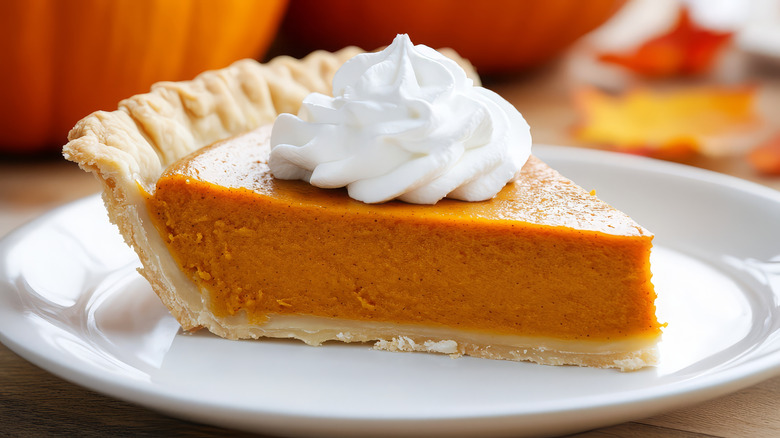
No slice of pumpkin pie is complete without a dollop of whipped cream, but Katie recommends putting a tangy twist on the traditional topping. At Fillings, Kaplan and her team serve their pumpkin pie with a lightly sweetened crème fraîche whipped cream, which adds a subtle acidity that balances the rich, sweet custard. While traditional whipped cream adds another layer of sweetness to the dessert, crème fraîche introduces a pleasantly tart flavor that complements the pumpkin and warm spices without overpowering them. "A little acidity," she writes, "can make every bite of pumpkin pie feel lighter, brighter, and more balanced."
To try the technique at home, fold a few spoonfuls of crème fraîche into freshly whipped cream, sweetening it with sugar lightly to taste. The tangy topping adds a sophisticated finishing touch without requiring much extra effort. Of course, Kaplan admits that Fillings has another secret ingredient in its whipped cream that takes the topping to the next level, but that particular addition is a closely guarded kitchen secret. At home, a little crème fraîche is an easy way to elevate your own Thanksgiving dessert to professional levels.