

8 Popular Kitchenware Brands To Look For At Thrift Stores
We may receive a commission on purchases made from links.
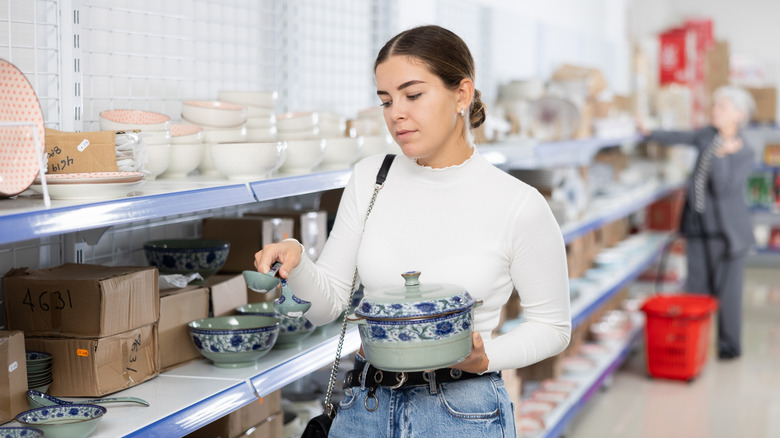
Thrifting can be divisive. Some hate it; others love getting their hands dirty at Goodwill or the Salvation Army, seeing it as the ultimate treasure hunt with the chance to strike gold. Whether it's a mint-condition designer jacket or a near-perfect Dutch oven, patience can be rewarded. Beyond the obvious savings, unearthing vintage or commercial-grade kitchenware adds cachet and a cool factor that mass-produced big-box store items can't replicate.
These products are usually tucked away in a corner of a second-hand store, away from the front, with shelves lined with old tools, utensils, serve-ware, bakeware, storage containers, and small countertop appliances from yesteryear. Esteemed glassware brands like Pyrex and Libbey would have been top tier to our grandparents, yet still carry some prestige in 2026. A well-seasoned vintage Lodge cast iron pan for under $10 would be hard to pass up for most budget-minded home cooks.
But if you're curious about second-hand kitchenware, it can be overwhelming. Crowded Goodwill shelves, spilling over with a mishmash of random kitchen gear, may not be so inviting, especially if you don't know which brands to look for. But knowing how to navigate a vintage product matrix prevents you from overpaying for delicate display pieces when you actually need daily workhorses. When hunting for clutch vintage finds, keep these four general tips in mind before you thrift any of the popular kitchen brands we've curated here.
1. Pyrex
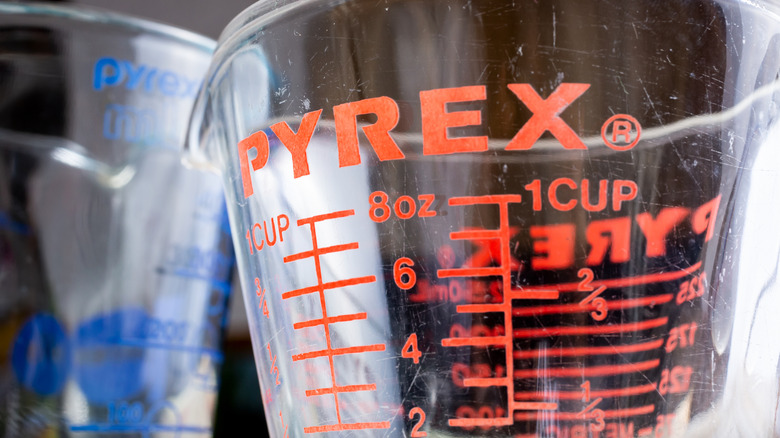
Pyrex is an iconic kitchenware brand that makes you think of thick glass measuring cups and unwieldy baking dishes. But when scanning the kitchen aisle shelves at a thrift shop, you might wonder: Can you really tell if Pyrex will explode from the logo alone? A persistent internet myth claims that all-caps lettering guarantees you're looking at vintage borosilicate glass, while lowercase logos are dated to 1975, making font style an unreliable durability test. Corning originally manufactured the glassware using thermal-shock-resistant borosilicate glass, but it sold the business in 1998 and shifted its line toward tempered soda-lime glass, which is less resilient overall.
But regardless of whether you find a vintage borosilicate baking dish or a newer soda-lime dish, Pyrex is a brand trusted by home cooks and even scientists, with a line of special glass found in labs around the world. So thrifters should rejoice upon finding it at a fraction of the retail price. This is especially true for those who like to cook casseroles — too soupy for a sheet tray, not enough volume to warrant a Dutch oven. Whether you want to replace a tired measuring cup with faded measurement markings or find a robust dish for scalloped potatoes, keep an eye out for Pyrex at your local Goodwill.
2. KitchenAid
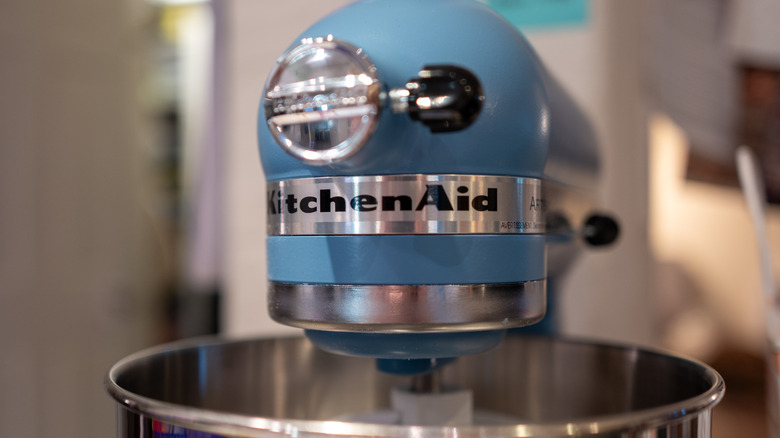
Some vintage buys are a no-brainer. If you are a baker who mostly works by hand, is short on cash, and wants some mechanical help, you'll need to save up to upgrade. But a frugal baker who knows the value of a KitchenAid mixer would probably tell you to stop spending a fortune on this mixer and thrift a secondhand version, instead. These renowned kitchen appliances have been assembled in Greenville, Ohio, since 1946. They were originally built by the Hobart Corp. before Whirlpool acquired it in 1986. If you find one at Goodwill, don't get too excited until you inspect it; plug it in and test every speed setting before you buy it.
A common issue thrifters may encounter with these units is a loud motor hum, yet the planetary beater attachment fails to turn. This issue is usually caused by a failed sacrificial nylon worm gear deep inside the gearbox. This plastic gear was intentionally engineered to shear under extreme mechanical stress, protecting the mixer's motor from burning out. Thrifty bakers with this issue will be glad to know that replacement nylon gears are inexpensive and easy to swap out with basic tools. While pre-1986 Hobart-built units are praised for their robust, all-metal internal gearing, almost any vintage KitchenAid mixer is fully repairable and definitely worth saving. If you find a fully-functional one at your local Salvation Army, you've hit the jackpot.
3. Lodge
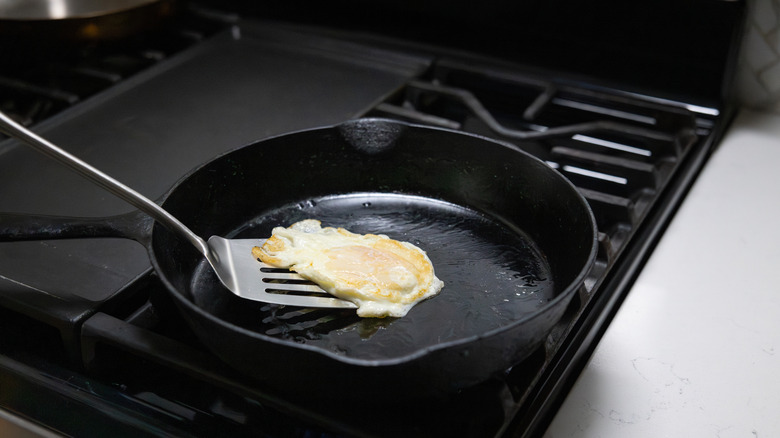
A Lodge cast iron frying pan is so affordable and easy to find that you might wonder if it's worth the trouble to thrift one. But here's the rub: While new factory pans come seasoned, it can take years to build up the kind of slick coating your grandmother's had, where eggs could almost slip around like it was Teflon-coated. When browsing secondhand cast iron pans, don't buy one from a thrift store until you give it this test. But know that you can trust Lodge — it is to cast iron pans what Le Creuset is to Dutch ovens. Operating in South Pittsburg, Tennessee, since 1896, Lodge is undoubtedly the gold standard for American-made cast-iron wares.
If you're looking for your first cast iron piece or want a different style for your collection, look for workhorses like the brand's classic 10.25-inch or 12-inch skillets. But before you check out, inspect the pan for warping by setting it on a flat surface and pressing down on the outer rim. If the skillet rocks back and forth, it's heat-warped from drastic thermal shock, which means it will make uneven contact on flat glass cooktops. While surface rust on bare cast iron is easily remedied by stripping and re-seasoning the pan's interior cooking surface, ideally you would find one with substantial, built-up seasoning, evidence of decades of dinners and more to come.
4. Duralex
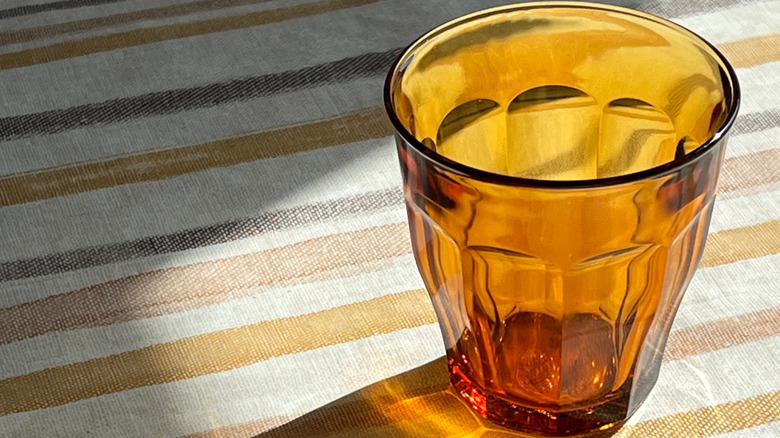
Manufactured in France since 1934, Duralex makes what are, at this point, very recognizable glasses — chances are you've sipped out of one at a restaurant or cafe before. The company pioneered glass tempering for tableware, and because the cups are so durable, some eateries favor them. The brand has produced legendary designs like the 1945 Gigogne and the rather iconic 1954 Picardie tumbler. But unlike cheaper decorated glassware, Duralex incorporates mineral pigments directly into the molten glass body, rather than relying on painted decorative glazes. This results in tempered soda-lime glass engineered to be about 2.5 times stronger than most standard annealed glass, breaking into small, blunt fragments — as a car windshield does — rather than jagged shards when dropped.
So when you're looking for cool vintage glassware to add to your collection, you can see why the Duralex brand is so sought after — it does it all, with classy designs and resilient materials. Before pulling the trigger on some second-hand cups, run your finger carefully along the rims of the tumblers to check for micro-chips. Note that Duralex safety guidelines officially advise consumers to immediately discard — and refrain from using — any piece that shows chips or structural damage. Whether you're on a budget or just like collecting vintage glasses, Duralex offers strong value — especially at thrift store prices.
5. Staub
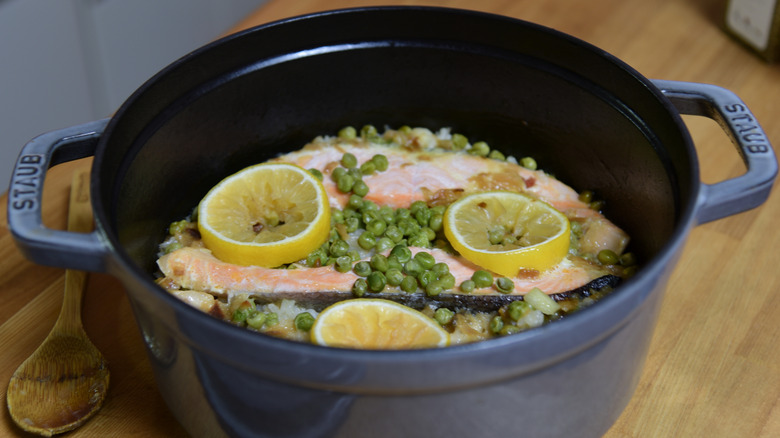
Scoring high-end French cookware secondhand is a dream, since these pieces are usually quite pricey when brand new. But if you find a Le Creuset while thrifting, there are some things you should check before buying it — and, equally, you can apply that same scrutiny to Staub. Crafted in France for over 50 years, Staub is renowned for its heavy 5.5-quart "cocottes," French for heavy-duty, covered cooking vessels made with enameled cast iron — commonly referred to as Dutch ovens by anglophones. These gorgeous pots feature a unique textured black matte enamel interior and heavy, flat lids. What sets Staub's Dutch ovens apart from competitors like Le Creuset are the lids, which feature spikes engineered for continuous self-basting, helping redistribute condensed braising liquid more evenly.
A brand-new 5.5-quart Staub cocotte typically costs about $430 at full retail value, so if you see one in great shape at Goodwill, jump on it. When inspecting a used one, tilt the interior toward direct light to inspect the enamel finish. You should immediately pass on pieces with noticeable interior chips, cracks, or significant pitting that expose the bare cast iron underneath. A Dutch oven with damaged enamel surfaces could continue to flake off glass particles during cooking, making this expensive cookware unsafe. But a well-cared-for cocotte should last many years, and buying one at thrift-store prices is a big win.
6. Libbey
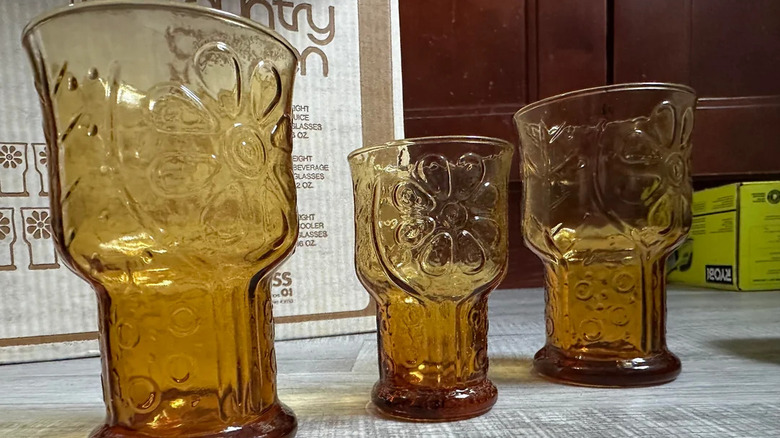
Libbey has strong brand recognition thanks to its staying power. With roots tracing back to 1818 as the New England Glass Company — before moving operations westward to Toledo in 1888 — Libbey stands as one of America's oldest glassware companies. These glasses are used in bars and restaurants, as well as being found in kitchen cupboards from coast to coast. When shopping for heavy-duty, used commercial barware, especially keep an eye out for glasses made with Libbey's proprietary DuraTuff treatment. Unlike full glass tempering, DuraTuff is a localized thermal treatment that gets applied to the top portion of tumblers and stemware alike.
This targeted heating process is meant to increase breakage resistance where commercial glassware sees the most contact and handling. When sorting through your local thrift store racks, skip over mid-century printed glasses with faded decorative glazes, since older decorative paints may pose safety issues. Instead, you should look for clear restaurant styles, then inspect the rims closely under good lighting to ensure they're free of fine cracks or chipped rims. If you find a full set that is in great shape, run to the case, because you've just scored.
7. Corelle
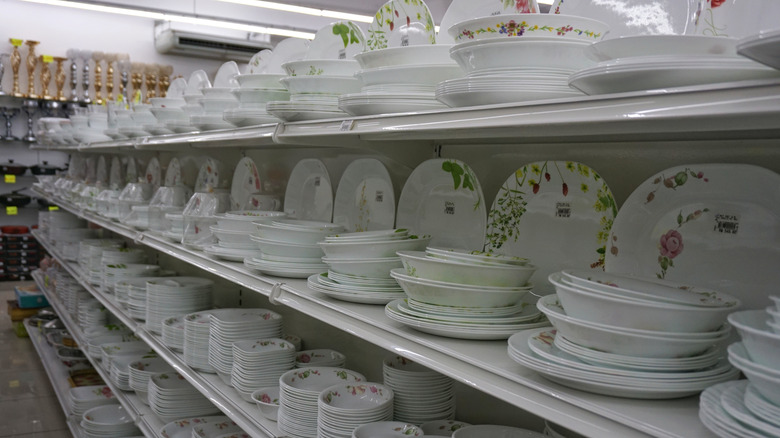
It is no surprise that everyone owned this dishware in the '80s that is now coveted at thrift stores. Corelle's proprietary Vitrelle glass — a hub of three-ply glass laminate resistant to chipping and breaking— has made the brand a staple in American cupboards for decades. Kitchenware thrifters in the know will snatch these up when they spot them, but if you're not versed in the line, some gems are worth seeking and some are worth avoiding.
When looking for daily-use wares, your best bet is to target plain white pieces or production runs made after 2005. Corelle has publicly noted that decorative patterns produced prior to 2000 used glazes containing traces of lead.
While the FDA set regulatory limits on lead in ceramics in 1971 and updated them in 1992, it's still worth being aware of the risks. If the surface layer of the dinnerware is heavily worn or chipped from decades of dining and dishwasher cycles, you might want to pass on it. But if you find a nice set in great shape, you could eat countless meals off iconic dinnerware for a fraction of the price, and it could last years, as some Redditors attest, with some using their Corelle plates for over a decade. We think vintage pieces of this popular kitchenware brand are worth thrifting if you can find them.
8. Steelite
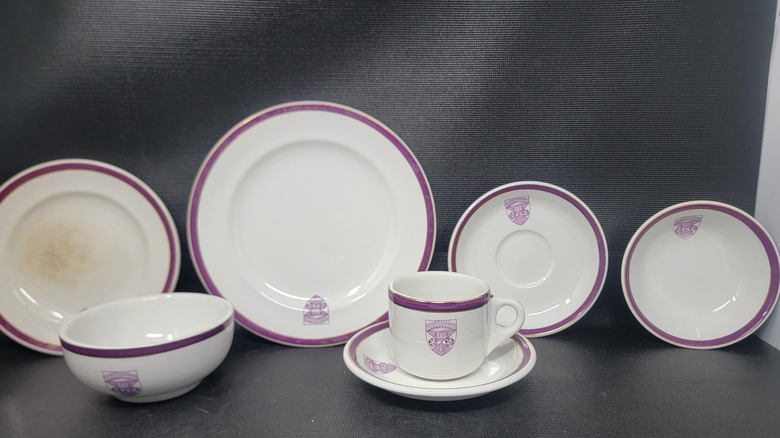
Steelite might not jump out as an omnipresent, lauded brand, but it's worth a double take when thrifting. Founded in 1983 in Stoke-on-Trent, England, and spun off from Royal Doulton's hotel-ware division, Steelite makes commercial-grade tableware built for heavy hospitality use. Anything designed for restaurant use needs to be especially tough, and this line is no exception. Made from alumina-vitrified clay, Steelite's plates and bowls offer exceptional resistance to thermal shock, scratches, and edge chipping.
When thrifting serve-ware, flip each piece over and look for the manufacturer's back stamp on the underside. This stamp verifies that the plate is genuine commercial construction and identifies the specific era and location it was made in. Also, examine the foot ring on the bottom of each piece; high-quality, restaurant-caliber dinnerware is fully glazed, with smooth foot rings rather than rough, bare-clay bottoms.
This fully glazed foot style prevents friction and severe scratching when stacking plates and bowls in kitchen cabinets, making these commercial pieces ideal for long-term home use. If they can survive a restaurant's abuse, they can survive your apartment. Now that you know the brand, keep an eye out for it on your next Goodwill run for dinnerware.