

This Affordable Southern Comfort Food Is Packed With Fiber (And Flavor)
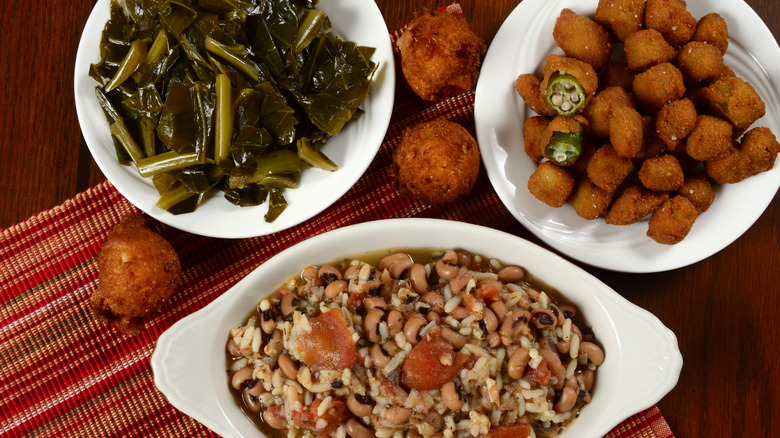
Fiber is apparently the next protein when it comes to food trends, and one option for adding some of it to your diet is to eat black-eyed peas (also called cowpeas). They're cheap, pantry-stable in both canned or dried form, and have plenty of other nutritional perks. They have a mellow, earthy flavor and a creamy texture when cooked, so they're easy to use since they can soak up the flavors around them.
When it comes to fiber, a cooked cup of them will give you around 11 grams of fiber, or 40% of the daily recommended intake for adults. Compared to other beans (despite the name, black-eyed peas are actually beans), they hold their own. You'll get about the same amount of fiber from kidney beans and chickpeas, which are also secretly beans. While some beans, like black or navy beans, have more fiber overall (around 15 and 19 grams per cooked cup), black-eyed peas are still considered a high-fiber food.
Beyond fiber, they're also a great source of protein, with one cup offering around 13 grams. That means it's comparable to some meats, although without the fat. They also give you a folate boost, a vitamin that helps your body create healthy red blood cells. Considering that a one-pound bag of dried black-eyed peas will set you back under $2 if bought cheaply, that's a great deal for a nutritious meal.
These beans are an easy fix for fiber and protein
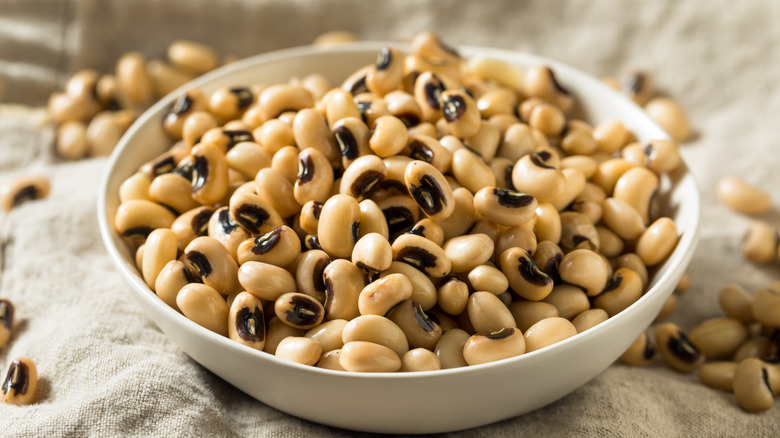
You'll find black-eyed peas in a number of culinary traditions. The bean is thought to originate from West Africa, and with enslaved people likely eating them during their journey to the Americas, it ended up finding a prominent place in Southern soul food. Arguably the most classic Southern dish with black-eyed peas is Hoppin' John, a stewy dish of black-eyed peas simmered with rice, smoky ham or bacon, and the holy trinity of onion, peppers, and celery. It's also a traditional New Year's dish that's eaten for good fortune. If you're feeling more like a salad, consider Texas Caviar (sometimes called Cowboy Caviar), which combines black-eyed peas with bell pepper, onion, and a vinegary dressing, and sometimes corn or black beans as well. It originates from a black bean and black-eyed pea salad that a cookbook author devised while working at the Houston Country Club (hence its upscale name).
Beyond soul food, the West African fritter named akara is another potential option. This is a fritter in which the peas are blended with onion and chile, and this mix is fried into crispy golden patties. This is a popular breakfast dish in Nigeria. You'll also see black-eyed peas in Indian food, where it appears under names like rongi, chawli, and lobia, depending on the region. One go-to dish here is lobia masala, where the beans are simmered in an onion-tomato gravy with mixed spices like garam masala until tender; it's served with rice or roti.