

12 Vintage Pyrex Designs That Defined '50s Kitchens
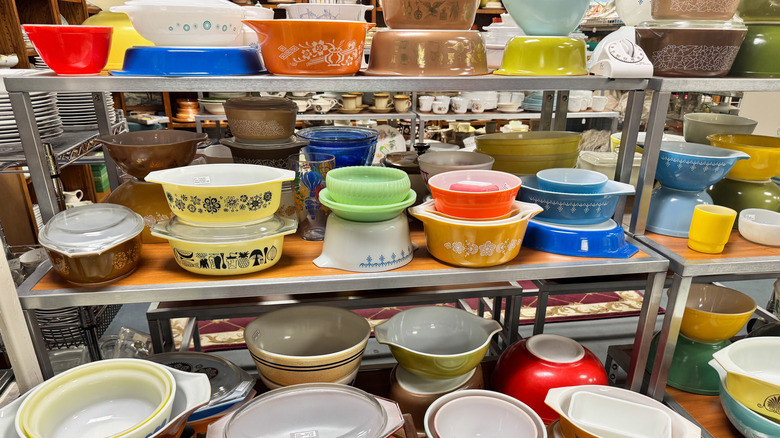
Few brands have been as iconic in the home cooking world as Pyrex, the brand that has produced a special type of heat-resistant glass cookware for more than a century. Unlike traditional glassware, Pyrex's unique chemical composition allows it to be warmed up and cooled down easily without shattering, making it perfect for use in the oven. In many ways, Pyrex changed home cooking forever.
While Pyrex continues to make a vast array of affordable bakeware, cookware, and kitchen storage containers today, some argue that the brand's golden age was in the mid-20th century, when Pyrex products were a cornerstone of the home kitchen (and its advertisements were nearly impossible to avoid). Over the years, the brand became even more of a sensation as it continued to release products with new, enduring, and sometimes limited-edition patterns. The 1950s saw plenty of these patterns come and go.
Curious about which vintage Pyrex patterns were emblematic of the decade? Keep reading for a rundown of some of the colors and designs that defined the '50s.
1. Snowflakes
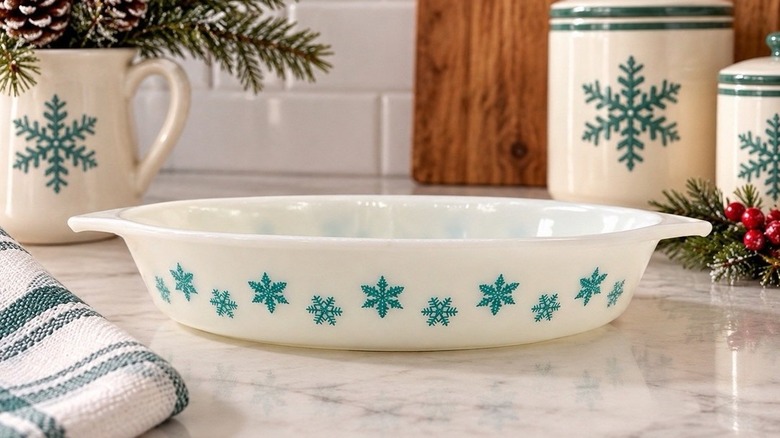
For the home cook looking to get in the holiday spirit (or to get a head start on their winter holiday shopping), Pyrex's Snowflakes pattern was the obvious choice during the 1950s. The design, which the brand released in 1956 and marketed as ideal for Christmas gift-giving, was printed on casserole dishes and made available in color schemes of turquoise-on-white, white-on-turquoise, and white-on-charcoal. Snowflakes casseroles came with clear lids that could also be used as trivets or serving dishes.
Snowflakes was especially significant during the decade because it was one of Pyrex's first screen-printed patterns. Prior to its release, the brand specialized solely in solid color varieties. In this way, Snowflakes can be credited as one of the patterns that marked the beginning of the Pyrex craze — and laid the groundwork for the ongoing waves of savvy collectors who scour thrift-store shelves for rare vintage Pyrex patterns. This historic design remained in production until 1967.
2. Butterprint
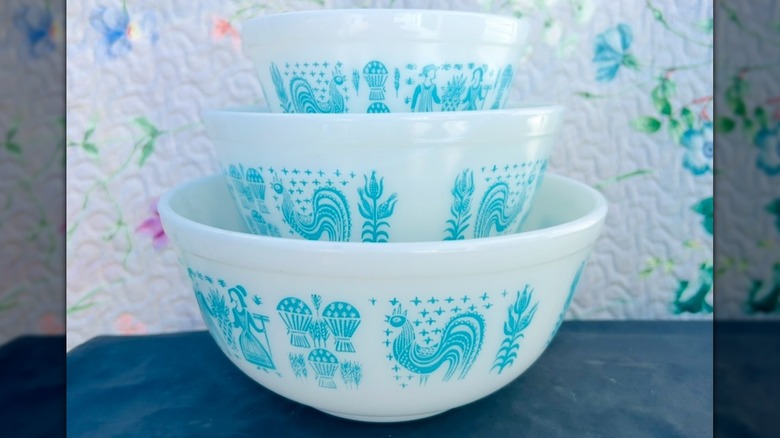
Another trailblazing Pyrex pattern that came out of the 1950s was Butterprint, a more intricate design than Snowflakes that depicted an Amish farm scene featuring farmers, roosters, and wheat. The design was officially released in 1957, in both white-on-turquoise and turquoise-on-white color schemes, and was featured on bowls and deeper dishes.
Butterprint was also one of the first patterns printed on Pyrex's then-new Cinderella Bowls, which boasted handles on one side and spouts on the other to make for easy pouring. After the new bowl model was release, other Pyrex products, such as divided casserole dishes and carafes, also were branded with the Cinderella moniker.
Over the years since the pattern's discontinuation in 1968, other promotional, limited-time Butterprint color schemes also entered the picture — including orange-on-white, pink-on-white, and white-on-pink. These rarer patterns are some of many in the Pyrex family that can be worth hundreds of dollars when resold as a complete set today.
3. Black Tulip
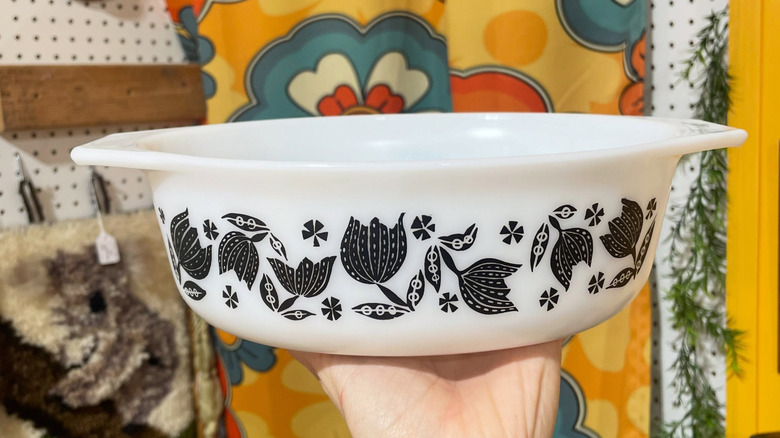
Pyrex's Black Tulip design, which boasts, as the name suggests, a pattern of illustrative black-on-white tulips, is one of several iconic 1950s designs that never got an official name and instead got its name from collectors. The pattern was solely printed on a promotional oval casserole dish that came with a serving cradle, and it was only produced from 1956 to 1957, making it a rare find that you should always grab if you spot it at a thrift store.
The fleeting Black Tulip also made waves as one of the first Pyrex promotional items with a printed design, and it was released along with several others (many of which have also earned a spot on this list). These promotional items are often some of the rarest and most coveted by collectors, and while this pattern was undoubtedly a hit in the '50s, the buzz surrounding it has only continued to grow since then.
4. Golden Hearts
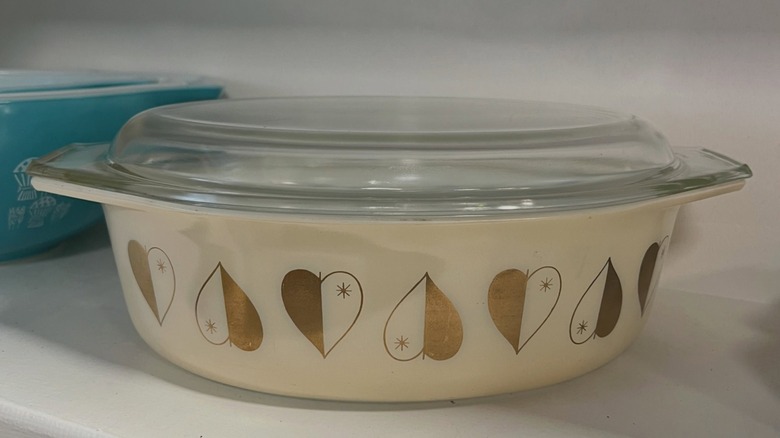
Another promotional and limited-time Pyrex design that was essential to the 1950s is Golden Hearts, an unofficial name assigned by collectors to a tan casserole dish lined with upside-down and right-side-up gold-colored hearts. The product was exclusively produced in 1959 and came with all of the bells and whistles, including a serving cradle, a double candle warmer, and a classic Pyrex clear lid.
Golden Hearts also stands out as one of the few designs of the 1950s that featured a shiny gold color. Others that came before it, or during the same year, typically featured flower or vine patterns and were also listed as promotional items. This pattern is also the first of only five in the entire history of Pyrex patterns that features hearts — the next one came along a whopping 10 years later — and Golden Hearts is the only Pyrex product in which hearts are the sole focal point (unlike the other four releases, which featured smaller hearts subtly worked into intricate designs).
5. Desert Dawn
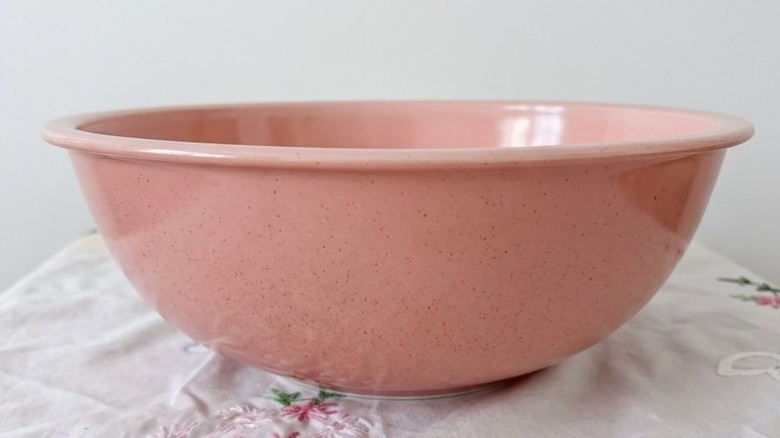
This Pyrex design emerged in 1955 at an interesting inflection point for the brand. Prior to its release, Pyrex only offered products in solid colors, and, with its subtle speckles throughout each piece, the Desert Dawn line was Pyrex's first foray into more intricate designs. This special motif, which only lasted one year, featured speckled cookware and bakeware in both yellow and pink colors. In its advertising, Pyrex cited natural desert hues as inspiration for the color scheme.
Unlike other short-lived designs, a vast range of Pyrex products were available in Desert Dawn, including covered bowls, roasting dishes, and deep loaf pans. This line remains one of only four speckled Pyrex designs to ever be released. During the year that it was discontinued, Pyrex seemingly shifted its focus to the screen-printed patterns it would go on to produce until 1986. For 1950's home cooks looking for a vestige of some of Pyrex's more minimal designs as the decade progressed, Desert Dawn was an obvious choice.
6. Pink Daisy
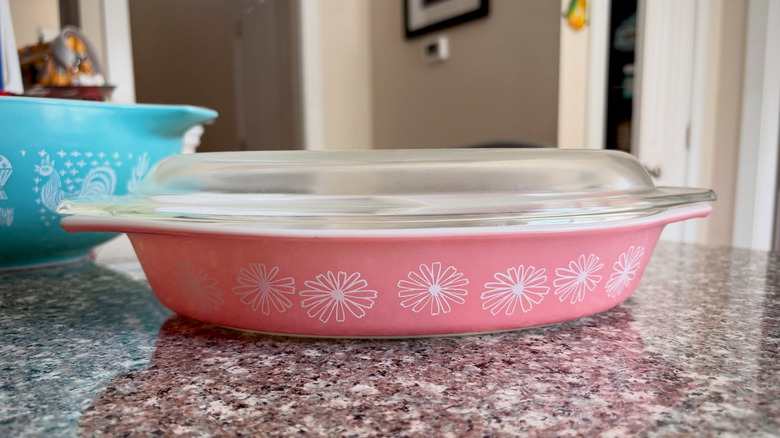
The Pink Daisy Pyrex pattern joined Snowflakes as the other first screen-printed pattern released by the brand in 1956. Just like Snowflakes, Pink Daisy was marketed as a holiday gift, but unlike Snowflakes, this design only came in one color scheme (white-on-pink).
Pink Daisy became a staple pattern for Pyrex, and was one of the first patterns to be printed on several newly released casserole and baking dish products until its discontinuation in 1962. It is one of the vintage Pyrex patterns we think should make a comeback, both because it was history-making and because it is adorable.
That said, if Pink Daisy products were to come back, they certainly would not be as lucrative to resell as they are right now. Because of the pattern's current rarity (and how quintessential it is to the Pyrex brand), single pieces from the collection can run you more than $100.
7. Compass
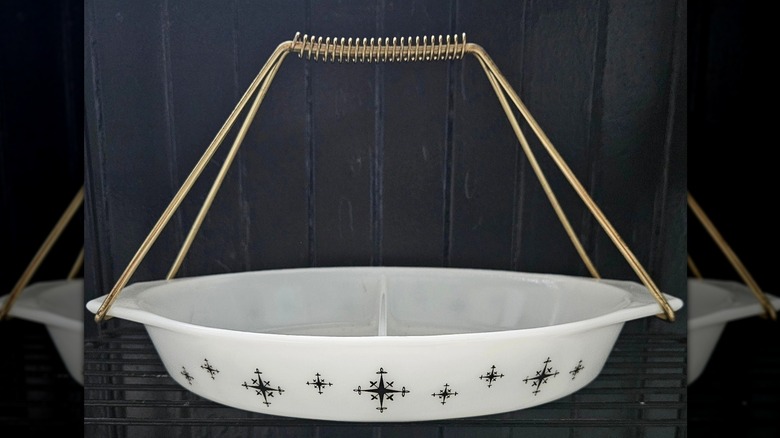
Also in the lengthy lineup of patterns for promotional Pyrex items released in the late 1950s was Compass. This name, just as with many of the other pattern names for promotional items, is an unofficial one, and was given to the black-on-white compass design by collectors.
The Compass pattern was only printed in 1959 on one item: an oval divided snack-serving dish with a brass handle for carrying. It was advertised as an ideal holiday gift and as one of many then-new Pyrex products with handles for easy transportation that emerged in the 1950s — one advertisement for the Compass pattern specifically depicted a totable birthday cake, candles and all, baked directly in the dish. The classic black-on-white color scheme and understated design made the Compass snack server one of the more minimalistic pieces of the decade, especially when compared to products such as Pink Daisy and Butterprint.
If you are searching for a rarer Pyrex design that is still on the more affordable side, Compass might be your best bet. Unlike other limited-edition promotional patterns, this snack server is valued online at prices as low as $20 to $30.
8. Lime
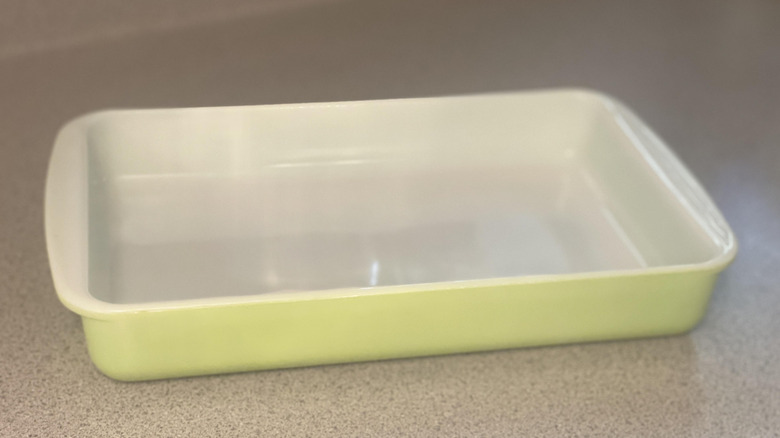
At the top of the decade, Lime was one of the very last solid Pyrex colors (known as the brand's Primary Colors line) to hit shelves. This bright yellow-green shade was released in 1952, and it graced a number of different Pyrex products, including bowls, pie pans, and both round and rectangular casserole dishes. One year later, a line of dinner-plate and bowl sets with Lime-colored rims joined the family.
Prior to the release of Lime, other Pyrex Primary Colors were far more... primary. Yellow, Red, Blue, and Green were the standard options for Pyrex products from 1945 to 1949. In many ways, the release of this last batch of Primary Colors, including Lime, signified a new frontier for the brand — one that would go on to include more engaging colors, styles, and designs. As such, although Lime Pyrex products are not the highest valued at resale, they are still historically significant.
9. Scroll
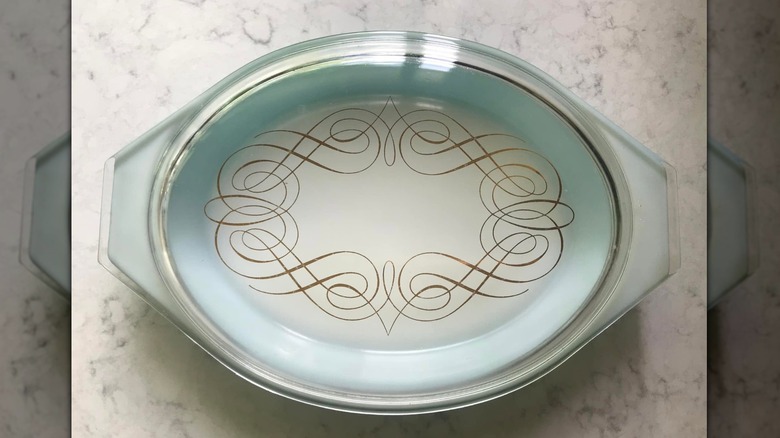
During the late 1950s, a number of different Scroll patterns (another unofficial name assigned by collectors to this abstract, swirly design) were released by Pyrex as promotional items. Golden Scroll, which featured the gold-on-ivory Scroll design, was exclusively sold in 1958 on a chip-and-dip set featuring two Cinderella bowls; Pink Scroll was printed from 1958 to 1959 on a Cinderella casserole dish with a clear lid and cradle; and Turquoise Scroll was produced exclusively in 1959 on a Cinderella serving bowl with a clear glass lid, cradle, and candle-warmer.
These designs, like other limited promotional releases by Pyrex, were marketed as holiday gifts and items fit for entertaining large groups. For example, the Turquoise Scroll Cinderella bowl was marketed in one advertisement as a punch bowl. When it comes to the resale value of Pyrex Scroll products, the Pink Scroll casserole dish takes the cake as the most expensive. Several online listings for the item exceed $150.
10. Gooseberry
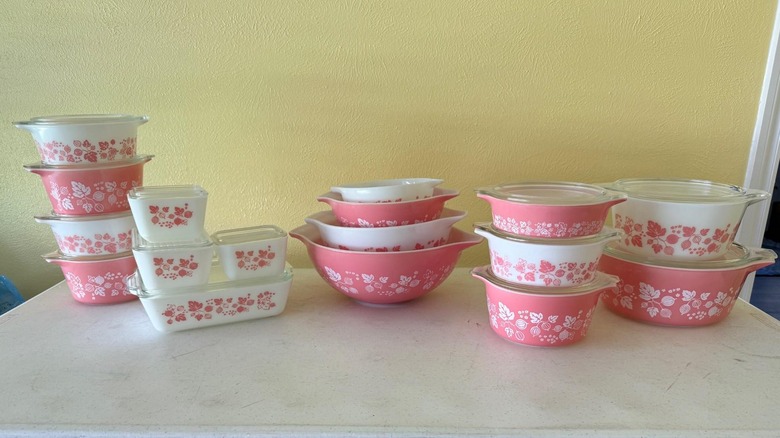
Just as with Scroll, Pyrex's Gooseberry pattern, which, as its name suggests, features a stylized vine of gooseberries, came in a variety of different color schemes: black-on-yellow, black-on-white, pink-on-white, and white-on pink. All four Gooseberry varieties came out in 1957 alongside Butterprint, making it the other first pattern to be printed on Cinderella bowls.
Depending on the pattern's color scheme, you might have found Gooseberry on different cookware and bakeware products during the '50s. Black-on-yellow was only printed on Cinderella bowls, black-on-white was printed on Cinderella bowls and deep casserole dishes, and both pink-on-white and white-on-pink were available on a wide range of bowls, casseroles, and refrigerator dishes in all shapes and sizes. All four patterns were discontinued in 1966.
Although the pink Gooseberry design was printed on the largest variety of Pyrex products, it is the Gooseberry color scheme with the highest resale value today. A set of four Cinderella bowls in alternating pink-on-white and white-on-pink colors, for example, can go for more than $400.
11. Bluebird
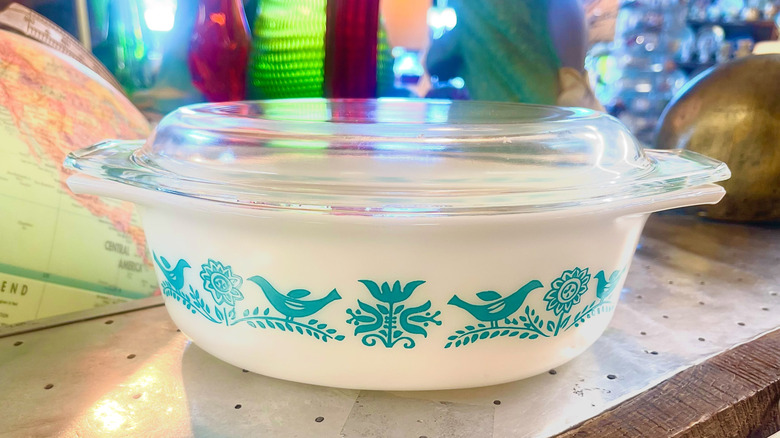
The final Pyrex promotional pattern on this list is Bluebird — which, unlike several of its relatives, boasts an official name and was produced for more than one year. The design, which featured a ring of turquoise-colored bluebirds on branches and tulips, was printed from 1959 to 1961 exclusively on an oval casserole dish with a clear lid and a companion cradle. Just as with other promotional items, the Bluebird dish was marketed as an ideal holiday gift and was promoted for its ease of both baking and serving.
Birds were a less common motif across decades of Pyrex patterns, but Bluebird was the first pattern that featured them — the next soonest bird designs emerged in the 1970s. As such, not only is Bluebird prized for its relatively short production period on a single promotional item, but it also is a rarity when it comes to the subject of its design.
12. Flamingo Pink
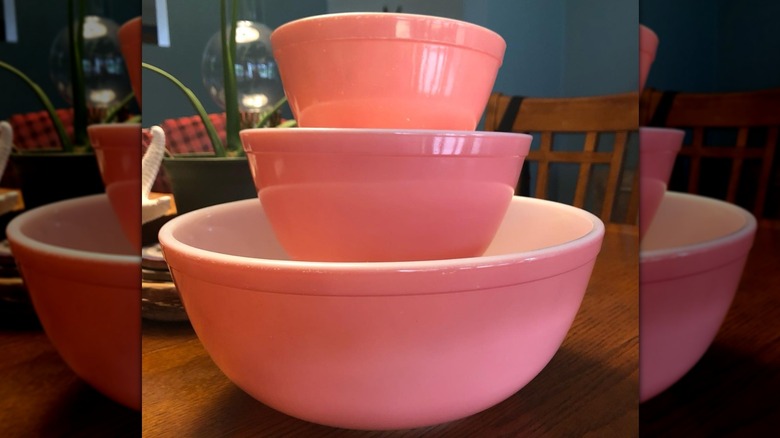
In 1952, Flamingo Pink joined Lime as the two final colors in the Pyrex Primary Colors line. Just like Lime, this shade of bright coral pink was one of the more playful Primary Colors to emerge from the brand before it ventured into patterns. The color was available on bowls, loaf pans, casserole dishes, cake plates, and much more — and, also just like Lime, a set of companion Flamingo-Pink-rimmed dinner plates and bowls was released in 1953.
Flamingo Pink is a Pyrex color that was essential to the 1950s, as it was the catalyst of the brand's long love affair with the color pink during the decade. Indeed, almost all of the pink designs that Pyrex produced were released during the '50s (save the 1965-1967 Pink Stripes pattern). While others, such as Pink Daisy, Butterprint, Gooseberry, and Pink Stripe, featured more intricate screen-printed art, Flamingo Pink was the first to break new ground.