

13 Underrated Condiments Worth Keeping In Your Fridge
We may receive a commission on purchases made from links.
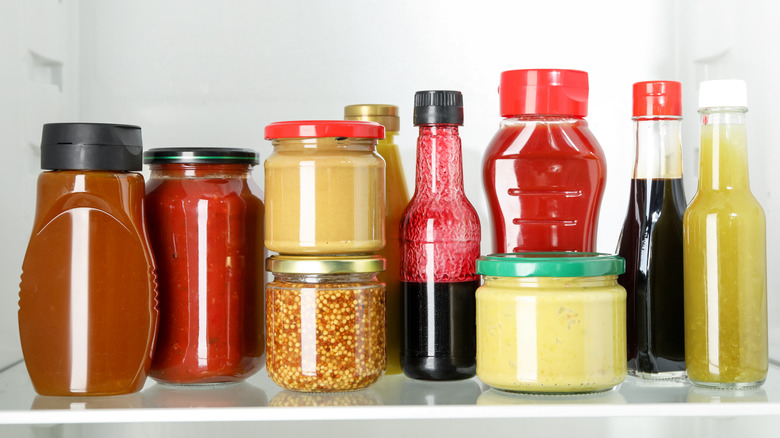
Most fridges have condiments that are non-negotiable, such as mayonnaise, ketchup, and mustard. While these classics have their place, stocking your fridge with a few underrated options can upgrade your regular meals and make your next sandwich or sauce more exciting.
Cuisines around the world have their own staple condiments that could add a fresh dimension to your cooking. From spicy chili pastes to fermented vegetables, experimenting with new ingredients can inspire you to try something different with your routine dinners or create meals you hadn't considered before. Some are best when added as a garnish, while others can bring depth to sauces and marinades.
The next time you head to the store for some mayo, consider picking up a jar or two of something that you haven't tried before. Here are our favorite suggestions for underrated condiments worth always keeping in your fridge.
1. Chili crisp
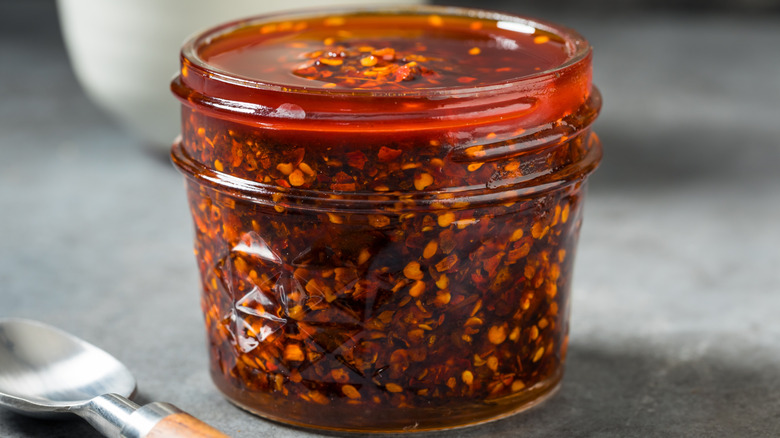
If you love spicy heat in your food, it's time to make room for a jar of chili crisp in your fridge. Made primarily from chili peppers, peppercorns, and oil, it also contains garlic, shallots, or ginger for extra aromatic depth. While it brings a similar flash of heat to hot sauce, it has the added benefit of a satisfying crunch that gives it an edge over many smooth condiments.
Chili crisp, like FLYBYJING's Original Sichuan Chili Crisp, is incredibly versatile. Though the condiment has its roots in Asian cuisine, becoming popular in China in the late 20th century, it can be added to a wide range of dishes whenever you are in the mood for a fiery punch. Anywhere that you would otherwise reach for fresh chilis, you can use this crispy condiment as a convenient replacement. Stir it into pasta sauce, brush it on to a salmon fillet, or even spoon a little onto a grilled cheese sandwich to enjoy both the crunch and piquant hit that it provides.
Each brand has its own ratio of ingredients, and therefore chili intensity, so give a new version a quick sample before slathering it over your favorite dish, just in case. If you've only ever tried it on noodles or fried rice, there are plenty of other dishes desperate for the same spicy upgrade.
2. Miso paste

You may have enjoyed miso in the classic Japanese soup, but this ingredient is capable of much more. This fermented condiment has long been a staple in Asian cuisine, and a tiny quantity can have a big impact on a range of savory dishes.
Traditional miso is made by fermenting salted soybeans using the mold Aspergillus oryzae, also called kōji. There are three main types of miso, distinguished by their colors. White miso is the mildest, while yellow miso is fermented longer, leading to a deeper color and flavor. Red miso has the boldest taste of the three, and can be used as a base for soups and sauces.
Miso has a distinctive umami character, and adding it to a salad dressing is an excellent way to bring complexity. Because soybeans contain all nine essential amino acids, miso can also contribute to the protein content of a dish. Keep some in the fridge, like Awase's Miso Soybean Paste, to drizzle on roasted veggies or stir into pasta sauce to enjoy the deep savory notes. Bear in mind that miso is quite salty, so taste any dishes you add it to before seasoning further.
3. Pomegranate molasses
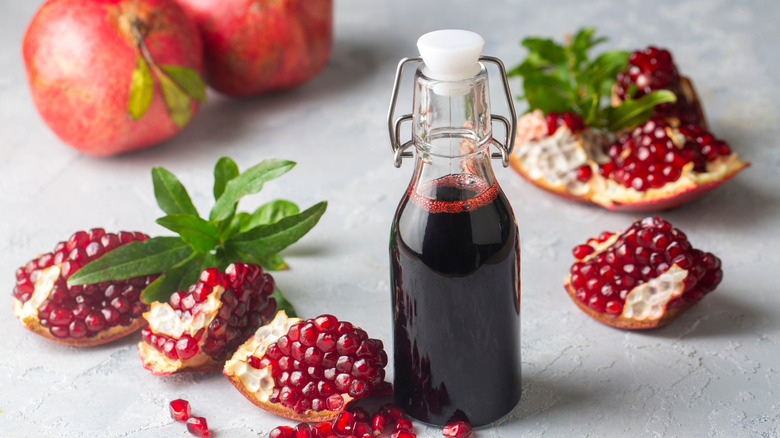
The mention of molasses may bring to mind an intensely sweet, treacly liquid to add to gingerbread, but the pomegranate version, like Corta's Pomegranate Molasses, is very different. Made by reducing pomegranate juice until it is thick and glossy, it is usually added to savory dishes to provide a sharp tang with a hint of sweetness. It is particularly popular in Middle Eastern cuisine, but can be used in various dishes, often in place of lemon juice or other citrus elements.
The best pairing for pomegranate molasses is with deep earthy flavors, where the acidity lifts the dish. Stir it into salad dressings with extra virgin olive oil, balsamic vinegar, and seasoning, where it will brighten the green leaves and enhance the natural sweetness in tomatoes and bell peppers. It is equally delicious drizzled onto vegetables, as in this crispy fried Brussels sprouts recipe, where it jazzes up the much-maligned veggies with its complex flavors.
Marinades also benefit from the syrup, and you can brush it directly onto poultry or fish to create a glossy sweet-sour glaze. It has a concentrated taste, so you don't need much. Start with a small drizzle, and increase the quantity depending on how intense you want the tart pomegranate flavor to be.
4. Kimchi
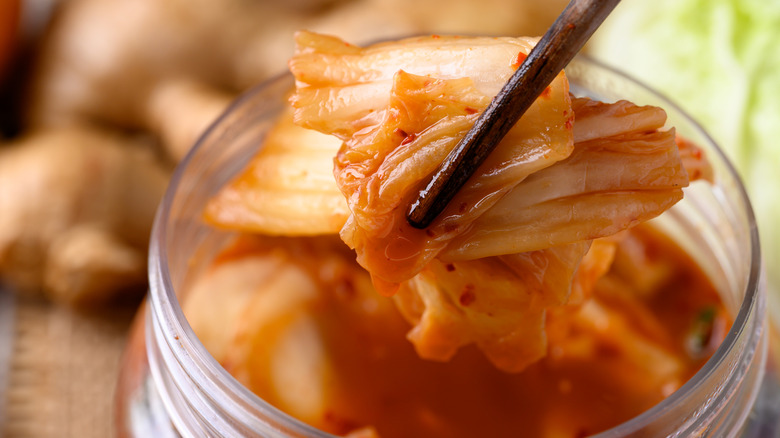
If you regularly have a jar of pickles in your fridge, you should consider making room for kimchi, too. This Korean staple is made from fermented vegetables, usually cabbage and radish, which are salted and seasoned with ginger, garlic, and red pepper powder. The result is tangy and spicy, giving it more excitement than your average pickle.
The process of making kimchi has been around for many centuries as a means to preserve food and prevent any of the precious ingredients from going to waste. Eating kimchi is a daily part of Korean food culture, and it is often served as a side or added to rice or noodle dishes. However, it also works really well as a condiment on burgers or sandwiches, with its funky savory flavors cutting through the rich meat and other fillings.
You can even use kimchi on breakfast dishes, spooning it on top of scrambled eggs, smoky bacon, or Greek yogurt as a spicy change from the usual honey. Be aware that the longer you keep a jar of kimchi in your fridge, the stronger it will taste, so you may want to get through your first jar quite quickly, which shouldn't be an issue once you discover its brilliance.
5. Red Pesto
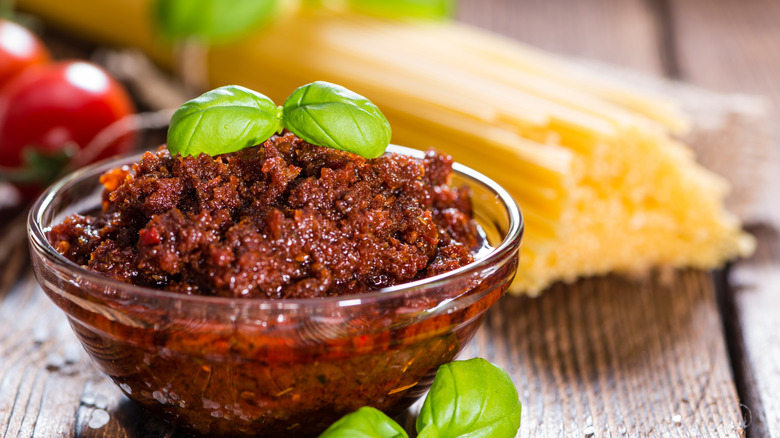
Green pesto may be a staple in your fridge, but its red counterpart deserves just as much attention and is an incredibly versatile condiment to have on hand. Also known as pesto rosso, from the Italian word for red, it contains the same olive oil, garlic, and Parmesan as the famous green version. Sundried tomatoes take the starring role however, often accompanied by almonds in place of pine nuts. Some versions may also include red bell peppers or chilis, but will usually still be mild as opposed to spicy.
Rather than the fresh, aromatic flavor of green pesto, pesto rosso has a deeper, richer taste thanks to the sundried tomatoes. Pasta or pizza are obvious places to start, and red pesto can be used on its own or added to a tomato-based sauce for extra depth. If it is too thick for drizzling or coating pasta, it can be thinned with water or olive oil.
Red pesto also makes a great topping for fish like as salmon or cod, or you can stuff a chicken breast with a mixture of red pesto and mozzarella for a delicious baked dinner. If you love Mediterranean flavors and the versatility of the green version, red pesto is well worth making space for in the fridge.
6. Remoulade
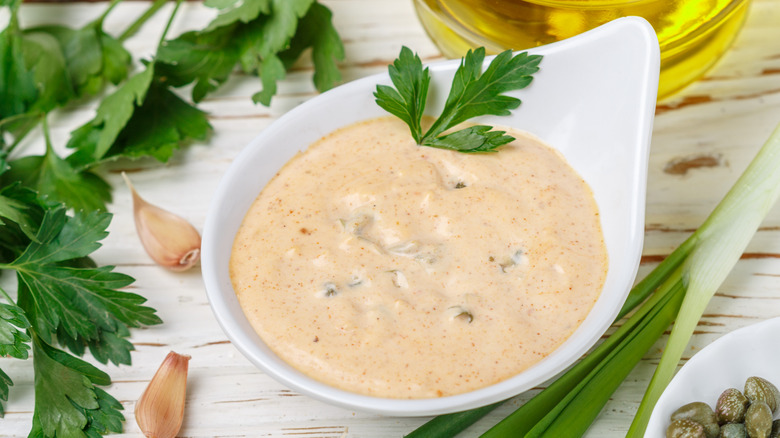
Most of us have a jar of mayo in the fridge at all times, but it can be a little pedestrian, and upgrading it to a savory remoulade instead is a good move. This delicious condiment originated in France, and the classic version featured bold flavors from capers, cornichons, mustard, and herbs. After arriving in New Orleans, the sauce evolved, picking up spice from ingredients such as paprika and Creole mustard.
As a substitute for mayo, remoulade works in virtually every situation you would enjoy its mild-mannered counterpart. Burgers, seafood, and sandwiches all benefit from the extra tang, and it makes an excellent dip for fries. Rich meat or oily fish will pair especially well with remoulade's acidity, and it makes a great coleslaw dressing too, if you want to spice up your veggies. If you've never tried this piquant condiment before, buy a bottle, like Louisiana's Remoulade Sauce, the next time you're having fishcakes or fried cod, and enjoy the difference the enhanced seasoning can make.
7. Chimichurri
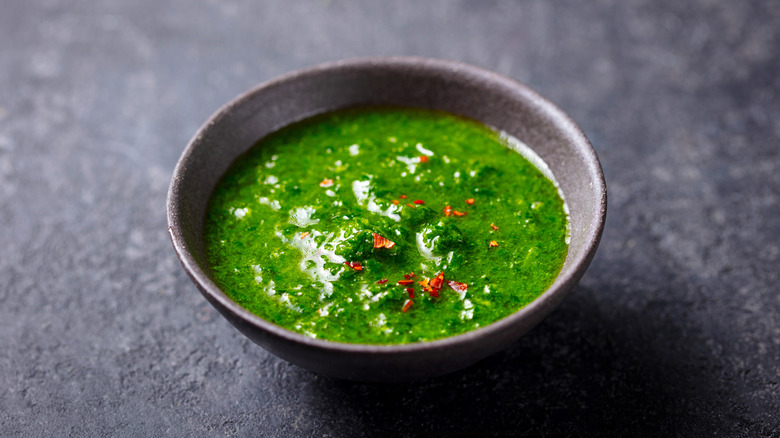
If you enjoy a good steak, chimichurri sauce is a condiment worth keeping in your fridge. Originating in South America, this vibrant sauce traditionally accompanies meat, but has so many delicious uses beyond that. It is usually made with herbs, including fresh parsley, dried oregano, and sometimes cilantro, as well as garlic, olive oil, and ají molido, which is a type of Argentinian dried chili.
Chimichurri works particularly well with rich food because the bright notes provide a sharp contrast. It is an obvious partner to steak, but the herbs and spices make a big difference to veggies too. It can also replace heavy, mayo-based dressings for salads or potato dishes, or be spooned over a burger for a zesty lift.
Don't assume that dinner is the only meal for this vibrant sauce either. Add some chimichurri to your breakfast eggs as a fun alternative to ketchup or hot sauce, and get your morning off to a refreshing start.
8. Harissa
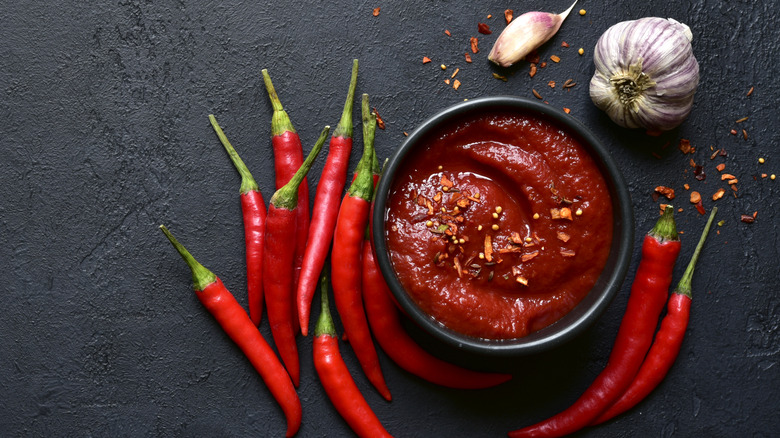
For those who love to add heat to dishes with hot sauce or fresh chilis, harissa paste is a convenient way to inject some personality into a range of meals with little effort. The chili paste originates in North Africa, and its smoky flavor is a feature of Middle Eastern cuisine.
Harissa is built around chili peppers, and the spice intensity can vary depending on the type of chilis it contains. It also has other fragrant ingredients, including garlic, paprika, and cumin, making it more than just another fiery sauce.
Depending on your tolerance for chili heat, you can use harissa directly as a spicy condiment, or add it to sauces and marinades to give them a kick without it being overpowering. It also works well as a glaze for vegetables before roasting, enhancing sweet options such as carrots, sweet potato, or butternut squash. If you are worried about the heat, try combining it with Greek yogurt or sour cream, which will mellow the spice but still allow you to enjoy the rich, aromatic flavor.
9. Tahini
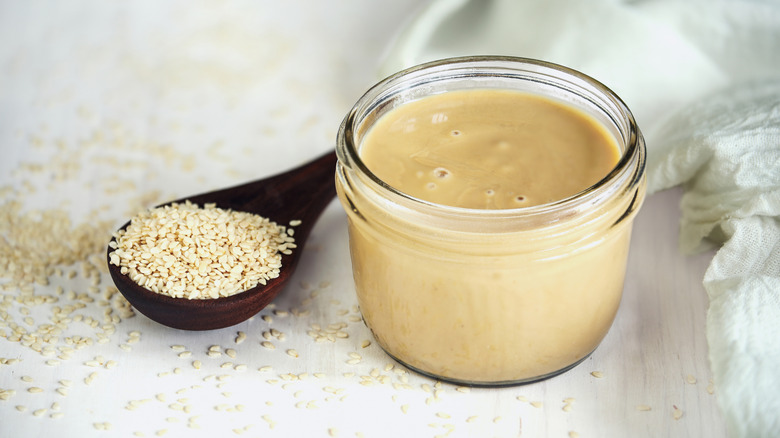
You may know that tahini is a key ingredient in making hummus, but it has a breadth of uses beyond the classic chickpea dip. Made from sesame seeds, it has a silky, creamy consistency and makes an earthy addition to salad dressings. While it often features in Mediterranean or Middle Eastern cuisine, it is a versatile condiment that you can use in many dishes, both sweet and savory.
For making plant-based sauces, tahini is particularly useful, as it lends a creamy texture without needing to introduce eggs or dairy. Its nutty flavor complements a green salad, or you can drizzle it over roasted veggies instead. It can even act as a replacement for nut butters, spreading it onto toast or pairing with apple slices. Having a jar in your fridge, like 365 by Whole Foods Market's Organic Tahini, also means you can whip up some roasted red pepper hummus whenever you fancy, which is never a bad thing.
10. Gochujang
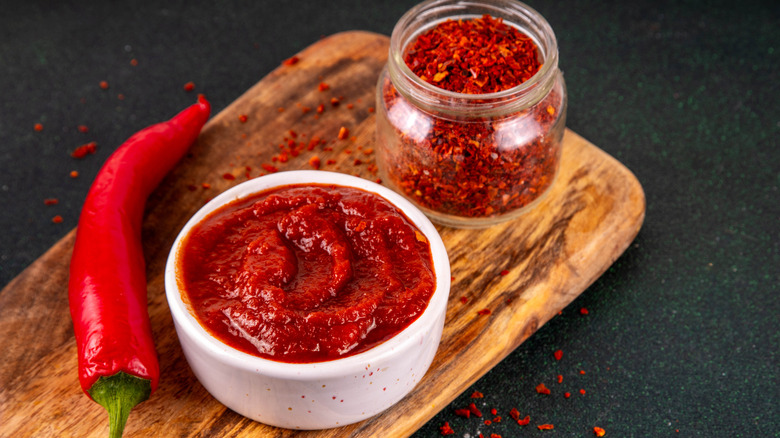
Gochujang is a vibrant red paste that may not have become as well known as its fellow Korean staple kimchi, but it deserves to. It is certainly full of chili heat, but the other ingredients create a much more complex flavor profile. It contains sticky rice, fermented soybeans, salt, and red chili powder, which is known as gochugaru.
While it is used extensively in Korean cuisine, gochujang has a place in plenty of other dishes, and is a handy condiment to have in the fridge at all times. A spoonful can add depth to sauces and marinades, and it makes an excellent upgrade to store-bought tomato sauce.
The intense crimson color of gochujang paste, like O'food's Premium Gochujang, makes an eye-catching glaze for salmon, where the chili heat complements the oily fish perfectly. Store-bought gochujang varies in its chili spice, so if you haven't tried it before, start with a mild version and work your way up. For an even gentler introduction, add a teaspoonful to mayonnaise or crème fraîche and use it as a punchy dip for fries or tempura prawns.
11. Yuzu kosho
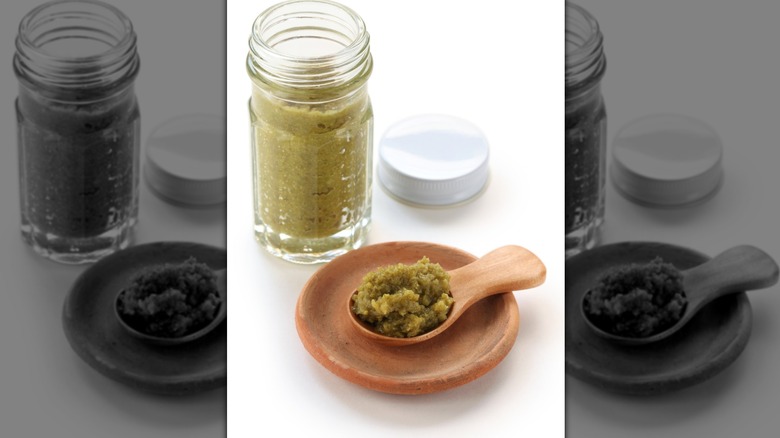
If you enjoy a citrus twist or chili kick to your meals — and ideally both — then yuzu kosho is a condiment you must try. This Japanese staple is made from the peel of yuzu, a fruit that originated in China, and has flavor notes reminiscent of other citrus such as lemon, lime, grapefruit, and mandarin. The paste also features fermented chili peppers, resulting in an aromatic condiment that brightens up many dishes.
Yuzu kosho works whenever you would usually reach for a squeeze of lemon or lime. Fish, chicken, and roasted vegetables can all be upgraded with a dab of the zingy paste, which should be used with restraint due to the concentrated flavor. It can also replace the usual citrus and chili in a salad dressing by mixing a small amount with extra virgin olive oil.
A fun way to introduce yuzu kosho into your lunch is to add a little to your usual mayonnaise before spreading on sandwiches or wraps. It works particularly well with seafood, including shrimp and tuna, and deli meats will also pair nicely with the fragrant citrus and chili heat.
12. Anchovy paste

If the thought of adding anchovies to your savory dishes makes you screw your face up, bear with me. Anchovy paste may sound like it would ruin the flavor of your favorite sauce or dressing with its fishy pungency, but its strong character is surprisingly muted when paired with other ingredients.
Like many condiments, its biggest strength is umami, which allows it to enhance savory dishes. One popular use for the paste is in Caesar dressing, and along with the Parmesan cheese it creates an intense sauce that doesn't taste noticeably of fish. Tomato-based pasta sauces benefit in a similar way, where the paste creates an added richness but doesn't overpower the sauce.
If you are skeptical as to whether the strong flavor of anchovies can go unnoticed in a sauce, buy a tube of the paste, like Amore's or Mangier Bene Rizzoli's, and add a little to the next tasty dish you make. Hopefully, you will find that it adds a richness that doesn't assault the senses, and it could just become your secret ingredient for future meals.
13. Worcestershire sauce

You may have bought Worcestershire sauce in the past for a one-off recipe, but this classic English condiment deserves a permanent place in your fridge. Invented almost 200 years ago in Worcester, England, by Lea and Perrins, its distinctive flavor comes from a mix of ingredients, including vinegar, molasses, fermented anchovies, and tamarind.
Famous as a key ingredient in Bloody Mary cocktails, Worcestershire sauce can be a secret weapon when you need to add a punch of flavor to savory dishes. Meat dishes are good candidates, and stews and marinades can be enhanced by a splash of the dark brown liquid. It also pairs incredibly well with cheese, and while it is a essential component of the rich Welsh rarebit, it can be added to a grilled cheese sandwich too.
Worcestershire sauce has a concentrated flavor, so if you are planning to add it to your cooking, start small. A few drops can bring plenty of depth to a marinade or dressing, and you can always add more if required. The combination of sweet, tangy, and savory makes it a versatile condiment to add to your collection, and one bottle will last a long time.