

The Underrated Tequila That An Insider Calls 'The Undeniable Industry Standard' And 'North Star'
There are literally thousands of tequila brands on the market, and with so many bottles crowding store shelves, it's worth finding a blanco, reposado, or añejo sipper that even people working in bars and restaurants think is outstanding. For many in the industry, Tequila Fortaleza is that brand. When asked by Chowhound about underrated tequilas, Craig Schoettler, former executive director of beverages for MGM Resorts International and now the CEO of Dharma Indian dry gin, described Fortaleza as "the undeniable industry standard and the north star," highlighting both high demand and the small brand's scarcity as supporting evidence. He's not alone: The website Taste Tequila ranks Tequila Los Abuelos — AKA NOM 1493 — where Fortaleza is made — as No. 1 out of what it considers the top 152 tequila distilleries in Mexico. Even the brand's founder credits the attention bartenders and others lavished early on for Fortaleza's status as an industry touchstone and a fan favorite.
"Everyone wants to pour it, and everyone wants it in their margarita," Schoettler told Chowhound. Similarly, a fellow booze writer told me, "it's like the Pappy of tequila," referring to the famously rare bourbon Pappy Van Winkle. But like with sought-after whiskies, it's not simply lack of supply or someone's viral TikTok that's driving demand. In the case of Fortaleza, bartenders and agave aficionados say it's the brand's commitment to authenticity and quality, despite any temptations to cut corners in the face of a rapidly growing market, that stands out. The spirit checks a lot of boxes for tequila nerds — traditional production methods, additive-free, and a deep family history (although the brand itself is relatively new).
Fortaleza uses traditional small-batch methods to create its highly praised tequila
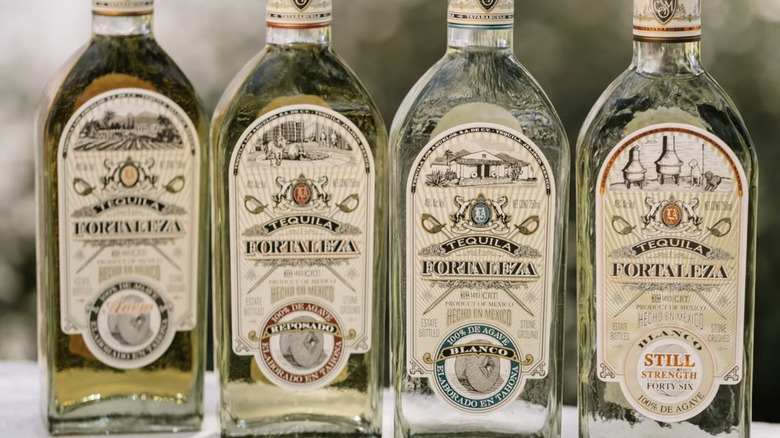
Fortaleza Tequila is the brainchild of Guillermo Erickson Sauza (yes, the same Sauza family who were once bitter rivals of Jose Cuervo). His grandfather built a small distillery, named La Fortaleza, near the town of Tequila, Mexico, but the family shut it down in 1968 and sold the Sauza brand name in 1976. In 1999, Guillermo decided to resuscitate the small distillery and launched Tequila Fortaleza in 2005, making it one of the few tequila brands with a dedicated distillery — despite the thousands of labels, there are only about 200 approved tequila distilleries in Mexico.
Guillermo and his team, alongside his son William Erickson, eschew industrial methods designed to cut costs and speed up production. Fortaleza uses only fully mature agaves (at least 8 years old), some of which are estate-grown. Agave hearts are steam-cooked in a stone oven for 36 hours, and crushed under a rolling tahona stone. During fermentation and distillation, production is similarly slow, traditional, and additive-free. Two small, century-old copper pot stills produce all the liquor, limiting how much tequila can be made with each batch.
While all of these steps help produce what many consider a top-tier tequila, it also makes bottles difficult to find. That holds true whether you're looking for the unaged blanco, the 18-month-aged añejo, or the ultra-limited Winter Blend reposado annual release. Like the allocated bourbon lauded by whiskey fans, it's doled out judiciously to distributors in the U.S., then to retailers and bars. But it's quickly snapped up or sold at exorbitant prices, often to the frustration of its die-hard fans. While experts consider Fortaleza worth the price, there are other well-regarded, additive-free tequilas that may be easier to find, including Tequila Ocho and El Tesoro.