

13 Desserts Commonly Enjoyed During The Medieval Era
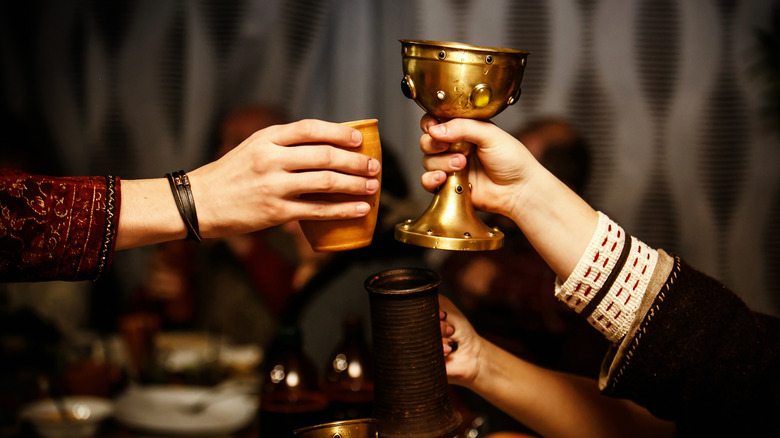
The medieval era, roughly spanning the 5th through the 15th centuries C.E. in European history, saw many scientific, cultural, and, yes, culinary advancements. Mealtime in the Middle Ages looked quite different from the way it does today, and dessert was no exception.
"The concept of desserts, as we think of dessert courses, wasn't really part of medieval life," says Dr. Christopher Monk, a specialist consultant in medieval texts and culture. Monk has recreated and prepared several of these dishes in his own kitchen, giving him a firsthand look at what some of these medieval recipes were like. As he explains, "Typically, feast menus of the 14th and 15th centuries show only a few obviously sweet dishes."
Rather than courses served one by one, "medieval food was served in removes — with all of the dishes for that serving placed on the table at once," adds Dr. Giles Gasper, professor of high medieval history at Durham University. "This means that savory and sweet dishes all came together. A larger feast might have a number of removes with entertainment in between."
While some of these sweets have become less common over time, others may look surprisingly familiar to modern diners. From fruit-based dishes and spiced drinks to wafers and other sweet treats, medieval cooks had plenty of ways to finish or complement a feast. Keep reading for a look at some of the most popular desserts and sweet dishes of medieval times, as contextualized by food historians who know the era best.
1. Comfits
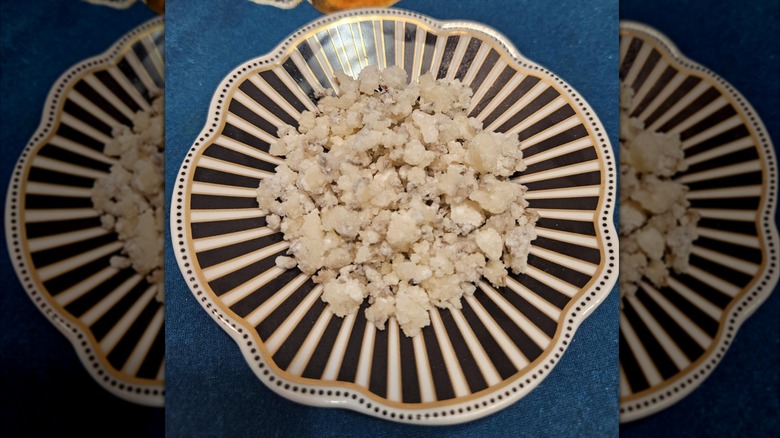
Comfits are interesting medieval dessert bites, as they served as both a sweet treat and medicine. Christopher Monk says this dish, made of candied nuts and seeds such as anise, caraway, and almond, appears in poet John Russell's 15th-century English etiquette book, "The Boke of Nurture."
"'The Boke of Nurture' is the first time we have unequivocal evidence of what we might call a pattern of eating a final sweet course," Monk says. He also suspects that the sugar-coated seeds may have been used as a digestive aid during the era, giving comfits a role beyond simply satisfying a sweet tooth.
Sugar, Giles Gasper says, became more fashionable with desserts in the mid-to-late medieval period. "The use of cane sugar became increasingly available and popular from the thirteenth century onwards," Gasper adds. "Used medicinally as well as for culinary art, sugar is a staple of medieval cuisine by the end of the Middle Ages."
2. Payn puff
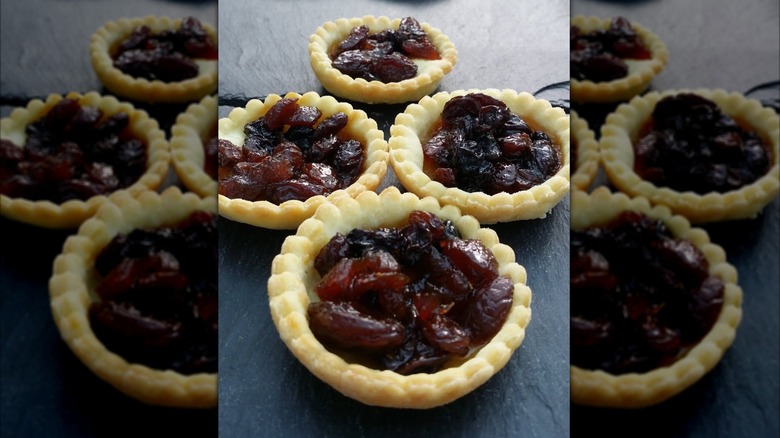
English Payn puffs — sweet morsels of puff pastry filled with cream, fruit, and spices such as ginger — were fashionable in the Middle Ages. They also show medieval diners' willingness to combine sweet and savory ingredients. Some recipes from the period called for fillings such as bone marrow with dates and raisins, while others were purely sweet, made with spiced dried fruit.
Payn puffs were versatile, small-format pastries that could combine sweet, spiced, and sometimes savory flavors in a single bite. Their delicate pastry and variety of fillings also offer a glimpse into the range of medieval baking, which included considerably more than simple breads and basic baked goods.
"These are amazingly tasty dishes — though there is a lot more research to be done on medieval pastry," Giles Gasper says. The delicacy of these hand-held bites also offers perspective on medieval dining. "[There are] misconceptions of disordered and chaotic eating habits," he adds. "Medieval culinary culture and etiquette were, by contrast, very strict and precise."
3. Rice pudding
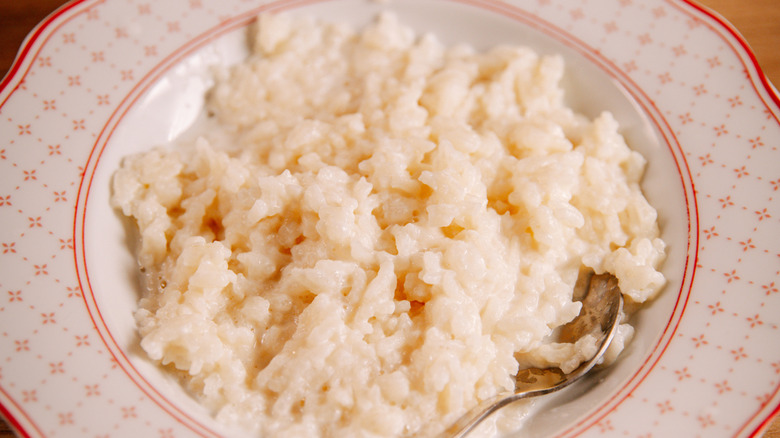
In medieval Europe, rice pudding took many forms. For example, a 14th-century Italian recipe called the dish riso nella migliore maniera, while a similar rice pudding dessert in England was called rys in the 15th-century English manuscript Harleian MS. 279.
The main difference between the slightly older Italian riso nella migliore maniera and the Harleian English rys is that the latter is sweetened with honey and sugar, rather than just sugar. Otherwise, the dishes are made quite similarly, both featuring rice cooked in one key ingredient: almond milk. Rather than reaching for a carton from one of the many store-bought almond milk brands that exist today, almond milk was created from scratch during the medieval period.
You will have a tougher time finding dairy milk in medieval desserts, Giles Gasper says, than its nondairy, almond-based counterpart. "Almond milk was an easier substance to preserve and with which to work," he says.
4. Sambocade
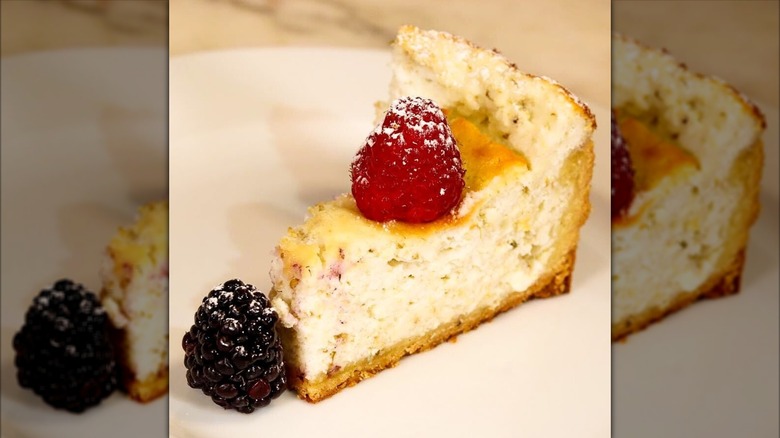
A lighter, more delicate dessert, sambocade can be traced to an entry in the late 14th-century English royal court recipe book, "Forme of Cury." The dish was made in a pie crust filled with a sugared mixture of strained cheese curds, egg whites, and elderberry flowers (also known as elderflowers, which are surprisingly delicious when fried). The final product was baked, then topped with rosewater before serving.
Many modern-day bakers compare the sambocade to a more floral and less dense cheesecake, although its pie crust suggests it may have more closely resembled a cheese tart. The tart could easily have been sliced and shared at a larger dinner table or feast. Giles Gasper notes, "Most of the recipe collections we have are from royal or aristocratic households, occasionally ecclesiastical, with an increasing number designed for wealthy urban households from the 15th century onwards."
5. Sweet Pottage
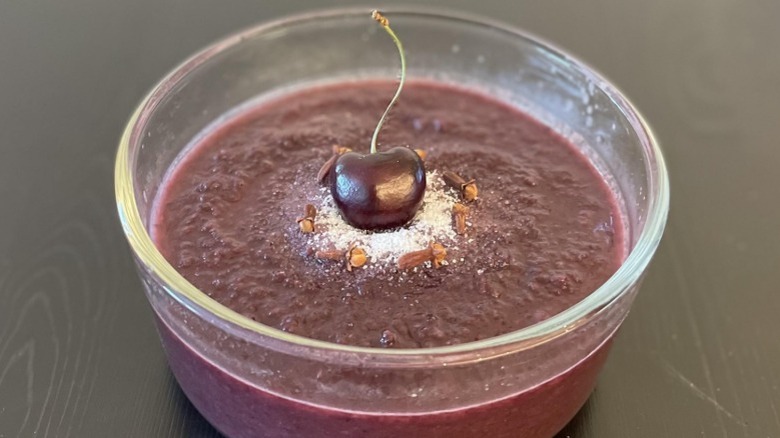
Medieval dining tables certainly featured their share of savory pottages — thick stews flavored with aromatic spices and packed with hearty meats, grains, and vegetables. But sweet versions also appeared on the menu. Recipes for sweet pottage span centuries, from a 4th-century Roman manuscript to a 16th-century German cookbook, as well as the 14th-century English cookbook called "Forme of Cury." Recipes vary considerably by period and place, but they share recurring ingredients and techniques.
Across recipes, the two most common flavors for sweet pottage are cherry and rose. Pottages differ in thickness, with cooks using different ingredients and techniques to achieve the desired texture. A recipe in the "Roman Oribasius, Medical Collections" calls for a cherry reduction made with sugar, butter, and red wine, thickened with breadcrumbs and flavored with cloves. A similarly constructed German cherry pottage, called kirschen, takes a simpler approach, using a low, syrupy boil made from cherries and red wine. Meanwhile, a rose pottage called rosee in "Forme of Cury" combines ground roses with boiling almond milk, dates, rosewater, and rice flour, then adds sugar, cinnamon, ginger, and saffron for sweetness and spice.
6. Tardepolene
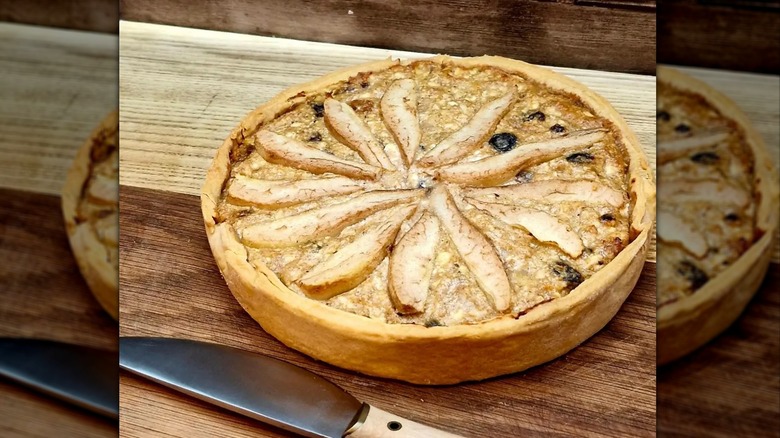
Another medieval tart is the tardepoline, which Giles Gasper says appears in several recipe collections from the period. He cites an early-14th-century Anglo-Norman manuscript in which a tardepoline features pears, dates, figs, almonds, and raisins as its emblematic ingredients.
One of the closest matches to the tardepoline is the tarte of wardens, found in the 16th-century housekeeping book, "The Good Huswifes Jewell" by Thomas Dawson. It combines pears, sugar, flour, cinnamon, and sugar to bake in a pie crust.
Tarts featuring other fruits were also popular during the medieval era. For example, a "tarte of strawberyes" from the 1545 British cookbook "A Proper Newe Booke of Cokerye" boasts a filling of strawberries with egg yolks, sugar, butter, and breadcrumbs, encased in a shortbread-adjacent crust flavored with saffron. Like other recipes of the era, the tardepoline has a cake-like filling rather than the looser, more syrupy fillings one might associate with 21st-century pies.
7. Golden toast
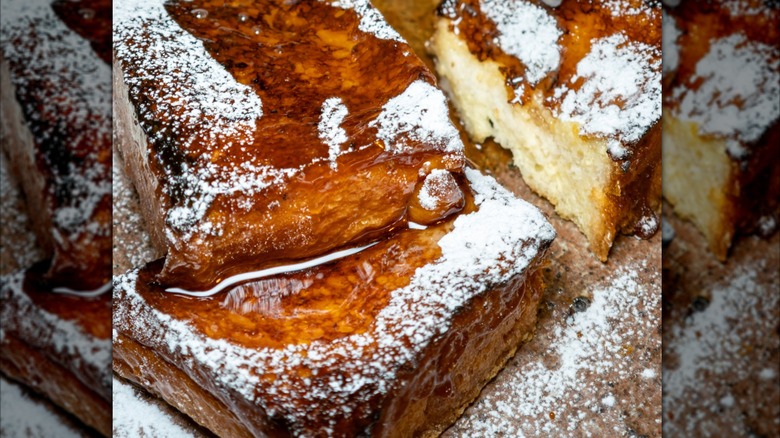
Here's another medieval dessert that modern diners will likely recognize: French toast. Suppa dorata is a 15th-century Italian recipe that food historians and home cooks often call "medieval French toast," although an actual French recipe from the early 14th century, tostées dorées, is probably a better fit for the title. Both names loosely translate to "golden toast," and the recipes were prepared similarly to the French toast we know today. Squares of bread (the crusts were trimmed in Italy) were coated in egg wash and cooked with plenty of butter and lard until golden and caramelized. In France, they sprinkled sugar over the toast as a finishing touch, while the egg wash was already sweetened with sugar and rose water.
When it comes to medieval desserts, these golden slices of toast are about as sweet as they come. The generous use of sugar in both recipes reflects what Giles Gasper describes as the medieval affinity for sweeter dishes among cooks and diners alike.
8. Peeres in confyt
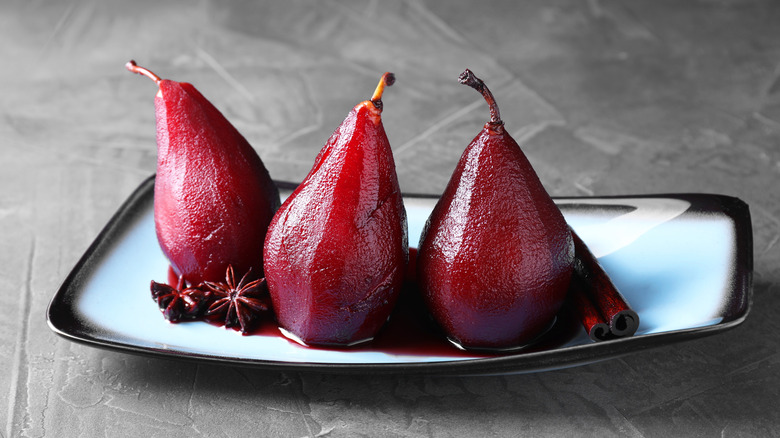
In the simple dish of peeres in confyt, as it is named in Forme of Cury, pears were cooked down with a comforting mixture of raspberries, red wine, ginger, vinegar, and sugar, giving the fruit a balance of sweetness, spice, and acidity. The final dish featured scarlet-tinged pears made tender from cooking and infused with the flavors of the accompanying ingredients.
Christopher Monk says that desserts with baked and sugared orchard fruits were a common sweet feature on a medieval table. He highlights a specific recipe from John Russell's cookbook, "The Boke of Nurture," for hot apples and pears with sugar candy, finished with minced ginger. "The minced ginger likely refers to minced, preserved ginger pieces, like we still buy today in syrup," he adds.
Peeres in confyt also underscores what Giles Gasper characterizes as a theme of spices and fruit in medieval sweets. "This is common across all regional variations; dried [fruit] as well as fresh," he says.
9. Llet malcuita
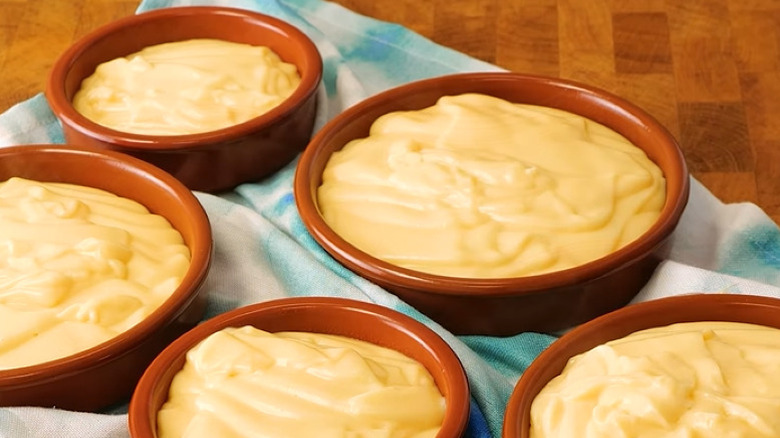
Llet malcuita is a thick milk custard that originated in 14th-century Catalunya and is considered an early relative of crema Catalana, the iconic Spanish dessert. Modern crema Catalana is typically made with a citrus-flavored custard spiced with cinnamon and topped with a layer of caramelized sugar. Although the medieval version was prepared differently, both share a similar custard base and some of the same characteristic flavors.
In the medieval recipe, llet malcuita (whose name translates to "badly cooked milk") is made with a mixture of milk and eggs and thickened with bread. The finished custard would have been soft and creamy, with the milk and eggs providing its richness, and the spices adding warmth and flavor. The result may remind modern diners of familiar custard desserts such as flan or crème brûlée.
10. Gyngerbrede
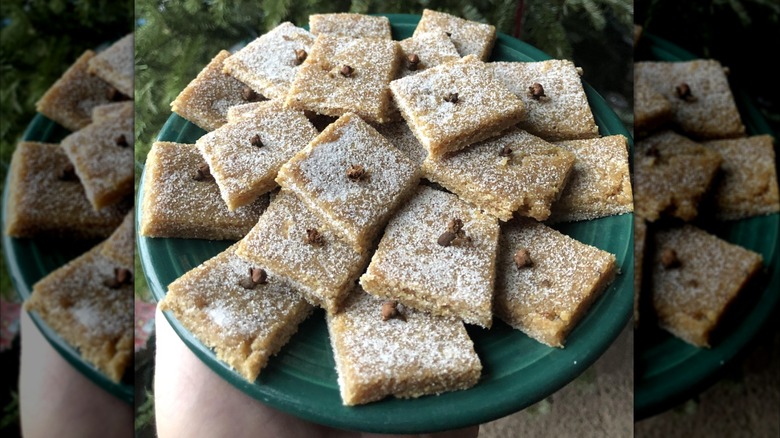
With many medieval desserts featuring ginger as a primary ingredient, it is perhaps no surprise that "gyngerbrede," or what we would call gingerbread today, was a popular sweet during the period. British recipes for the dish were especially prominent in the 14th and 15th centuries, appearing in manuscripts such as the cookbook "Curye on Inglysch" and Harleian MS. 279.
Unlike the spiced gingerbread loaf recipes we use today, medieval gyngerbrede was much thinner, more like cookies or pieces of brittle candy. Recipes for medieval gyngerbrede began with honey that was boiled and clarified, after which aromatic spices such as pepper, cloves, sandalwood, cinnamon, and, yes, plenty of ginger were added. The mixture was further sweetened with sugar and thickened with bread or breadcrumbs, rather than flour. The finished treat was cut or formed into small pieces, creating something more akin to a crisp ginger snap than the soft, cake-like gingerbread familiar to modern diners.
11. Taillis
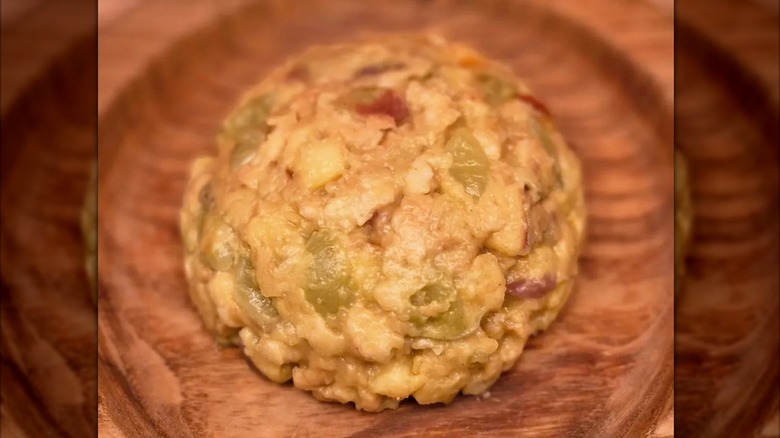
Giles Gasper describes taillis (also known as tailliz) as a fruit slice made with figs, grapes, and almond milk. Although almond milk is characteristically thin, medieval taillis recipes reveal the secret to making it thick enough to slice: toasted bread. The bread was added to a boiling mixture of the milk and the other sweet ingredients, and the final dish was poured into a baking pan or mold. After it set, the thick mass was then sliced before serving.
Some taillis recipes were called "Lenten slices" because their lack of dairy and eggs made them permissible to eat during Lent. Later recipes, including one from 15th-century England, referred to the dish as Gaylede. This version replaced the bread with rice flour and added honey, which, despite being animal-derived, was also considered acceptable during Lent.
12. Wafers with hippocras
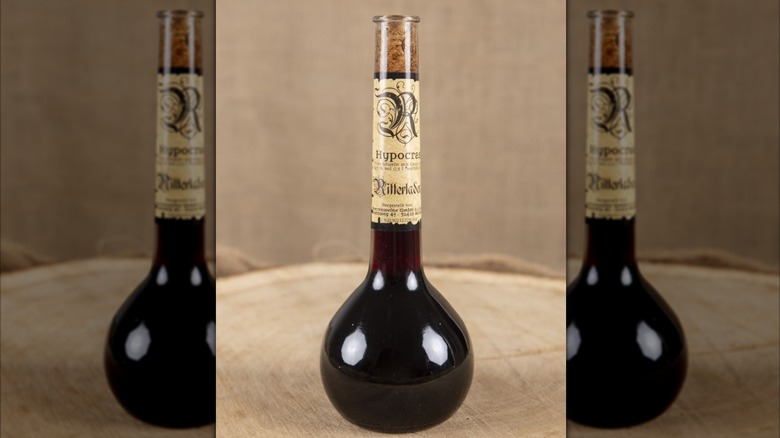
Also featured in poet John Russell's "Boke of Nurture," Christopher Monk says, is a dish of wafers with a glass of hippocras, a red wine heavily spiced with ginger, cinnamon, pepper, mace, and cloves. The combination is similar to a pot of holiday-ready mulled wine today. Sweet wafers served alongside spiced wine could appear at the end of a feast, giving diners something to eat while enjoying the aromatic drink.
The wafers, known as oblées or obleys, were a pressed-thin snack originally made from unleavened wheat flour. Monk explains that they were similar in composition to the Holy Communion wafers used across medieval Europe. Their plain ingredients made them a useful counterpart to strongly flavored hippocras, as their crisp texture contrasted with the warm, spiced wine. Together, they offered a simple pairing of baked wheat and richly seasoned wine at the close of a medieval feast.
13. Doucetes
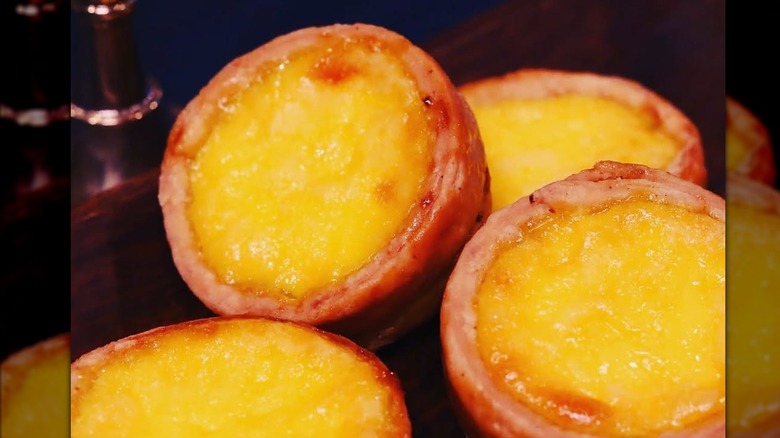
Doucetes are two-bite wonders similar to Portuguese custard tarts (or pasteis de nata). The 15th-century English recipe describes an egg-yolk custard, boiled with milk and sugar, poured into miniature shortbread crusts, then baked. The tart's filling has a rich yellow color, not only from its high concentration of egg yolks, but also from saffron threads steeped into the custard before baking.
Despite its deep red color, saffron turns yellow when cooked, and was a common medieval ingredient for color and flavor. Giles Gasper says these vivid, inviting colors were not unusual in the era. "In common with medieval food in general [is] the vibrancy and color of the dishes," he says. Not only do these bites look inviting, but they are also undoubtedly rich, given their high fat content from the yolks and their buttery crusts.