

8 Benefits Of An Electric Stove You Won't Get With Gas
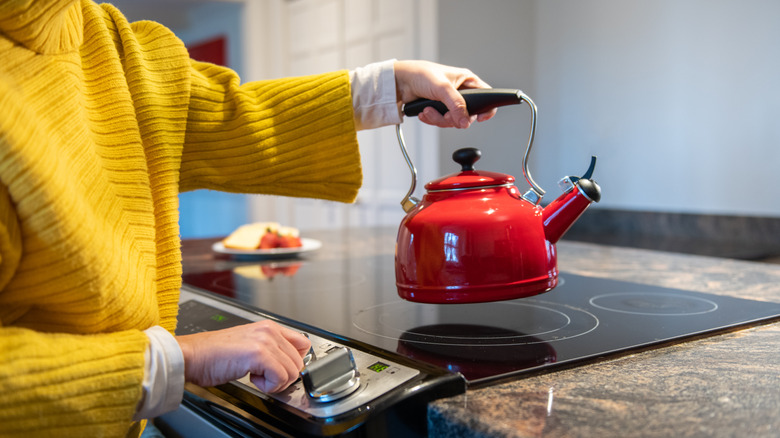
Buying a new range — or buying a home based on features like the stove — isn't an easy decision. Ranges aren't cheap, and you want something you will genuinely enjoy cooking on for years to come. You usually have two options for a stove: gas or electric, the latter including induction, coil-, and glass-top models. You may have heard about the advantages of using a gas stove, including its rapid response time and professional appeal. But we think there is a lot to love about electric, since it can offer things gas stoves can't.
To get some insights into some of the benefits home cooks will get with electric stoves that they won't get with gas, we spoke to the experts: Mike Langan, lead field instructor and technical specialist at Pinnacle Sales Group; Brit Angelesco, executive vice president of ZLINE; Ilaria Castagnoli, product trainer at SMEG USA; and Caleb John, director of Exceed Plumbing & Air Conditioning. Not only will their insights help you decide if an electric stove might be right for you, but they might also turn you off to gas stoves entirely.
1. Cheaper installation costs
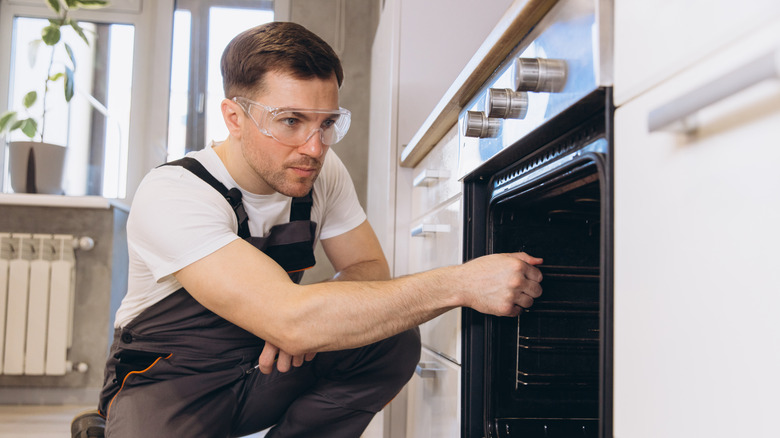
One of the most important things to know before buying any appliance, regardless of type, is that the "cost" doesn't just include the appliance. It also includes all of the work needed to prepare your space and get the appliance from the showroom into your kitchen. This is one instance where gas usually pales in comparison to electric, simply because gas requires a more extensive setup. Mike Langan says that as long as the house has a proper electric circuit, installing an electric stove is easy-peasy. "You basically put it in, connect the cord, level it, and you're done," he says. It's not the same thing for gas, though. "Gas adds another layer. You need a proper gas supply, shutoff, connections, leak checks, and depending on the situation, permits, or a licensed gas fitter," he says.
Caleb John knows from personal experience how expensive gas installations can be. "I had a job recently where the homeowner had budgeted $150 for the whole installation and ended up paying closer to $600 once we factored in the gas line extension running across the kitchen to reach the new stove position," he says. He noted that not budgeting for the gas line extension is a common mistake homeowners make.
There are, of course, always going to be cases where electric is more expensive. One of these, as Langan explains, is when there is no 240-volt circuit to plug it in, like when you switch from a gas range to an electric one. But as long as you don't need to install any new infrastructure, electric stoves are generally cheaper to install.
2. Limited release of air pollutants
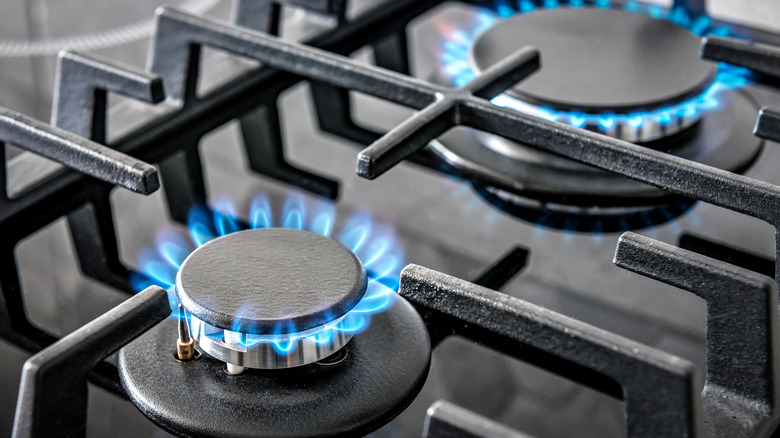
One of the biggest disadvantages of a gas stove relates to air quality. An open gas line and flame (which is not something you have with an electric stove) means you will be releasing pollutants into your home — there's no way to avoid it. Brit Angelesco highlighted major emissions: nitrogen dioxide, carbon monoxide, and particulate matter. "At concentrations above 100 micrograms per cubic meter, [nitrogen dioxide has] been linked to respiratory irritation and aggravated asthma symptoms. That's not a malfunction level, that's just a gas burner doing its job in a poorly ventilated kitchen," echoes Caleb John. He also highlights benzene, which is usually tied to industrial or chemical exposure, though it is also a common byproduct of cooking on a gas stove. With proper ventilation, you can avoid some common gas-stove mistakes and lower the risk of negative health effects from these emissions.
Now, that's not to say cooking on an electric stove doesn't release some of the same compounds. As Mike Langan says, "Cooking itself also creates particulate matter, regardless of whether you're cooking on gas or electric. Frying bacon on an electric range isn't magically clean air." But Langan does note that the amount released is much less significant because no active combustion is happening. "The difference is gas adds combustion emissions on top of what the cooking is already producing. That's why I tell people ventilation matters," Langan says. So, if air quality is top of mind for you, you might want to opt for an electric stove instead of a gas one.
3. Safer operation, generally speaking
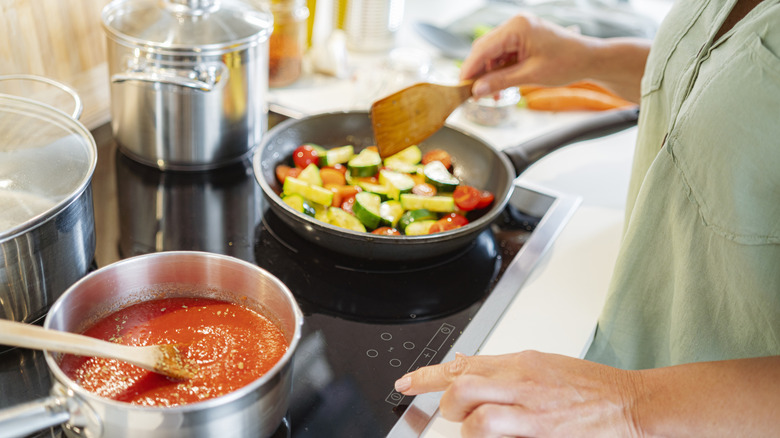
If you live in a home with children or pets, safety may be top of mind. And this is perhaps where we see the biggest advantages of an electric stove. "Electric eliminates the open flame, gas leaks, and combustion concerns. That's obviously a safety advantage," says Mike Langan. He goes on to explain that induction burners, which are a boon to caregivers and forgetful cooks, are best for safety because the burner heats the pan directly rather than heating the stovetop. This can decrease the risk of accidental burns, as you only have to avoid touching the hot pan. "Induction tops are truly cool after removing the cookware, and where I give the advantage," he says.
Although electric stoves have the benefit of no open flame — which you can catch a hand or a sleeve on — the stovetop can stay hot after use. "Electric stoves can remain hot after they are turned off, and both gas and electric appliances present burn and fire risks if they are used improperly or left unattended," says Brit Angelesco. Caleb John adds that it can be difficult to tell when the electric stovetop is still hot. Still, its advantage over gas is considerable. "So for me, electric wins on the bigger safety picture, but it's not without its own thing to be aware of. Knowing the surface stays hot is just part of learning how to use it well," John says.
4. Easier to clean
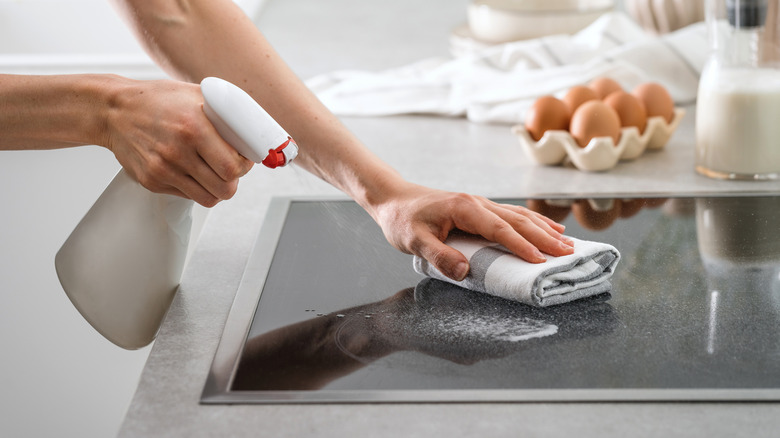
Cleaning and caring for gas stove grates is a very important step in safely operating the appliance. A buildup of gunk isn't just an eyesore; it can also restrict gas flow or cause ignition issues, increasing the risk of incomplete combustion and carbon monoxide exposure. If you tend to put stovetop cleaning off, you may be better off getting a glass-topped electric stovetop instead. "A glass-ceramic cooktop provides a smooth, continuous surface without grates, drip pans, and recessed areas that can collect grease and food debris," says Brit Angelesco. "Because spills remain on top of the sealed surface, most everyday messes can be removed with a soft cloth and an appropriate cooktop cleaner once the surface has cooled."
And the process for cleaning a glass-topped stovetop couldn't be easier. "Glass cooking surfaces commonly featured on electric and induction cooktops are easy to wipe clean as soon as the cooktop has cooled," says Ilaria Castagnoli, product trainer at SMEG USA. She recommends wiping it after each use, then using a specific glass cleaning product to make future clean-up easier. Compare that to the non-abrasive scrubbing, breakdown, drying, and reassembly of a gas cooktop, and you can see which one wins.
5. Added features and smart integrations
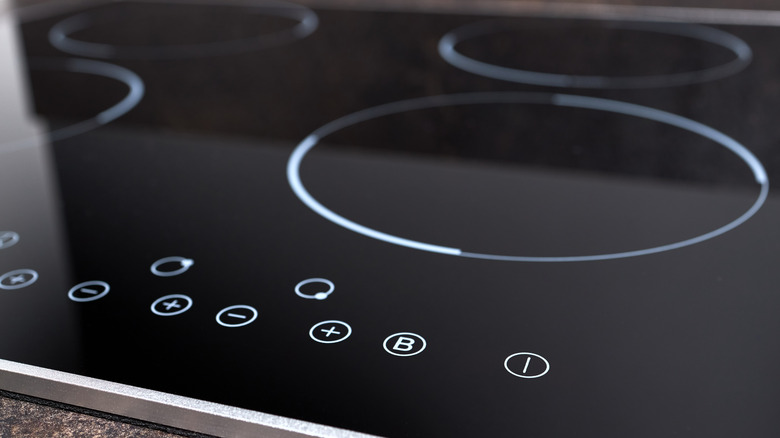
If you are building a high-tech kitchen, an electric stove may appeal to you more than gas. "Electric, and especially induction, gives end users a lot more control," says Mike Langan. "Depending on the appliance, you can have precise temperature control, timers for individual cooking zones, automatic shutoff, pan sensing, bridge zones that combine two elements, synchronization with a hood, Wi-Fi/app connectivity and guided cooking features." He also notes that some induction stoves let you control heat beyond low, medium, and high — which can make a big difference for someone trying to perfect a sauce or prepare a recipe that requires greater temperature precision. While some of these functions can be gimmicky, as Langan alludes to, others are generally useful for home cooks.
It's also worth mentioning that many electric stove features can make operation safer. Brit Angelesco offers some examples. "Pan-detection technology prevents the cooking zone from generating heat unless compatible cookware is present, and heat generation stops when that cookware is removed. Many induction models also include residual-heat indicators, overheat protection, automatic shutoff, and control locks." These features may be geared more toward certain households than others — for example, households with people with memory or cognitive impairment where forgetting to shut off the stove is a regular occurrence — but they are still worth noting.
6. Potentially more efficient
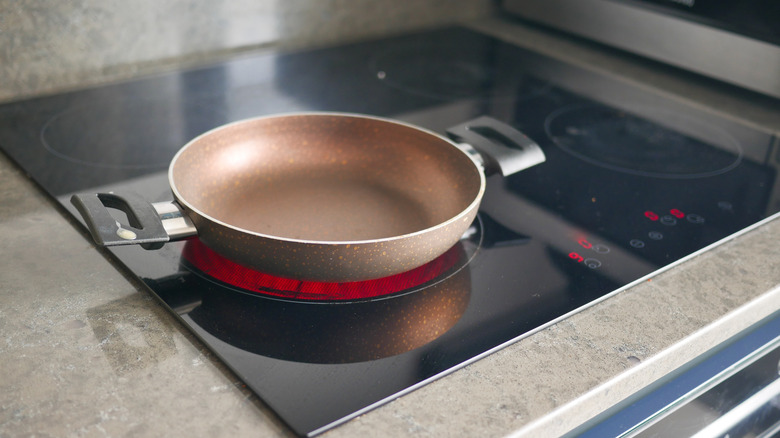
Even if you don't consider yourself the most eco-conscious home cook, you should still consider efficiency, mainly because it can affect your utility costs. Unfortunately, gas isn't winning any efficiency prizes. "With gas, you're heating the pan, but you're also heating the grate and sending a fair amount of heat around the sides of the pan and into the kitchen," says Mike Langan. Not only does this waste energy, which is one of the primary reasons so many people have abandoned gas for electric, but it can also warm your kitchen.
Compare that to a radiant electric stove, which puts more energy into the cookware than into the surrounding kitchen (even if it still has to heat the cooktop surface). Induction is generally seen as the most efficient type of cooktop in this regard, since it transmits heat directly. "That's why induction will boil water so quickly and dump less waste heat into the kitchen," says Langan.
Ilaria Castagnoli quantified this difference for us. "Of the energy gas cooktops consume, only about [30% to 40%] heats the food. The other [60% to 70%] escapes into the room ... Induction technology offers significantly more efficiency — with about [85% to 90%] of the heat going directly into the pot/pan rather than out into the room," she says.
7. May be easier to repair
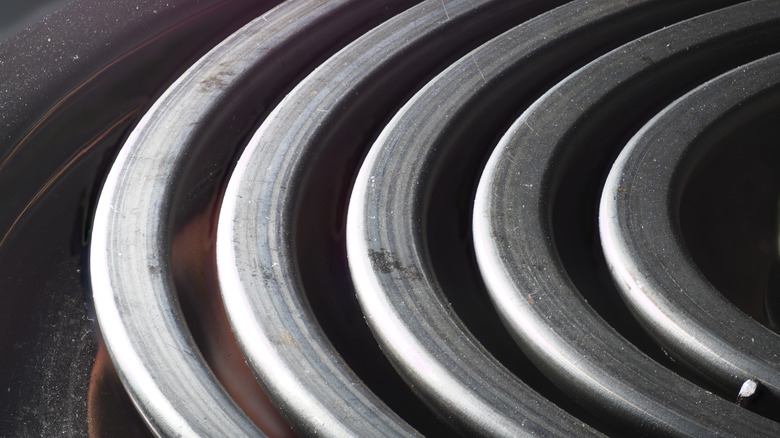
Although no one wants to see their new stove break, thinking about potential repairs — and what they might cost you — is important. Electric stoves tend to last longer than gas stoves, and their relatively simple construction can also keep repair costs low. "This is very much a case-by-case basis, but generally speaking, traditional electric stoves can sometimes be less expensive because common issues often involve straightforward components, such as heating elements or switches," says Brit Angelesco. "Gas appliances may require specialized work if you are having issues with igniters, burners, valves, or gas connections."
Mike Langan agrees. He says that electric coil ranges are simple to repair because "there just isn't a ton going on." He also says that may be why these appliances are cheap. That said, the more complicated the appliance, the more complicated the repair. "But once you get into modern glass-top and especially induction, that changes. Now you've got electronic controls, sensors, power boards and expensive elements or induction modules," he says.
8. Better pan stability
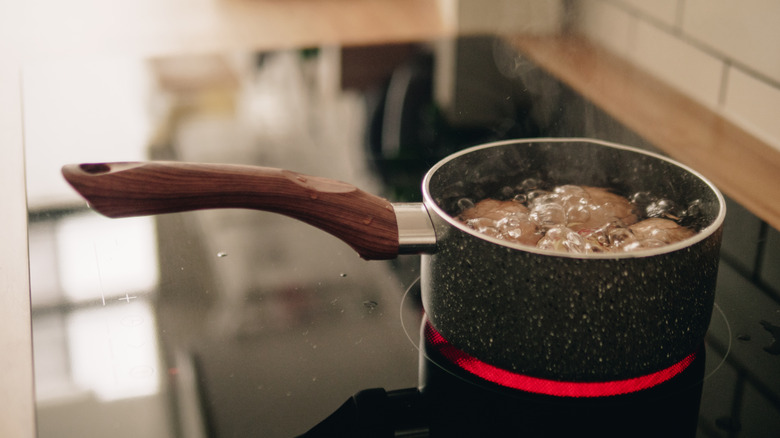
Have you ever cooked on a gas stove, only to realize that your pan is a bit lopsided? It may not be because of you, but rather because of the way that the prongs sit on the gas burner. As you can probably assume, removing these prongs and using the pot on a flat surface (i.e., a glass cooktop) eliminates some uneven-heating issues.
Generally speaking, electric stoves cook more evenly than gas. "A flat electric cooktop can provide a level surface that allows cookware to sit evenly without rocking, but that does not mean pans will necessarily move less," says Brit Angelesco. "On an electric cooktop, a flat pan maintains better contact with the surface, supporting more consistent heat transfer and even cooking." This contact can matter for something like melting butter, since you want it to melt evenly rather than scorch in spots. As with everything on this list, though, a flat surface can be a drawback. Home cooks need to be careful not to scratch the glass when moving a pan around, which is why Angelesco recommends lifting and repositioning cookware on the flat-top rather than sliding it from burner to burner.