

Do Gas Or Electric Stoves Last Longer?
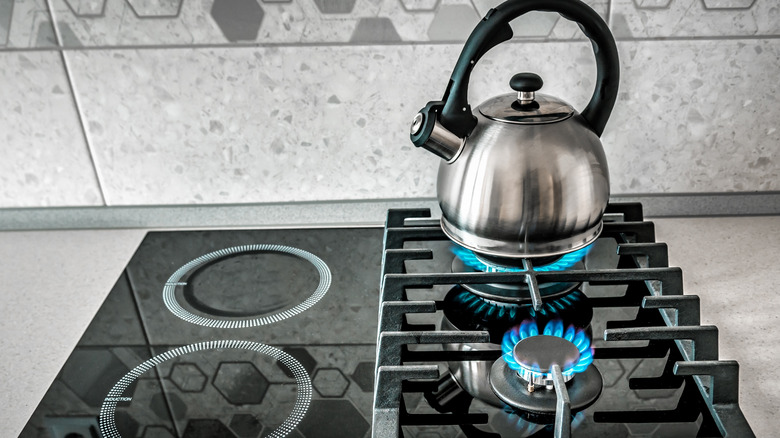
Gas or electric stoves are largely a matter of preference. Those who love gas stoves often say it's because the gas burners heat up fast; similarly, once the flame is turned off, the heat immediately stops. Electric stoves may offer less precise heat control, but they offer other benefits, such as steady oven heat that is ideal for baking as well as being easier to clean because of their smooth, flat stovetop surfaces.
All of this aside, what stove gives you the most years of service? Chowhound spoke with Scott Flint, appliance repair expert and creator of Scott The Fix-It Guy, to find out which takes the longest to start giving the telltale signs it's time to replace your oven. "Electric stoves tend to last longer due to being a simpler design than gas stoves — fewer parts to malfunction," he exclusively told us. "Also, gas stoves and ovens produce water vapor as one of the byproducts of combustion. That water vapor causes corrosion that speeds up the degradation of the metal parts."
Tips for extending the life of your stove

Though electric stoves tend to last longer, there are ways to mitigate damage and prolong the life of both kinds of stoves. Scott Flint says, for both electric and gas stoves, to limit or avoid the self-cleaning feature on your gas or electric oven. "The temperatures exceed 900 degrees Fahrenheit and can severely damage your stove or oven," he warns. For gas stoves specifically, he advises to keep your burners clean. "Excessive food debris and grease can clog the small gas ports, causing a weak or even absent flame," he says. "Dirty igniters can't create a strong enough spark to light the gas. Gently cleaning the igniter can create a strong spark again."
For both electric and gas, Flint says to avoid letting your burners get wet. "Water on your gas burner can cause corrosion and short out your spark ignition system, causing the igniters to constantly spark even when the burner is off." He adds that letting water boil over from a pot onto the surface burners of an electric stove can also cause corrosion and short out the electric circuit bringing energy to the burners. The extra downside of water spilling over onto your electric stovetop is the task of cleaning the unsightly white water stains. Lastly, he warns against moving pots and pats around too much on top of your electric burners. "Movement of heavy, water-filled pots can loosen the electrical connectors for the burners, causing a loss of power," he warns.