

Skip Pyrex And Look For These 9 Nostalgic Kitchenware Brands At Thrift Stores
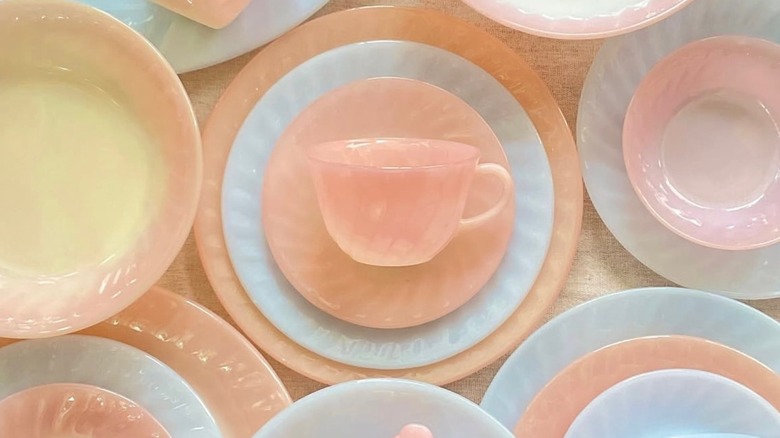
When it comes to kitchenware (a catch-all term to describe vessels, utensils, and implements used to cook, serve, and store food), few brands are as ubiquitous as Pyrex. After all, the brand, which still exists today, changed home cooking forever during the 1900s, and its vintage pieces are some of the biggest sources of nostalgia for collectors and cooks alike.
One of Pyrex's biggest selling points is that many of its products, from its mixing bowls to its loaf pans, are made with strong, sturdy glass that keeps them oven-safe. That said, maybe you want to add some variety to your vintage kitchenware collection, or maybe you have concerns about the alarming amount of lead some collectors have found in their vintage Pyrex pieces. Regardless of why you're looking to expand your horizons, there are plenty of other nostalgic kitchenware brands worth exploring on your next thrift store visit.
With any vintage kitchenware from the thrift store, make sure to take proper precautions before cooking. For a good place to start, check out our guide to how to properly clean and sanitize thrift store kitchen finds before using them, or to some things to look out for when thrifting cookware. We've also included some specific guidance on how to determine if your thrifts from each brand are safe for use — but you can never be too careful! With that, keep reading to learn more about nine thrift store-friendly nostalgic kitchenware brands.
1. CorningWare
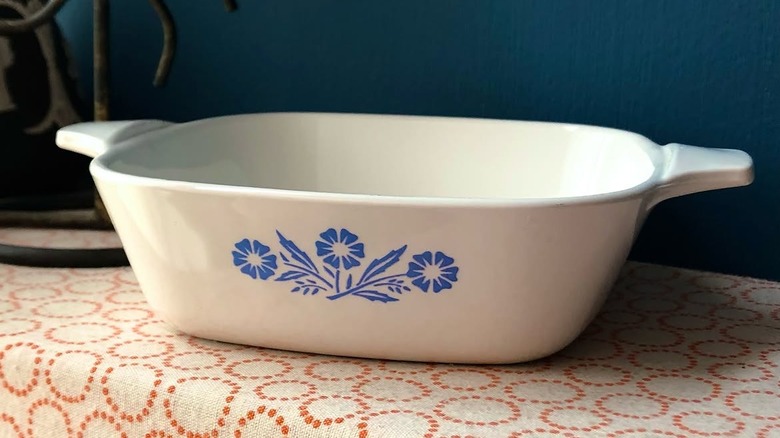
For the brand most similar to Pyrex, look no further than CorningWare, which was established in 1958 as a sister brand of Pyrex. Unlike Pyrex, vintage CorningWare products, which ranged from casserole dishes to saucepans, were made with the material Pyroceram (which, unlike Pyrex, also allowed the products to be advertised as stovetop safe).
Just like Pyrex, CorningWare's designs are ever nostalgic and evocative of mid-to-late 1900s home cooking. In your local thrift store, you might find CorningWare kitchenware in any of the brand's 80-plus patterns, ranging from the common-yet-iconic Blue Cornflower to the rare 1960s Black Starburst. Regardless of how unique the patterns you find are, they are all charming in their own right!
Today, CorningWare remains in production thanks to the kitchenware brand Corelle, but thrifters and enthusiasts still delight in finding vintage pieces at local shops. That said, it is important to take some safety precautions before using the more aged products in your kitchen. Some collectors have found disturbing amounts of lead in some vintage CorningWare kitchenware items, but this does not necessarily mean every single piece will be contaminated.
The United States Food and Drug Administration recommends testing ceramics with an at-home lead testing kit, which can be purchased online or at your local hardware store. Assuming they come back negative, congratulations — you have scored a multipurpose, vintage piece that is as nostalgic as it is durable in the kitchen.
2. WearEver
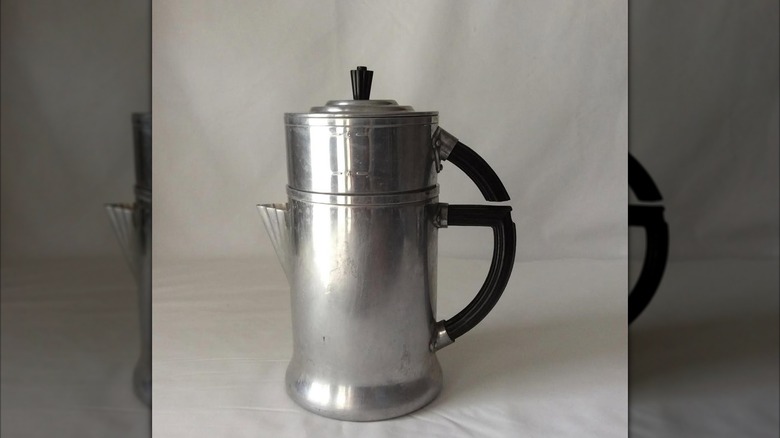
Since 1903, WearEver has been one of the biggest names in aluminum cookware. It was even created with help from the Aluminum Company of America, in order to establish market demand for products made from aluminum.
Although the brand continues to exist today, its long-lasting legacy and production period of over a century mean that, similarly to Pyrex, the brand boasts collectible, nostalgic pieces from multiple eras of home cooking. Its roster of products has included custard steamers from the 1930s, drip coffee pots from the 1940s, and heavy pans from the 1960s, as well as timeless products such as Dutch ovens and skillets.
Just like with any other vintage cookware from the thrift store, it is important to take some precautions before using your new WearEver acquisition. Because WearEver cookware is made from aluminum, it can be subject to metal leaching, which is when particles of aluminum will interact with the food (specifically, acidic ingredients) with which you are cooking. While you will likely not ingest a meaningful amount of aluminum when using this cookware, it can add an undesirable metallic taste to your food. One way to mitigate this is to avoid cooking acidic foods your new WearEver pot.
3. Oneida
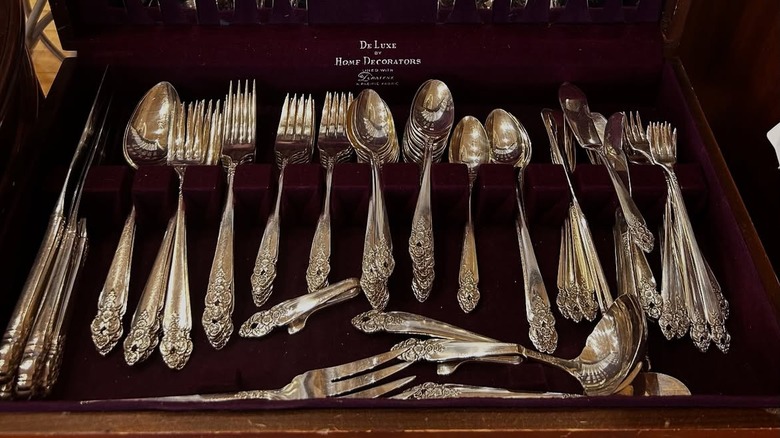
Although Pyrex does not specialize in flatware, a list of nostalgic kitchenware brands would be incomplete without Oneida. Although the company was acquired by the Lenox Corporation in 2021, Oneida has a history of producing high-quality silverware since its small-scale beginnings in 1880.
With nearly 150 years of history, Oneida has long been the standard for high-quality, dinner-party-ready silverware sets. The real selling point of the brand's flatware is the attention to detail in each piece: design lines range considerably in style and intricacy, including the Spring Glen collection with seashell-esque scalloped ends, the Midnight collection with thin, emerald-cut handles, and the Fantasy collection with lacy edges and a stacked-hourglass silhouette.
If you are lucky enough to find a full set of any of Oneida's silverware collections at your local thrift store, you will have elegant table settings for life (and be one step closer to putting together a stunning tablescape that will impress your dinner party guests). It is typically safe to use antique and vintage silverware, so long as the pieces remain silver-plated and not worn down. If they are, or if you just want some peace of mind, there is no harm in performing an at-home lead test, just in case.
4. Libbey
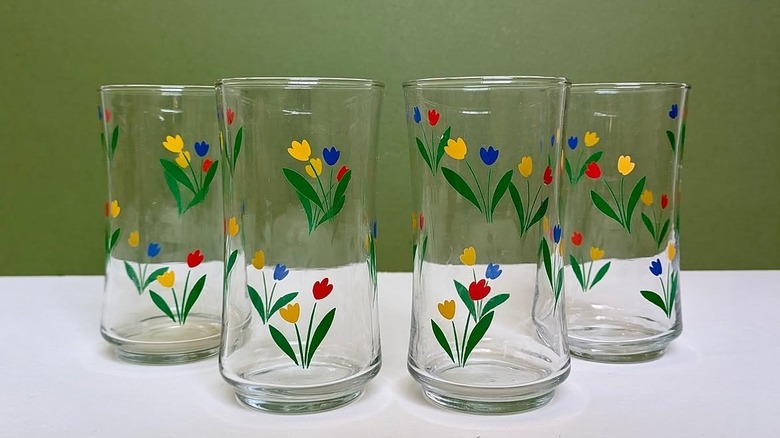
Libbey, which boasts glassware that is as whimsical as it is durable, is another ideal thrift store find. The kitchenware brand is currently still in production; however, it got its start in 1818 as a division of the New England Glass Company.
Although Libbey carries a wide range of glass kitchenware and cookware, from baking dishes (not dissimilar in appearance to Pyrex's) and serving boards to pitchers and coffee mugs, its biggest claim to fame is undoubtedly its drinking glasses, which have come in many different designs and patterns over the past two centuries. Just like with CorningWare, the varieties you might find in a thrift store will range considerably in value based on how common they are, but, regardless of their stickers, designs are overwhelmingly playful and make great use of vibrant colors — especially those manufactured in the 1960s.
Some standouts from over the years include a Queen Anne's Lace pattern in varying shades of green, a swirling Golden Wheat pattern, and the Berry Festival pattern featuring strawberries and their blossoms. Today, Libbey has capitalized on the nostalgia factor of these patterned glasses with collections inspired by vintage designs (although you don't have to head to a thrift store to score those).
Like all vintage glassware, Libbey products run the risk of containing or being contaminated by lead. So this is another instance where a lead test can ensure the safety of your finds.
5. Royal Albert
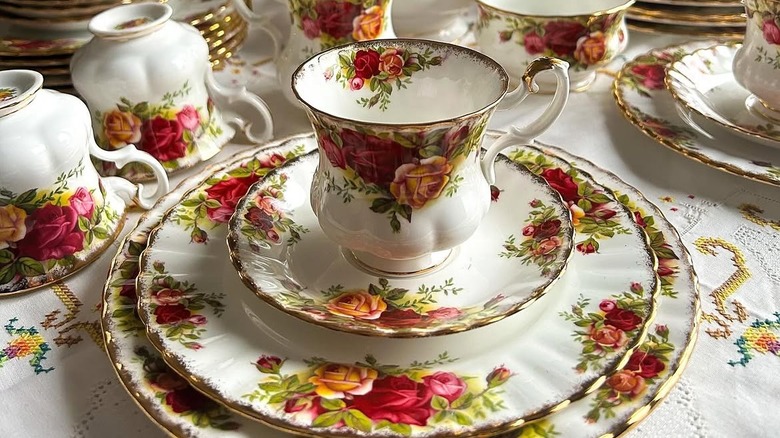
For more than 120 years, fanciful tea sets have been the name of the game at Royal Albert. Many of its iconic patterns still exist today — but thrift store shoppers are bound to feel a rush when they score nostalgic collections from the 20th century.
Royal Albert's collections predominantly showcase floral designs, and, undoubtedly, the most iconic Royal Albert tea set pattern is the Old Country Roses, which was released in 1962 and soon became popular. Today, this pattern is virtually synonymous with the brand; however, an original 1960s Old Country Roses tea set is now worth a fortune. Not only is it a rare find, but it also serves as a time capsule of home entertaining during the decade.
A thrifted Royal Albert tea set (or even just some lone pieces, such as a kettle or some teacups) is fitting for throwing a perfect afternoon tea party, or even for just enjoying a solo afternoon spot of tea. To keep it in the best condition and ensure safe tea-brewing, check your new pieces for chips and cracks, avoid acidic teas, and wash them by hand. If you plan to use the set often, there is no harm in performing a quick test for lead.
6. Tupperware
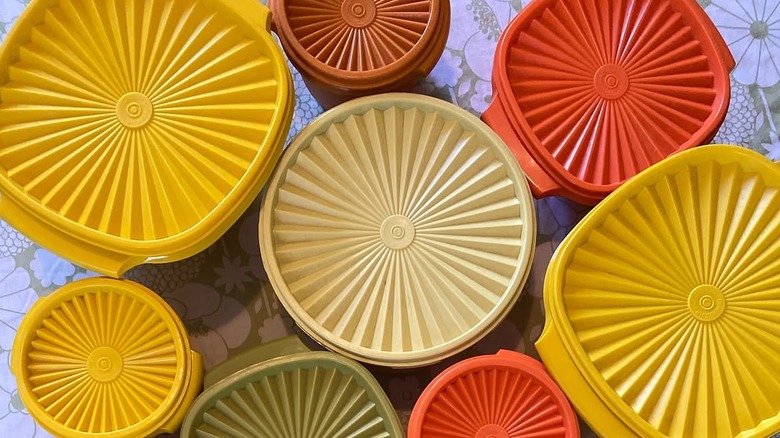
This nostalgic (and still-productive) kitchenware brand needs no introduction — after all, it is so ubiquitous that people refer to any refrigerator-safe storage containers as "Tupperware" — but we will give it one anyway. Established in the 1940s by none other than chemist Earl Tupper, the brand has become a household name for its reusable storage vessels that provide an airtight seal for leftover food.
Today's Tupperware collection has expanded considerably, now offering everything from baking utensils to serveware. Its food storage items are still the brand's best-known products — although, today many of them are certainly lacking in the aesthetics department. During the mid-to-late 1900s, Tupperware came in a variety of eye-catching colors, including, most commonly, a series of warm earth tones. Just like Libbey, Tupperware now offers its own vintage line with many familiar products, but nothing is more nostalgic than getting your hands on the real thing.
In spite of their good looks, it is best to be wary when using vintage Tupperware products. Until 2010, some of the Tupperware products still included the chemical Bisphenol A, or BPA, which can be hazardous when ingested. Since then, products sold in the United States and Canada are BPA-free. That said, vintage Tupperware can still be used in your kitchen, so long as it is not used to store anything that will come in contact with food. For example, try using them to grow fresh herbs!
7. Fire-King
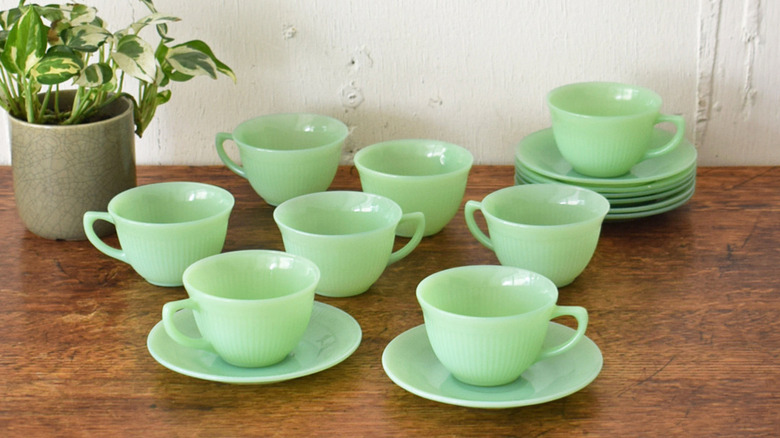
For more classic kitchenware that is bound to make your table guests reminisce, Fire-King pieces are another apt thrift store find. While the brand's existence, from the 1940s to 1976, was short-lived, it made quite the impact on the worlds of home cooking and entertaining.
Just like Pyrex, Fire-King specialized in cookware, serveware, and drinking vessels made from durable glass. Also similarly to Pyrex, its designs remained on the minimal side, with the brand predominantly specializing in a series of unique colors — the most iconic of which was its Jadeite collection, which boasted colored glassware in a milky, pastel mint green. One (or a set) of these pieces will make you feel like you are at a mid-1900s dinner party.
Just as with many other glassware brands, the more a vintage item is painted, the more likely (but never guaranteed) it is to test positive for lead. Because even some solid-color Jadeite pieces might not always be lead-free, it is not a bad idea to invest in a store-bought lead test for any of your vintage Fire-King finds.
8. Griswold Wagner
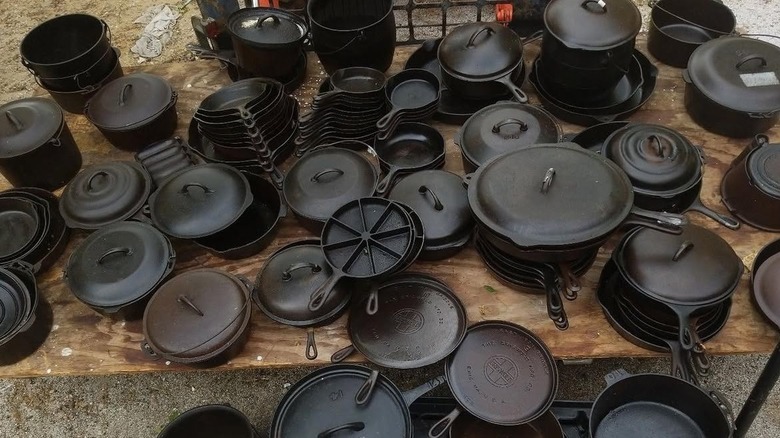
In the pursuit of finding the most Pyrex-esque cookware brands, this list is heavy on cooking implements made out of glass. That said, a list of nostalgic kitchenware would be incomplete without a mention of this quintessential cast-iron brand. The Griswold Wagner brand was actually the combination of two 19th-century-born manufacturing companies (Griswold Manufacturing and Wagner Manufacturing Company) which joined forces in 1957. The pair didn't stay joined for long, so, if you find one of these heavy-duty collaborations at a thrift store, you should not hesitate to get your hands on it!
The two brands worked together on all things cast iron, including your classic skillets and kettles, along with some wild cards, such as muffin tins and cornbread pans. If it could be made out of cast iron, it seems that these two manufacturing powerhouses made it happen during their short time working together.
So long as you properly inspect your Griswold Wagner cast-iron cookware for cracks, it is likely safe to use. You'd be surprised by the average lifespan of a cast iron skillet, assuming it has been well taken care of (and that you take good care of it in its new home).
9. Dansk
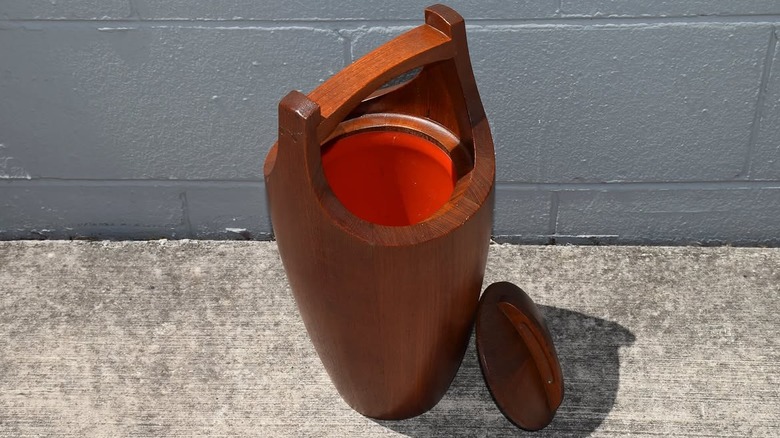
Last but not least, a nostalgic cookware brand specializing in some more novel materials: Dansk, which is best known for its wooden serveware (but also boasts a wide variety of collectible kitchen pieces made with a variety of materials, including stainless steel flatware and enamel pots and pans). The brand got its start in the mid-1950s and quickly created a name for itself with its sleek and oft-funky designs. Vintage Dansk pieces might not necessarily be in style today, but, just like Pyrex, we think that makes them all the more nostalgic.
It is hard to pin down a single motif for Dansk kitchenware. The same brand that made teak ice buckets in the style of Congo drums also created bright-orange enamel pitchers, ceramic plates painted with mesmerizing patterns, and massive wooden hexagonal trivets. According to the Dansk website, the brand is "returning soon," although it is unclear when. That means the time is now to go hunting for nostalgic pieces that might differ considerably from whatever the brand has cooking next!
Because Dansk pieces are made from a wide range of materials, it is hard to give a prescriptive rule on their safety for cooking and serving. Wood is generally safe to use, while ceramics should be thoroughly inspected and used with the same precaution and testing standards as you would with ceramics from brands like CorningWare. When in doubt, an at-home lead test is never a bad call.