

How To Properly Clean And Sanitize Thrift Store Kitchen Finds Before Using Them
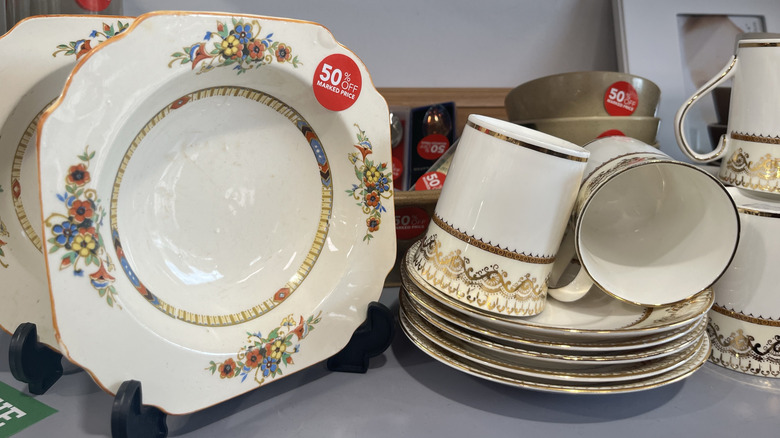
Those in the know understand that thrifting is an excellent way to score beautiful kitchenware at a fraction of the original cost, especially if you're hunting down something specific, such as Le Creuset or vintage brands. Many of these items were crafted both to add beauty and color to your kitchen, and to last a long time, so building an heirloom-worthy collection can be well worth the hunt. However, many of these items don't come to thrift stores perfectly clean.
This is why it's essential to safely and thoroughly clean vintage dishware, cookware, and silverware before using it to prepare, serve, or eat food. The first thing to do is disinfect them in case they came into contact with something particularly nasty. Add about 1 tablespoon of bleach to 1 gallon of hot water and let non-metal, nonporous kitchenware items soak for about one minute. Since the bleach is so diluted, and contact with it is limited, this shouldn't damage most thrifted finds.
The next step is to wash the dishes to remove any remaining visible grime and bleach residue since that's not safe to ingest. You can use the dishwasher for modern dishware, but it's best to skip it for vintage thrifted kitchen items that predate dishwashers being standard in most homes. For these, fill your sink with hot water and mild dish soap (such as Dawn) and give everything a thorough handwashing. Rinse them in cool water and let everything air dry.
Saving silver and stainless steel
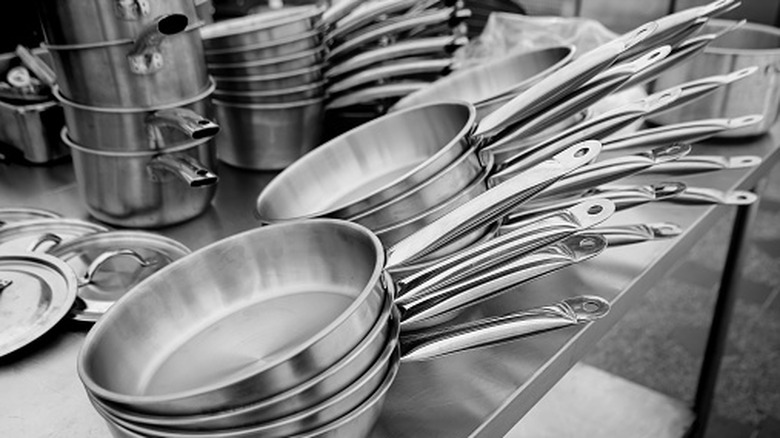
Though properly diluted bleach works well for disinfecting glass, ceramics, and even vintage plastic, such as Tupperware, it should never be used to clean thrifted kitchenware made of metal; it can discolor and ruin them. Instead, after you give them an initial scrubbing to remove visible dust and grime, slip metal utensils, pots, and pans into a boiling water bath for about 10 minutes. This should be long enough to kill any microbes or pathogens still clinging to your new-to-you kitchenware.
To ensure these pieces get as clean as possible, you may need to do a little disassembly. Pots, pans, and their lids often have handles that screw into place. Remove them before washing to scrub away any dirt that's worked its way underneath. This is especially important if the handles are made of plastic or wood, which may warp when boiled. Plastic can be cleaned with bleach, as described, while wood can be disinfected with a spritz of white vinegar.
Let everything air dry before reassembling. Turn them at regular intervals to ensure all surfaces are exposed to the air; trapped moisture could harbor microbes, defeating the purpose. Also, put off polishing any silver items until after they've been sanitized and dried. When you're ready to polish your new silver, all you need is a dollop of toothpaste and a lint-free, microfiber cloth to restore their shine.