

12 Facts About Smart Refrigerators To Know Before You Buy
We may receive a commission on purchases made from links.
If you have noticed more smart appliances hitting the market, you aren't the only one. According to Fortune Business Insights, the smart home appliance market is projected to grow from $180 billion in 2026 to over $848 billion by 2034. And one of the places where smart appliances are seeing tremendous growth is in the kitchen. Take, for example, smart fridges.
Like other types of smart home appliances, smart fridges offer functionalities that make your kitchen experience both easier and more technologically integrated. However, since this technology is relatively new — smart fridges only became largely available to consumers in cost-effective formats in the mid-2010s — there are a lot of questions that people have about them, including what they can do and, ultimately, whether they are worth investing in.
To get some answers to these queries, we spoke to three smart fridge experts: Amy Chernoff, an appliance expert and vice president of marketing at AjMadison; Marc Dal Cin, a licensed electrician and the founder of Calibre Connect; and Jason May, executive director of product management, bottom freezer refrigeration at GE Appliances.
1. The exact definition of a smart fridge varies
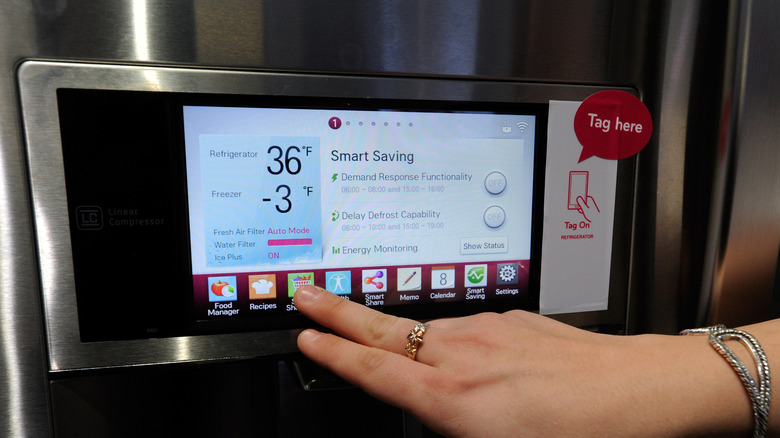
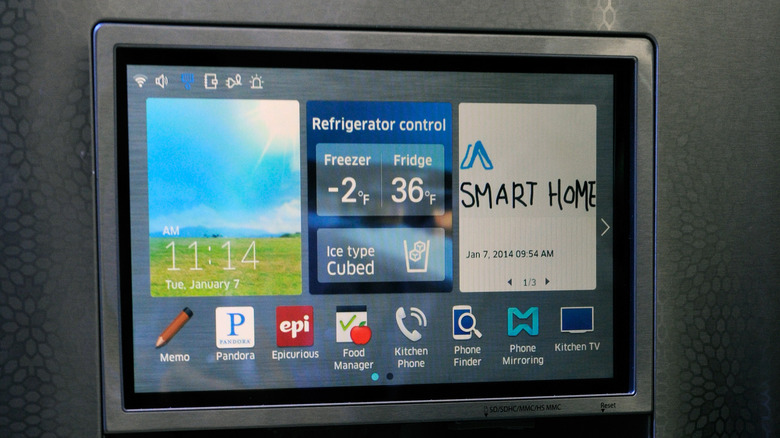
Since smart fridges are just now becoming more mainstream, we don't blame you if you haven't heard of them, let alone seen one in the wild. That said, defining what a smart fridge is can be very difficult, seeing as it depends on who you ask. Amy Chernoff, an appliance expert and vice president of marketing at AjMadison, says that it's "a fridge with Wi-Fi connectivity that allows it to communicate with an app on your phone." She gives a few examples of applications that allow you to monitor the temperature of your fridge from your phone or view its contents virtually. Some applications will even allow you to build a grocery list based on what you already have in your fridge.
Jason May of GE Appliances broadens the scope here. "While the definition of a 'smart fridge' can vary across the industry, in general, these are refrigerators that go far beyond basic food preservation and cooling. They are Wi-Fi–connected appliances powered by an onboard computer, built to meaningfully enhance the everyday user experience," he says, offering many of the same examples of functionality as Chernoff. So think of a smart fridge as having the same cooling and storage capabilities as your fridge, just with added, helpful technological integration.
2. You will pay more for a smart fridge
The next question you likely have about smart fridges, after learning what one is, is how much more they cost. For reference, think of a smart fridge like an iPhone, while a standard fridge is like a flip-phone; although they both take calls and send texts, you're paying for all of the added bells and whistles and functionalities that a hyper-connected appliance can offer.
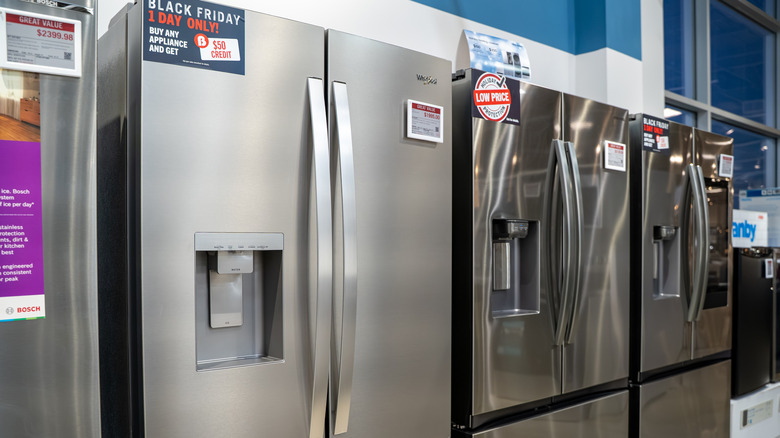
Since the exact functionalities of a smart fridge vary, it's hard to clearly state how much more it costs. "Price points vary considerably based on capacity, configuration, finish, and the sophistication of the technology. Consumers should compare similarly sized and configured refrigerators rather than treating 'smart' as a single price category, but consumers should expect a price change of about $500 from a base model that lacks the digital features and benefits," says Jason May.
Amy Chernoff, meanwhile, notes that price increases with functionality. "As a ballpark, you might spend a few hundred to $1,000 or more for advanced features like cameras, large displays, and AI; for example, GE Profile's new Kitchen Assistant refrigerator has a starting retail price around $4,899, while connected French-door models without all of that technology can currently be found closer to the $1,500 to $3,000 range," she says. She goes on to explain that there is no universal premium cost for smart fridges, since many newer, mid-range fridges already have some degree of Wi-Fi connectivity.
3. Smart fridges may or may not be more energy-efficient
When you are purchasing an appliance, you should always ask about energy efficiency. Not only is being eco-friendly top-of-mind for consumers, but if your appliance isn't energy-efficient, it could cost you a heck of a lot to run, therefore driving up its overall cost of use. We asked Marc Dal Cin, a licensed electrician and founder of Calibre Connect, about how energy-efficient smart fridges are. "Smart fridges do consume more energy than your standard fridge. This is because all that internal technology like cameras, touchscreen displays and Wi-Fi modules are running all the time," he says. Most normal fridges typically run between 300 and 800 watts, and smart fridges typically run between 300 and 700 watts, giving each type of fridge a similar range.
Not only do you have to factor this energy use into how much the smart fridge costs to operate, but also how much your circuit breaker can handle. "I have visited homes where the homeowner has just bought a new smart fridge and the circuit panel is already at its limit. The homeowner never checked the capacity of the electrical circuits in the house before making the purchase," he says.
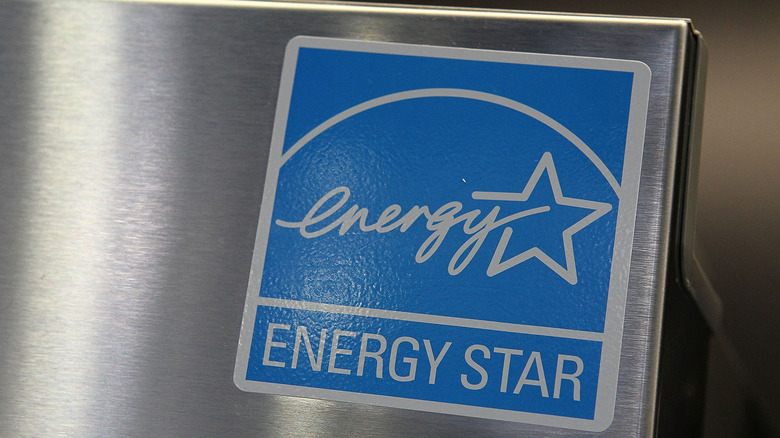
Amy Chernoff does note that some functionalities in the fridge can reduce energy use, including Samsung's Artificial Intelligence (AI) Energy Mode, which can cut power use by between 10 and 70%. She recommends prospective buyers look at the Energy Star rating and annual energy-use estimate when purchasing a smart fridge.
4. Smart fridges can help you 'solve' life's problems

So if smart fridges can be super expensive and suck energy like there's no tomorrow, why would anyone want to buy one? Well, because they have some features that make life easier. "The category is evolving from novelty-driven technology toward purposeful tools that can save time, reduce mental load and help households manage food more effectively while solving actual pain points consumers face daily," says Jason May. "Checking calendars, playing music or a podcast while you prep for the day, and accessing recipes without picking up your phone all have benefits that create efficiencies in a period of life when no one has enough time."
May offers some examples, noting that many of the fridges' most useful features are the ones that help simplify mundane kitchen tasks. "Creation of shared shopping lists, hands-free water dispensing, built-in voice and speakers and the ability to check what is at home while shopping can all provide immediate value," he says. He suggests the Scan-to-List feature, which allows folks to scan barcodes of items they are about to throw away. These products are then synced to a shared grocery list or can be uploaded to Instacart for delivery (which still might be one of the most annoying ways to get groceries). Gone are the days of lists and trying to remember what brand of chips you wanted to restock.
5. There are some limitations to its functionality and accuracy
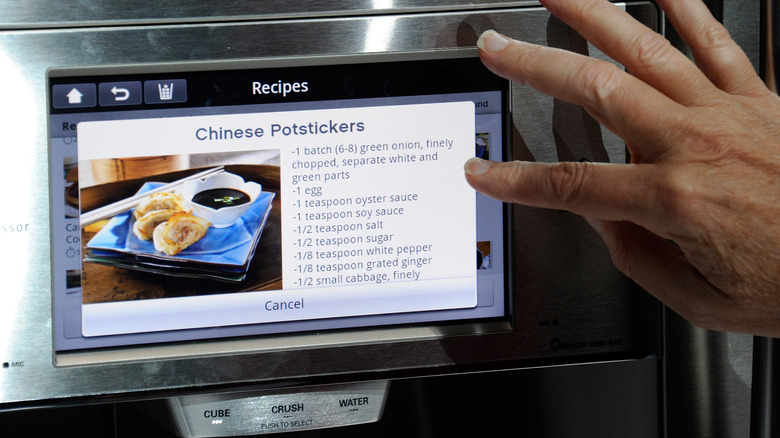
Are you smarter than a ... smart fridge? As with any new technology, there are plenty of questions around accuracy associated with smart fridges — because what good is the appliance if it can't do what you need it to?
When we asked our experts about the accuracy of smart fridges' ability to identify food items and track expiration dates, Amy Chernoff noted that the technology is always on the up-and-up. "They're getting much better, but I wouldn't expect a smart fridge to know every single thing you've put inside it," she says. "Even the more advanced systems have limitations, and expiration tracking can still require you to register items or dates yourself, so I see it as a helpful assistant rather than a perfect inventory system." She offers the example of Samsung's AI Vision, as seen in this 36-inch-wide French door refrigerator, which now allows it to utilize cloud AI to recognize more produce and packaged items rather than rely on a rudimentary list of pre-trained foods.
Jason May explains that some companies' "visual identification can be affected by lighting, packaging, placement, and items stored in non-original containers." Like Chernoff, he highlights that "expiration tracking can also depend on the quality of available product data or information entered by the user." We're always "feeding" information into our smart fridges, so we can assume that the technology will only become more accurate with time.
6. Smart fridges can store data and raise privacy concerns
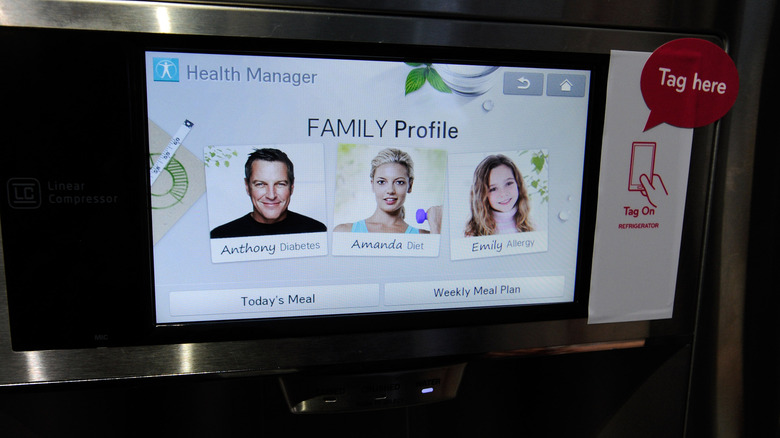
One of the major hesitations folks have about purchasing smart appliances (and smart fridges) is privacy. "Depending on the platform and features you use, a connected appliance can collect things like appliance-performance data, energy usage, device information, and even shopping or recipe preferences," says Amy Chernoff. When we queried our experts about these concerns, about both data storage and the ramifications of information storage from a consumer-protection standpoint, they offered some interesting answers.
For one, Jason May pointed out that some manufacturers are indeed working to keep consumer data private, or at least allow folks to select from a list of privacy options. He explains that GE Appliances both encrypts and anonymizes user data and offers users privacy options or U.S.-based cloud storage. FridgeFocus technology, specifically, uses on-demand viewing rather than what he calls "whole-fridge surveillance" — suggesting that folks can shut this feature, as well as the integrated microphone, off when not in use. "Transparency, security and meaningful owner control should be fundamental to every connected-appliance experience," he says.
Consumers should be aware of these potential privacy concerns when deciding if a smart fridge is right for them. "I would treat a smart refrigerator the same way you treat any other connected device in your home: look at the privacy settings and do your own product research. The smarter our appliances get, the more important basic cybersecurity becomes," says Chernoff.
7. Smart fridges can improve the accessibility of your kitchen

For folks with disabilities — whether that's visual impairment, memory or cognition deficits, or limited use of the arms — smart appliances can be particularly helpful. "This is an area where I think smart technology can be genuinely useful. Voice controls, remote operation and features like Samsung's Auto Open Door can make a refrigerator easier to use for someone with limited mobility, limited hand strength or even someone who simply has their hands full," says Amy Chernoff.
Jason May agrees. "Connected features can make common kitchen tasks easier for people with different mobility, vision or dexterity needs," he says, noting that voice controls allow people to easily set timers or build a shopping list, while AutoFill technology allows folks to fill containers without needing to hold them in place. So while you may not find the functions of a smart fridge entirely useful, that's not to say they aren't valuable for some other users.
8. Features are always evolving
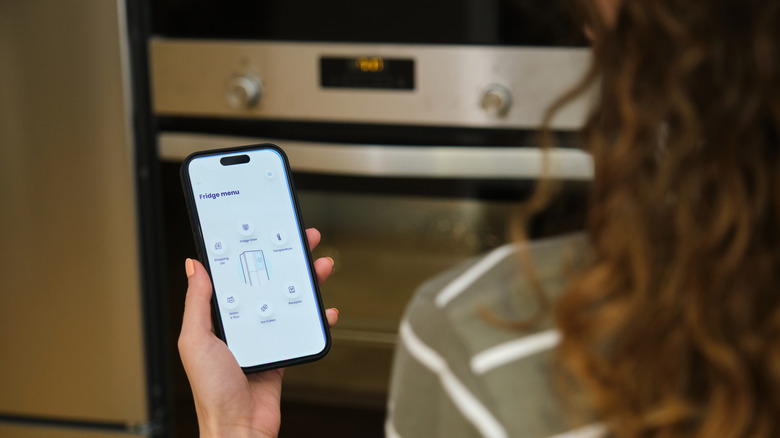
Just as not all types of stovetops and dishwashers are the same, not all smart fridges have the same functionality and features. And, the smart fridges of today will definitely look different from the ones unveiled years from now. "Basic connectivity is showing up across a wide range of brands and price points; cameras, AI food recognition and large displays are still more of a premium feature set," says Amy Chernoff. Once we get past the basics here, we are seeing more and more technologies and programs come into play and enhance the user experience.
"I think proactive diagnostics will eventually become standard. Having your refrigerator tell you, 'Something isn't operating normally, here's what to check,' before you're standing in front of a warm fridge full of groceries is a much more meaningful use of smart technology than adding another screen to the kitchen," says Chernoff. Jason May agrees that connected diagnostics and proactive maintenance are on the horizon. "Helping owners recognize temperature, filter or performance issues early can protect food, reduce disruption and make service more efficient," he says.
Marc Dal Cin, meanwhile, is looking forward to developments in adaptive temperature zoning. "I am referring to a refrigerator that recognizes where raw meat is stored and automatically adjusts the temperature to approximately 1 degree Celsius. It makes sense to me because it reduces the amount of wasted food and significantly cuts energy consumption."
9. Artificial intelligence is already being used in smart fridges

We would be remiss not to talk about one of the hot topics of the modern era and how it relates to smart fridges: AI. It appears that smart fridge companies aren't shying away from it. "AI can support visual processing, voice recognition, recipe suggestions, personalization, energy optimization, and predictive service capabilities," says Jason May. He offers the example of the GE Profile with Kitchen Assist, as found in this smart 4-door refrigerator with Kitchen Assistant and Scan-to-Shopping-List technology - it uses AI in both the camera and voice experiences. App integrations like Flavorly can help users build recipes based on the ingredients in their fridge, as well as preferences and preparation time.
May insists that the emphasis of this program is on the customer experience — especially with meal planning and hands-free functionality. Is this functionality "worth" the cost of AI — including the copious amount of energy and water it uses and the carbon emissions it releases? That is something consumers need to decide, as this is not a technological development without consequence.
10. Some functionalities can help reduce food waste

Although smart fridges can be energy hogs, they could also have some environmentally friendly advantages, per our experts. Jason May gives the example of FridgeFocus, which allows owners to check the contents of their produce drawers while shopping so that they can build a recipe around the ingredients they already have. Not only can surveying your fridge help reduce food waste, but it can also help you trim down your weekly grocery budget.
Aside from shopping, some smart fridge technologies can also reduce food waste once it gets to your home. "Remote alarms for things like doors left open or power outages can protect from valuable food loss," he says. Amy Chernoff agrees. "Some models can also optimize compressor and defrost operation, alert you when a door is left open, and help reduce food waste by keeping better track of what's in the refrigerator," she says. These technologies all might be helpful in limiting the amount of food you throw away, which may be appealing to some users.
11. Certain functionalities can improve the lifespan of your refrigerator
A fridge is not a cheap investment, so you'll want to make sure to keep yours as functional for as long as possible. Luckily, there are some features and remote diagnostics that can help you identify a problem with your smart fridge early on. "If the refrigerator can alert you to a temperature issue or flag a problem before you notice spoiled food, you have an opportunity to address it earlier rather than waiting until something completely fails," says Amy Chernoff.
The GE Profile Smart Refrigerator with Kitchen Assistant, per Jason May, will also give regular updates to keep the appliance running as best as possible. "It can support longevity by providing filter reminders, maintenance notifications, and software-based improvements. Connected diagnostics may also help identify a developing problem earlier diagnosing or [scheduling] corrective action before a failure would occur," he says. These software updates, he notes, have improved the functionality of the appliance and also offer additional (and arguably more frivolous) tools for fridge owners, like options for wallpaper personalization or food delivery.
12. The added technology can be both a perk and a disadvantage for maintenance
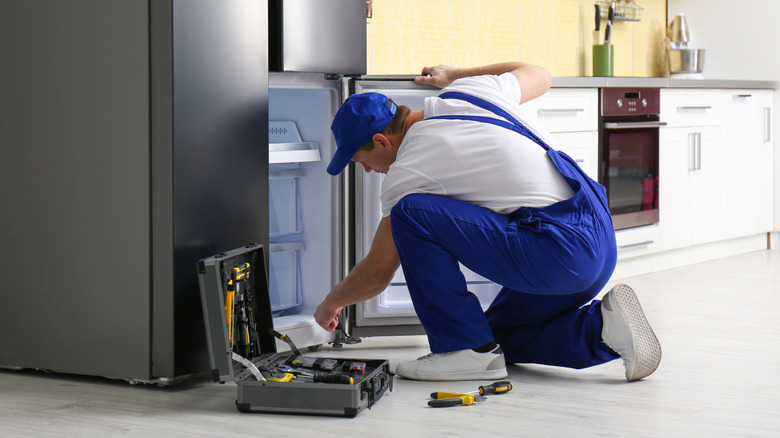
Now we have to talk about one of everyone's least favorite appliance topics: maintenance. As you might expect, smart fridges can cost more to maintain than conventional fridges. The issue with smart fridges is that they have a lot of components, which often require a specialist's experience to fix. "A typical repair on a traditional unit runs somewhere between $150 and $300, while smart [refrigerator] repairs usually involve proprietary software and specialized embedded sensors and components that a general appliance tech may be unfamiliar with," says Marc Dal Cin. This complex interface can not only be costly, but it can also draw out the time it takes to fix. "I have encountered clients who have had to wait three to four weeks to get a specific proprietary sensor that had to be ordered from the manufacturer directly, and the diagnostics alone cost $200 before a single part got ordered," he says. Maintenance questions, as well as who to call in case something breaks, are worth asking an appliance sales rep about before you invest in a smart fridge.
However, it's not all bad news. "One trade-off I think shoppers should understand: More technology can mean more expensive components, although connected diagnostics can also make certain problems much easier for a technician to pinpoint," says Amy Chernoff. Jason May agrees. "A smart refrigerator does contain additional components, including displays, sensors, cameras and connectivity hardware, but these enhancements also allow for easier diagnostics to be run on the product in the event there is an issue," he says.