

The 11 Best Questions To Ask Salespeople When Buying Kitchen Appliances

The kitchen is one of the most functional rooms in the home. It's so functional, in fact, that when a key appliance in it stops working, panic often sets in immediately. After all, you can't keep food cold without a fridge or a freezer, and you can say "bye-bye" to any hopes of cheesy baked ziti without a working oven. As such, when a big appliance breaks, you are often sent running to the store to try to find a new one as quickly as possible. But in this mad dash (or even casual search) to replace something like a fridge or a dishwasher, you may be less inclined to ask salespeople questions about the appliance you have your eyes on.
On one hand, not asking enough questions (or the right ones) means that you dump a ton of money into an appliance that you aren't 100% sold on or that isn't perfect for your space. It can also drive up the cost of installing and operating it, or cause you to come back to the store sooner than you would like to replace it.
In an effort to save you money and the headaches associated with appliance shopping, we consulted with the experts: Ilaria Castagnoli, product trainer at Smeg U.S.A.; Glenn Lewis, president of Mr. Appliance, a Neighborly company; and Dennis Godynuk, owner-operator of Comfort Appliance Repair. They shared the most important questions you need to be asking salespeople when buying appliances in order to get the right appliance for your needs — and at the right price.
1. What is the expected lifespan of this appliance?
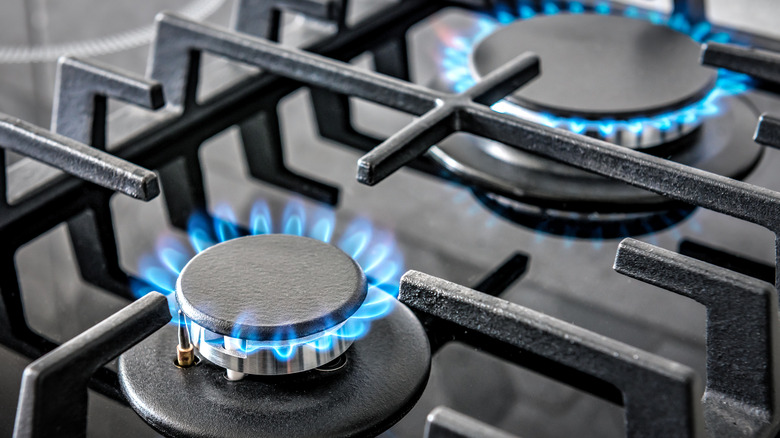
Kitchen appliances are anything but a short-term investment. As such, one of the most important things that you can do as a customer is to try to find the options that will give you the most bang for your buck. Besides considering functionality, thinking about the longevity of the appliance — and by proxy, how often it'll need to be replaced, assuming average use — is important. "It's important to understand that large appliances are an investment, and selecting the right appliance of highest quality has the ability to make or break the heart of your home," says Ilaria Castagnoli, product trainer at Smeg U.S.A.
Glenn Lewis, president of Mr. Appliance, a Neighborly company, agrees. "A higher-priced appliance may be worthwhile if it offers improved energy efficiency, longer expected lifespan, greater capacity, or features that will be used regularly. Otherwise, the extra cost may not provide meaningful value," he says. He goes on to say that some buyers may even consider long-term value and expected lifespan over promotional pricing. While only you can decide whether a cheaper or longer-lasting appliance is a better deal, asking how long the appliance usually lasts will ensure that you have all of the information you need to make a decision.
2. Which accessories are included, and what do I need to purchase myself?

When you walk into an appliance store, you may see all different types of appliances that almost look lived in. They offer cool features and functional components that you could really see yourself using in your own space — like racks, displays, and drawers. However, if you fail to ask whether these are included in the purchase price, you could be setting yourself up for disaster. "It's important to ask whether every accessory on display is included with the appliance, or whether it needs to be purchased separately. Otherwise, that could lead to an unpleasant surprise down the road," says Ilaria Castagnoli. Water filters for fridges are one example that may come to mind, but these accessories can also include fundamental components of the appliance, including trays, organizers, racks, and more.
These accessories may increase the purchase price, so you may also want to ask whether you can opt out of all these extras and find them elsewhere. This can help you cut down on the purchase price of the appliance, and gives you a greater choice of what to accessorize your appliance with.
3. What are the most common repairs seen for this model?
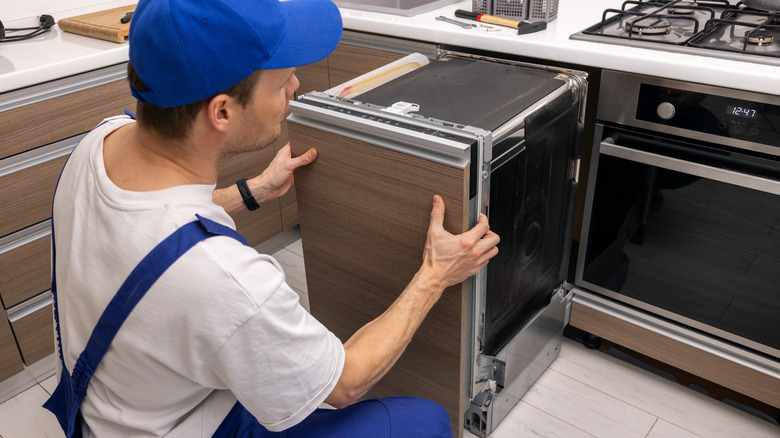
The last thing that you are probably thinking about when you are making the trip to an appliance store to pick out a new dishwasher or fridge is how soon you'll need to make that first repair. However, like all gadgets and technology, not everything lasts forever, and asking questions about it beforehand will let you know what to expect. "Kitchen appliances are a major investment so it's only right to ask about common repairs or failure points before taking one home," says Dennis Godynuk, owner of Comfort Appliance Repair. He also notes that salespeople may try to dismiss these concerns among customers — presumably to save a sale. "To get some answers, point out common problems with the kitchen appliance you're going to buy, along with common issues with certain brands," Godynuk suggests. This may make your salesperson more honest with their answers.
Luckily, as Ilaria Castagnoli shares, consumers have more power than ever to look up common repairs and issues with appliances, thanks to online reviews. Doing this research ahead of time will save you time in-store, and also give you a better idea of the positives and drawbacks of certain brands and models. "In addition to doing your own research ahead of time, asking the experts in the store is a great opportunity to tap into their insights on whether any brands or specific products have a higher than average return or repair rate, whether there are any particular components or features that seem to have the most issues arise, and whether any of the units are more challenging to install than others," she says.
4. How energy-efficient is the appliance?
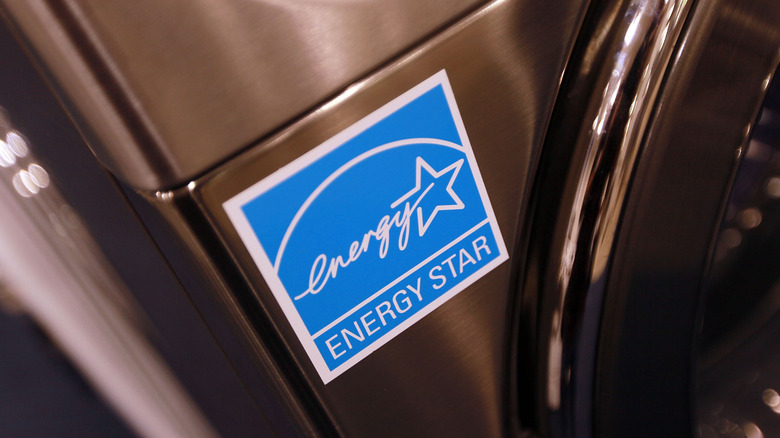
We wish we could tell you that the cost of owning an appliance ends at the initial purchase and installation. The reality, rather, is that you'll end up spending a fair amount of cash on running your appliance, especially if you opt for something that's not eco-friendly or does not have energy-saving capabilities. As such, you should inquire with a salesperson about what energy-saving features your appliance can offer, as well as what the cost of actually running it looks like, so you can make an informed decision on which one to buy. "Ask about annual energy consumption, expected utility costs, and whether the appliance is designed for improved efficiency. Older and less-efficient appliances can significantly increase utility bills over time," says Glenn Lewis.
Luckily, there are some easy ways to tell if your appliance is eco-friendly and can potentially save you money on your energy bills, per Ilaria Castagnoli. "The best way to identify an efficient appliance is to check if it is Energy Star rated, which is a certification that the appliance meets strict energy efficiency criteria," she says. "You can also check for features that help it operate more efficiently, such as whether a washing machine or dishwasher offers an 'eco' or 'energy saver' cycle that utilizes less water and energy." If you're in the market for a stove, you may also want to consider the fundamental differences between different types of cooktops, like gas and induction, as their long-term operating costs and efficiencies vary.
5. What kind of ventilation is required?
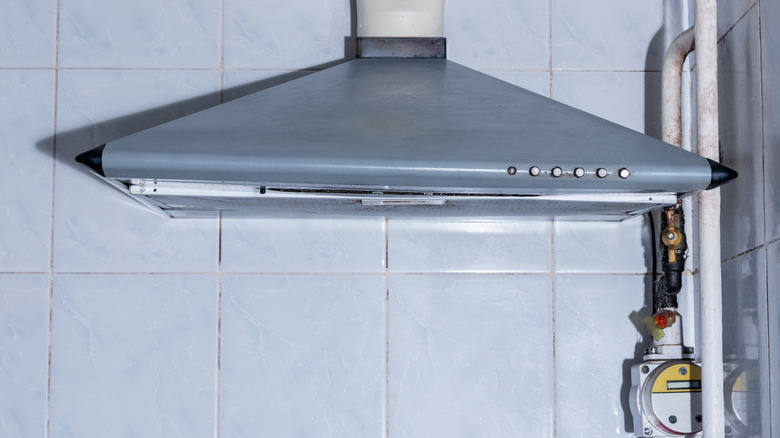
The needs of every kitchen appliance vary, especially when it comes to stoves. There are many different types of cooktops, and not all of them work the same, nor do they have the same ventilation requirements. As such, considering the ventilation requirements of your potential new appliance and asking the appropriate questions can prevent hidden fees from cropping up later on, or perhaps even prevent your appliance from becoming unusable.
When purchasing a range, for example, you should always ask about ventilation requirements for both stoves and the microwave, which may be positioned above them. One question Ilaria Castagnoli recommends asking yourself when shopping is "Do I have a way to vent my cooking range outside, or do I need to consider an over-the-range microwave that can also provide ventilation for my cooking range?" This will help you decide which style of microwave and range would be best for your space. Dennis Godynuk and Glenn Lewis also recommend asking about ventilation requirements for microwaves specifically.
6. What are the actual dimensions of this appliance?

The last thing that you want to do is to get your newfangled appliance dropped off, only to realize that it doesn't fit in the space that it's intended to. While you might be able to move a few things around to help it fit, it may require you to cut into your cabinet space or change the entire layout of your kitchen to accommodate it. Ilaria Castagnoli recommends asking yourself about the size of the appliance that'll fit in your home before you even head to the appliance store. That way, you won't fall in love with a massive, sparkly new smart oven, only to realize it won't fit.
This size requirement applies to almost all kitchen appliances. "Before buying a refrigerator, ask about the measurements (width, depth, height, door swing), water/ice hookup, and the extra features," says Dennis Godynuk. Glenn Lewis says that dimensions are one installation-centered question that you should ask when shopping. "[Shoppers] should also confirm installation dimensions and whether modifications will be needed before delivery," he says.
7. What kinds of hookups are required?
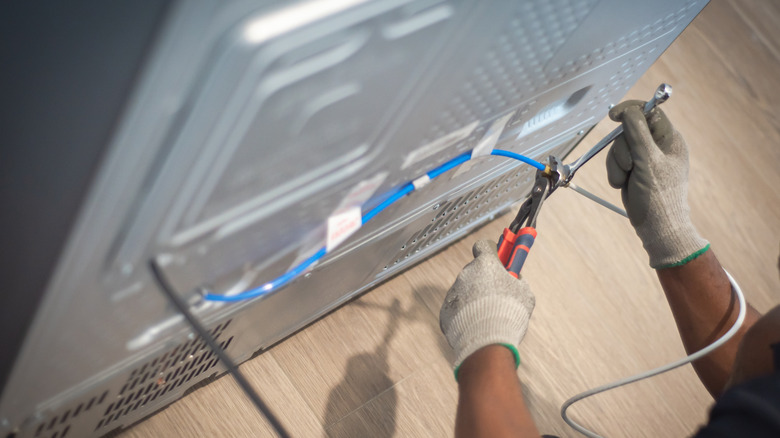
We hate to tell you this, but you can't have a gas stove in your kitchen without a gas hookup. Knowing what kinds of hookups your home has and doesn't have is important for buying the right appliance — and perhaps more importantly, circumventing expensive installs and added post-purchase expenses.
Besides gas lines and electric hookups, Ilaria Castagnoli also recommends appliance shoppers check if their home has a water line hookup if they're shopping for a refrigerator with a water or ice dispenser. Dennis Godynuk suggests asking about custom fittings as well. Outlet sizes and types are also a worthwhile consideration for appliance shoppers, as you may not want to change the entire layout of your kitchen just so you can plug in your fridge at the one spot where it fits and can reach the outlet.
8. Are any warranties included with this appliance?
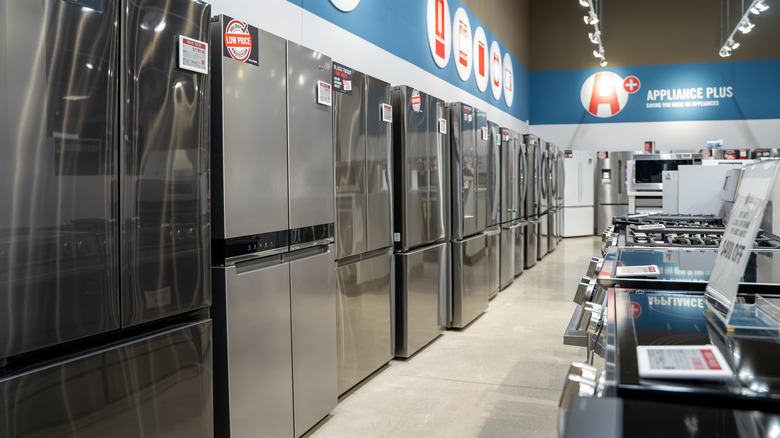
The last thing that you want to do is spend a ton of money on a kitchen appliance only to get it installed and realize that something is indeed broken. Luckily, many appliances come with warranty options that can give you peace of mind on an appliance purchase — you just have to ask about them. Glenn Lewis and Dennis Godynuk recommend asking about warranties, specifically when deciding whether to purchase an appliance.
Besides asking if an appliance comes with a warranty, you should also ask if there are any stipulations that may limit what's covered. For example, some warranties may not cover dings, dents, and scratches, and they may be void if you fail to perform regular maintenance on the appliance. You may also want to consider who is installing or repairing your appliance, as getting it done by a third party may also void your warranty. Asking about these terms and conditions before buying an appliance with a warranty (or when you're considering getting additional coverage) will save you headaches in the long run.
9. What does the installation fee include?

Congratulations! It's a healthy baby ... French door refrigerator. Once you are the proud owner of your new appliance, it's time to get it installed. Questions around installation are perhaps some of the most important ones to ask salespeople when buying an appliance, as it will give you a clear idea of when your new appliance will arrive and if you need to shell out extra cash for things not included in the fine print.
"It's important to ask about any delivery and installation fees, whether the installation and delivery are scheduled to take place at the same time, how long it will take for the appliance to be delivered, and whether it is in stock. It's also important to confirm whether they will haul away the old appliance and if there's a cost to do so," says Ilaria Castagnoli. Glenn Lewis adds that installation costs and the removal and disposal of the old appliance are two of the most overlooked things for appliance shoppers — so make sure you read that fine print closely and ask any installation-related questions you may have before buying your appliance.
10. What cleaning or maintenance tasks are required?
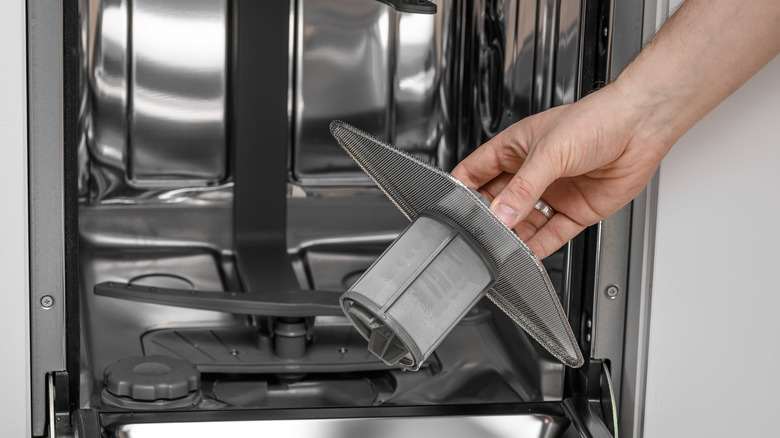
Kitchen appliances are big investments. As such, you'll want to keep yours in tip-top shape through regular maintenance and upkeep. Ilaria Castagnoli suggests asking about these kinds of things when you are shopping. "When customers get excited about the new features and look of an appliance, the cleaning and maintenance required to keep the unit performing at its peak may become an afterthought. However, these are important considerations to ensure that they don't purchase a model that becomes burdensome to clean and maintain," she says.
She notes that this is especially important for something like a dishwasher, which has many moving parts. "Ask about cleaning performance, water efficiency, maintenance requirements, expected lifespan, and repair history. Since dishwashers combine water, heat, electronics, and sensors, understanding reliability and maintenance needs is especially important," she says. While there are some dishwasher cleaning tips that will help prolong your machine's lifespan (like descaling with vinegar), you should also read closely through the warranty, as some cleaning processes can actually void the warranty. Knowing how to (and how not to) clean your appliance will ensure you get the most out of it — and salespeople will usually have all of the know-how that you need.
11. Are there any discounts available?

If you've strolled through the aisles at a specialty appliance store or even Home Depot, you've probably realized that certain times of year bring better sales. Asking about these potential promotions can get you a better deal on your purchase. "The best time to shop for appliances is typically ahead of major holidays when many retailers are offering special savings, as well as toward the end of the year when retailers are looking to discount and sell older stock or models that may be retiring," says Ilaria Castagnoli. She also shares that service discounts or bundle offers may also be a good thing to ask about.
Dennis Godynuk, meanwhile, suggests comparing prices before you visit a store. "Before heading to the stores, search online about appliance sales in the said stores and find out competitor prices," he says. Holiday weekends, such as the weekend after Thanksgiving when Black Friday sales are available, are good times to shop, he explains, as retailers want to capitalize on potential customers' free time. Other good times to buy kitchen appliances include Labor Day weekend.
Godynuk also notes that it doesn't hurt to be nice if you want to score some extra deals. "Many discounts are heavily advertised and easily given, but you may score some by being informed and polite to salespeople." You may be able to politely negotiate a price — but only if you are kind and show that you are genuinely serious about the purchase.