

Get 10x The Flavor From Pork Chops With These 13 Tips
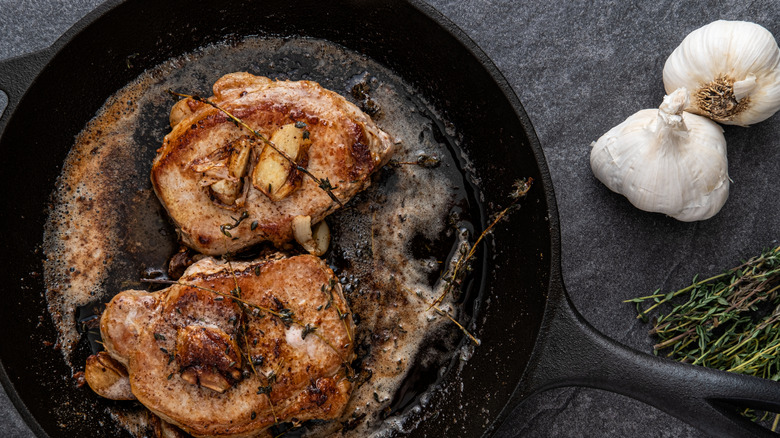
Pork chops are a protein that you may not think much about (and if you do think about them, it may not be in high regard). They catch a lot of flak from meat lovers who assume they are one of the least juicy cuts and easiest to overcook. But perhaps the most dangerous and untrue assumption about pork chops is that they are inherently flavorless.
We argue that this meat has earned this reputation because people don't know how to prepare it well. It's not a collagen-rich cut of beef you can slow-cook for hours, nor is it like chicken thighs, which seem to pair well with absolutely every ingredient. Pork chops require a careful and well-trained hand to bring out their potential. In order to get some insight about how to best prepare this misunderstood cut of meat for max flavor, we spoke to the experts: Masa Ose, executive chef of Old Brea Chop House and Chef Cut Meat House in Brea, California; Jorge Thomas, founder of Swaledale Butchers; and Harrison Porter, executive chef and owner of BearLeek in Denver, Colorado.
1. Source quality pork for the best flavor

"Quality you can taste" is an expression that people should use more often when talking about meat. Although many of us don't think twice about the meat we add to our shopping cart, our experts affirm that the quality of something like pork chops affects its overall flavor. "The quality of the meat should always be foremost, and simple cooking methods aligned with complex accompaniments are the best way to go," says Executive Chef Harrison Porter. Executive Chef Masa Ose echoes this. "[I] use premium Iberico, Kurobuta, and Duroc pork, so I prefer preserving the flavor of the meat instead of covering it up with a heavy marinade," he says. Let the pork speak for itself, using other ingredients and techniques as the megaphone.
The best way to get flavorful meat is, first, to know what you're looking for. Avoid meat-aisle mistakes like choosing cuts that looks discolored or are nearing the sell-by date. You can also ask your butcher for their recommendation for what brand or type of pork chop (yes, there are different types) to purchase based on the recipe you plan to make.
2. Don't be afraid to brine your chops before cooking

Pork is a dense, finicky cut of meat, so if you want flavor, it's best to brine it ahead of time. "Brining matters because pork is lean and dries out fast, and the margin for error is smaller than most people think. Brining gets seasoning into the meat properly and gives you a bit more room when you're cooking," says Jorge Thomas of Swaledale Butchers.
Two common types of brining are dry and wet. Dry-brining means salting the meat ahead of time and letting it sit overnight, which all our experts recommend for pork chops, while wet-brining (submerging the meat in salted water) works better for a whole leg or loin, which needs deeper penetration. "[Dry-brining] produces a much better crust during searing and allows the natural flavor of quality pork to remain the star of the dish," says Masa Ose.
The bad news is that the key phrase here is "ahead of time," as it means you'll have to think in advance for a great chop. "If you really want the salt to penetrate the meat, dry brine the pork chop about 12 hours in advance," says Ose. He does note, though, that you can take a shortcut here. "For most home cooks, simply seasoning the chop while it comes to room temperature for about 30 minutes before cooking will still produce great results."
3. Choose the right cooking method

Pork chops don't have much fat and are easy to overcook, and doing so will not only make them chewy but also zap out all that flavor. So choose a cooking method that preserves the chop's flavor while still letting you customize it to your liking.
Jorge Thomas, for one, is a big fan of pan-roasting pork chops. "Pan-roasted is probably my [favorite] method. [Color] from the direct heat, oven to finish if it's a thick chop. You need browning at some point; there's just no way around it," he says. You may also want to try breading and frying the pork chops, which is ideal for thin cuts, as it won't dry them out and will give you a pleasant contrast of crunch and juiciness.
Thomas cautions against cooking methods that don't help develop any sort of color (like sous vide). "And cooking thick chops all the way through on high heat, because by the time the [center's] done the outside has gone too far and you can't undo that," he says. Pork chops don't take well to low-and-slow, either. "Don't treat pork chops like pork shoulder. Avoid low-and-slow cooking or boiling, which are better suited to tougher cuts," says Masa Ose.
4. Avoid overcooking your pork chops

As we've mentioned, pork chops are incredibly easy to overcook, which removes all of the flavorful juices. So to keep your chops flavorful, pay attention to both how and how long you cook them. Otherwise, you could be left with a porky hockey puck. The easiest way to avoid overcooking is to watch the internal temperature and doneness. "Pork chops should reach an internal temperature of 145 [degrees Fahrenheit], then rest before serving," says Masa Ose. You only need to rest them for a few minutes after cooking so the juices can redistribute and keep the meat well-flavored.
Aside from not leaving your pork chops unattended on the stovetop, Ose says another way to prevent overcooked pork is to brine it. Brining meat lets moisture penetrate deeper into the chop, rather than staying on the surface where it can quickly dry out. Additionally, bring pork to room temperature before cooking, as this helps it cook more evenly and prevents you from drying out an otherwise flavorful cut of meat.
5. Utilize unconventional ingredients to enhance umami

When you think of pork chops, you probably envision conventional pairings like apples and savory herbs. However, one of the easiest ways to add flavor to your pork is to reach for a different, historically underappreciated flavor (when it comes to pork, that is): umami. On its own, pork chops don't have much of this savory essence — especially compared to something like steak — so supplementing it with umami ingredients is the way to go.
"Anchovies are underrated, which I know sounds wrong. They dissolve completely into the fat, no fishiness, just depth," says Jorge Thomas. If the thought of opening up a tin of anchovies and coating your meat in a slurry with them doesn't appeal to you, fear not. You can also use foods with anchovies in them — like fish sauce — to create a flavorful sauce or to cook your pork chops with. Thomas also suggests miso paste (a fermented mash of soybeans and salt); try adding this to the butter you baste the pork with to make it extra flavorful. You can even try rubbing your raw chops in monosodium glutamate (MSG) before pan-searing them, basting them with butter, and enjoying.
6. Pair your chops with complementary spices

If you want to elevate your pork chops, take a trip to the spice cabinet, as you'll find plenty of seasonings worth experimenting with. "Sage is the obvious herb with pork, and it's earned that," says Jorge Thomas. It has a subtle eucalyptus and piney undertone, which pairs well not only with pork but also with other ingredients pork is often served with — like apples, garlic, onions, and shallots. Add sage to a savory stuffing or baste your pork chops in a sage butter sauce to harness the herb's flavor.
Masa Ose has some other suggestions. "Paprika, black pepper, garlic, onion powder, fennel pollen, rosemary, thyme, and sage are all excellent pairings. They complement pork without overpowering its natural flavor," he says. He does caution against adding too much rosemary to your pork chops, as it can dominate the flavor profile. Like sage, Thomas suggests adding bay leaves and thyme to your butter-basting sauce, along with a few cloves of garlic.
7. Integrate a fruit element to enhance the pork's natural flavor

Who would we be not to mention fruit on this list of ways to elevate the flavor of pork chops? Pork and apples are a classic pairing that go way back, and although it's overplayed, it's a match made in flavor heaven. The fruit's sweetness and honey undertones pair well with the meat, and as Jorge Thomas notes, the fruit's acidity also helps balance the dish. Plenty of ways make this pairing work, aside from the obvious suggestion of serving your chops with a side of applesauce. You can add apples to the stuffing for your chops, use apple butter in a sauce or to flavor the chops, or bake the chops with chopped apples.
You aren't just limited to apples, though. "Quince is better if you can find it. Plum and cherry work in a sauce, particularly with richer cuts," says Thomas. Meanwhile, our aromatic smothered pork chop recipe uses a completely different medley of fruits, including Turkish figs and orange, for a complex, lighter take on a classically heavy, smothered chop. Thomas also cautions that the fruit needs to be serving a purpose — not just there for the sake of it being there. "The fruit should be earning its place, not just making things sweet," he says.
8. Opt for bone-in chops rather than boneless

You have probably heard the rumor out there that bone-in cuts are more flavorful than boneless ones. This isn't entirely true, since the bone itself doesn't add flavor; it just insulates and enhances the sensory experience of eating the meat. But for all intents and purposes, we're going to say here that bone-in chops are better for flavor than boneless ones. The bones reduce moisture loss, help prevent overcooking, and yield a chop we perceive as more flavorful — even if the bone itself isn't the source of the flavor.
Masa Ose is a big fan of bone-in chops. "The bone contributes additional flavor during cooking, and personally, my favorite bites are always the meat closest to the bone," he says. Jorge Thomas agrees. "The bone slows the heat down around it, and the meat stays juicier. It tastes better too," he says, though he notes that boneless may be a more convenient option. "Boneless is easier to eat at the table, and that's genuinely the only thing it has going for it." If you are stuffing your chops or planning on slicing them for something like stir-fry, boneless is the better option.
9. Try stuffing your chops

What a perfect segue into discussing one of the tastiest ways to elevate pork chops: stuffing them. If you are a fan of stuffed chicken breast, or the kind of person who goes for the stuffing first on the Thanksgiving buffet spread, you're going to want to try making stuffed pork chops at home. As the meat cooks, it releases juices into the stuffing, making each bite much more flavorful.
Masa Ose recommends stuffing your chops with ingredients like sausage, fruit, and cheeses. "I'd avoid overly salty ingredients, especially if the pork has already been brined, because it's easy to oversalt the finished dish," he says. The stuffing can also be an excellent conduit for spice; sage, thyme, and rosemary can add a savory yet restrained flavor. Jorge Thomas, on the other hand, cautions against using cheese in the stuffing. "I'd avoid anything very wet because it steams inside the chop rather than roasting, and I'd mostly avoid cheese because it leaks out before the meat's done and burns in the pan," he says.
Thomas is a fan of stuffing chops with black pudding — an ingredient folks in the U.S. may not be familiar with. It's made by cooking animal blood with a binder until it congeals, giving you a sausage-like texture. "The fat and seasoning are already in there. Herb butter with sage and garlic works well," he says.
10. Use flavorful fat

Fat is an excellent conduit for flavor — anyone who has ever eaten unsalted and unbuttered popcorn before diving into a bag of copiously buttered kernels would be able to tell you that. As such, pairing pork chops with a complementary fat can do wonders for their flavor. "I start with a neutral oil and add butter once the chop is in [the pan]. Lard is actually very good with pork, better than most people remember, but most people don't have it anymore. Goose fat if you do," says Jorge Thomas.
If you are searing your chop over high heat, use a neutral fat that won't smoke or impart bitter notes. "If you start with butter, it will burn and create bitter flavors before the chop has properly seared," says Masa Ose.
You can also make use of pork chops' natural fat cap by rendering it in the pan. "If the chop has a fat cap, stand it on its edge first and render that fat down before you lay it flat," says Thomas. As a bonus, you can use the rendered fat to whip up a tasty pan sauce to serve with your pork chops.
11. Serve your pork chops with a tasty sauce

Man, we are on fire with segues today! As you might already have realized, some of the best ways to prepare pork chops are to pair them with flavorful things, rather than trying to switch up the flavor of the chops themselves. Enter: sauces. "My favorite sauces with pork always lean toward high acidity to really brighten up the richness of pork. A brown butter with lots of lemon and capers, an agrodolce, a beurre blanc, or a mostarda," says Harrison Porter. "These components really bring out the cloying sweetness of pork chops while cutting through the fat."
Jorge Thomas, meanwhile, recommends playing on the dynamic duo of apples and pork chops — but this time, with apple cider. "For a sauce, cider and wholegrain mustard, finished with butter off the heat. Deglaze, reduce, done. It takes about five minutes, and with good pork you don't really need anything more ambitious than that," he says. He mentions that deglazing the pan — which can be done with cider or wine — will release all those flavor compounds. "That's the difference between a chop and an actual dish," he says.
Masa Ose recommends using the sauce as a conduit for fruity flavors. "After cooking, remove excess fat, then add seasonal fruit or berries, butter, and a little brown sugar or maple syrup. It's simple, fast, and creates a beautiful balance of richness and acidity," he says.
12. Incorporate smoke and fire into your cooking

Although pork chops may not be ideal for grilling because they can dry out quickly, you shouldn't be afraid of utilizing smoke and flame to add depth to them. "A hard sear over a grill or in a cast iron pan creates incredible flavor. Personally, I love the combination of smoke and pork, so cooking over wood fire or incorporating light smoking adds another layer of complexity," says Masa Ose. The key here, of course, is not to overdo it. You want to use the grill to sear the pork, not let it sit idly so all the moisture zaps out.
Jorge Thomas, meanwhile, is in the smoking camp. "Pork chops can be smoked at home, and they take to it well," he says, recommending folks use cherry or applewood for pork chops and keep an eye on the heat. "The main thing people get wrong is running it too hot. You're smoking, not grilling, and those aren't the same thing. Brine first, go slowly, rest it."
The smoky profile of the pork goes especially well with sweet sauces — think ones spiked with maple syrup or brown sugar — as well as those that utilize mustard to offer a spicy bite. "Adding mustard gives a bitter and sharp contrast to the richness of a pork chop," says Harrison Porter.
13. Try searing your pork chops for better flavor

Pork chops sear well, developing a flavorful crust and locking in interior moisture. Our experts offered numerous tips for developing a great crust on pork chops, and the good news is that all of them are relatively easy to implement at home. Masa Ose recommends removing any moisture from the exterior of the chop first, then preparing your pan. "Heat your grill or cast-iron skillet until it's smoking hot before adding the chop, then reduce the heat slightly to prevent burning," he says.
He explains that it's important not to flip the chop too soon. Jorge Thomas agrees and offers an easy tip to help you tell when your chop is ready to flip. "If you're having to force it off the pan, it's not ready to turn. The crust will form when it's ready," he says. Ose says it usually takes about three to five minutes to develop a deep golden-brown crust, though this depends on how hot you're cooking it and how thick the chop is. As long as you're patient and follow their tips, you'll get tasty, juicy, flavorful chops.