

Here's When It's Best To Use Bone-In Pork Chops
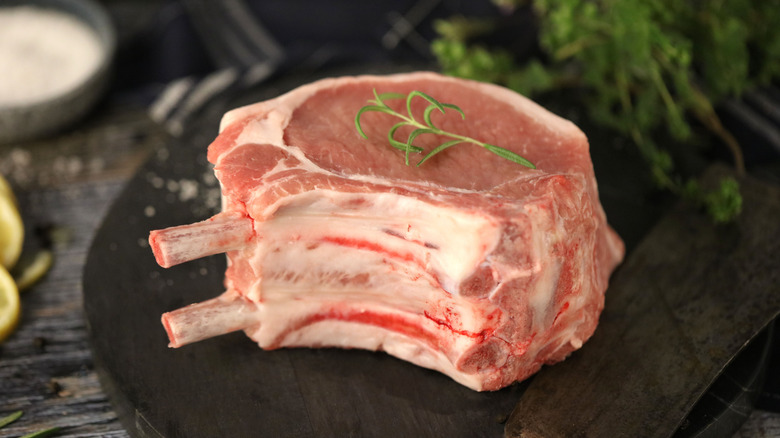
Making a delicious pork chop recipe starts at the butcher's counter — and deciding between bone-in and boneless chops matters more than you might think. When pork chops are the headliner of your meal, choosing a bone-in cut is your best bet. They're usually richer, juicier, and more flavorful than boneless chops, making them the better call to create the most flavorful chop.
Plenty of people swear that the bones are packed with flavor — it's why folks toss them into sauces and gravies — but contrary to popular belief, the bones themselves don't impart flavor. The bone can slow down cooking, which staves off drying to help produce a better chop, but it's the fat that connects the meat and bone which is famously tasty and creates the one-of-a-kind pork flavor that can't be mistaken for any other meat. Remove the bone and its attendant fat, and you're missing out on all those qualities. In addition to flavor, bone-in pork chops look more substantial than the thinner boneless variety, creating a more impressive presentation as an entree.
While a bone-in pork chop turns out plump and juicy after just a few minutes grilled or sauteed on each side, its natural liquid releasing when you slice it, boneless chops tend to curl up at the edges and dry out faster. Now, this doesn't mean that you nix boneless chops all together. They're fine when the sliced and tucked into something like a veggie-packed stir-fry or sandwich. Boneless pork chop's less intense flavor and drier texture won't matter as much in dishes like once you've added condiments and sauces. But when your pork chops are the main, bone-in is the better, bolder choice.
A few foolproof tips for top bone-in pork chops
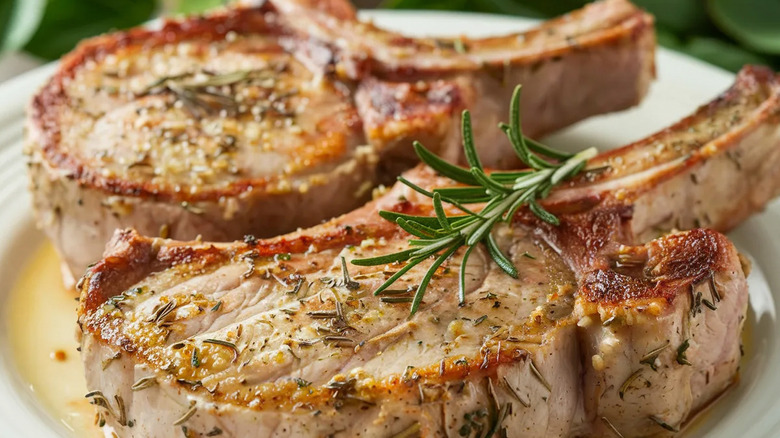
Even among the bone-in options, not all pork chops are created equal. You should always familiarize yourself with the pork chop you have before you even turn on the oven. A nicely marbled blade chop, for example, works best low and slow so the fat has time to render and become juicy, while a comparatively leaner ribeye chop can't take heat for that long or it will start drying out. Fattier chops can be more forgiving than leaner selections.
Most folks are going to want to cook their pork chops to the safe internal temperature of 145 degrees Fahrenheit. Once you're a pork chop pro, you may be able to do so with your eyes closed. Until then, you can just take the few seconds required to properly use a meat thermometer. You want to make sure to probe a nice, thick section of the meat, avoiding the bone, which can cause an inaccurate read. Even hearty cuts only take a few minutes on each side in your cast-iron skillet, the best way to cook bone-in pork chops, before your trusty thermometer reaches the magic number.