

The Telltale Sign You Should Skip A Grocery Store's Rotisserie Chicken
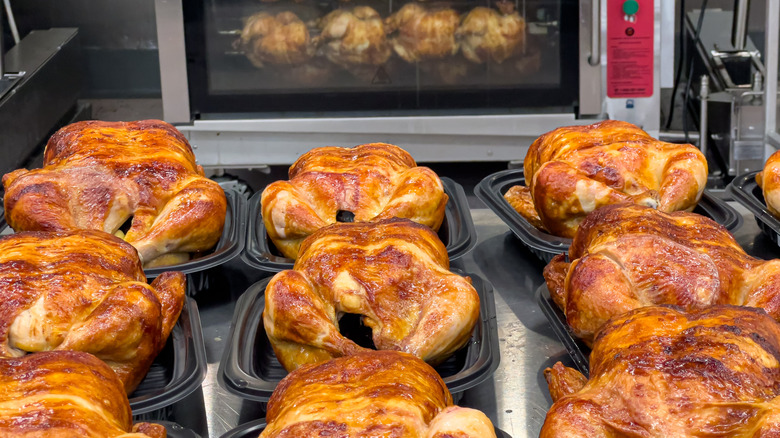
Rotisserie chicken can be one of the most versatile foods for meal prepping. But before you get excited about buying a protein-packed meal that can last you for days from the grocery store, check if it's truly worth the purchase. Seeing its skin appear unusual is an automatic red flag, and it can mean two things: It's been sitting behind the deli counter past its maximum freshness or it hasn't been cooked properly.
While changes in color can be a common occurrence even for fresh batches, pale, darkened, and discolored chicken should alarm you — if its suspiciously slimy appearance hasn't clued you in yet. Pale chicken skin could still be safe to eat, but don't expect the quality to be exceptional. If there are other options by the counter, it's best to continue looking around. What you should be really wary of are green and grayish spots, indicating that it's now riddled with harmful bacteria, so for your own sake, steer clear. Otherwise, you might contract one of the most common types of food poisoning, salmonella. So, before just picking up a random bag of rotisserie, allot a few moments to inspect its freshness, which can potentially save you from future food-related disasters. Or better yet, know what a fresh one looks like, too.
What fresh rotisserie should look like — and signs that shouldn't scare you off
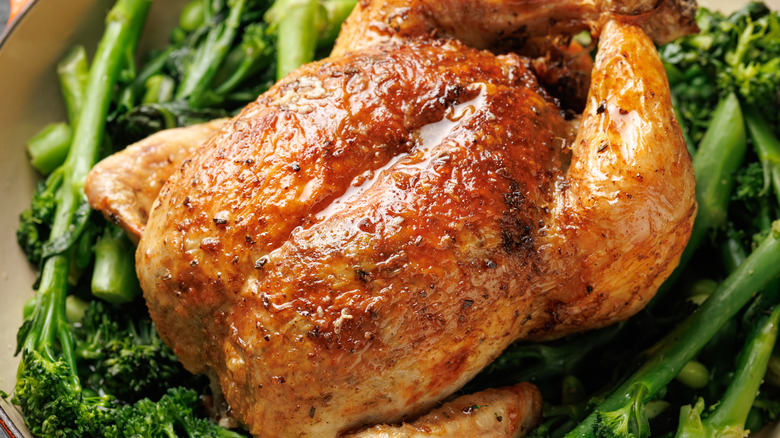
Now that you already know what to avoid, you should know what fresh rotisserie also looks like. Instead of pale or grayish skin, a lovely golden brown hue is a green light. It can tell you a lot of things about the poultry before even taking a bite, as it's a reflection of its juiciness and even cooking. It shows that the chicken had enough time to crisp on all sides, which is an indication that it has been cooked evenly and not burnt, maintaining its delectable succulence. The bag of rotisserie should also emit an aroma that delights your senses and not make you scrunch up your nose.
Upon purchasing and enjoying the chicken, there are other suspicious signs that might make you want to return the bird, but it can still be safe to consume. Seeing pink meat upon closer look doesn't always mean that it's raw. It can be a result of chemical changes from roasting or it can be from young livestock. That green color on your rotisserie chicken doesn't actually mean it's gone bad, either, as it's an indication of green muscle disease. More importantly, it's still safe to consume and it shouldn't affect how much you usually enjoy the chicken. Of course, even if you purchase it fresh, storing it properly after getting home is just as important, which means transferring it to an airtight container to delay bacterial growth, allowing you to enjoy it for longer.