

6 Benefits (And 7 Disadvantages) Of Using A Gas Stove
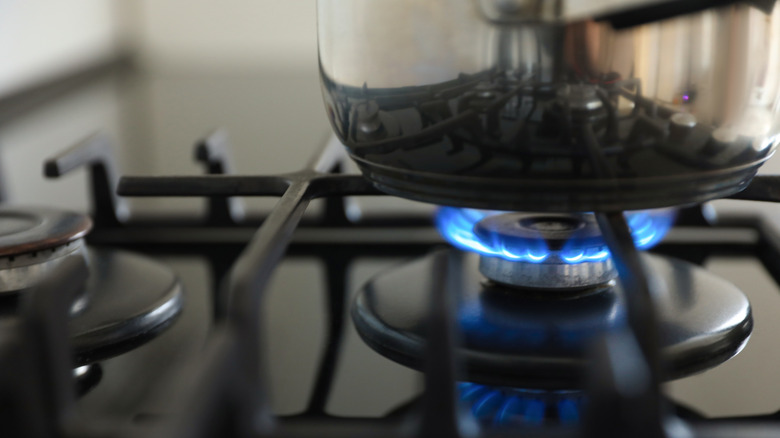
Choosing which type of cooktop you want for your space — whether you're shopping for a replacement for your current range or making a list of likes and dislikes in homes you're looking at purchasing – is not something to take lightly. Part of this is functional, as you want to invest in a cooktop that's right for your needs, experience, and space (not to mention, one that you genuinely enjoy using), and part of it is financial, as choosing the wrong cooktop can be a costly mistake both in the short- and long-term.
Gas may appear to come with more caveats and tradeoffs than other stoves. And as a shopper, you should know everything you can about this popular type of cooktop before you take the plunge and buy one for yourself. As such, we wanted to get insight from an expert as to the biggest advantages and disadvantages of gas stoves. We reached out to Brit Angelesco, executive vice president of ZLINE. She shared both the great things and the not-so-great things about gas stoves so that you can be a more informed shopper (or Zillow scroller).
Benefit: Gas stoves are very quick to heat
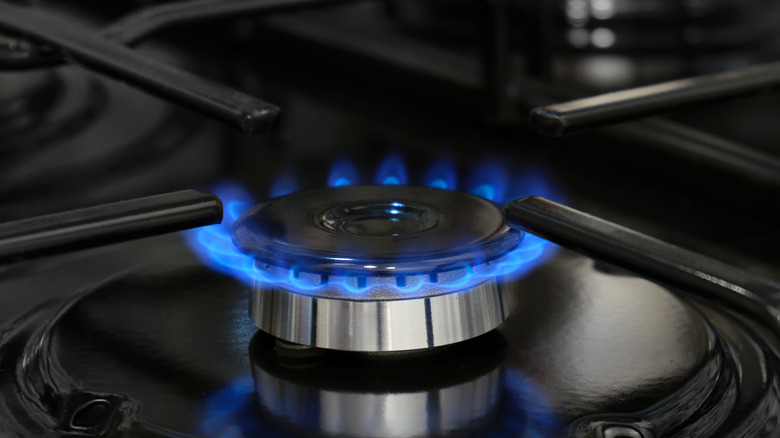
There's a reason why many professional kitchens are outfitted with professional-grade gas ranges rather than induction or electric burners: efficiency. With gas, cooks can see the flame and adjust the heat instantly, rather than waiting for a burner to heat up and transfer that heat to the pan. "Gas gives cooks a visible flame and more immediate control over where heat is applied. Many people like that because they can see the intensity of the burner and make quick adjustments," says Brit Angelesco, ZLINE's executive vice president.
Sure, we would all like stoves that heat quickly, but this advantage of using a gas stove may be more relevant to some home cooks than others. "Gas is a great fit for cooks who like visual flame control, quick adjustments, and a more traditional cooking experience," says Angelesco. "It can be especially appealing for people who cook often, use a variety of pan techniques, or prefer the familiarity of cooking over a visible flame."
Disadvantage: Gas stoves are not as conventionally efficient as other stovetops
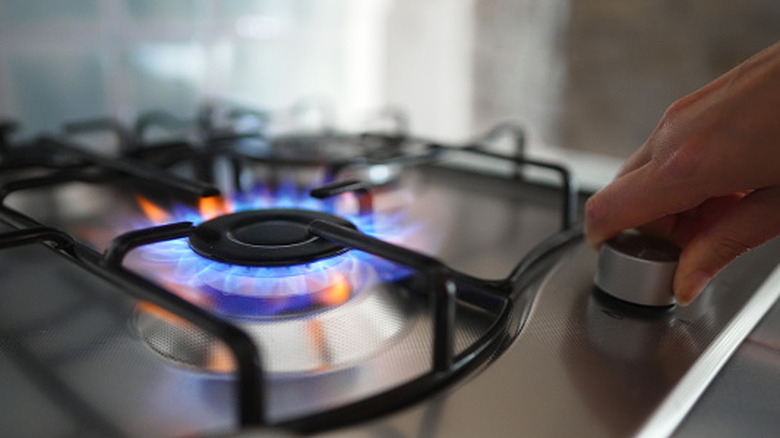
When many people talk about gas stovetops, they often talk about "efficiency." And by definition, gas stoves are efficient: They heat up quickly, the flame can easily be dialed back, and home cooks can get the results that they want from the open flame. Although gas stoves may be efficient in these ways, they may not be in others.
Take heat loss, for example. "From an energy-efficiency standpoint, though, induction is generally more efficient because it heats the cookware directly, while gas loses more heat into the surrounding air," says Brit Angelesco. This means that you, as a homeowner, are spending a lot on gas only to lose much of that heat to the outside air rather than being able to harness it to cook with. Not only is this wasted gas, but it's also wasted money, which may not be ideal for a consumer looking to cut back on their gas bill. This also has an unpleasant side effect: a warmer kitchen (which can be remedied with some of these tips). If you are after a cooktop that only heats what you put on it, you may want to look at something other than gas.
Benefit: Most cookware is safe to use on a gas stovetop
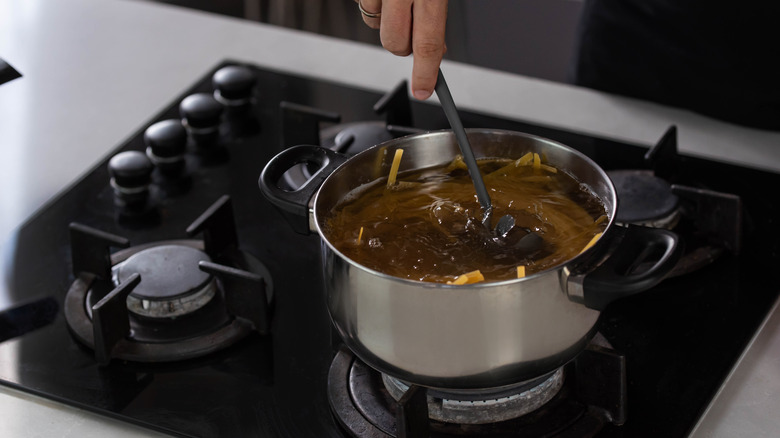
There are many types of cookware that you can purchase, including stainless steel, carbon steel, cast iron, and non-stick. The good news is that much of the cookware you already have can be used on a gas stove — provided you are careful with it.
"Most common cookware can be used safely on a gas stove, including stainless steel, cast iron, enameled cast iron, carbon steel, copper, and aluminum, as long as the cookware is designed for stovetop use," says Brit Angelesco. However, it may be wise to look at all of the components of your cookware and ensure that there aren't any parts that can melt or catch fire. "What you want to avoid is anything with materials that are not heat-safe over an open flame, such as certain plastic, silicone, or decorative components that can melt or become damaged," she says. When in doubt, check the manufacturer's guidance before using it on the stove, per Angelesco's recommendation.
Disadvantage: Gas stoves can carry major safety risks
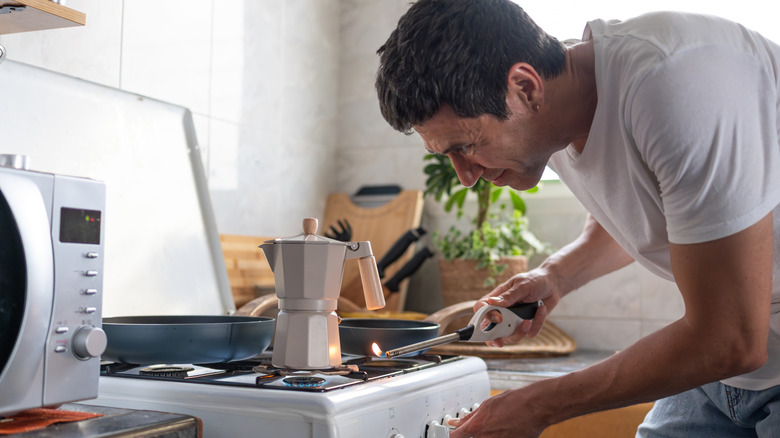
Let's face it: Anything can be flammable if it tries hard enough. And since gas stoves have an open flame, you might assume they are inherently more fire-prone and dangerous than something with coils or that is encased under glass. And in some respects, this is true. "The biggest safety considerations with gas are open flame, gas leaks, carbon monoxide risk if the appliance is malfunctioning or improperly used, and indoor air quality concerns," says Brit Angelesco. While she notes that electric and induction burners also have fire safety issues, they don't have the combustion or open flame hazards. Gas alternatives may be safer in some respects, but still come with their own risks.
That said, it is difficult to say whether gas is as safe or unsafe as other cooktops. "I would not frame one option as universally 'safe' or 'unsafe.' The safer choice depends on proper installation, ventilation, maintenance, and how the cooktop is used day to day," says Brit Angelesco. As long as you are careful and perform regular maintenance on your gas stove, you can rest assured that it is as safe as it can be.
Benefit: Gas stoves come in many different layouts
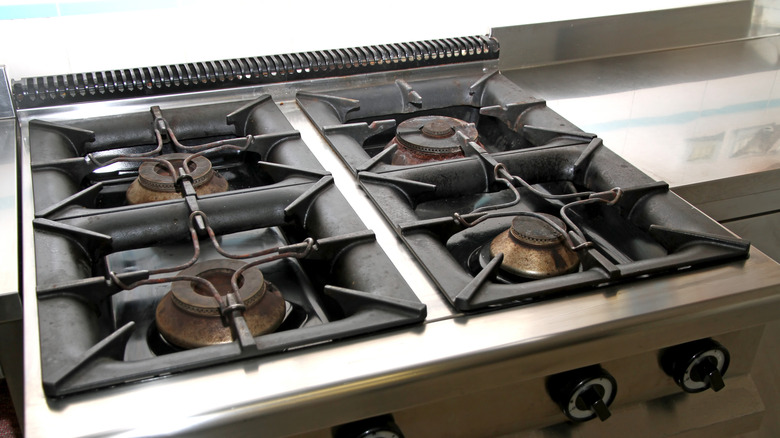
If you are purchasing a custom gas cooktop, just know that many layout and customization options await you. "Gas ranges and cooktops have traditionally offered a lot of variety in burner configurations, sizes, finishes, grates, and control styles, which is part of their appeal," says Brit Angelesco. This allows you to choose the right cooktop for you, your space, and most importantly, your budget. Plenty of features are now offered as well; Angelesco offers the example of ZLINE's DuoPro, which means that each burner is designed to handle both gentle and higher-heat cooking. "That flexibility is a big part of why gas continues to appeal to people who cook often," she says.
And the choice for your cooktop isn't just a functional one; you can also purchase a cooktop that mirrors your aesthetic goals. "Today, customization is less about the fuel type alone and more about the brand, product line, finish options, handle styles, burner layout, and overall kitchen design goals," she says.
Disadvantage: Gas stoves can require a more extensive installation process
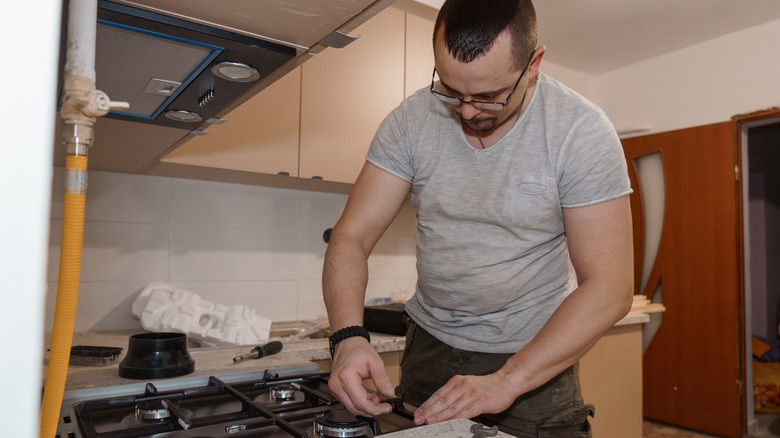
We wish that a gas stove were a plug-and-play type deal. Instead, gas stoves can require a pretty tricky, lengthy (not to mention expensive) installation process, especially if you don't have an existing gas line. "Homeowners may need to account for professional installation, local code requirements, permits, shutoff valves, ventilation upgrades, and possible cabinetry or countertop adjustments," says Brit Angelesco. Unfortunately, this isn't something that you want to YouTube or DIY, either. If you incorrectly install a gas line, you risk gas leaks or releasing dangerous levels of carbon monoxide. Not only does this waste your time and money in terms of fuel efficiency, but in some instances, doing a DIY install on something like this can actually void your home warranty in case of an accident or explosion.
That's not to say that electric and induction stovetops are a walk in the park, though. "With electric or induction, the hidden cost is often electrical capacity. Some homes may need a dedicated circuit or panel upgrade, so it is worth pricing the full installation before comparing appliance costs alone," says Brit Angelesco. Taking into account potential installation costs will help you decide whether this cooktop is right for you —and your wallet.
Benefit: You can use some types of gas stoves when your power goes out
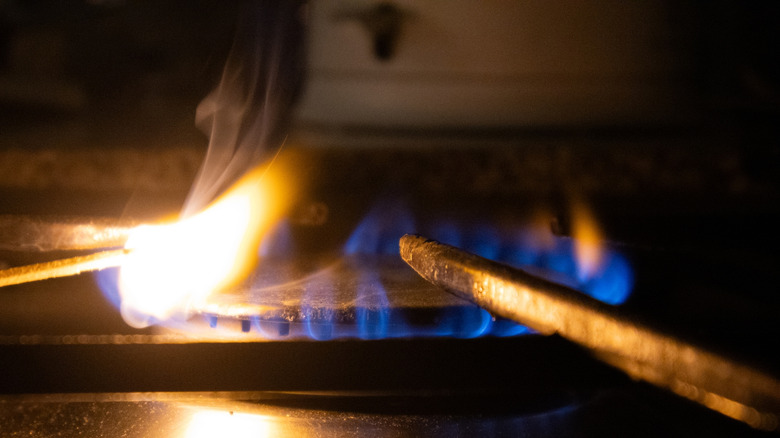
There is perhaps nothing more frustrating than having a meal all planned out — recipe chosen, ingredients painstakingly prepped and ready to go — just to have all of your lights flicker and go out. Power outages are a real problem for home cooks, but if your stove runs off gas rather than electric, it should still work ... right?
The answer to this question is the good ol' "it depends." We asked Bri Angelesco about this. "Some gas cooktop burners can be lit manually during a power outage, but many modern ranges use electronic ignition and safety systems, and gas ovens typically need electricity to operate," she says. So while you may be able to light your gas stove and get some sort of spark, you may not be able to do anything from there. Of course, you can still carefully light some gas stoves, which is more than can be said for cooktops that run off electric power. Takeout might just be a better option, though.
Disadvantage: Gas stovetops can cause indoor air quality issues
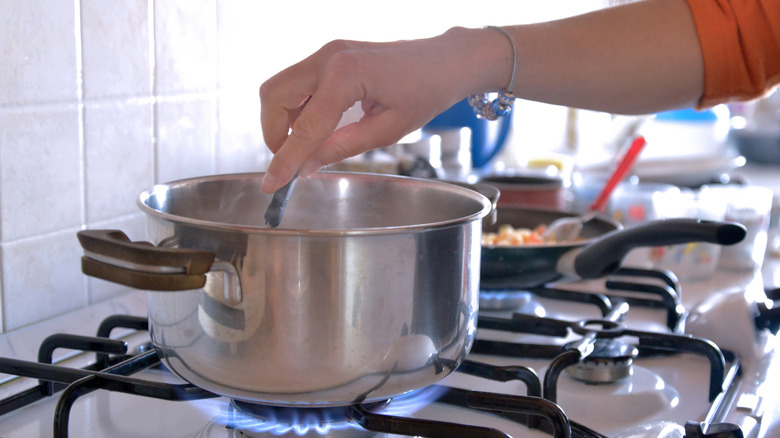
It's about time that we mention the elephant in the room, as it's one of the reasons why people historically haven't liked using gas stoves: the air quality issues. Several studies, including one published in the International Journal of Environmental Research and Public Health in 2022, found that 12.7% of childhood asthma cases in the United States can be connected to gas stove use. When the gas burns, it releases nitrogen dioxide, which can be emitted even after the stove is shut off. While more research will need to be done to concretely link the development of adverse health effects from gas stove use, the preliminary findings are still quite alarming and may turn some folks off from the idea of getting a gas stove.
There are ways to safely operate a gas stove and reduce exposure to these air pollutants. Installing proper ventilation and having the stove serviced regularly can help catch leaks before they become a problem. For some, though, the release of nitrogen dioxide, as well as benzene and carbon monoxide, doesn't justify the purchase.
Benefit: Gas stoves can be very durable
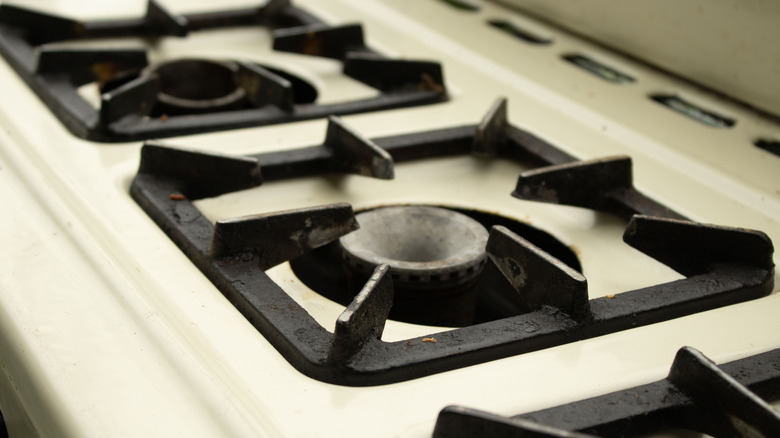
There is a reason why folks who have gas stoves don't tend to get rid of them quickly: They are very durable and tend to last a long time. That said, there are some things you need to do to keep cooking on them for as long as possible. "Reliability depends heavily on product quality, installation, maintenance, and usage. A well-made gas, electric, or induction cooktop can be reliable when it is properly installed and cared for," says Bri Angelesco.
Gas stoves tend to outlast electric ones by two to five years. Several outlets have attributed this difference to the fact that gas stoves have fewer electrical components. Most gas ranges will last between 13 and 15 years, though regular cleaning and recommended maintenance can help extend their lifespan to 20 years or more.
Disadvantage: Gas stovetops require extensive ventilation
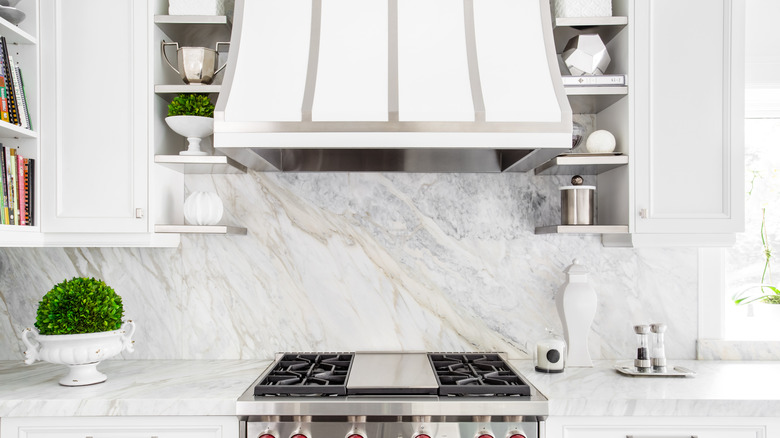
Proper ventilation is key to any type of stovetop cooking. Ventilation systems and range hoods will pull air (and the grease and particles in it) upwards and either expel it outside or clean the air before recirculating it in the home. And for gas stoves, having a proper ventilation system is a must.
"All cooktops benefit from ventilation because cooking itself creates steam, smoke, grease, and odors. Gas also creates combustion byproducts, so ventilation becomes especially important," says Bri Angelesco. Range hoods are by far the best defense against kitchen grease buildup, so be sure to invest in one that fits both your needs and the needs of your gas stove.
Besides thinking about how these vent hoods will affect the aesthetics of your kitchen, you will also need to consider the cost and labor associated with installing them. New installations can cost several thousand dollars, while retrofitting existing ductwork to fit your gas stove's ventilation requirements can cost anywhere from a few hundred to a couple thousand. Ducted ventilation systems, which send air outside rather than scrubbing and recirculating it, are significantly more expensive than ductless systems. However, they do a much better job of improving indoor air quality and removing pollutants. Ventilation needs are another important consideration when deciding whether a gas stove is right for you.
Benefit: They can be cost-effective in areas with cheap natural gas prices
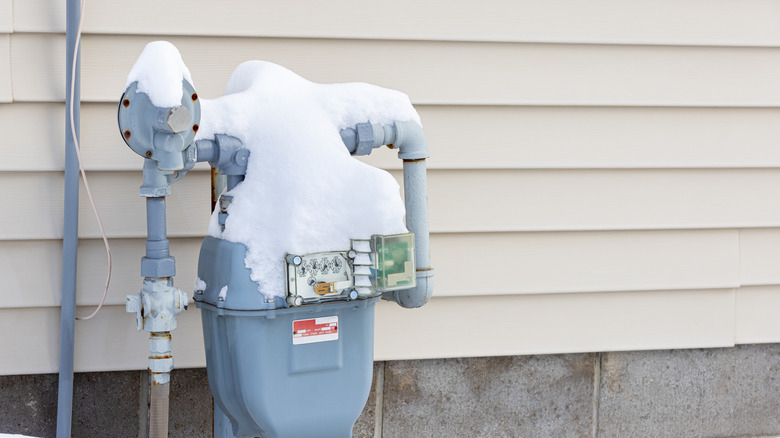
One of the biggest ongoing expenses of a gas stove is the fuel needed to power it. Most gas stoves run on either natural gas or liquid propane, although you'll need the proper gas jet nozzles to use propane instead of natural gas. Natural gas is generally cheaper than propane, and in some parts of the country, you could power your gas stove for very little.
"Gas can be cost-effective in homes that are already set up for it, especially where natural gas rates are favorable," says Bri Angelesco. States like South Dakota, Idaho, and Montana tend to have the cheapest natural gas rates. Folks living in states like Hawaii (which relies on liquid natural gas imports due to its location), as well as states with high energy taxes, like Massachusetts, New York, and Connecticut, should expect to pay more for natural gas. Before you buy a gas stove, it's worth considering how you'll be spending on fuel, as well as how your geographic location impacts pricing.
Disadvantage: Gas stoves are more difficult to clean than other cooktops
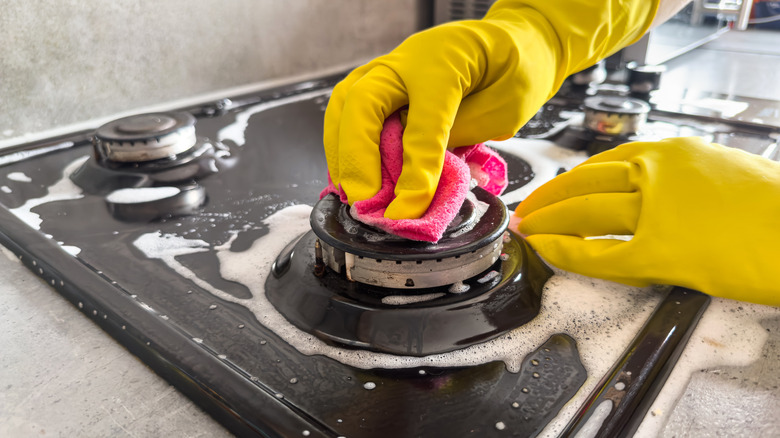
As long as you avoid some major mistakes, cleaning a glass-topped stove is relatively easy. Heck, you can even clean a ceramic cooktop with baking soda. As you can probably guess, cleaning a gas stove is a bit more tricky because there are plenty of places where grime can hide. "Gas grates usually take more hands-on cleaning because spills can reach grates, burner caps, and recessed areas around the burners," says Bri Angelesco.
You have to clean and care for your gas stove grates, keep your burners free of debris and grease, and also make sure everything is in good working order. This is a lot more time- and energy-intensive than spraying cooktop spray, wiping things down with a towel, and walking away. Angelesco also notes that certain types of gas stoves may require more specific upkeep than others. "Material matters too: cast iron grates may need more detailed cleaning and thorough drying, while stainless and glass surfaces each have their own best practices for avoiding streaking, scratching, or discoloration," she says. If you've only worked with glass or coiled stovetops in the past, learning how to care for your gas stovetop may come with a learning curve.
Disadvantage: Gas stoves may not be suitable for homes with children or pets
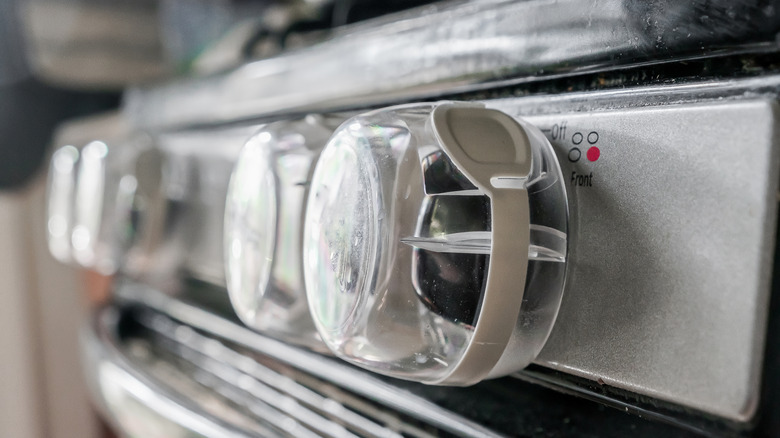
Gas stoves can be dangerous in more ways than one. Bri Angelesco mentions that other popular types of cooktops may be better for homes with children and pets than gas. "Induction can be a strong option for households with children or pets because there is no open flame and the cooktop surface generally does not stay hot in the same way a traditional electric burner does. Electric removes the open flame as well, though the surface can remain hot after cooking," she says, noting that the knobs and open flame on a gas burner require "more awareness." If you have cats that like to jump up on countertops and wave their tails near the burners, or have small children who like to grab and fiddle with knobs, a gas stove may not be right for you and your home.
However, this isn't to say that gas stoves are universally dangerous, as any cooktop comes with risks. "Regardless of fuel type, knob locks, supervision, and keeping cookware handles turned inward are important," says Angelesco. As long as you know what the most overlooked fire hazards in the kitchen are and implement the appropriate safety strategies, you can ensure a safe gas stove experience for everyone in your home.