

9 Old-School Pie Flavors That Are Slowly Being Forgotten
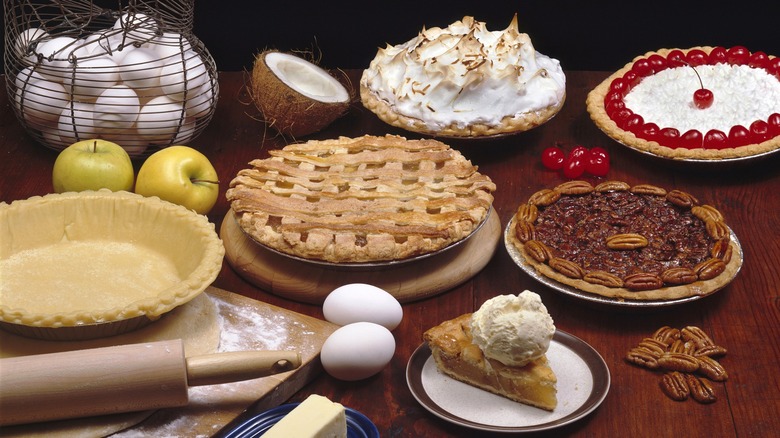
Tastes are often fleeting, even when it comes to pie. Sure, we've got our popular varieties: apple, cherry, chocolate, etc. For every one of those seemingly timeless classics, though, there are dozens of other pies that have fallen by the wayside. Some for good reason. Others, though, deserve to be remembered and retried.
Good pies are forgotten for a myriad of reasons. Some were products of particular times that failed to evolve. Others were localized favorites that flashed into the mainstream but couldn't remain there. Many of these pies were created during times of hardship by bakers who sought to make the most of their humble ingredients. Recipes like those can disappear when times are good and may reappear when things go bad.
Every pie has a history and a story. Some of those stories are important, and some pies should be remembered for their stories alone. Other pies deserve to be remembered simply because they taste great: pies where the crust is flaky, the custard is creamy, and the perfectly whipped cream is piled high. I believe the pies below are the rare ones that should be remembered for both reasons. Not only do these nine pies have stories to tell, but they also just happen to be really good pies. Don't let them be lost to history.
1. Butterscotch pie
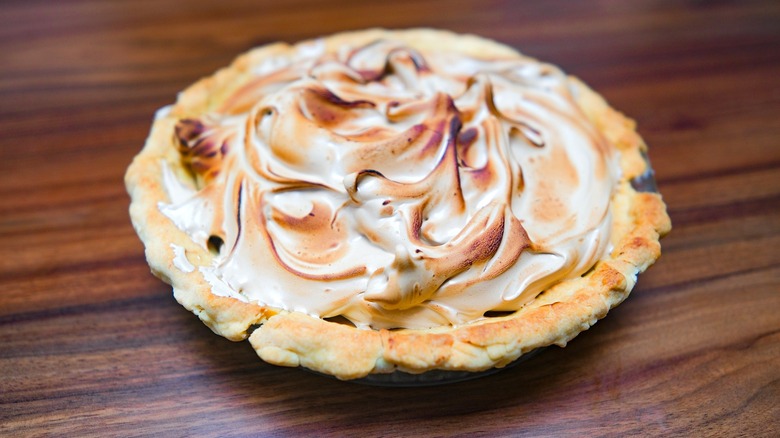
Legend has it that butterscotch pie was created by accident by a baker named Sarah Wheeler in an Indiana bakery and creamerie in the early 20th century. While working in her family's shop, the Wheeler Creamerie Exchange, Sarah accidentally burned a cream pie she was working on. She gave it to her sons to try, and a classic Midwestern dessert was born.
Sarah Wheeler's creation is a simple pie featuring a basic flaky pie crust, a smooth butterscotch custard, and an airy meringue. Unfortunately, butterscotch pie has largely been removed from modern menus.
One reason for this pie going M.I.A. could be its finickiness: Since making butterscotch can be tricky and whipping up the meringue is both time-consuming and delicate, butterscotch pie is easy to mess up. If the baker gets distracted, it's not hard to scorch the butterscotch filling. It can go from silky smooth to grainy and unpleasant in a matter of seconds. As for the meringue, it should be whipped to soft or medium-firm peaks. Again, if you're not paying attention or you're not an expert whisker, it's easy to go a little too far and end up with a too-stiff meringue.
2. Shoofly pie
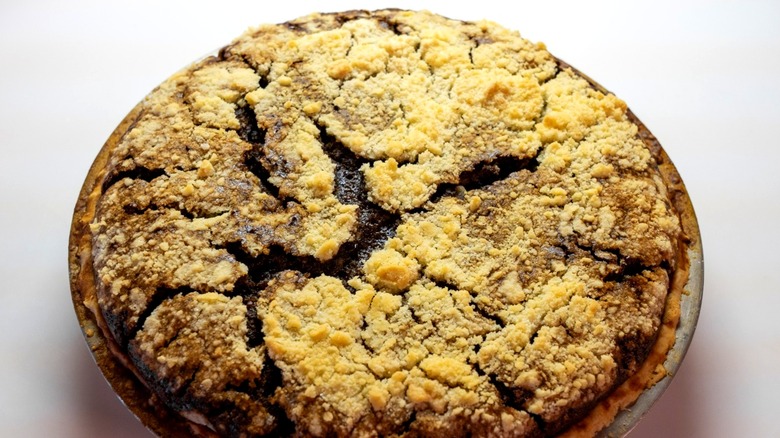
We've written about the story behind this old school pie's oddly memorable name before, but there's a lot more to this classic Pennsylvania Dutch pie than its unusual moniker. The Pennsylvania Dutch, a cultural group of Americans descended from German-speaking immigrants, are credited with coming up with this decadent treat (made with gooey molasses a crumbly sugar topping) during the late 1800s. The pie took inspiration from a popular 1876 American Centennial cake, which made to mark the country's 100th birthday.
The Pennsylvania Dutch embraced the original Centennial cake, and then added a pie crust on the bottom to make it easier to eat. With increased portability to match its flavors and textures, shoofly pie became a popular breakfast for the Pennsylvania Dutch that could be eaten on the go.
There are two varieties of shoofly pie: dry-bottom and wet-bottom. Dry-bottom pies are more faithful to the centennial celebration original, having a cakey texture throughout. Wet-bottom shoofly pies have more variety as far as mouthfeel goes: There's a gooey, molasses-drenched crust, a cake-like center, and buttery crumb topping. Because of that blend of flavors and textures, the wet-bottom pie is the most popular and most accessible today.
3. Possum pie
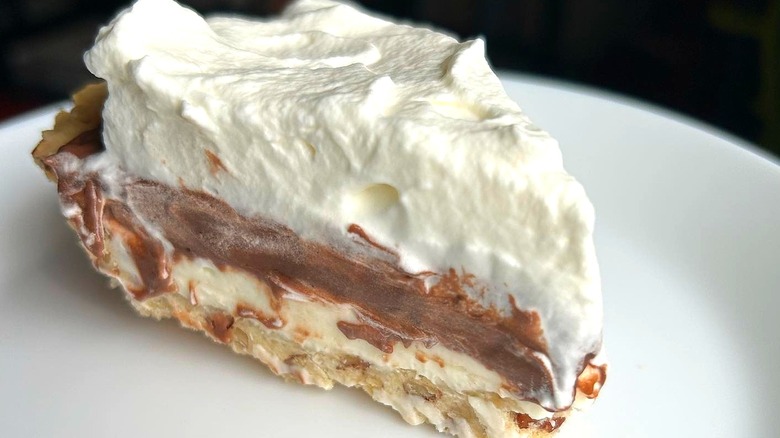
Possum pie is arguably Arkansas's most iconic dessert, but it's been pretty much forgotten by anyone not from "The Natural State." Of course, there are no actual marsupials in the ingredient list: Possum pie is named so because the ingredients are "playing possum" under a thick, high layer of whipped cream. The ingredients in hiding include cream cheese, chocolate, and pecans.
The most authentic versions of possum pie actually use a pecan crust, which is made like a regular pie crust but with the addition of ground pecans. The nutty flavor of the crust, along with the pecans garnishing the top of the pie, helps offset some of the sweetness of all that whipped cream.
Possum pie gained a small measure of popularity outside of Arkansas in the early 1980s. After a local paper printed the recipe, how-tos on the oddly named pie began appearing in other outlets. Many of these outlets renamed it "possum pie." Another name given to the once-popular recipe was "The Next Best Thing to Robert Redford Pie."
4. Vinegar pie
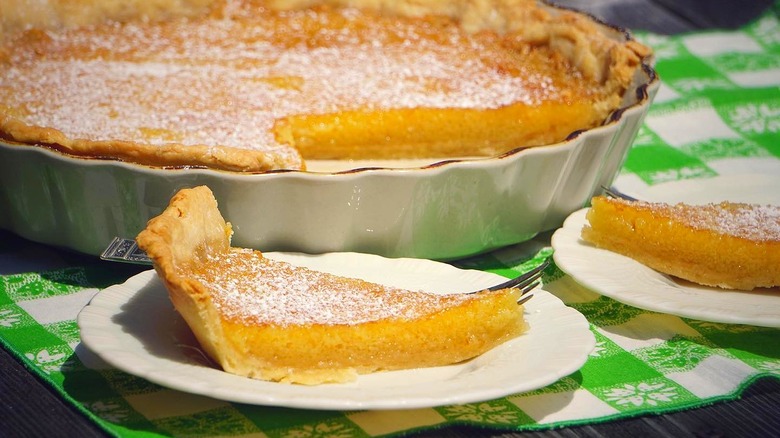
President James K. Polk was a simple man, at least in terms of dessert: The all-time favorite of America's 11th president was basic pantry pie made with sugar, eggs, butter, salt, and, yes, apple cider vinegar. Another fan of vinegar pie was Laura Ingalls Wilder, who wrote about the confection in the first novel of her famous "Little House" series. In that book, "Little House in the Big Woods," Laura's mother presents the pie as a Christmas treat, dressed up with the festive additions of cinnamon and nutmeg.
Often thought to be a Depression-era, low-cost dessert creation, the first printed recipe for vinegar pie actually appeared back in 1855. Vinegar pie is part of a class of so-called "transparent pies" that are made with minimal pantry ingredients. When times are tough, you could do worse than vinegar pie: The apple cider vinegar provides a strong, flavorful punch of acid, which makes the pie taste like a revved up, performance-enhanced lemon meringue.
5. Sawdust pie
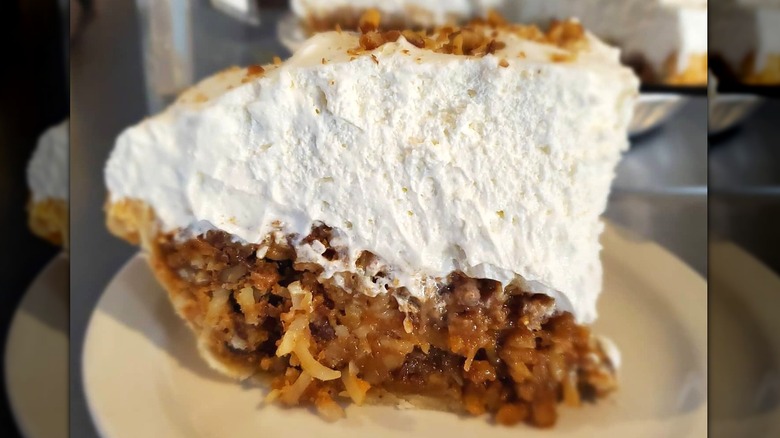
In culinary circles, the Bluegrass State is best known for hot brown, bourbon, burgoo, and mint juleps. A lesser-known dish, a pie featuring egg whites, sugar, chopped pecans, Graham cracker crumble, and coconut, lags in popularity, but not in taste or history. Maybe it's because of its less-than-appetizing name: sawdust pie.
Sawdust pie was created by Patti Tullar, the owner of a Kentucky motel and restaurant in the 1970s. It remained mostly a local delicacy until 1983, when Patti's recipe was published in Bon Appétit. After a brief period of national popularity, sawdust pie fell out of favor and returned to its Kentucky roots. The name "sawdust pie" comes from Patti Tullar's children, who thought the sugar and Graham cracker crumble topping resembled sawdust. Under that topping, you'll find a gooey, eggy center sitting on a thin, buttery crust. Sawdust pie is traditionally served with a heaping helping of whipped cream and some banana slices.
6. Buttermilk pie
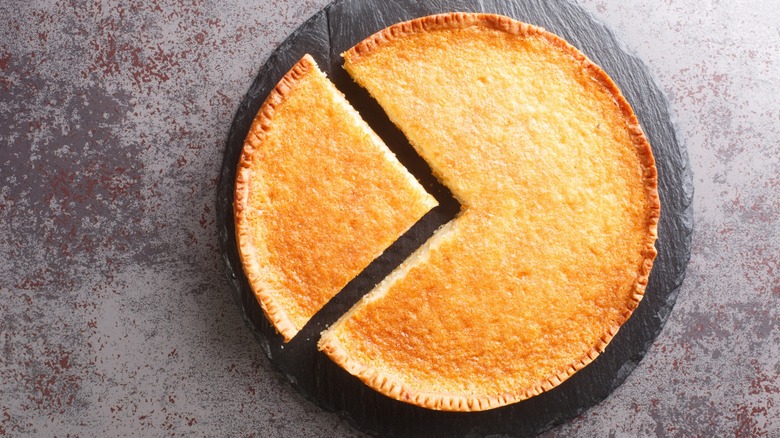
Buttermilk pie is another pantry pie that came back into fashion during the Great Depression. Before that, it was a popular dessert in the post-Civil War South, as evidenced by the recipe's appearance in many African-American community cookbooks from that era. Although it's not as popular today, it is remembered fondly. In fact, we ranked buttermilk pie as one of the nine most iconic Southern desserts of all time.
Best made with whole-fat buttermilk for a silkier texture, buttermilk pie is similar to the better-known chess pie. While chess pie typically gets its tangy flavor from a dash of vinegar in the filling, the tang in buttermilk pie comes directly from the buttermilk. The result is a deeper, smoother, slightly sour flavor. To punch up buttermilk pie further, lemon zest and juice are typically added in modern recipes. The addition of a little vanilla extract is usually included to help balance the pies' sour flavor with a little sweetness.
7. Onion pie
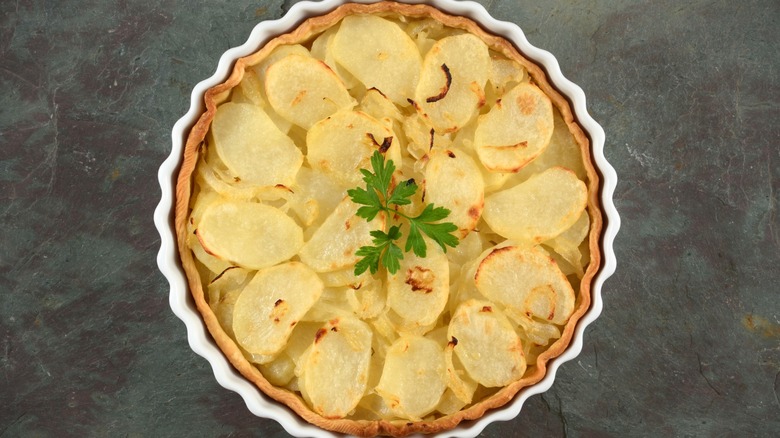
Savory pies are, and have been for centuries, staples of British cuisine. The oldest-known published recipe for onion pie dates to a 1747 British cookbook. While English versions typically feature leeks, American colonists typically substituted the more available and harsher tasting onion in their recipes. This savory pie can also feature apples, potatoes, or a mix of the two, and sometimes the settlers added cheese if it was available. Onion pie was so popular among the Colonists that there's a recipe for it on the official Colonial Williamsburg website. But onion pie wasn't just a dish for the average colonist trying to make it in the New World: There's also a recipe for "onion pye" on the Mount Vernon website, so our first president enjoyed it as well.
Onion pie still survives in the modern South, but with one major innovation. The harsh white onion that replaced the mild leeks has itself been replaced. Today, onion pies are usually made with sweet Vidalia onions; an ideal compromise in the battle between mild and harsh.
8. Kool-Aid pie
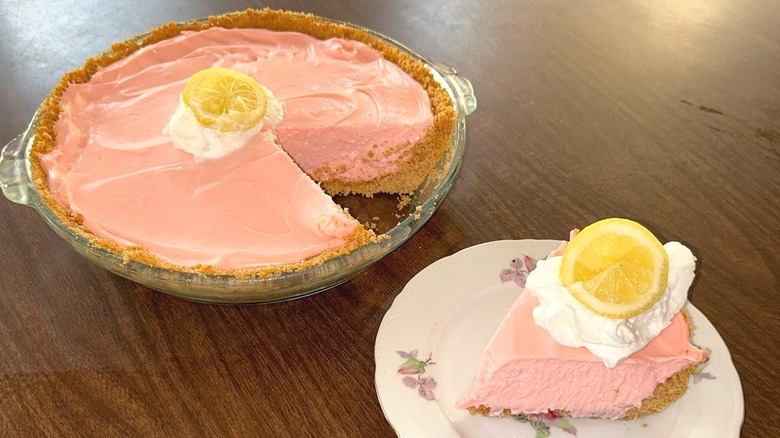
Finally, some good news: Kool-Aid pie is making a comeback. The pie — which was popular in many Black communities in America during the 1970s — is made with a filling consisting of whipped cream, sweetened condensed milk, and Kool-Aid. The dessert was less popular for a few decades to follow, before experiencing a remarkable resurgence in the 2010s, when it was rediscovered by social media. We even wrote about the old school pie you can make with a pouch of Kool-Aid as recently as last year.
Making the pie with red Kool-Aid is both the traditional and modern standard, largely because of red Kool-Aid's prominence in Soul Food culture and history. The other flavors are either neutral or sweet. The result is exactly what one would expect it to be: sugary red Kool-Aid-flavored cream in a flaky pie crust.
9. Grasshopper pie
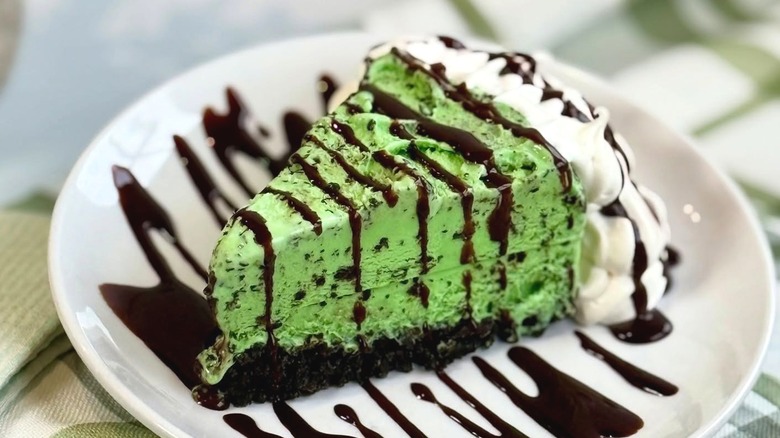
If "Mad Men" was a pie, it would be this one. No-bake grasshopper pie became popular in the mid-20th century, as the flavors were based on the once-popular grasshopper cocktail, a cold, minty concoction that was often garnished with chocolate. The pie itself typically consists of marshmallows, whipped cream, creme de menthe, and creme de cacao stuffed into a chocolate crumb crust. In our Old-Fashioned Grasshopper Pie recipe, we used a Mint Oreo crust to both complement the liqueurs and also to balance out the sweetness of the marshmallows and whipped cream.
Though the history of the grasshopper cocktail begins in New Orleans, the origins of the pie are harder to pin down. The recipe appeared in print frequently starting in the late 1950s and early 1960s, but the actual creator of the concoction is unknown. Grasshopper pie gained popularity throughout the '60s, largely because of its popular flavors, its easy recipe, and its no-bake nature. By the 1970s, people had moved on to other flavors, and grasshopper pie mostly went underground. It's worth digging up, though: The combination of mint and chocolate is timeless.