

For The Crispiest Fried Chicken, Don't Skip These 10 Tips And Tricks
We may receive a commission on purchases made from links.
Fried chicken is a food that's hard not to love. While plenty of chains serving great fried chicken (our taster even tried and ranked them), there is something very homey about setting up a dredge station, heating up a heavy-bottomed pot, and making a batch for yourself. Anyone who makes fried chicken at home will tell you that it's a labor of love, especially when it comes to getting the crispiest version possible. No one wants to bite into a fried drumstick with limp, soggy breading lacking an audible crunch. At that point, you may wonder why you didn't just go to Chick-fil-A instead. While getting crispy fried chicken may require a little more attention to detail than just tossing floured chicken thighs into a vat of oil and hoping for the best, it will yield consistently crunchy fried chicken every single time.
Lucky for you, though, we spoke to the experts and got all of the best tips and tricks for making deliciously cripsy fried chicken at home, including chef Brian Lewis of Full House Hospitality Group; executive chef David Schaumburger of Elway's at the Ritz Carlton Denver; executive chef Edward Morris at FIRE Restaurant at the Art, a Hotel; executive chef Grant Morgan of 97 West Kitchen and Bar at the Hotel Drover; and sous chef Tara Mayfield of The Betty in Atlanta. Their tips will come in handy whether you're making Nashville hot chicken sandwiches or are looking for a savory topping for a stack of buttermilk waffles.
1. Dry the chicken well before breading
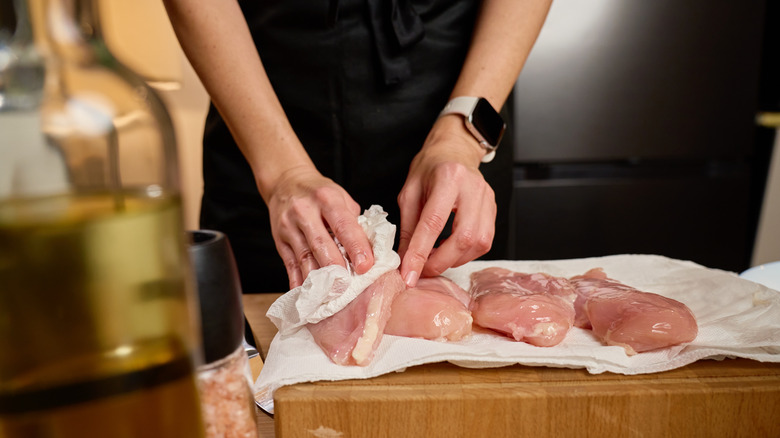
As you can probably assume, moisture is the biggest obstacle to getting a crispy fry. As such, you'll want to ensure your chicken pieces are dry before you bread or season them. Any residual moisture can seep into the breadcrumbs, making it more difficult for them to adhere to the piece. It can also cause large, unpleasant clumps of breading to form. "Patting chicken dry before seasoning or breading removes excess surface moisture, which helps the coating adhere better and promotes browning. Too much moisture creates steam, making it harder to achieve a crisp crust," says executive chef David Schaumburger. Executive chef Grant Morgan agrees with this tip and recommends patting the chicken dry before seasoning or breading it. "A dry surface allows the flour to adhere better and creates a more even, crisp coating," he says.
Schaumburger also recommends drying the chicken after you brine it. He explains that brining (or submerging the chicken in an acidic liquid, like buttermilk) can make the meat more flavorful and juicy. However, you shouldn't let this step come at the expense of crispiness. "After brining, thoroughly pat the chicken dry and let it air-dry in the refrigerator for 30 minutes to several hours before breading to maximize crispiness," he says.
2. Use cornstarch for a crispier fry
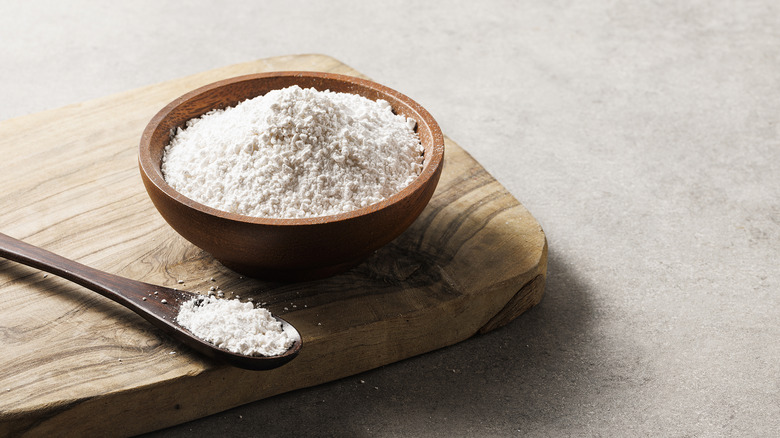
There are plenty of ways to get your chicken even crispier, and they may only require a one-ingredient addition. Cornstarch is the chef-approved ingredient that many of our experts highlight. "Cornstarch pulls liquid from the skin and prevents the crust from becoming soggy," says sous chef Tara Mayfield. Chef Brian Lewis agrees. "Cornstarch adds to the crispiness, as there is no gluten in cornstarch and this allows the cornstarch to absorb moisture and creates a barrier between the chicken meat and the oil, preventing oil absorption to the meat," he says. Aside from helping promote crispiness, cornstarch can actually improve the texture of your breading too. "Cornstarch limits gluten development and creates a lighter, crispier coating," says David Schaumburger.
The exact amount of cornstarch you need to add to your recipe varies, as some folks use a 50/50 ratio of cornstarch to all-purpose flour, while others recommend adding as little as a tablespoon to the flour. Grant Morgan uses 20 to 30% cornstarch in his seasoned flour mix. So, if it's your first time, you may want to follow a recipe to determine how much starch you need.
It's important to note that cornstarch is not the only crisping ingredient you can use. Schaumburger, for one, recommends using rice flour in tandem with the cornstarch for extra-crispy chicken. "A blend of flour and cornstarch or rice flour often delivers the best balance of color, crunch, and adhesion," he says, pointing to rice flour's ability to retain crunchiness for longer. Lewis uses both cornstarch and rice flour, but also adds potato starch to create a crispy, gluten-free dredge.
3. Select your breading with care
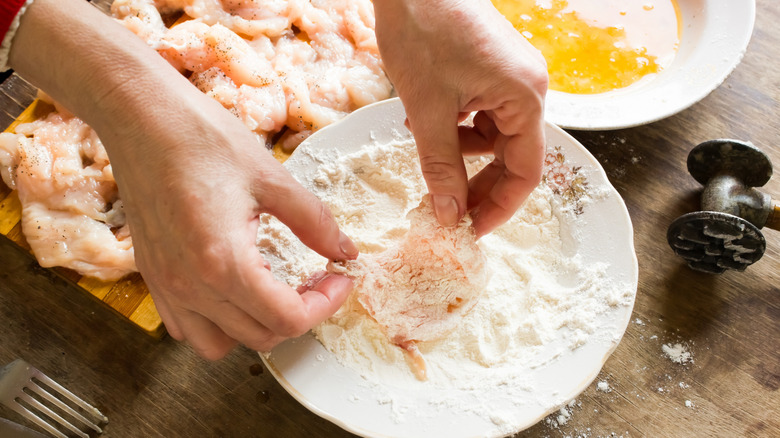
If you sample an array of fried chicken recipes, you'll find that breadings and coatings vary. "Every breading has its own useful purpose," says executive chef Edward Morris. Therefore, it's important to think about which breading will set you up for deep-fried crispiness, rather than soggy disappointment. David Schaumburger offers several options for fried chicken, including a classic flour and cornstarch coating; panko coating, which he says "produces a crunchier, more textured coating that's great for cutlets"; and crushed cornflakes, which are super crunchy, but can brown very fast (so it may not be the best choice for you if you tend to get distracted in the kitchen). Tara Mayfield is a big proponent of panko on chicken. "Panko absorbs less oil and stays crispy much longer," she says.
If you are after a crispy piece of chicken, you may want to take Schaumburger's advice and skip breadcrumbs. "Fine, dry breadcrumbs tend to produce a denser crust and are less ideal if maximum crispiness is the goal," he says. Morris also recommends steering clear of finely-ground 00 flour. "Expensive double 00 flours I feel don't fry as well as your standard [all-purpose] flour," he says.
4. Shake off any excess breading before frying
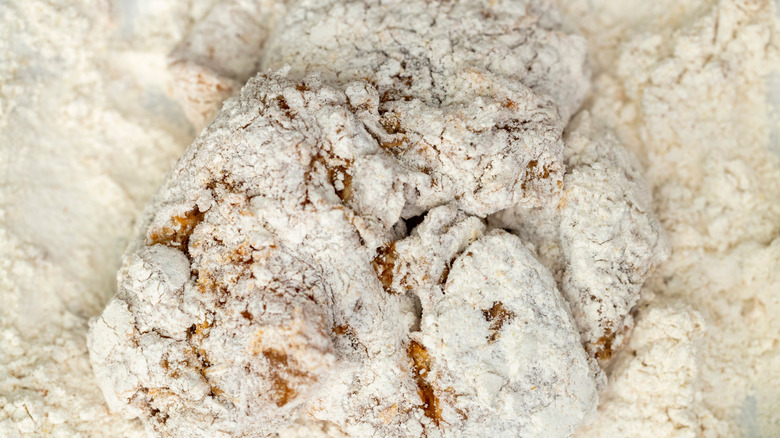
When most people fry chicken, they like to use a dredge. This three-bowl technique calls for dipping the food in flour before transferring it to whipped eggs, then adding it to your seasoning or breading of choice (like panko or crushed cornflakes). It's a superior technique to just tossing your raw chicken in seasoned breading because it encourages the crumbs to not only stick to the meat, but also offers a delicious dichotomy between the plump chicken and the extra-crispy breadcrumbs. However, one step could be ruining your whole dredge: not shaking off any excess crumbs or flour. David Schaumburger says, "After breading, gently shake off excess flour and let the coated chicken rest for 10–15 minutes. This allows the coating to hydrate and adhere, reducing the chance that it falls off during frying."
He is not the only one of our experts to endorse this fried chicken tip. Edward Morris says that this simple step creates ridges and a rough texture when frying chicken. Morris' method lets "more moisture escape when frying, allowing the crust to have crispy, flaky textures." If you're using breading for your chicken, Brian Lewis recommends sticking to a light and even layer to help reduce oil absorption (which will keep your chicken crispier). You can also use your hands to help adhere the breadcrumbs to the chicken, per Grant Morgan's suggestion. "After dipping in the flour mixture, gently toss and press extra flour onto the chicken to create small crispy bits," Morgan says.
5. Try double-dredging
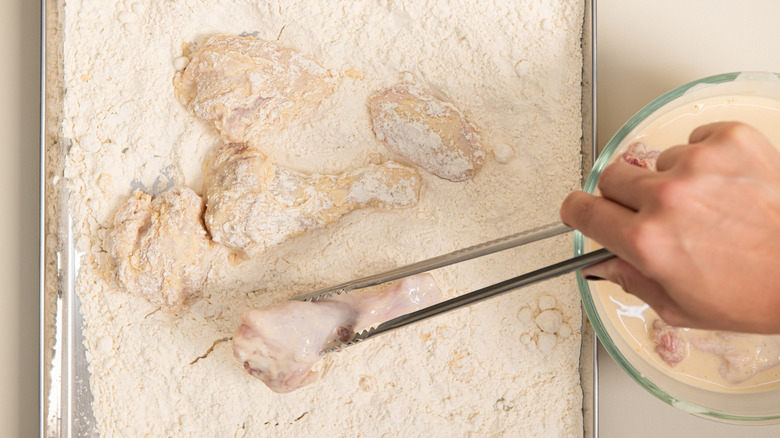
Once is not enough if you're after extra-crispy fried chicken. Per our experts, double-dredging (dipping your chicken in the eggs or buttermilk, the flour, then back into the eggs and flour again) is the secret to a crispier cook. This dramatically increases the chance that your breading will stick to the meat, and it will give your juicy chicken a thicker layer of insulation from the heat of the oil, making your chicken appear extra crispy. "The extra [breading] adds more opportunity for a larger crisp-breading barrier," says Brian Lewis.
If you prefer a thicker coating, this might also be the way to go, per David Schaumburger. "Double-dredging creates a thicker, craggier crust with extra crunch. It's especially effective if you enjoy a substantial coating, but it's important not to make the coating so thick that it becomes doughy," he says. Grant Morgan adds that while the flour-to-buttermilk-to-flour technique can create more texture on the chicken, there is also a point where too much breading becomes an issue. "Anything more than this will leave the inside with a doughy texture," he says.
6. Maintain the proper oil temperature
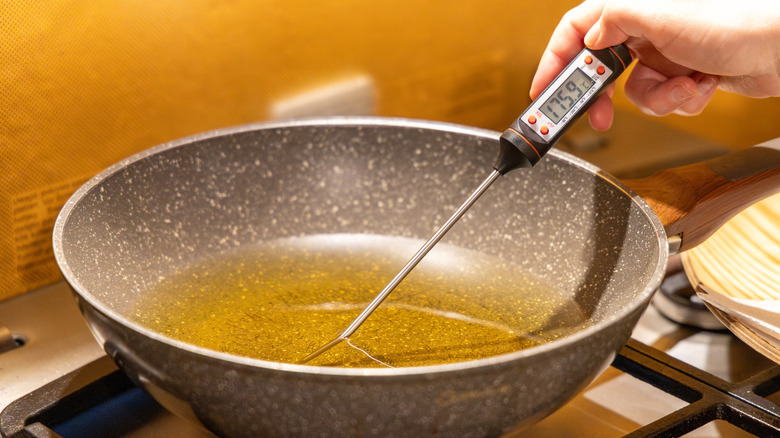
Perhaps the most important part of frying anything is maintaining a consistent oil temperature. Not only does your oil need to be preheated when your chicken goes in, but you also have to make sure it maintains a consistent temperature as it cooks. Edward Morris explains that the initial temperature depends on which breading and type of dredge you use. A low-moisture dredge with spices that won't burn is best around 345 to 350 degrees Fahrenheit, Morris told us. He added, "I feel buttermilk-dredged chicken with lots of spices fry better at 330 [degrees Fahrenheit]." You will also want to consider the size of the chicken pieces. "Smaller pieces can cook closer to 350 [degrees Fahrenheit], while bone-in pieces often do best around 325–340 [degrees Fahrenheit] to ensure the meat cooks through before the crust becomes too dark," says David Schaumburger.
Not only do you have to check the temperature when your chicken goes in, but you'll also need to check it in between batches. Tara Mayfield advised using an essential tool for this: an infrared thermometer (or a food or frying thermometer). "Even the best chefs use thermometers," says Edward Morris. You can check the temperature before you fry each batch and adjust the heat as necessary. This basic fried chicken tip works whether you're shallow- or deep-frying, reducing greasiness while producing crispier chicken.
7. Don't overload your pan
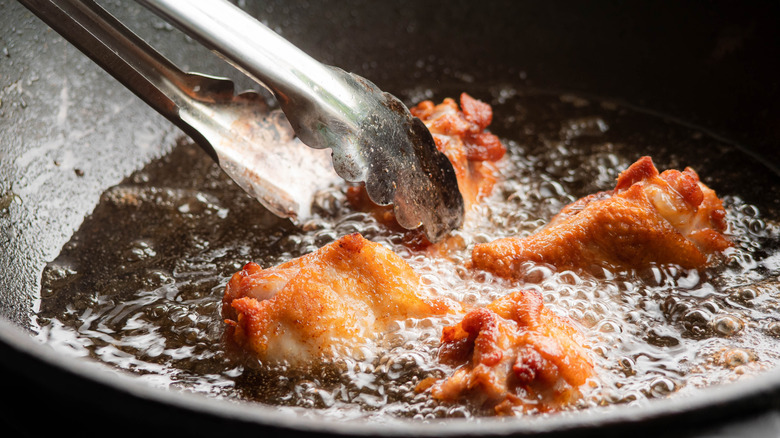
If you are eating your fried chicken and notice that it tastes greasy or undercooked, it may be because you cooked at too low a temperature, or because you committed the other cardinal sin of frying chicken: overcrowding your pan. "Cooking chicken at the right oil temp is key, and putting too much at once reduces the heat of the oil and affects the frying," says Edward Morris. If you are frying in small batches, you essentially allow the oil temperature to recover between batches, ensuring a crispier fry.
"Adding too much chicken at once causes the oil temperature to drop, resulting in a greasy, soggy coating. If the pieces are touching or the bubbling slows dramatically after adding food, the pan is overcrowded," says David Schaumburger. Aside from pulling down the oil temperature, frying a few pieces at once will give you better control over the cook, as you aren't scrambling to rotate, move, and transfer too many pieces to a wire rack at once. "Taking your time and seeing the moisture leave the oil and the chicken fry and crisp up evenly is very important," says Brian Lewis. "The chicken should be able to 'free fry' without touching each other."
8. Transfer your fried chicken to a wire rack
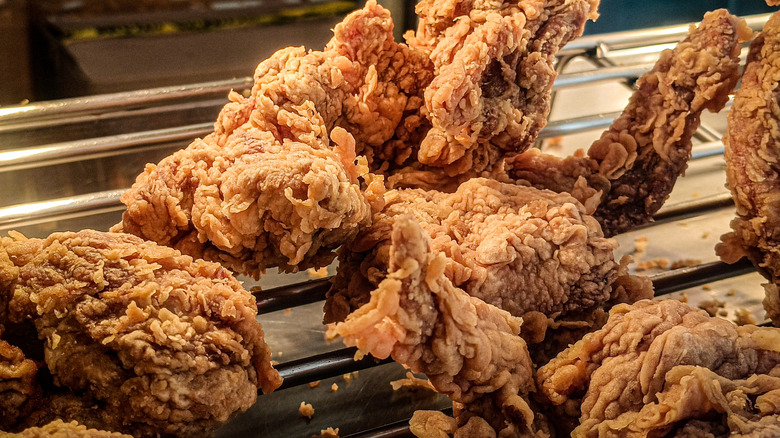
After you've gone through all the work of brining, dredging, and frying your chicken, the last thing you want to do is mess it up by not transferring it to the right surface. For David Schaumburger, there is only one right answer. "A wire rack is the best choice. Paper towels trap steam underneath the meat, softening the coating, while a rack allows excess oil to drain without compromising crispiness," he says. Edward Morris agrees, noting that the heat needs to escape from all sides of the chicken to prevent sogginess. As such, when you are cooling your chicken, it's important not to stack the pieces on top of one another, as this can further trap steam and cause the crunchy coating to go limp.
You can use a wire rack that you would normally use for cooling cookies or baked goods here. We recommend this heavy-duty five-piece set, which won't warp or bend under the weight of your chicken. Placing a plate or a paper towel underneath your rack can help trap any dripping oil and make the cleaning process easier, too.
9. Consider double-frying for crispier chicken
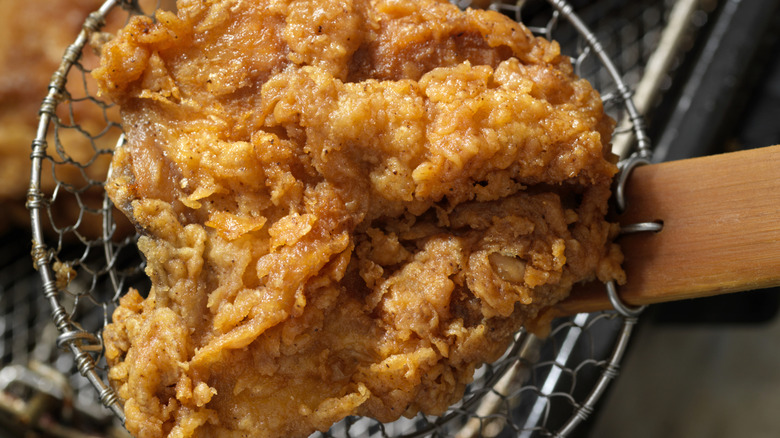
Not only is one dredge not enough, but if you're on the hunt for the crunchiest possible chicken, you may also want to double-fry it. "Double-frying allows moisture to escape during the first fry and creates an exceptionally crisp crust during the second fry," says David Schaumburger. "Fry the chicken until nearly cooked, let it rest for 5–10 minutes, then fry again at 350–375 [degrees Fahrenheit] for a few minutes until deeply golden and crisp." In essence, that first fry cooks the meat, while the second one finishes the crispy exterior. The holding period in the middle allows the temperature of the chicken to decrease, which will prevent overcooking. This brief intermission is another opportunity for the moisture to evaporate, further ensuring a crispy cook.
Grant Morgan adds that many restaurants use this cooking tip and suggests that folks fry at 325 degrees Fahrenheit the first time, before cranking it up to 375 degrees Fahrenheit for just a couple of minutes. The size of your chicken as well as whether it's bone-in or boneless may alter this cooking time, so following a recipe tailored to your cut of choice can be especially helpful for double-frying.
10. Keep your fried chicken in the oven if you don't eat it immediately
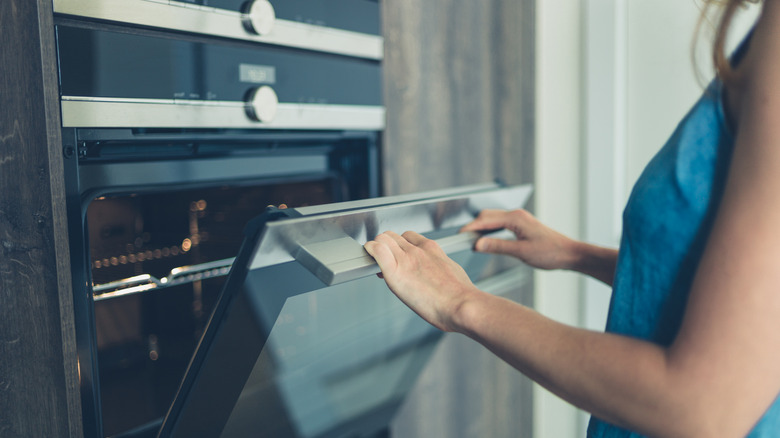
We all know that fried chicken is best while it's hot. However, if you are frying multiple batches or preparing sides to serve with your fried chicken (we recommend an old-fashioned potato salad or side of chive-infused, savory buttermilk waffles), you may not have time to eat them right away. Luckily, your oven comes in handy here. "Put [the chicken] on a wire rack and in an oven at 180 [degrees Fahrenheit] to keep warm and crispy," said Edward Morris. Grant Morgan suggests a slightly higher temperature — around 200 degrees Fahrenheit. When you're ready to eat, follow David Schaumburger's tip and re-crisp it in an air-fryer or oven at 375 degrees Fahrenheit. He also suggests leaving it uncovered rather than wrapping it tightly in foil; the latter can cause steam to build up and ruin the crispy coating.
With this, it's important to note that the ambient conditions of your kitchen can affect how long your chicken stays crispy. "If the [air's humidity] is too high, it limits the moisture of the chicken. It traps the steam. The crust stays soft, not crispy," says Tara Mayfield. Morgan agrees and says, "Humidity is one of the biggest challenges." As such, if the weather is super humid out, you may want to pick a different day to fry chicken (or fry anything, for that matter).