

Give Your Next BBQ The Italian Treatment With This Flavor Powerhouse
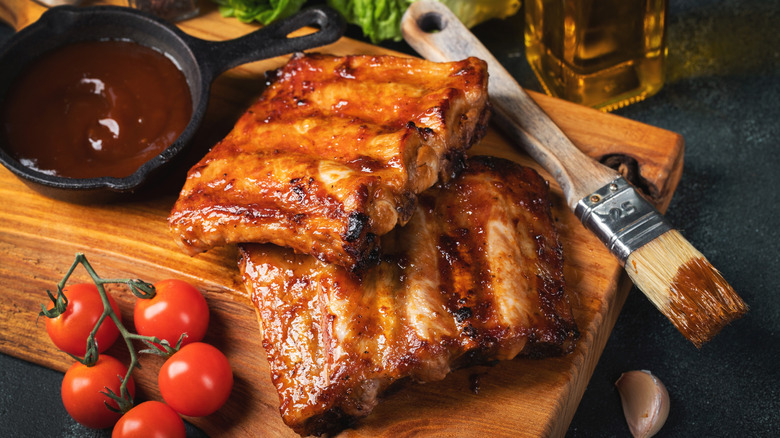
There are as many live-fired meat varieties as there are places in the world to enjoy them. While one's mind may immediately drift to Korean, Caribbean, or Texas barbecue, some locales are less known for their smoked, grilled, and often-sauced proteins. Even as Italy is beloved for its culinary contributions all over the globe, for example, it does not count barbecue among its most famous exports. That doesn't mean you can't imbue your own meats with some of the Republic's beloved flavors via balsamic vinegar.
Balsamic vinegar varies from maker to maker, but the best should have a notable viscosity and some sweetness thanks to the grapes from whence they were derived; qualities that already have a delicious precedent in plenty of barbecue sauces. Kansas City barbecue sauces, for example, often call for molasses, another sweet, syrupy ingredient. Although it occasionally kicks up controversy, sugar is also known to appear across regions. These ingredients can create their own sweet sense of place, just like balsamic vinegar can with its Italian origins. Like those other confections, balsamic vinegar's flavor adds dimension, and its stickiness helps achieve the ideal cling on tender ribs. You can even prepare balsamic barbecue sauce pretty similarly to your everyday recipe with some easy adaptations.
How to make balsamic vinegar barbecue sauce
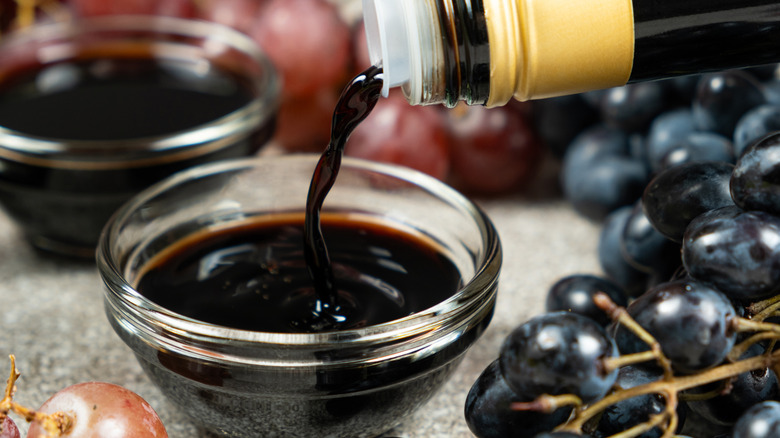
The perfect barbecue sauce is all about customization, and this is as excellent a zag as any. Start by sourcing a good balsamic vinegar, avoiding any labels emblazoned with words like "imitation." That doesn't mean you need to use the most expensive option on the shelf, but it should be good enough that you'd dip bread in it. You need about 1 cup for your new Italian-influenced barbecue sauce, so buy at least an 8-ounce bottle.
Balsamic vinegar barbecue sauce also calls for the ketchup, brown sugar, Worcestershire sauce, mustard, garlic, salt, and pepper you may be used to from more basic recipes. You can further enliven it with additions such as red pepper flakes or more alliums as long as you get it nice and smooth by reducing everything together.
You can also add a bit of balsamic vinegar to your favorite store-bought barbecue sauce, but taste each element separately first to make sure the flavors don't compete or clash. Relatively syrupy as it is, the balsamic should also be stirred in a little at a time to prevent the sauce from thinning out too much. Try a tablespoon at a time to maintain your intended consistency, tasting as you go.