

The Ultimate Guide To Mezcal: Everything To Know About The Smoky Spirit
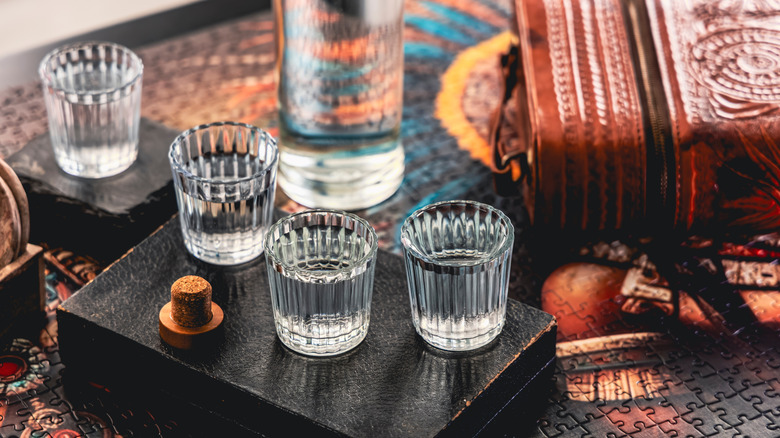
For a long time, Mexico's spirit scene was dominated by tequila, and to some extent, it still is today. However, mezcal has been making major inroads as of late, exploding in popularity not just in Mexico, but around the world. Step into a trendy bar in London, New York City, or Toronto, and there's a good chance you'll find a few first-rate bottles of mezcal behind the bar. Yet despite its rising fame, mezcal is still misunderstood by many. Some think of it as simply a smoky relative of tequila, but it's so much more than that.
The first time I tried mezcal was shortly after I moved to Mexico five years ago, and I was instantly struck by how complex the spirit was. As I branched out to different bottles and styles, I quickly realized there is no such thing as a typical mezcal. Some are bright and citrusy, others earthy and vegetal. Some offer hints of smoke, while others are barely smoky at all. That diversity is part of what makes mezcal so intriguing, but it can also be intimidating for newcomers.
To get a deeper understanding of what makes mezcal so special, I reached out to three mezcal producers who are making some truly exceptional spirits. I asked them to share their insights on everything from agave varieties and production methods to sustainability and even food pairings. If you're new to mezcal or just want to expand your knowledge, this guide will walk you through everything you need to know about this unique spirit.
What is mezcal?
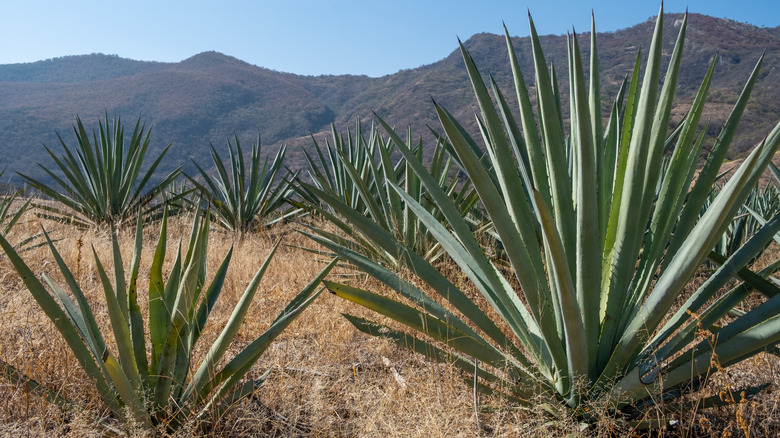
Simply put, mezcal is a distilled spirit made from agave. The name comes from the Nahuatl term "mexicali," which means "cooked agave." For those unfamiliar, agave is a genus of succulent plants that spans about 200 species. The plants have spiky leaves and a heart-shaped structure called a piña that resembles a pineapple. Mezcal is made from the piña when it's at its ripest and full of sugars. Depending on the species, an agave plant can take anywhere from 7 to 40 years to fully mature.
Native to Mexico, agave is deeply ingrained in the local culture. Evidence shows that people were using agave sap to make an alcoholic drink called pulque as far back as 200 C.E. And while some people may have been cooking agave to make beverages, it wasn't until the Spanish arrived in the 16th century and introduced distillation methods that mezcal was truly born. Over the centuries, mezcaleros have developed numerous techniques for producing the spirit.
According to Alejandro Rossbach, CEO and Co-Founder of Maguey Spirits, which produces Bozal Mezcal, one thing that sets mezcal apart from other spirits is how varied it can be. He said, "You have more than 40 agave varieties that can be used, different regional traditions, fermentation methods, distillation styles, and ultimately each maestro mezcalero's personal recipe and philosophy." As he pointed out, all of those factors mean that no two bottles of mezcal are ever truly the same.
How is mezcal made?
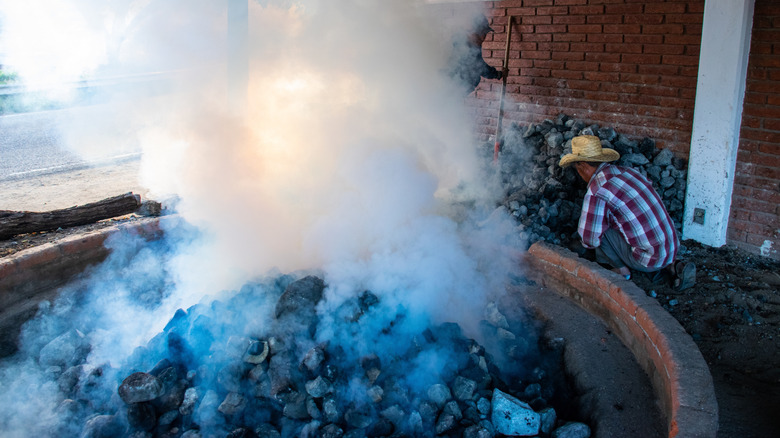
The process of making mezcal begins in the field. The mezcaleros harvest the agave by hand, chopping the leaves off first so that they can get down to the piña and dig it out of the ground. Then, the piñas are brought back to the distillery, also known as a palenque, where they're cooked. The traditional way to cook the piñas is in pits filled with stones and fueled by a wood fire. The piñas are often covered with earth and left to roast for few days or even up to a week.
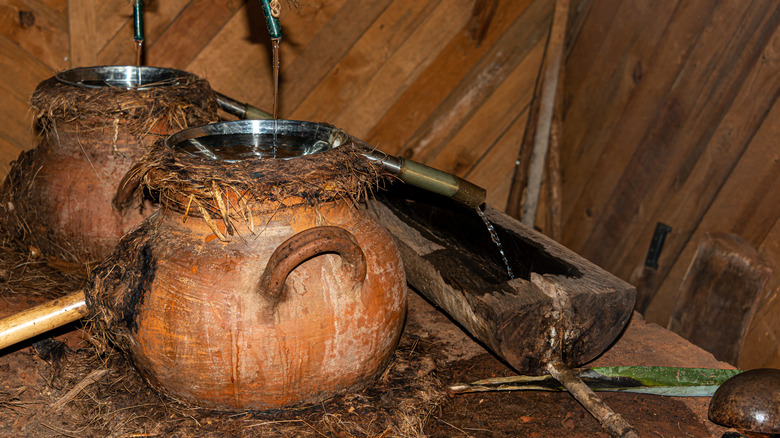
When the piñas are thoroughly roasted, they're typically crushed with a stone wheel called a tahona to extract the juices and sugars. The fibers and juice then go into open-air wooden vats to ferment, often with just the wild yeasts that are present in the air at the palenque. Finally, the fermented juice is distilled two times (sometimes three) in copper or clay pots and the final product is bottled, often at full strength.
It should be noted that every palenque does things a little bit differently. For example, some mezcaleros use wooden instruments to crush the piñas instead of tahona wheels. Others use starter yeast to kick off the fermentation and some use stills made from wood or stainless steel for distillation. Some industrial distilleries also use modern machinery like mechanical shredders to break up the agave piñas and steam ovens called autoclaves to cook the piñas.
Mezcal vs tequila
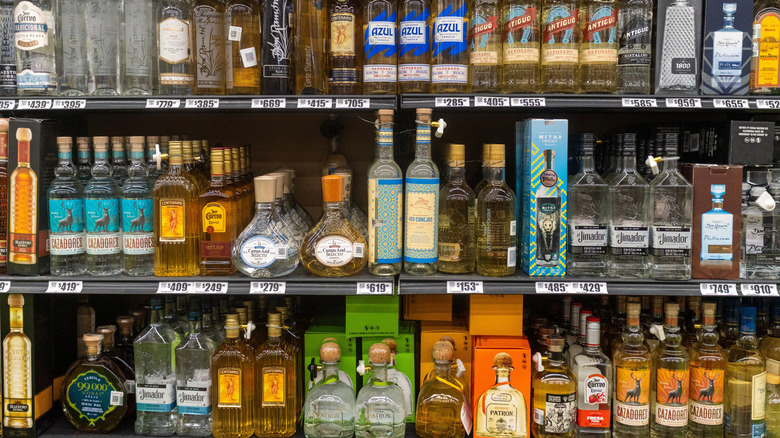
One of the biggest misconceptions people have about mezcal is that it's simply a smokier version of tequila. While it's true that they're both agave spirits, there are actually several differences between mezcal and tequila. For one, mezcal can be made from any species of agave, while the Norma Oficial Mexicana (NOM) states that tequila can only be made with Blue Weber agave. Interestingly, that means that tequila can be considered a type of mezcal, while most mezcals cannot be considered tequila.
Another difference between tequila and mezcal is where they can be made. You may have heard that true tequila can only come from Mexico. That's due to the Denomiación de Origen de Tequila (DOT), which stipulates that tequila can only be made in the Mexican states of Jalisco, Michoacán, Guanajuato, Nayarit, and Tamaulipas. Well, there is also a Denomiación de Origen de Mezcal, which states that mezcal can be made in 12 Mexican states: Oaxaca, Durango, Guerrero, San Luis Potosí, Zacatecas, Tamaulipas, Michoacán, Puebla, Guanajuato, Aguascalientes, Morelos, and the state of Mexico.
The production methods also set tequila and mezcal apart. As mentioned, mezcal is typically made by roasting agave piñas in wood-fired pits. That's why many mezcals have a woody, slightly smoky flavor. However, tequila is often made by steaming the agave piñas in brick or stone ovens or autoclaves. In addition, many tequila makers do not add the agave fibers to the juice during fermentation, while this is common in mezcal production.
Myths about mezcal
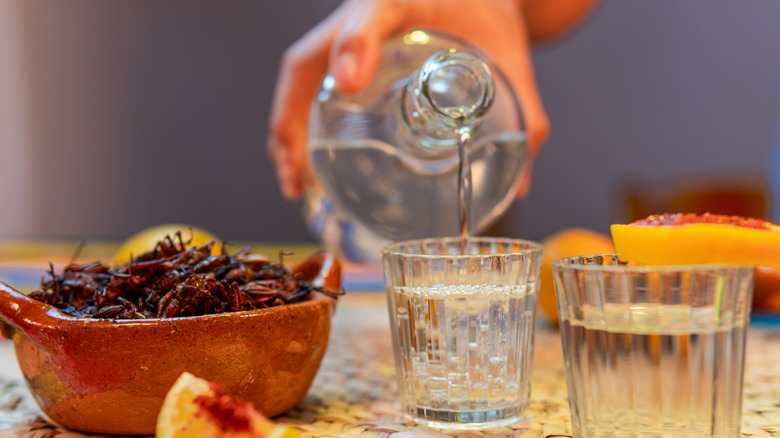
Now that we've dispelled the notion that mezcal is just smoky tequila, let's get into some other myths about the spirit. All of the experts we spoke to agree that one of the most common misunderstandings is that mezcal has just one flavor profile. As Alejandro Rossbach said, "In many ways, it is almost like multiple spirits living within the same category." He believes that perception may be due to the dominance of larger-scale smoky mezcals on the market and a lack of exposure to mezcal's diversity.
And speaking of that smoky flavor, Judah Kuper of Mezcal Vago pointed out that while so many people are hung up on it as the dominant flavor, it's not always a given. He said, "For me, the more you taste mezcal from different regions, varieties, and distillation methods, the more you don't even taste smoke. I think it is hard to find descriptive words for some of the stronger, nuanced flavors mezcal offers. I swear I almost never even taste smoke."
Then there's the erroneous belief that mezcal comes with a worm in the bottle. This myth actually began in the middle of the 20th century when a mezcalero named Jacobo Lozano Páez added agave redworm moth larvae (aka gusano de maguey) into his bottles of mezcal. The marketing ploy caught people's attention and eventually fueled the infamous tequila worm myth. The truth is, it's rare to find bottles of mezcals today that contain a worm. It's also strictly against the rules of tequila production.
The different types of mezcal
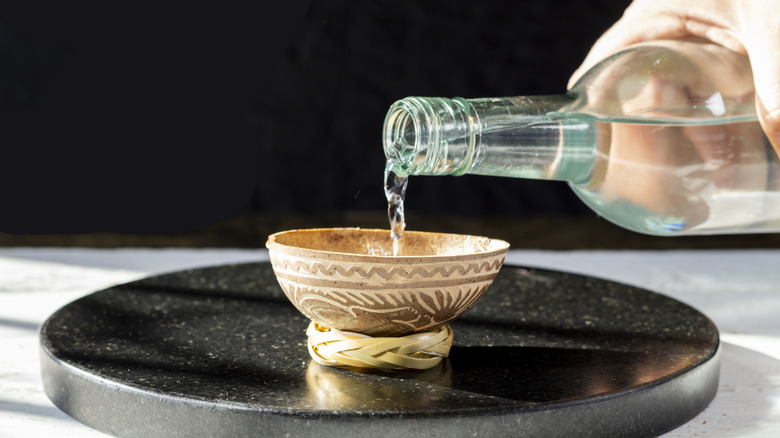
According to NOM-070 (the set of government-determined rules for mezcal production) there are three official types of mezcal: Mezcal (often referred to as "industrial"), Mezcal Artesanal, and Mezcal Ancestral. Mezcal can be made with modern tools like mechanical rollers and autoclaves, which lends this style more to mass production. The latter two categories are more time-consuming and labor-intensive, but many believe they result in better-tasting mezcal.
Mezcal Artesanal can be made with a mix of traditional and modern production methods. For example, the agave can be cooked in underground pits, fermented in open-air tanks, and distilled with copper stills. "In Artesanal Mezcal, there are no machines used," said Sean Keane of O'Kahan Agave. "It is handcrafted, and there is no taste of industrial machines. Good Artesanal Mezcal has life to it. It tastes bright and complex."
Mezcal Ancestral takes that one step further with historical methods and old-fashioned materials. As Alejandro Rossbach explained, "Cooking is done exclusively in underground pit ovens, fermentation takes place in natural containers such as wood, clay, stone, or animal-derived vessels, and distillation is carried out in clay pot stills, often over direct fire." Because of the intensity of this production method, it's best suited to small batches, which is why you don't see it as often as Ancestral Mezcal or mass-produced bottles.
What types of agave are used to make mezcal?
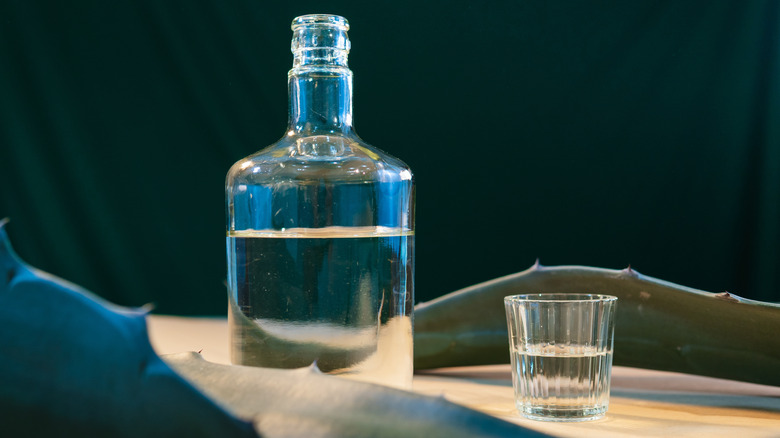
While tequila can only be made with Blue Weber agave, mezcaleros are free to use whatever agave is available to them to make mezcal. Espadín is the most common variety used because it's widely available, relatively easy to grow, and contains a high sugar content. However, there are roughly 40 different types of agave commonly used for mezcal, including Tobalá, Madrecuishe, Tepeztate, and Cempasúchil.
Each species of agave offers a unique flavor profile. For example, Sean Keane told us, "Our Agave espadin/Angustifolia has a nice hint of smoke without being overpowering. Agave Jabali has a slight hint of pepper, while Agave Lyobaa has more floral notes. Agave Tobalá, which is my favorite, has a unique flavor appreciated by bourbon drinkers." Keane encourages people to try a variety of mezcals to discover which ones align with their tastes.
Some producers (including all of the experts we spoke to) also combine agave varietals to create unique ensembles. Dylan Sloan of Mezcal Vago told us, "By combining agave types in the same batch, there can be more balance in flavor and [it] adds an element of unique blends never before tasted." Then there are pechuga mezcals or "celebration" mezcals where the mezcalero adds unique ingredients to the final distillation, such as corn, berries, spices, or even meats. This provides additional layers of flavor on top of the agave notes.
The factors that determine how a mezcal tastes
Obviously, the type of agave used has a large effect on how a mezcal will taste, but it's not the only factor. According to many of the experts we spoke to, terroir also plays a big role. Alejandro Rossbach told us, "Soil composition, altitude, climate, water, surrounding vegetation, and overall ecosystem all influence how the agave matures and ultimately the flavors that will come through in the mezcal." Therefore, the same type of agave grown in different regions can offer different flavors.
The team at Mezcal Vago also stresses that the water used for fermentation and proofing is important. They work with several mezcaleros, some of whom use spring water and others who use well water. Judah Kuper said, "The different minerality that the water source brings to the final flavor immensely affects the flavor profile." He noted that the well water used by Emigdio Jarquín gives his mezcal a "bone-dry finish," while the mezcals produced by Joel Barriga with spring water are sweeter and more fruit-forward.
Technique also contributes to a mezcal's flavor profile. This is where the human touch comes into play, from the choice of equipment, such as ovens and crushing tools, to the decisions they make as the mezcal progresses. For example, Sean Keane told us, "Depending on how long you cook the agave affects the taste and smokiness of the final product." Even decisions like how the agave piñas are stacked in the oven or which cooking fuel is used can significantly alter the outcome.
Sustainability in mezcal production
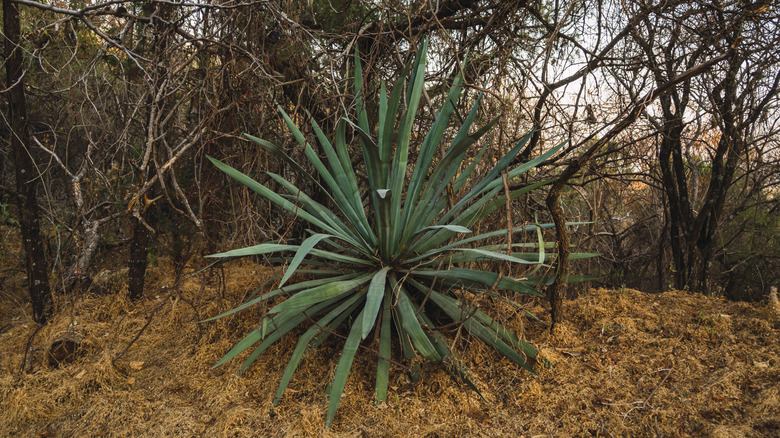
Given the growth in demand for mezcal and the fact that certain agave varieties can take decades to mature, sustainability is a major concern in the industry. This is particularly true in Oaxaca, where roughly 90% of mezcal production takes place. Some of the most pressing issues include the loss of wild agave species and the reliance on monocultures, which are prone to drought and disease. Fortunately, some mezcal companies are facing these issues head-on.
Sustainability has always been one of the core tenets at Mezcal Vago, and, according to Judah Kuper, it's already ingrained in the culture. "The thing to understand is that Oaxacan rural mezcaleros are truly sustenance farmers," he said. He explained that many live off the land in tiny towns, raising animals and growing their own crops in addition to agave. "So it isn't about teaching these guys about what they already live, it's about maintaining it as they scale up their production."
One way that Mezcal Vago supports the larger ecosystem is with Bat Friendly, a UNAM conservation project that requires agave spirit producers to allow at least 5% of their agaves to flower. While this funnels sugars from the piñas into the flowers, it also encourages bats to feed on the nectar and pollinate more agaves, which helps increase biodiversity across the region. As Dylan Sloan said, "Agave biodiversity helps resist the agave population against the plight and weather fluctuations that can wipe out an entire genetically monotonous crop."
The best way to taste mezcal
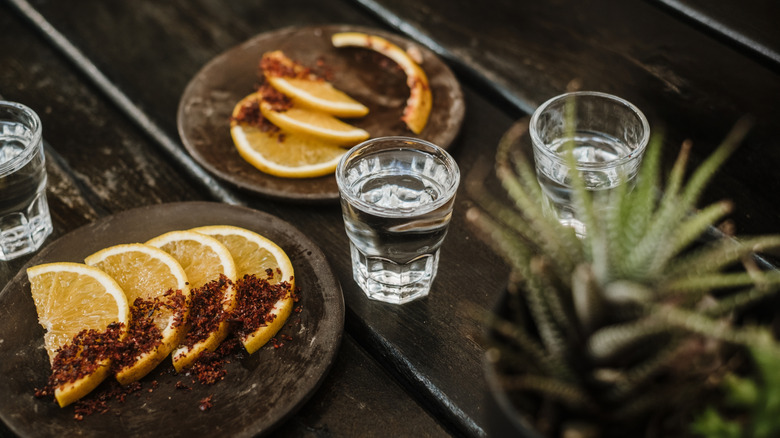
So you've settled on a bottle of mezcal and are ready to crack it open. Before you do, it's helpful to know the right way to drink mezcal so that you can get the most out of that bottle. To start, you'll need the proper drinking vessels. Mezcal is typically served in bowl-shaped vessels called copitas or glasses called veladoras. If you don't have either of those, any small, wide-mouthed glass will do.
Once you pour the mezcal, Alejandro Rossbach recommends letting it open up a bit before taking a sip. He said, "Mezcal benefits from a moment of oxygenation in the glass, which helps its aromas and structure fully express themselves." While it's aerating, you can take the opportunity to breathe in some of those aromas. Think of it like wine, where the notes you get on the nose contribute to the overall experience.
Finally, it's time to drink, but as Sean Keane told us, "Mezcal is for sipping. Not shooting. The first sip should slowly coat the tongue and allow the mezcal to sit for a second." He pointed out that the first sip can pack a punch, so it's the second and third sips where you can really start to appreciate the complexity. And if you want to enhance the experience, some people like to enjoy their mezcal with orange slices dipped in sal de gusano (a mix of salt, chiles, and dried and ground agave moth larvae).
Mezcal food pairing tips
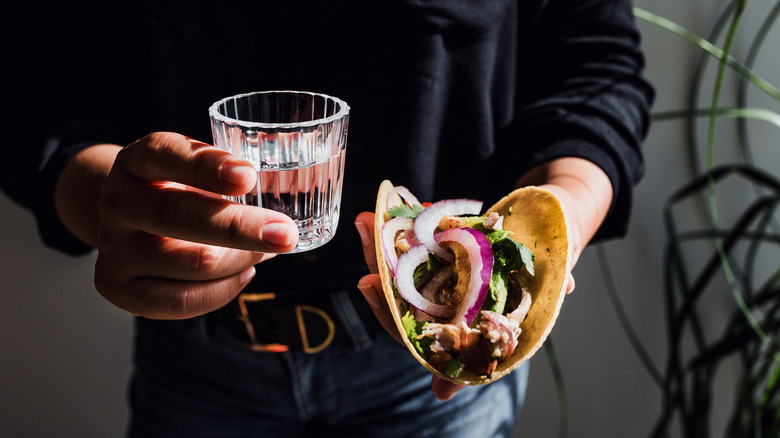
Many folks will tell you that mezcal is best enjoyed when sipped slowly on its own or mixed into easygoing mezcal cocktails that let the spirit's flavors shine through. However, it also pairs well with a wide variety of foods. The trick is knowing your agave types and considering how those flavors will either complement or contrast the flavor profiles of different dishes.
Alejandro Rossbach told us, "Herbal or earthy agaves like Cuishe or Madrecuishe tend to work well with grilled vegetables, herbs, and savory dishes, while softer profiles can align with richer seafood or subtly sweet preparations. Smokier or more structured mezcals can cut through fatty dishes like pork or lamb, while brighter expressions can lift heavier flavors." He recommends trying different styles of mezcal and seeing how they can elevate various dishes.
Mexican cuisine is an especially good match for mezcal, which makes sense, considering the spirit and many of the country's most iconic dishes developed side by side over generations. "Tacos al pastor go well with a good agave Espadín mezcal, because the seasoning and the pineapple pair perfectly with the mezcal," said Sean Keane. He also recommends pairing smoky Espadín mezcals with grilled meats and Tobalá mezcals with mole poblano.