

3 Types Of Mezcal, Explained
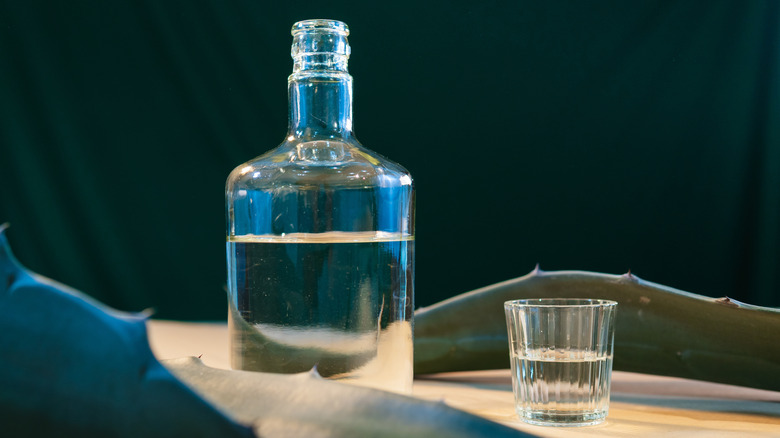
When it comes to mezcal, the smoky, agave-based Mexican spirit that deserves a spot in your liquor cabinet, there's a host of different labels or descriptions you might see on the bottle. Three of those relate to the way it's produced: "artisanal," "ancestral," and regular mezcal. While mezcal production generally follows the same path — first the piña of the agave (the juicy, central part) is cooked, then crushed to extract the juice, before it's left to ferment, and finally distilled — there are a lot of possible variables within that process. These include the types of containers (stills) used for distilling, which can be made from clay or metal, or the type of oven used to cook the agave, which can impact the mezcal's taste.
These three categories for the way mezcal is produced are defined under Mexican law. For example, only those produced under the relatively strict "ancestral" methods can use that label. That said, they shouldn't be confused with some other ways of categorizing mezcal. There's a separate classification system for mezcal's age (tequila uses similar terms for age, although the definitions are a little different). The type of agave used in the mezcal can also be used to sort them. It's worth brushing up on these, as they can give useful indications about the taste of a mezcal, but the focus here is the production categories.
Standard mezcal
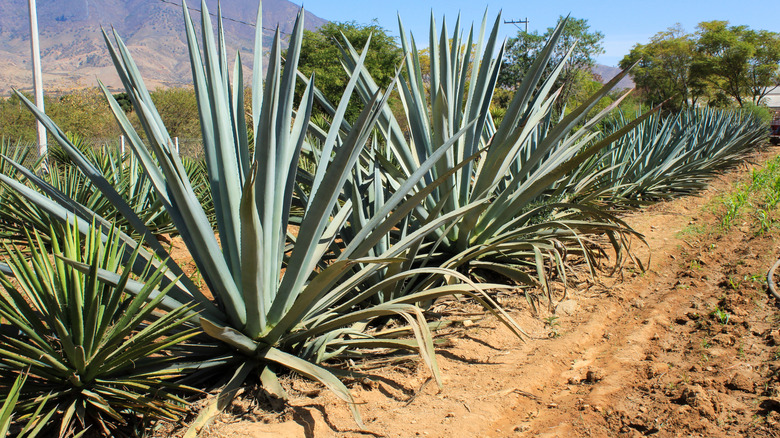
Let's start with the generic mezcal category. No "artisanal" or "ancestral" modifier is used here — it's just ... mezcal. It's sometimes referred to as "industrial" mezcal, and while this isn't the official terminology, it's arguably a helpful description for the production used. It's the least restrictive category, allowing for a wider range of production techniques than the other two. For example, the agave can be roasted in industrial machines like autoclaves (compared to the traditional earthen pits). There are few restrictions on how the agave is crushed or shredded to get the juice out, and it can be distilled in pretty much any type of container, rather than, say, a traditional clay pot, as might happen with the other categories.
If you buy a bottle of this standard mezcal, you might not find a ton of information about the production techniques on the label. That's not because there's inherently anything wrong with them; it's just that companies aren't inclined to boast that they used industrial machines to make their product. That said, it still needs to meet baseline requirements, like being made solely with agave (unlike tequila, any agave is acceptable), and having a certain alcohol content (35% to 55%). Perhaps surprisingly, this category only makes up around 4% of the mezcal that's out there: The vast majority of mezcal falls into the artisanal category.
Artisanal mezcal
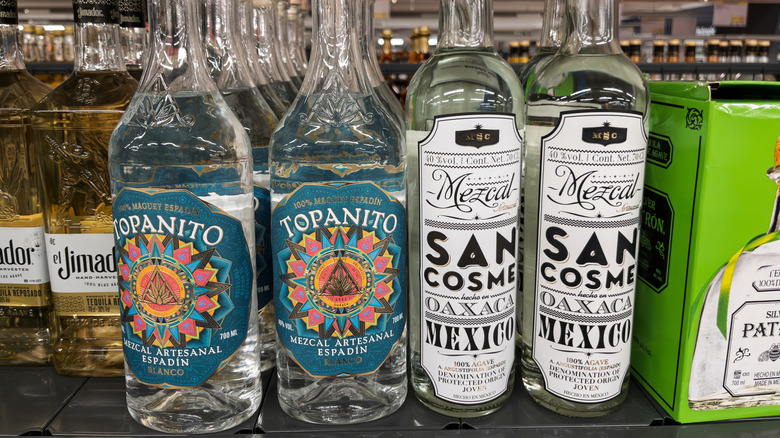
Artisanal is by far the most common category of mezcal. Making up about 95% of all mezcal production, this is probably what you got if you ordered a mezcalita at a bar or grabbed a bottle without looking at the label.
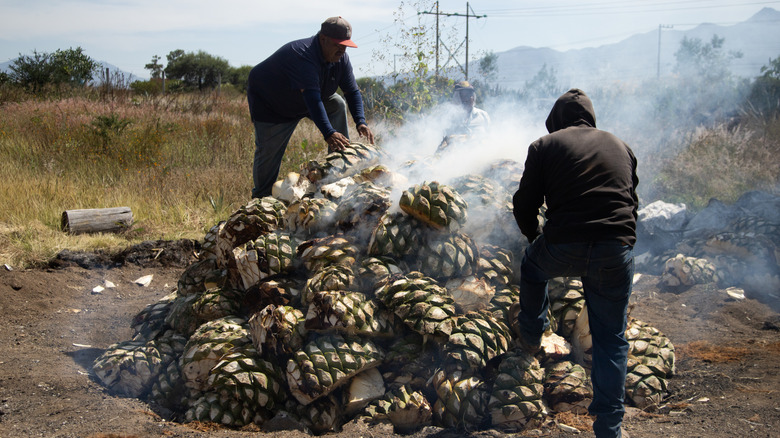
There are a few rules that have to be followed during production in order to use the artisanal label. First, the agave must be roasted in either earthen pit ovens, or an above-ground masonry oven — no industrial autoclaves as with standard mezcal. The milling (that is, crushing the agave to get its juice) can be done by hand or with a tahona, a large rotating stone that crushes the plant. Mechanical shredders are also permitted, which separates it from the more hands-on ancestral mezcal (some claim that this breaks up the agave fibers in a way that tastes different from more manual methods).
The fermentation process leans traditional: It can happen in stone pits, holes in the ground, wooden or clay vessels, hollow tree trunks, or even animal hides. Finally, the distillation can be in clay or wood stills, like ancestral mezcal, but the rules are a bit more permissive, so copper and stainless steel stills are also acceptable. Overall, artisanal mezcal requires a more traditional approach than industrial, but producers have some freedom to use more modern tools or materials that, as you'll see, can't be used for the ultra-traditional ancestral method.
Ancestral mezcal
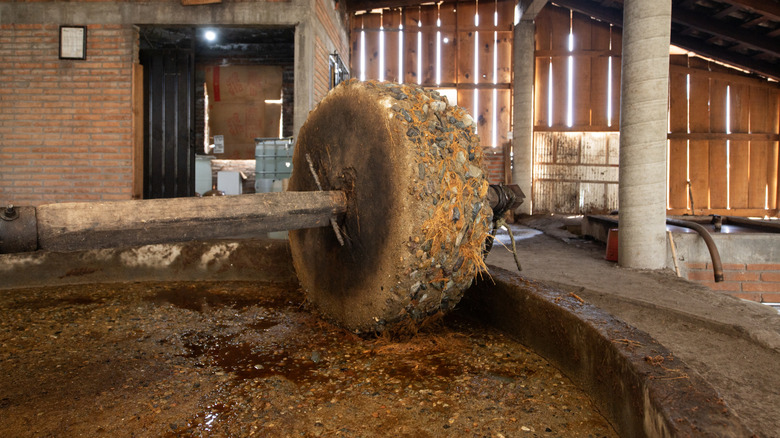
This is the type of mezcal you're least likely to encounter, as it makes up less than 1% of what's on the market. It refers to mezcal that's effectively made the old-fashioned way, and Mexican law is quite strict about this. The agave can only be cooked in earthen pits in the ground; no above-ground ovens as with the artisanal type. When cooked, it can only be crushed by hand or with a tahona. Fermentation has to happen in natural containers. Wood is the most common, although animal skin, stone, and clay vats are also allowed. The mezcal must be distilled in clay pots rather than steel, and the heat must come from a wood fire.
Generally, you'll get a more earthy, intense, layered flavor from ancestral mezcal. This is partly a result of the fermentation containers and clay stills. The heavier taste also comes from the fact that agave fibers are left in during the fermentation process (as opposed to just the juice), which adds extra flavor. Plus, it can have a headier smoky taste due to the use of the earthen pits and wood fire for cooking and distillation. Because producing ancestral mezcal is a more labor-intensive task that doesn't scale industrially, you'll generally pay more for it.
How much do these categories really matter?
While these production methods can impact the final product, the age of the mezcal (joven/blanco, reposado, and añejo) and type of agave are probably more important factors in terms of flavor. Plus, they're not measures of quality: There's nothing stopping industrially produced mezcal from being "good," however different drinkers might define that. Meanwhile, the finicky nature of ancestral mezcal production means it's still possible to make mediocre batches.
There's also some overlap: Some artisanal producers will use almost entirely ancestral processes, but if they use copper for distilling, they're automatically bumped into the artisanal category. Similarly, some mezcal producers choose not to use wood-firing for the distillation, and this relegates them to the standard category. Then there's the fact you have to go through a regulatory process: There are producers who can't or don't want to navigate the regulatory process, and may make something that's effectively ancestral mezcal, but with a label like "destilado de agave."
Overall, these categories are just a piece of the mezcal puzzle. You can use them to guide you to a degree, but for a fuller picture, you'll want to consider all the factors that go into making the liquor.