

8 Tips For Making Next-Level Chilaquiles
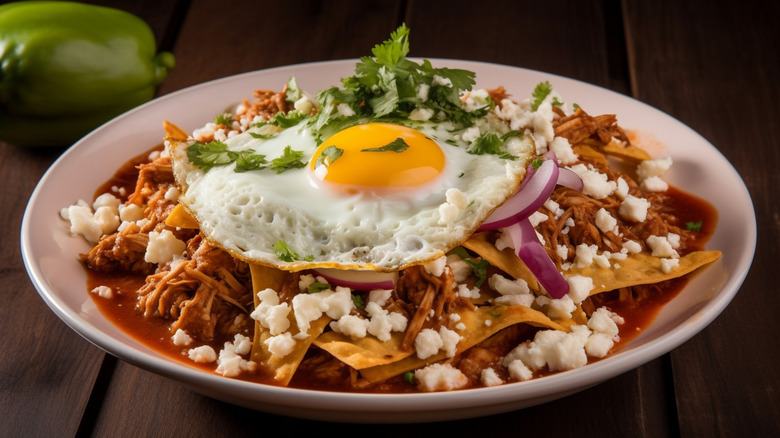
When it comes to Mexican breakfast foods, few dishes are as beloved as chilaquiles. The dish features a comforting mix of crispy corn tortilla chips tossed in vibrant salsa and topped with ingredients like fried eggs, meat, fresh herbs, cheese, and crema. It may seem easy enough to make, but there's actually an art to getting the textures and flavors just right. After all, chilaquiles aren't simply a style of nachos where you can just layer everything together and hope for the best.
Although everyone has their personal preferences when it comes to chilaquiles, most agree that the tortilla chips should retain a bit of bite rather than turn into a soggy, soupy mess. In addition, the salsa should be fresh-tasting and full of flavor, and the toppings should complement the chips and salsa rather than overwhelming the plate. Pulling that off takes some planning and a bit of know-how, and that's where expert insights can be invaluable.
In an effort to step up our chilaquiles game, we reached out to several chefs who specialize in Mexican cuisine. We asked them to share suggestions for making better chilaquiles, and they came through with insights on everything from choosing the right tortillas to amping up the salsa's flavor and perfecting the toppings. Here are their tips for making next-level chilaquiles that wouldn't be out of place in a Mexican restaurant or at home.
1. Skip store-bought chips and start with thick, sturdy tortillas
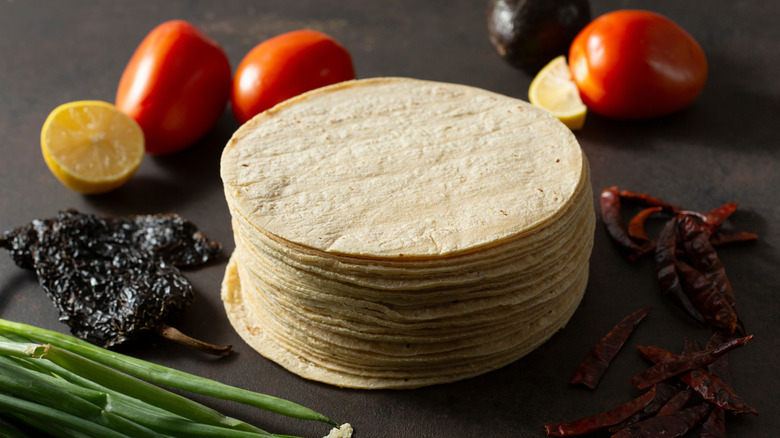
Ask any chef where most home cooks go wrong with chilaquiles, and the answer usually starts with the tortilla chips. After all, the chips are the foundation of the dish, so you want to make sure you get them right from the start. Sure, store-bought tortilla chips might save you time and effort, but the truth is, they may not stand up to salsa and toppings. According to the chefs we spoke to, whole tortillas are a must.
"Thick corn tortillas make the best chilaquiles — cut and fried right before making your recipe, if possible," said Tim Bechtle, culinary training manager at Broken Yolk Cafe. He explained, "The thicker they are, the better coverage of sauce you can add while still maintaining a great crunch factor. Thin tortillas do not hold up and become soggy too quickly." Look for sturdy tortillas at your local tortilleria, Latin market, or grocery store. Or, even better, make your own at home.
You also want to make sure your tortillas aren't too fresh, because too much moisture can prevent them from crisping properly when you fry them. Day-old tortillas are ideal. Some people also suggest letting the tortillas sit in the sun for a while to firm them up a bit. Hot oil is also key, so the tortilla chips crisp up quickly without absorbing too much oil.
2. Use a wide, shallow pan and fry in batches
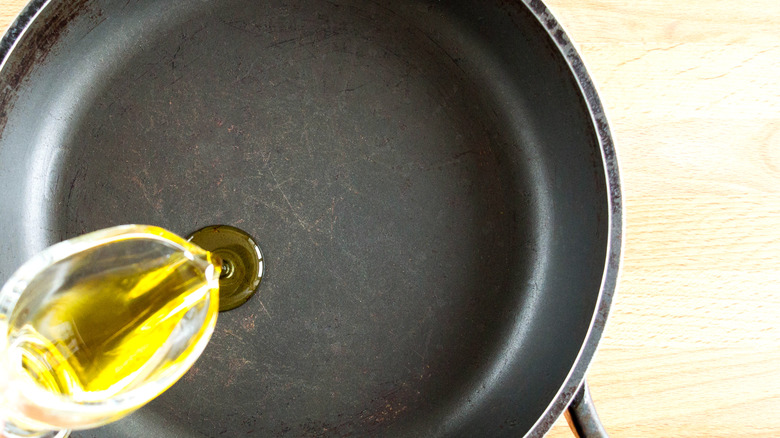
Once you've cut your tortillas into smaller pieces, it's time to start frying. Several of the chefs we spoke to suggested using a wide sauté pan or shallow skillet. José Luis Chávez, culinary director at Matilda Chicago, told us that this will give you more control over the tortillas, allowing you to cook them quickly and more evenly. He said, "This is because you need high heat and fast movement since chilaquiles can't sit for that long."
The best type of oil for shallow frying is something with a high smoke point, like canola oil. As an added bonus, canola oil has a neutral flavor, so it won't mask the tortilla chips' flavor. Pour enough oil into the pan to immerse the chips (about an inch or two), and aim for a temperature of about 350 degrees Fahrenheit. You may want to use a candy thermometer or deep-frying thermometer to monitor the temperature.
Many chefs will also tell you that one of the worst ways to ruin chilaquiles is by overcrowding the pan. When too many tortilla pieces are added at once, the oil temperature drops, and the chips start to steam rather than fry. Work in batches and fry the chips until they're golden and crispy. Then, remove the chips with a slotted spoon and let them rest on a paper towel-lined plate to absorb any excess oil.
3. Don't be afraid to make your own salsa
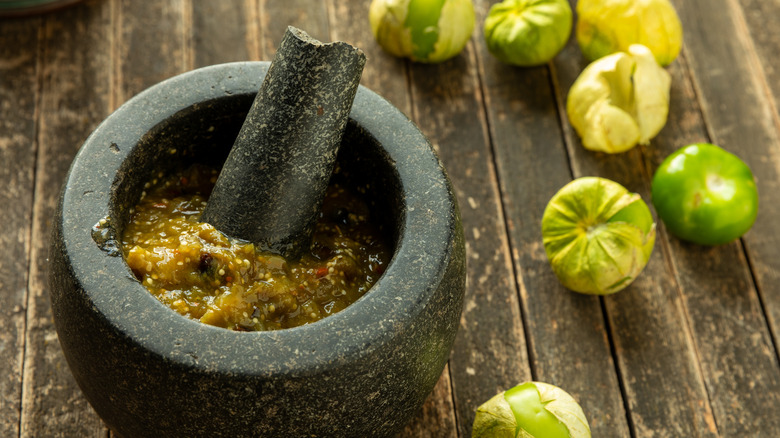
Tortilla chips provide the base of chilaquiles, but the salsa is what really makes them come alive. Many home cooks use store-bought salsa as a convenient shortcut, but at the end of the day, nothing beats homemade. The most common types of salsa used for chilaquiles are salsa roja, which is tomato-based, and tomatillo-based salsa verde. And while they may look and taste complex, both are actually relatively easy to make.
All of the chefs we spoke to agree that the key to a good salsa is using fresh ingredients rather than jarred or canned items. In addition, Richard Sandoval said it's all about balance and depth. He explained, "You want acidity from tomatillo or tomato, heat from chile, aromatics like onion and garlic, and enough salt to make everything come alive."
Chef Emeterio "Tello" Luna of Harry's Poolside Bar & Grill also recommends preparing your salsa by hand with a molcajete (a mortar and pestle made from volcanic stone). "Here in the States, we call it a Mexican blender," he said. The molcajete method bruises the ingredients and forces oils to escape, giving the salsa more depth of flavor. It also gives you more control over consistency, allowing you to strike a nice balance between smooth and slightly chunky so the salsa clings to the chips without feeling watery.
4. Roast your ingredients for more depth
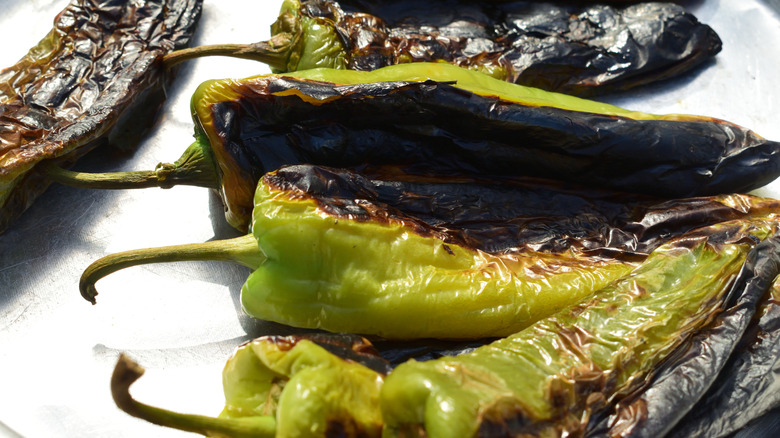
Even when you use fresh ingredients and blend by hand, your salsa might still fall a bit flat. That's where roasting comes in. Tim Bechtle told us, "A quick roasting of all the ingredients will pre-cook each of them separately, unlocking their flavors individually before coming together." Richard Sandoval also agreed that the best salsas have a roasted element. He said, "Roasting the vegetables adds smokiness and complexity that gives the dish more soul."
There are a few different ways you can roast your vegetables. The easiest is to place them on a sheet pan, drizzle them with oil, and pop them in the oven under the broiler until they're blistered and slightly blackened. You can also use the grill to get the same effect and add extra smokiness. Some people also roast their fresh chiles directly over flames on a gas stovetop burner until blackened, and toast dried chiles in a pan before soaking them in water to soften them.
Once your vegetables are roasted, you can decide whether to remove the skins or leave them on. The blackened skins can add a nice charred flavor, but too much can also make the salsa bitter. This can also depend on whether you're using a blender or molcajete. The blender will whiz up those charred bits and disperse them throughout the salsa, but it may be harder to break down the charred skins in a molcajete.
5. Think beyond red and green sauces
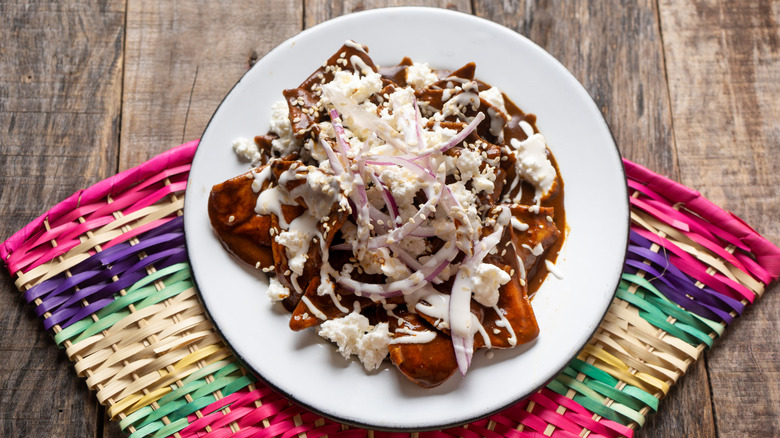
Salsa roja and salsa verde are the usual go-to sauces for chilaquiles, but there's no reason you have to stick to just those two. For example, in Mexico, it's not uncommon to see chilaquiles with mole. Sometimes called the national dish of Mexico, mole dates back thousands of years. Its name means "sauce" in Nahuatl, and it comes in multiple variations, many of which include ingredients such as fruits, nuts, seeds, chiles, and sometimes chocolate. It can be red, green, brown, or black and offer sweet, spicy, and savory notes.
Creamy sauces are another option that can work surprisingly well with chilaquiles. You can simply add a bit of cream to your salsa roja or salsa verde while it's simmering on the stove, or whip up a creamy chipotle or roasted poblano sauce by blending your desired ingredients with cream or sour cream. Just keep in mind that you want the sauce to be thin enough to coat the tortilla chips evenly. If you find it's too thick, you may want to thin it out with a bit of broth or water. Also, if you're opting for a creamy sauce, you may want to go easy on rich garnishes like cheese and crema.
6. Heat and timing matter
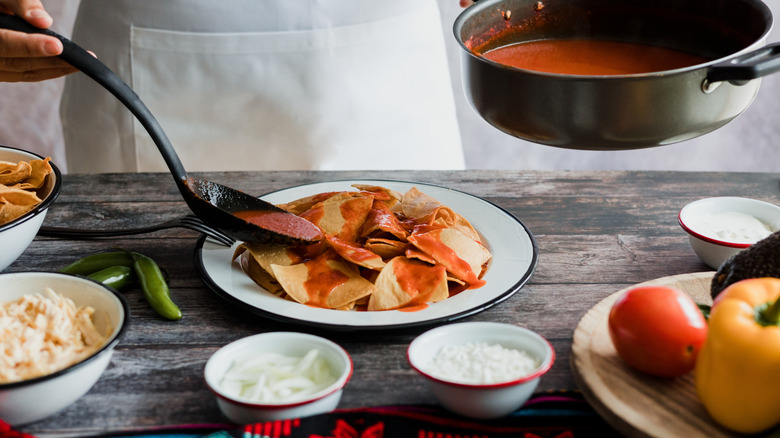
One important point that all of the chefs we spoke to brought up is that timing is everything when it comes to chilaquiles. This is not a slow-cooked dish, but rather one that comes together at the last minute and it should be served quickly. With that in mind, José Luis Chávez advised, "Have everything ready to go before you start: salsa hot, garnishes prepped, and plates ready because chilaquiles is not a dish you can step away from."
To combine the chips and salsa, Richard Sandoval recommends adding the chips to the pan with the salsa and gently folding them in to lightly coat them. "The goal is to coat them, not stew them," he said. Alternatively, you can do like Emeterio "Tello" Luna does and pour the salsa over the chips once everything is done. "This way you can get the spiciness of the salsa and the crispiness of the tortilla to your liking," he said.
Regardless of how you combine the chips and salsa, all of the chefs agree that this should be the final step before adding your garnishes, and that you only have a small window of time to serve the dish. Chávez pointed out that the tortilla chips will keep absorbing liquid even when on the plate thanks to residual heat. Sandoval noted, "Chilaquiles should never sit in the pan for too long. I always say they should go from stove to table in under a minute."
7. Get creative with your proteins
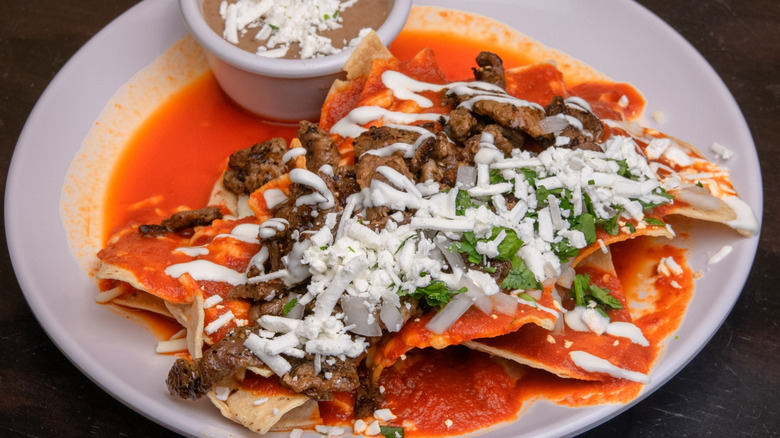
One of the great things about chilaquiles is their versatility. You can enjoy them as-is with just the chips and salsa and maybe a few garnishes, or top them with hearty ingredients that amp up the flavor and protein. Sunny-side-up eggs work well because the runny yolk melds into the salsa and chips, adding extra lusciousness. Shredded chicken is also a popular topping because it adds texture and a mild flavor that complements the tangy salsas.
If you want to go bigger on flavor, Tim Bechtle recommends adding barbacoa. "The juices of the meat blend into the salsa so there is no added sogginess," he said. And if you're thinking more along the lines of spicy ingredients that will make your breakfast sizzle with awesome flavor, Emeterio "Tello" Luna recommends chorizo. Some other meaty options can include carne asada, carnitas, and cochinita pibil (a Yucatan dish that's similar to pulled pork).
And if you prefer to keep things meat-free, there are also plenty of ways to add flavor and texture. For example, Bechtle told us, "Toasted pepitas (pumpkin seeds) give a nutty depth and an additional crunch that elevates a dish with both red and green sauces." Avocado can add pops of color and creaminess, and refried beans are a popular pairing, often served on the side so that you can dip the chips into them or spoon the beans over top.
8. Finish with the right garnishes to tie everything together
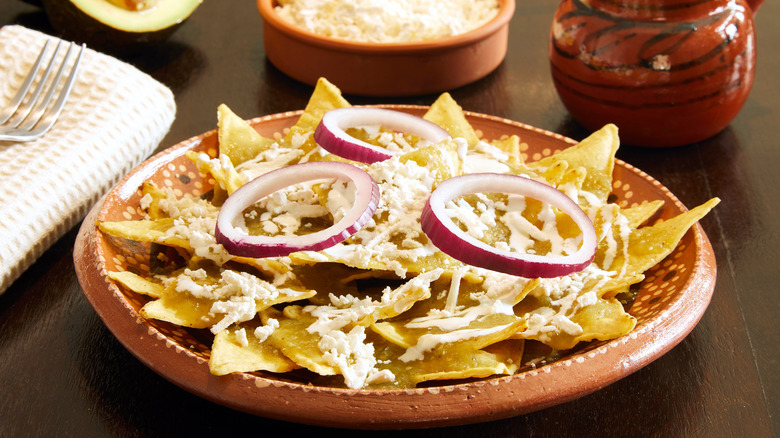
Last but not least, if you really want to step your chilaquiles up a notch, garnishes can make a big difference. "I tell people not to forget the queso fresco, fresh cilantro, and a Mexican crema," said Emeterio "Tello" Luna. "That just completes the dish and gets those taste buds going!" The queso fresco adds texture and tang, the cilantro brings bright herbal notes, and the crema adds smoothness.
For those not familiar with Mexican crema, it's a cultured cream that's basically a thinned-out version of sour cream or crème fraîche, but slightly saltier and tangier. It's often considered a must-have ingredient for really good Mexican food, so it's worth seeking out. Tim Bechtle recommends keeping an eye out for Oaxacan crema in particular, as he said it "adds a creaminess that combines well with the savory flavors already present in the dish."
Beyond the fresh herbs, cheese, and crema, many chefs also recommend adding tangy garnishes for contrast. Richard Sandoval told us, "An underrated topping is thinly sliced pickled red onion. It brings brightness, acidity, and a little crunch that cuts through the richness of the salsa and crema." José Luis Chávez also recommends escabeche vegetables (pickled veggies) and a touch of lime zest to add freshness and balance.