

10 Secrets Texas Roadhouse Doesn't Want Customers To Know
Texas Roadhouse has a reputation for serving comforting, mouthwatering ribs, steaks, and sides. Its butter-slathered rolls are extraordinary (here's why they're so delicious), and people adore the friendly energy. It's also known for being strict about sourcing its meat. It's no surprise that it was one of the most popular restaurants in the country in 2025, according to the American Customer Satisfaction Index Restaurant and Food Delivery Study.
But that hasn't stopped it from facing its share of secrets that it might prefer to sweep under the rug. The company has had to deal with several lawsuits and claims over the years. This isn't unusual for corporations as most of them tackle court cases in their lifetimes. And most people might not care about a number of these filings. However, some of the accusations against Texas Roadhouse could easily tarnish its reputation. Among them are these 10 secrets Texas Roadhouse doesn't want customers to know.
1. A legal group filed a complaint about the company's hiring practices

Texas Roadhouse's Diversity, Equity, and Inclusion policies have resulted in accusations of hiring discrimination. America First Legal (AFL) filed a complaint with the U.S. Equal Employment Opportunity Commission in 2025. The group claimed that Texas Roadhouse's hiring policies violated the Civil Rights Act of 1964, which prohibits segregation and discrimination, including employment bias based on characteristics such as race. AFL accused Texas Roadhouse of illegally considering race and gender when hiring.
Texas Roadhouse has been open about its workforce. In fact, according to the company's 2024 Sustainability Report, 62.5% of the director nominees were male, per AFL. Texas Roadhouse's annual report to the Securities and Exchange Commission did show that, by the end of 2024, a slim majority of support center and hourly employees were women. However, women constituted only 40% of the company's restaurant managers, and only 24% of the restaurant managers were people of color.
AFL has still called the company's policies unlawful and outdated. It's also claimed that Texas Roadhouse was essentially dodging its responsibility to shareholders.
2. A family found staples inside the restaurant's bread

An alarming situation allegedly occurred at a Massachusetts location in 2025. According to Boston 25 News, a TikToker, @maymonayy, posted a video claiming that she and her family were eating when her sister said there was something sharp in her roll. The segment shows the woman's hand moving a piece of bread that clearly has a few metal staples trapped inside. Despite the manager promising to comp the meal, the family reportedly did not receive any form of credit.
Texas Roadhouse responded to the news report, stating that the local health department inspected the restaurant after the woman's claim went public. Inspectors apparently found no signs of a contamination problem, and there have been no reports of similar issues. (If you're still worried, you can always make copycat Texas Roadhouse rolls at home.)
3. The company settled a $12 million age discrimination lawsuit

The company had to settle a huge lawsuit in 2017, resulting in a settlement of well over $10 million. In 2011, the U.S. Equal Employment Opportunity Commission (EEOC) announced that it was suing Texas Roadhouse for systemic age discrimination. The EEOC claimed that the company routinely and intentionally didn't hire people over 40 for public-facing positions. It also noted that the images of people in its company manuals were all of younger people.
Texas Roadhouse fought back, accusing the EEOC in 2014 of failing to provide records that the company had requested under the Freedom of Information Act. A federal court dismissed Texas Roadhouse's claim after determining that the EEOC had responded.
The case finally went to trial in 2017. However, the jury was deadlocked. Before a retrial could occur, Texas Roadhouse agreed to settle for $12 million. The settlement also required the company to have a decree compliance monitor keep the company on track.
4. It was accused of failing to follow state labor laws and refusing to pay overtime
Two Texas Roadhouse locations have been accused of not following state labor regulations regarding breaks, meals, and overtime pay. In 2020, an assistant manager in Erie, Pennsylvania, filed a lawsuit against the company for overtime violations. She was classified as exempt, which meant she was not eligible for overtime pay. This is very common for managers, and it's legal as long as they handle managerial tasks like scheduling and supervising employees. However, she claimed that she often spent her days cleaning, serving customers, and handling other responsibilities expected of non-managers, which would have made her eligible for overtime pay.
In California, another employee filed a lawsuit in 2022, claiming that her location violated laws regarding meal and rest breaks, overtime pay, wage statements, and a lot more. The company allegedly didn't give employees proper breaks and wouldn't compensate them correctly for any they missed. It also supposedly didn't provide correct wage statements and used incorrect values to calculate overtime. So far, there's been little in the way of resolution. The franchise owner of the location in question tried to move the case to federal court; however, a U.S. district court judge sent the case back to state court in 2024.
5. Employees accused the company of improperly handling tips

In 2012, Texas Roadhouse agreed to settle a class-action lawsuit brought by Massachusetts servers. The employees claimed that the company included managers and non-waitstaff when distributing tips from a tip pool. Tip pools affect what Texas Roadhouse servers can make on average, and Massachusetts law prohibits non-service employees from receiving any of the gratuities that waitstaff earn. The company was also accused of violating tip credit laws, which state that if a server makes less than the state minimum wage after tips, the company must pay the difference. After the company distributed the tips to managers and other waitstaff, the servers' pay was supposedly less than the minimum wage. However, according to the lawsuit, Texas Roadhouse didn't pay the difference.
In 2019, employees in Kentucky filed a lawsuit accusing the company of not properly informing waitstaff that they'd be part of a tip credit plan despite paying them reduced wages. The Fair Labor Standards Act (FLSA) says that companies must inform employees if they're enrolled in this; otherwise, the employees should be paid the full minimum wage regardless of tips. The FLSA also states that if a tipped employee performs non-tipped work more than 20% of the time, the employee should receive the full minimum wage for those hours. However, Texas Roadhouse allegedly understaffed locations to the point that waitstaff had to perform non-tipped duties while still being paid a reduced wage.
6. An employee allegedly stole company secrets

A restaurant's recipes, menus, and formats are considered trade secrets. If you work for a restaurant and take one of those recipes or menus over to a competitor without permission, you could be sued for stealing. That's what happened to a former Texas Roadhouse employee in 2013.
The company claimed a former employee, who worked for Texas Roadhouse between 2006 and 2013, made efforts to learn about a new restaurant concept the company created before he left to work for California Pizza Kitchen. He allegedly tried to learn as much as he could about the new concept, including taking pictures of the interior and the menus. He was also accused of taking a new pizza recipe the company was serving. The company wanted a restraining order and temporary injunction to prevent him from giving away any of that information, claiming he had a two-year non-compete agreement at the time he left.
7. The old peanut shell tradition led to severe injuries
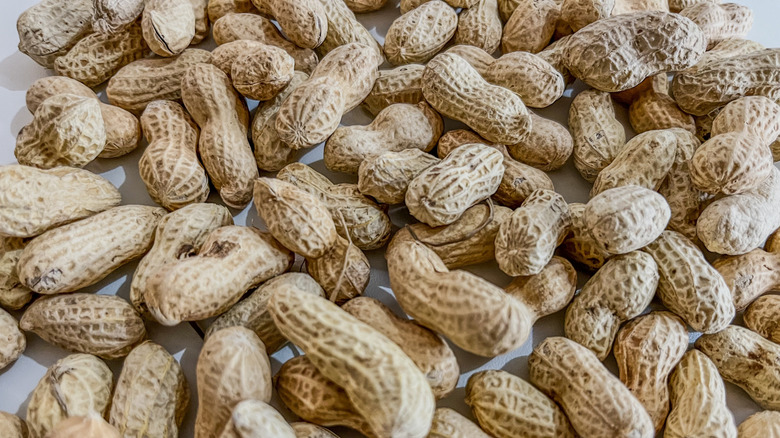
Texas Roadhouse used to allow customers to throw peanut shells onto the floor at each restaurant. Unfortunately, that led to serious injuries and resulted in a few lawsuits for the company. In 2013, a jury found in favor of Angela Bishoff and her husband after she accused Texas Roadhouse in Temple, Texas, of encouraging dangerous practices that led to her falling and breaking her kneecap. The restaurant had both concrete and hardwood floors, and the hardwood (where Bishoff fell) couldn't absorb the oil from the shells. The jury did find her 50% liable, stating that she didn't take appropriate care in crossing the floor while in high heels.
Another woman, this time in southern Texas, filed suit against Texas Roadhouse in 2013, claiming she also slipped on the shells, resulting in both physical injuries and mental anguish. In 2016, a man in Iowa sued Texas Roadhouse after he slipped on shells in 2015. The suit claimed that, among other factors, the restaurant's flooring contributed to the conditions that led to the fall. The case apparently ended in 2017 with a stipulation of dismissal.
Texas Roadhouse no longer allows people to throw peanut shells on the floor. It stopped that tradition around the time of the pandemic, although the lawsuits and allergies may have also played roles in the decision.
8. One location let a dog eat off regular plates

In 2022, a TikTok video of a dog eating at a Texas Roadhouse on Veterans Day went viral. The video shows the dog in a booth with a person next to it, cutting up food and letting the dog eat it off a fork. According to the caption, the dog itself is a veteran of two tours in Afghanistan.
@bigwill1997 Veteran Dog Gets Free Meal At Texas Roadhouse #YellowstoneTV #ChevyEVSongContest #veteran #dog #texasroadhouse #dog #army #navy #usmc #miltok #trend #viral #fyp #tiktok
Most reactions were positive, and people reposted the video across social media platforms. People thanked the dog for its service and noted how well-behaved he was. But not all were happy. One person on Facebook simply called it "Groooossssss," with several replies pushing back. Others said they would no longer eat at the chain because the location had let a dog eat off the utensils.
It turns out that the people who were disgusted may have had good reason to feel that way. In 2021, TeamDogs interviewed a veterinarian about whether letting dogs lick the plate after a meal was a bad idea. According to Dave Leicester of Vets Now, dogs can leave behind "bacteria such as salmonella, especially if they are fed a raw meat diet, which cannot be reliably destroyed by dishwashing, and can remain on crockery as a source of infection for the family."
9. It was sued over years of sexual harassment

In 2014, the U.S. Equal Employment Opportunity Commission (EEOC) announced it had filed a lawsuit against a Texas Roadhouse franchise in Ohio. According to the lawsuit, a manager at a location in Columbus had allegedly sexually harassed female employees, offering them extra benefits or the opportunity to get out of disciplinary action if they complied. The lawsuit also accused managers of using youth and sexual desirability as a factor in hiring female employees. The franchise management was accused of not doing anything to stop them despite knowing about the problem, and retaliating against anyone who complained. The harassment, according to the lawsuit, started in 2007 and lasted until the a manager was fired in 2011.
The EEOC announced in 2016 that the franchise operators had agreed to settle for $1.4 million. The agency wrote that there had been 12 victims, some only 17 years old at the time of the harassment. The EEOC also noted that the manager's termination in 2011 was due to him being caught on video harassing a 17-year-old in his office.
In 2023, three separate lawsuits claimed the manager at a location in West Virginia allegedly harassed and stalked female employees, including a 17-year-old. As of early April 2026, there's no word on any resolution for the three cases.
10. Executives were accused of planning to make a sick employee quit

In 2024, TikTok user @tara_rule posted a video in which she claimed she overheard a Texas Roadhouse corporate staff member plotting to trick an employee's spouse. The video shows her in an airport, eating and listening to a nearby one-sided conversation. The background noise obscures much of the discussion; you hear a woman's voice but don't hear all of what she says. The caption on the video explains that the woman is on the phone, mentioning a plan to send a hospitalized employee's husband a termination agreement disguised as benefits paperwork. The staffer allegedly broached canceling the employee's 401(k).
@tara_rule could be wrong but i listened to 3 diff convos about the situation soo #dystopian #latestagecapitalism #texasroadhouse
Online reaction was exactly what you'd expect. People piled into the comments section on an unrelated post on Texas Roadhouse's Facebook page, shaming the company for the alleged conspiracy. The company denied that the woman was discussing ways to trick the couple; instead, it claimed she was discussing a way to reach the employee's family.