

6 Ways Walmart Was Different For Boomers Back In The Day
Whether you love it or hate it, you can't deny that Walmart is one of the most successful companies in the world, and one of the best examples of how expansion and experimentation can help a company thrive. What started as one discount store in Rogers, Arkansas, in 1962 quickly grew to 24 stores by 1967, eventually reaching nearly 11,000 stores worldwide under the Walmart, Sam's Club, and Walmart International divisions by 2026. Not all of its ventures have worked out, but the company has rolled with those punches and successfully navigated an increasingly volatile commercial world. And it continues to evolve, making new changes in 2026.
Walmart is now the largest retail grocer in the U.S. Its stores cover everything from groceries to more traditional department-store products to membership warehouse shopping. But this multi-format model is so different from what the original stores were like that the Walmart of old seems like a completely different company. Its relationship with food saw some of the biggest innovations. Some of those are obviously due to new technology, but the Walmart of the 20th century really was worlds apart back in the day. The store that your Baby Boomer, Silent Generation, and even Gen X friends and family shopped at would seem wanting compared to what you see when you walk through those doors now, especially in these six ways.
1. When it first opened, its ads didn't list any departments containing food
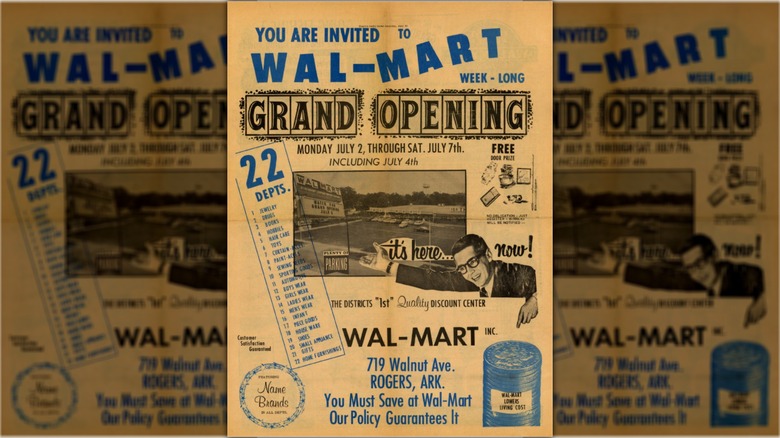
Every Walmart store format now includes some sort of food for sale. Even the fuel stations have convenience stores and are located next to other food-carrying Walmart stores. But back when Walmart first opened in 1962, food wasn't a regular product. In fact, the list of departments on a flyer for the grand opening had nothing food-related on it at all.
The company did feature some food at the grand opening of the second store in 1964, but that did not go the way the company had thought it would. Founder Sam Walton had planned for a fun day with donkey rides for the kids when the store opened, and he also brought in a large pile of watermelons that sat outside the store. It was hot, so you'd think having watermelon available would be helpful for hydration. Unfortunately, the day was too hot for the melons. In an interview for a Walmart company history video, executive David Glass recalled that the temperature was around 110 degrees Fahrenheit, causing the melons to burst. They leaked juice everywhere, which the donkeys promptly tracked all over the parking lot.
Of course, by the 1980s, you could buy shelf-stable foods at Walmart. That was also the decade in which the company branched out into different formats that offered more grocery offerings, including fresh produce.
2. There were no Neighborhood Markets for grocery shopping
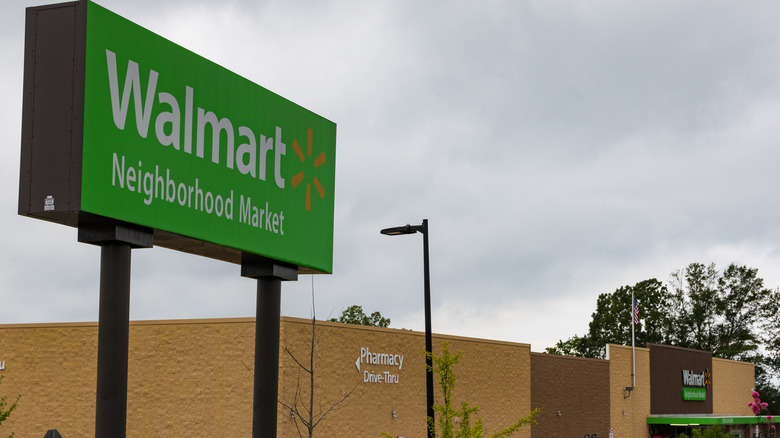
If you just want to get some fruit and cheese and maybe pick up a prescription at a pharmacy, you can go to one of Walmart's Neighborhood Markets. These are spaces that look like your typical grocery store, without all the household, camping, and car products that you see in other Walmart formats. But it wasn't always that easy. The Neighborhood Market format, with its green signs and vests, didn't open until 1998. These stores average 40,000 square feet, less than half the average area of a typical classic Walmart (that format is called a discount store).
The idea behind opening up these separate supermarket-like stores was that there was a gap in Walmart's offerings that left a number of shoppers behind. By 1998, the Supercenter had become a fixture, and you could get everything you needed there. Produce, bread, meat — they were all available at Supercenters. But Supercenters were huge, averaging over 200,000 square feet. The Neighborhood Market format was meant to make it easier for store employees to interact with customers, and the products sold at these stores could be adjusted to better suit the tastes of the surrounding neighborhoods.
In 2025, Walmart changed the name of the Neighborhood Market format, replacing "neighborhood" with the name of the city, such as "Pinellas Park Market." The markets now also use the classic Walmart blue color instead of green, but the format remains the same.
3. Fresh groceries weren't available until 1987
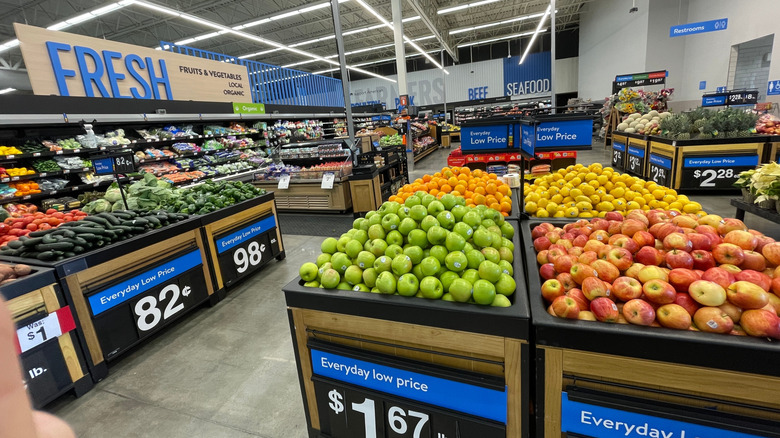
Walmart had a rocky, albeit educational, introduction to selling fresh food. In 1987, the company opened Hypermart USA, which was its take on European hypermarkets. These combined regular discount-store Walmarts with a grocery store, run by the company that also ran the Tom Thumb grocery chain, and rivaled shopping malls in size. The first Hypermart USA was 213,000 square feet. Compared to a regular Walmart store's average area of 108,000 square feet, Hypermart USA was unimaginably huge. Customers initially loved it.
But the large size had drawbacks, including making people feel lost and having nasty backups at checkout lines. One woman, interviewed for a news story after the first Hypermart opened in Garland, Texas, said it took her an hour to check out after getting in line. For at least the first couple of years, sales associates used roller skates to get around the stores. Despite the size, people still complained that the grocery section was inadequate, and when Hypermart raised prices, sales dropped.
In 1988, Walmart took the lessons it learned from Hypermart and opened a revamped combination store that it called a Supercenter. This had a full grocery section run by Walmart itself, complete with fresh produce and meat. The Supercenters averaged 187,000 square feet, and the slightly smaller size and overhauled merchandising were hits. As for Hypermart, Walmart opened four in total but closed them all by 2000.
4. You could, however, stop at snack bars or food courts before shopping
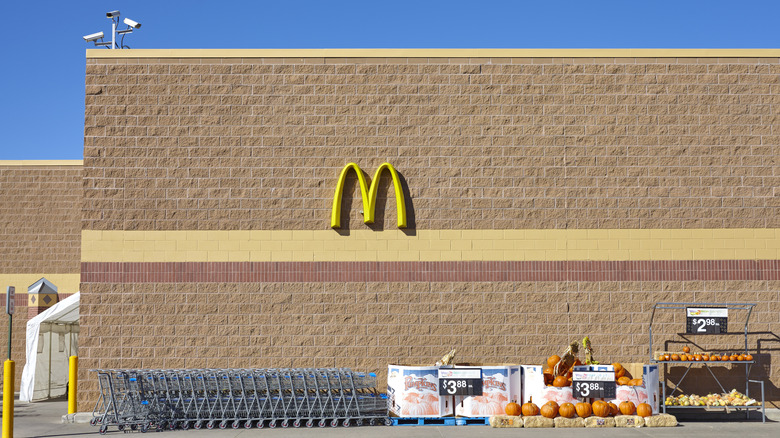
You might not have been able to get fresh food at a Walmart until the Hypermarts and Supercenters opened, but you could still get something to eat. Walmart locations had snack bars serving nachos, burgers, baked potatoes, and other items that quickly became customer favorites. Even now, you can find social media posts with comments about how delicious this or that menu item was. When the Supercenters opened, Walmart remodeled the snack bars, renaming them "Radio Grill." (Some people have noted online that the Radio Grill they used to go to reverted back to a more generic snack bar before closing.) After the Radio Grills closed, those spaces were taken over by individual fast food outlets.
Hypermart USA took the snack bar a step further. These locations had complete food courts with several restaurants and food stands available (the Garland store had eight different restaurants, for example). It wasn't unusual to walk in and find Popeye's, McDonald's, and other outlets competing for your attention.
5. Walmart hadn't yet introduced Great Value, Marketside, and Mainstays
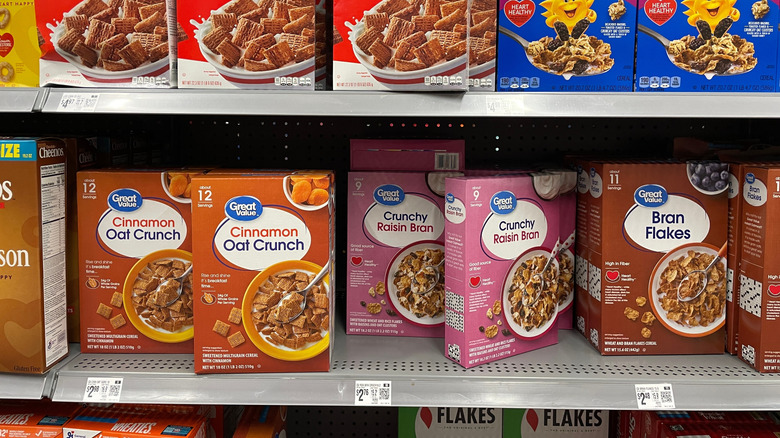
It seems almost unfathomable now, but once upon a time, no Great Value, Marketside, or Mainstays labels sat on any Walmart shelf. In the 1980s, the only food-related private label that Walmart had was Ol' Roy, which was dog food. It wasn't until 1993 that the company introduced the Great Value label for groceries. The brand underwent a major overhaul in 2009 with new graphics and more products. The next food-related brand to appear was Mainstays in 1996, although it was meant to be the label only for storage bins. Over the next few years, the brand expanded to include more home items, including kitchen tools, textiles, and appliances.
In 2008, Walmart opened Marketside, a smaller chain that sold prepared meals alongside a small selection of produce, meat, and other fresh and frozen items. The stores were only about 15,000 square feet and never expanded outside Arizona; Walmart ended up closing them by 2011 and transferred the Marketside name to its line of packaged produce and to-go meals. 2024 saw the introduction of Walmart's latest food brand, bettergoods (with a deliberately lower-cased "b"), which focused on trendier flavors.
One other private label is Freshness Guaranteed, which you'll find on products like pre-cut fruit and bakery goods. The company started offering a 100% money-back guarantee on fruits and vegetables in 2013 and again in 2017, and this gradually turned into an actual store brand. The name was trademarked in 2019.
6. There was no organic food in sight
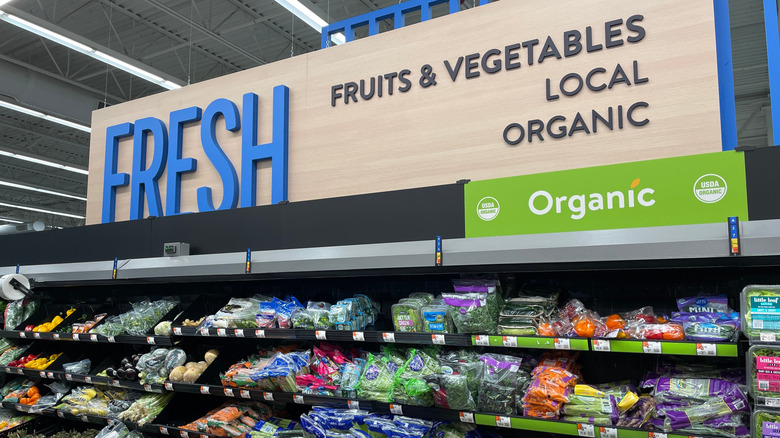
Selling organic products and produce seems standard for most markets now, but 25 to 30 years ago, organic food was still a specialty that you had to seek out. It was definitely growing in popularity at that point (whether or not buying organic made a difference), but you weren't going to find sections devoted to organic food at the local Walmart in the 1990s, let alone in the 1980s, 1970s, or 1960s. Walmart didn't really dive into the organic scene until around 2004, when it began testing the sale of organic produce at a store in New Mexico. And the reason it did that was that everyone else appeared to be doing it. However, in 2006, the company announced a major push toward adding organic products at more affordable prices.
Walmart's move into organic food actually raised alarm bells in some quarters. While some in the organic food industry supported Walmart's initiatives, others thought it would undercut organic standards. Despite the worry, Walmart has continued to increase its organic offerings. In 2014, it partnered with organic brand Wild Oats to bring more products to stores, although it ended the partnership in 2016, instead focusing on selling its own organic items. In 2019, the company created a section within each store's produce department that was devoted to organic food, and in recent years, it's worked with smaller organic brands to bring those lines to customers.