

9 Protein Pasta Brands, Ranked Worst To Best
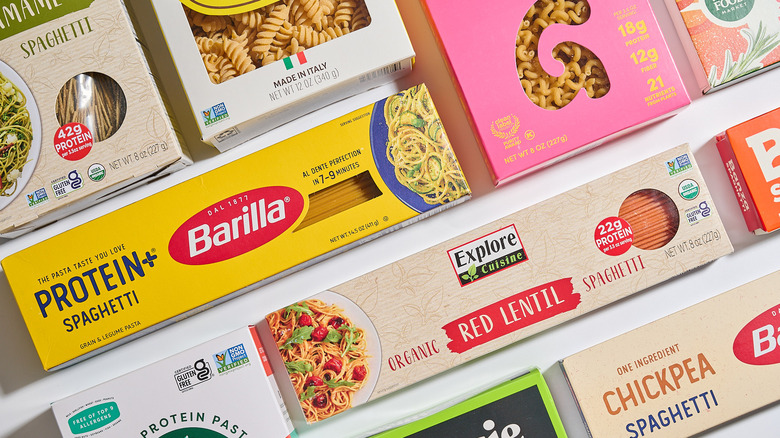
For a long time, my only knowledge of protein came from my most fitness-focused friends, who insisted on keeping a large jug of the powdered supplement in their pantries at all times. These days, protein powder looks a lot different, showing up in recipes and as add-ins to your morning coffee. Though there is such a thing as too much protein, the truth is that it's hard to really consume that much protein in a day — and if you are able to get even half, you're probably eating pretty well. Like anything, eating protein from organic sources like meats or high-protein vegetables is always better than processed foods, but it can still be challenging to incorporate enough high-quality sources to hit your goals, especially if you follow a plant-based diet.
For plant-based diets, those on keto, or high-performance athletes who may need additional sources of protein, protein pasta serves as a creative way to satisfy a high protein requirement without needing to add powders, pills, or bars that can be high in added sugars or calories. Better, these pastas often contain vegetables and legumes that add fiber to your diet, necessary for balancing the digestive system. Because not all pastas are created equal, I collected the 9 most popular protein pasta brands and sampled each, comparing for texture, taste, and nutrition. Some are nearly identical to regular wheat pastas, while others couldn't be more different — so to guide you to which ones are worth buying, I ranked them from worst to best.
9. Whole Foods 365
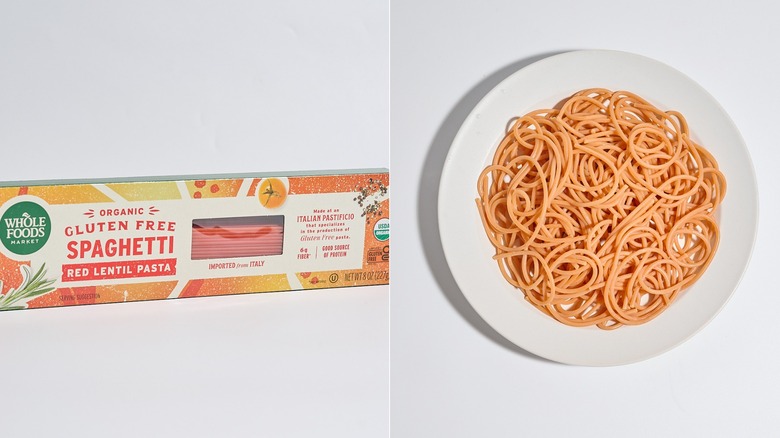
Whole Foods offers its own branded products that, like any grocery store, can save you a lot of money when shopping for groceries; but also like any off-brand product, the store's house line isn't quite as good as the name brands. Some products are home runs, but others, like the red lentil pasta, are worth leaving on the shelf. There are a few positives about the Whole Foods 365 pasta: gluten-free and vegan, the pasta is notably inexpensive at $3.29 and offers 26 grams of protein per 3.5-ounce serving with just one ingredient listed (red lentil flour). The negatives, though, outweigh the positives, even without comparing to the other pastas on the list.
The Whole Foods 365 red lentil pasta is bright red in color, and when cooked, it stays a fairly bright orange-red hue. Being that you'd likely coat this in tomato sauce, the color isn't the alarming part — it's actually the smell. There's no elegant way to describe the smell of the pasta, which is deeply unappetizing even after draining and rinsing. It gets worse, too: The pasta tastes exactly how it smells, and is hard to get past even after several bites and coating in a sauce. The chew isn't bad, though I learned red lentil pasta takes a bit longer to reach al dente than the box implies, and my first batch was hard and crunchy when drained at the recommended time. A few minutes longer and it's still far from silky, but softer, with a denser chew than typical pasta. I wouldn't eat this pasta again, so it ranks last place for me.
8. Veggie Craft
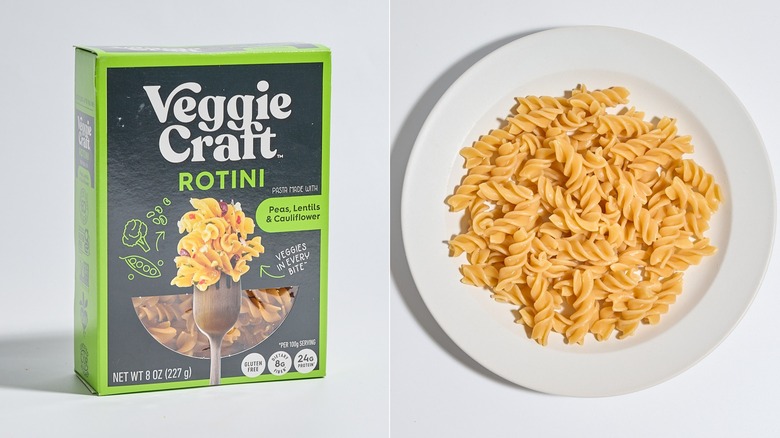
Like the Whole Foods pasta, the Veggie Craft boiled with a smell that I struggled to find appetizing even after draining and saucing. The Veggie Craft is made with pea flour, lentil flour, and cauliflower flour, amounting to 24 grams of protein per 3.5 ounce serving. Despite having additional veggies over the Whole Foods version, the nutritional facts are nearly identical, if not slightly worse than the Whole Foods pasta (depending on your goals). However, those veggies are what make this pasta slightly more palatable than the pure red lentil — the pasta, tasting similar to how it smells, has a more savory flavor and less lingering aftertaste.
The texture is again where the pasta fails to rank highly for me. Cooking according to the package directions left the pasta undercooked, and cooking a few minutes longer didn't seem to help much further. The pasta stayed tough, dense, and chewy, giving it an undercooked texture and unpleasant bite. Because I found this slightly easier to eat than Whole Foods, I'd choose it between the two, but it's unlikely I'd choose either in a lineup of all protein pastas.
7. Explore Cuisine
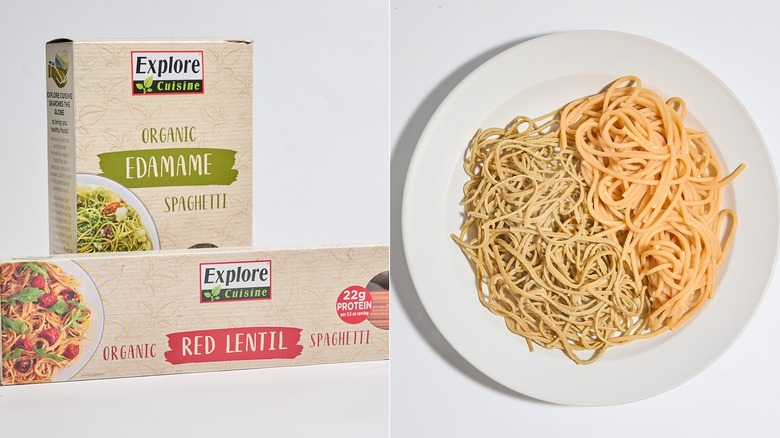
The Explore Cuisine edamame spaghetti is a unique option that offers a whopping 42 grams of protein per 3.5-ounce serving, doubling most pastas on the list. The enormous amount of protein comes from the pasta's lone ingredient, edamame bean flour, which is a great source of plant-based protein for vegans, especially. The high protein comes with a cost, though a different one than red lentil — the pasta has an odd, fishy smell, but it translates to a pleasant umami flavor. The texture is where the pasta gets stranger, which is evident even before cooking: the strands of spaghetti are spindly, thin, and shaggy, and once cooked, become stringy and gummy, similar in texture to the Big League Chew bubble gum. Though the texture isn't what I associate with pasta, the wheaty taste makes it passable enough that I could use it in a stir fry or as a substitute for soba noodles in assembled bowls.
The red lentil is where I struggled with Explore Cuisine. Though the pasta smells better than both Whole Foods and Veggie Craft, the texture is worse. What is common among specialty pasta brands is a distinctly gummy texture, which feels a bit like the pasta is sticky and thick rather than silky or soft. It can result in a chewy or grainy texture that is similar to undercooked (or overcooked) pasta, but is a result of neither. The Explore Cuisine red lentil penne is the first on the list to truly feel gummy to me, and even after experimenting with different cook times, I struggled with the texture being too chewy or too gummy. While it is a unique brand with super high-protein options, I likely wouldn't choose it again, especially with better, similar options out there.
6. Ancient Harvest
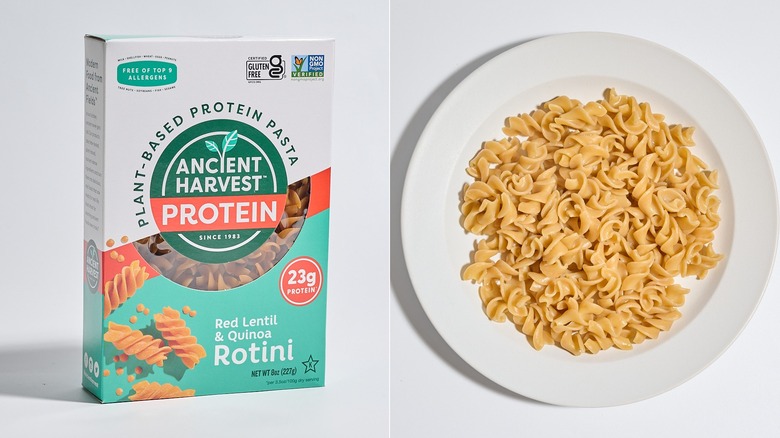
Protein pasta is never quite the same as its wheaty equivalent (though one brand is close), but I can assure you that there are plenty of great options on the list, and they begin with Ancient Harvest. Ancient Harvest has remnants of the pastas before it — it smells strange while boiling, and its green-ish hue is mildly off-putting at best. The taste is surprising, at least compared to the smell, and is mild enough to go unnoticed under a particularly flavorful sauce. Of course, you can still tell that this pasta is made with atypical ingredients, and it's largely evident in its texture.
Ancient Harvest stands out among the red lentil varieties for being softer, silkier, and less offensive in both taste and smell, but it still reveals itself as a plant-based protein pasta with its chewy, slightly gummy texture. This is likely the result of the lentil, which tends to be chewy, mixed with quinoa, which tends to cook to a softer, more gummy texture. The combination of the two falls somewhere in between, leading to a soft noodle that can be used in place of pasta for an extra 23 grams of protein per 3.5-ounce serving. This noodle would be great for a heavy sauce like stroganoff, and for that, I'd consider buying it again.
5. The Only Bean
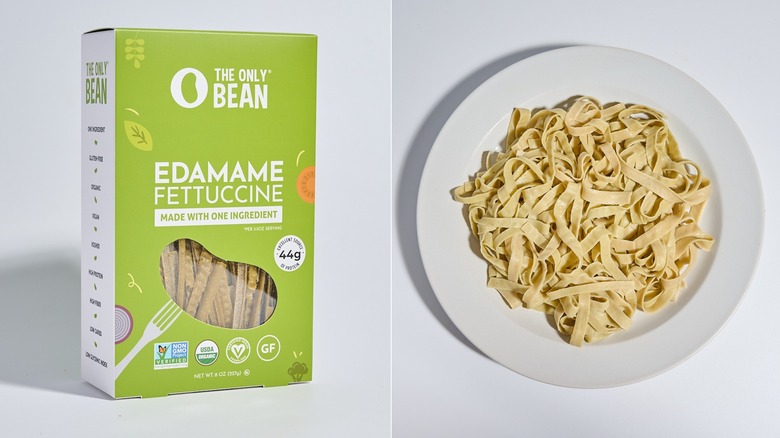
It's hard to know what an edamame pasta is going to become once boiled. The dry pasta is thin, delicate, green-hued, and uneven, which are all indicators of low-quality pasta. In the case of The Only Bean, though, the pasta boils into an impressive, soft, and tender noodle, and if I hadn't smelled and tasted it, I may have confused it for a regular wheat-based pasta. It isn't wheat-based at all, though, and instead is completely gluten-free and made with just one ingredient — only one bean, if you will — edamame.
This edamame pasta is what all edamame pastas should be — tender, silky, and mild in flavor. Though it has many of the same qualities as Explore Cuisine's edamame pasta, like a distinct, rubbery chew and a soy-based flavor with a deep umami quality, it has a more versatile quality that would allow it to be used with tomato and cream-based sauces and ingredients. Though I'd likely not reach for this first in an aisle full of protein pastas, it's impressive, and with a whopping 44 grams of protein per 3.5-ounce serving, it's by far the best benefit with only a few compromises to flavor and texture.
4. Banza
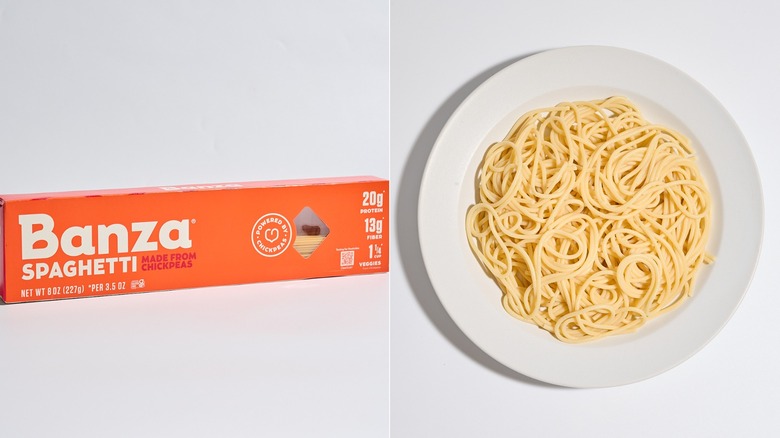
Banza is popular for a reason. The noodle is a near-perfect chickpea flour blend that cooks into a silky smooth chew, and with the benefit of 20 grams of protein and 13 grams of fiber per 3.5 ounce serving. Comparing Banza with the other top three pastas is nearly impossible, and the decision comes down to small details in taste that, for what it's worth, may be entirely personal to me. Banza is similar in texture to a regular, wheat-based pasta without containing any wheat, which is a feature that gives the brand an edge over the other top choices. What gave me pause was the use of starches and xanthan gum, which aren't present in other brands and could deter those who avoid processed foods.
Beyond the ingredients list — which is far better than most processed foods — the pasta has a very slight, nearly unnoticeable wheaty flavor, comparable to whole wheat pastas or plain chickpeas. If you are used to eating whole wheat or simply don't mind the flavor, Banza is a very good option with a good texture to match. If, like me, you have trouble digesting chickpeas, this pasta might sink a little lower on the list for you as it does for me.
3. Goodles
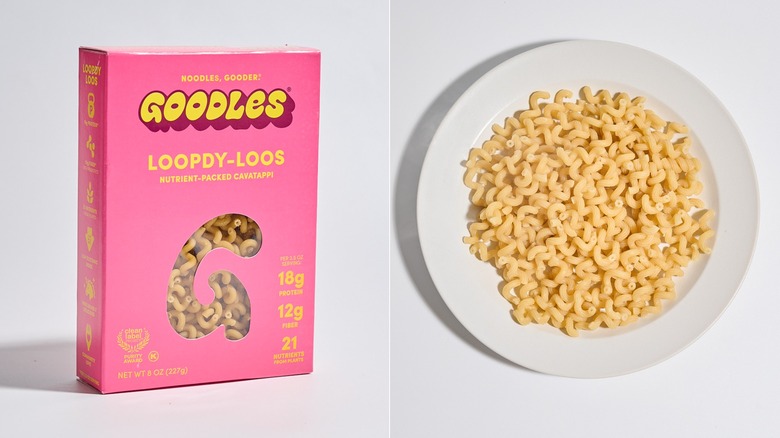
Goodles is known for its adult-friendly, boxed mac and cheeses, which are available in inventive flavors like Hatch chile and truffle parmesan. The brand recently began offering dry noodles for cooking your own pasta dishes, and every available shape is promised to have 18 grams of protein and 12 grams of fiber in each 3.5-ounce serving. Further, the noodles are packed with extracts from 10 different vegetables, giving each serving a small amount of vitamins, too (very small, but enough to count). Though I tried the noodles made with semolina and wheat, the brand does offer a gluten-free version, too, which also contains vegetable extracts — and xanthan gum, as noted in Banza.
These noodles have one of the best flavors overall, even more so than Brami, which is ranked above it. If flavor alone is enough to sway you, Goodles is a good choice and is available in many grocery stores nationwide. Where Goodles falls just behind is its texture, which is a little chewy, even after cooking just past al dente. The shape of these noodles and all that Goodles offers is likely meant to be used for cheese-based sauces and soups, which may explain the dense texture. Sturdy enough to be used in heavy sauces with a well-salted, tasty flavor, Goodles is a brand I'd buy again and wins as one of my favorites overall.
2. Brami
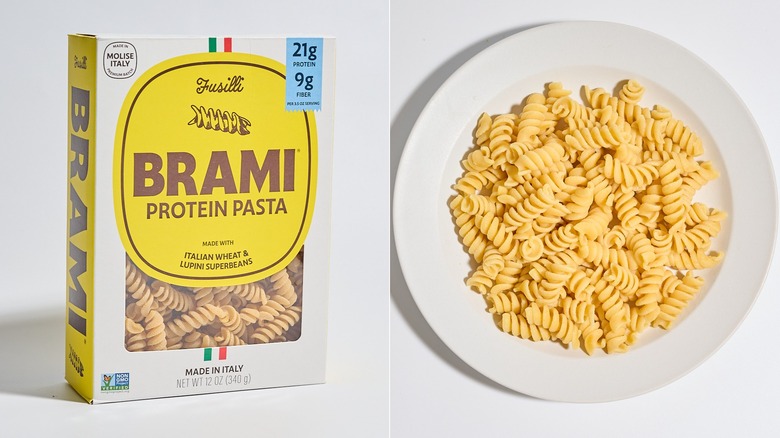
There are some brands that truly feel like luxury; the products both look and taste high-end. Brami is one such brand, the pasta both looking and tasting like the hand-cut, homemade pasta you'd find at Italian markets and high-end grocery stores. It's thick and golden in color, with a defined shape and dusting of flour over each piece. It's elegant even before cooking, and transforms further when boiled and sauced.
Brami pasta is the lone pasta on the list made with lupini beans, which gives each 3.5-ounce serving 21 grams of protein and 9 grams of fiber. Blended with semolina, the pasta isn't gluten-free, but it has the perfect taste and texture of regular semolina and egg-based pasta. Cooked, the pasta is perfectly tender and soft, with a near-identical flavor to egg-based semolina pastas. Though there is one brand that impressed me slightly more, this brand is the one I'd get for nicer dinners with specialty shapes like radiatore.
1. Barilla
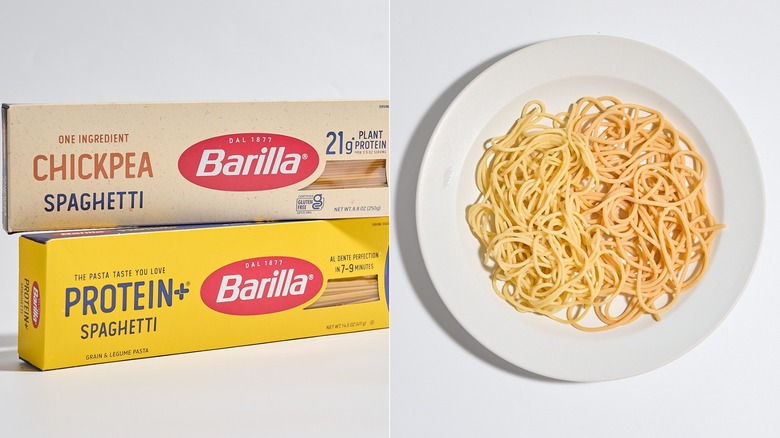
There is no brand that nails specialty pastas like Barilla. Already a big fan of the gluten-free pastas offered by Barilla, I was admittedly excited to try the brand's take on added protein. It again gets the texture spot-on — it's not just almost identical to regular wheat-based pasta, it's indistinguishable. It's silky, smooth, flavorful, and foolproof, not needing any guesswork with the cook time to be perfectly al dente.
Of course, being the most delicious pasta comes with a few drawbacks, which may or may not change its place in the ranking for you. The pasta has the lowest amount of protein on the list at 17 grams per 3.5-ounce serving, and also has the longest and most wheat-forward ingredient list, which is likely the reason why the pasta is able to taste so good. Because this ranking isn't focused on fiber, added vitamins, or gluten-free qualities, I ranked Barilla truthfully as my favorite protein pasta, based on its smooth, silky texture and perfect flavor.
Methodology
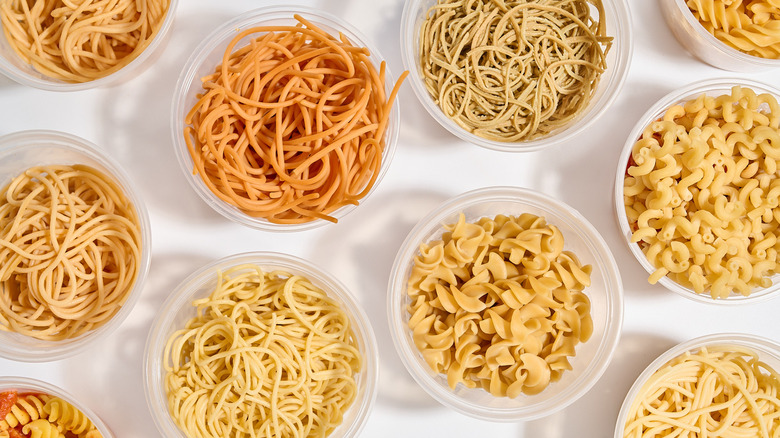
To qualify as a high-protein pasta, the pasta had to have at least 15 grams of protein per 3.5-ounce serving — ideally having at least 20 grams or otherwise labelled as high protein. To test, I brought a fresh pot of water to a boil for each pasta, salted it with 1 teaspoon of salt, and added 1 serving of dry pasta to the pot. I boiled each to the minimum time suggested on the package, then added time as needed based on doneness, taking note of adjusted cooking times. From there, I drained and tasted the pasta without sauce, reviewed it, then added sauce to test its clinging quality (whether or not the sauce stuck to the pasta, and how well).
Though gluten-free was considered a positive, it didn't act as a requirement in this ranking, as high-protein diets do not always equate to gluten-free. Instead, I ranked first on taste and texture, then on protein content, fiber content, added nutritional value, and cost. All of the pastas were similar in calorie content, carbohydrates, sodium, and salt, so these values were not considered closely.