

Avoid Ordering These 8 Seafood Dishes If You See Them On A Menu
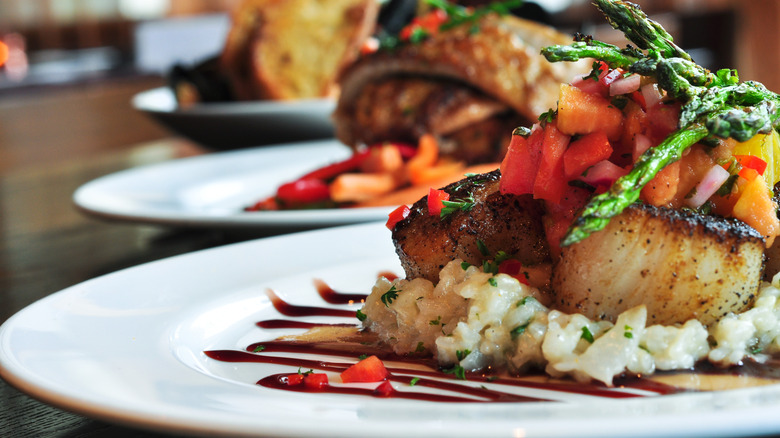
Seafood seems to exist at a rarified intersection between being high-risk and being a health food — so knowing which is which matters. Unfortunately, making informed decisions about which fish ends up on your plate isn't particularly simple. When choosing what to eat from our oceans, a number of factors can (and maybe should) affect your decision.
We took a deep dive into what to watch for when dining to help ensure the quality of your meal and your health. To do so, we've spoken with three experts in the field and shared their best advice on avoiding eight types of seafood dishes, along with the reasons for their recommendations.
1. Anything smothered and covered
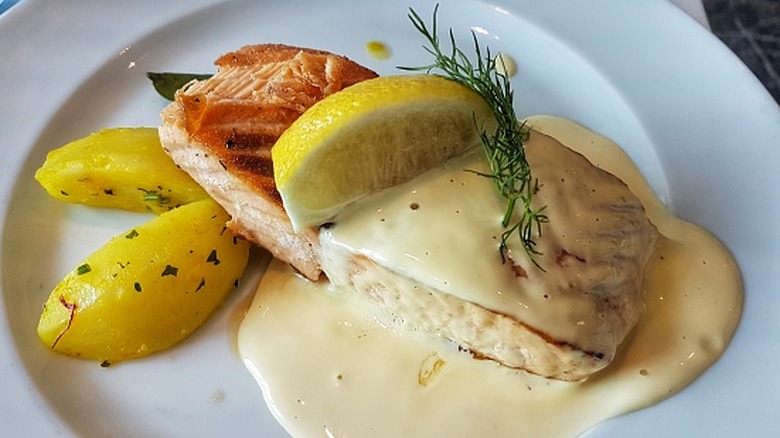
Sauce is the boss, but if that boss is smothering your featured ingredient, it might be a sign to find other work. "If a delicate fish is buried under heavy cream, sugary glaze, or five different sauces, that's usually camouflage," says chef Danny "Jaimie" Viers.
Viers is a Tidewater, Virginia native and current institutional culinary director with years of hands-on experience preparing seafood at destination restaurants such as Rappahannock River Oyster Company's tasting room, Merroir, Denson's Raw Bar & Grocery, and the Tides Inn. For Viers, seafood isn't simply a professional concern; it's part of his heritage, upbringing, and regional identity.
That's not to say that a beurre noisette — a two-ingredient brown butter — should raise any red flags; a gentle, delicate sauce can absolutely elevate a dish to the realm of the sublime. Just make sure it's playing a supporting role, not concealing a crime against marine life.
2. Out-of-place menu items
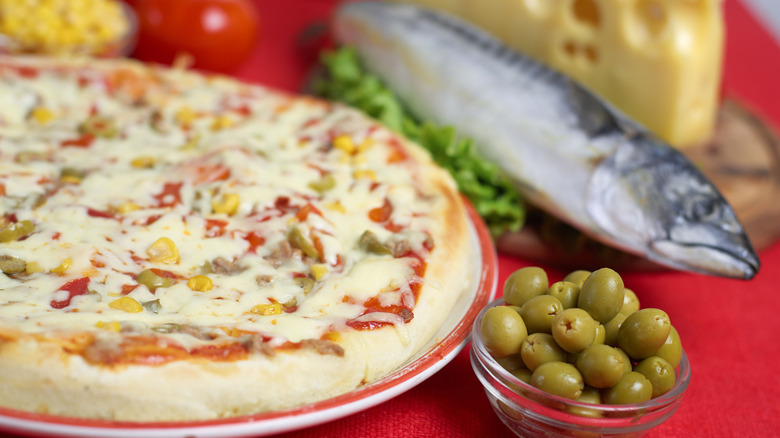
If you see shellfish at a sub shop, it might be best to steer clear. Executive Chef Timothy Paroulek of the Grand Hyatt Grand Cayman Resort and Spa in the Cayman Islands says, "The most important detail to remember is to look for seafood dishes that are popular, and that fit the theme of the restaurant."
With seafood, freshness is everything. If you're ordering a dish that isn't what the restaurant is known for, it's likely less popular, so the ingredients might have been hanging around for a while. "I wouldn't count a dish out unless it obviously went against the other types of cuisine on the menu. In addition, I would stay away from less popular dishes or seafood from less popular restaurants, as I would expect less turnover of the product," Paroulek explained.
3. The great deal
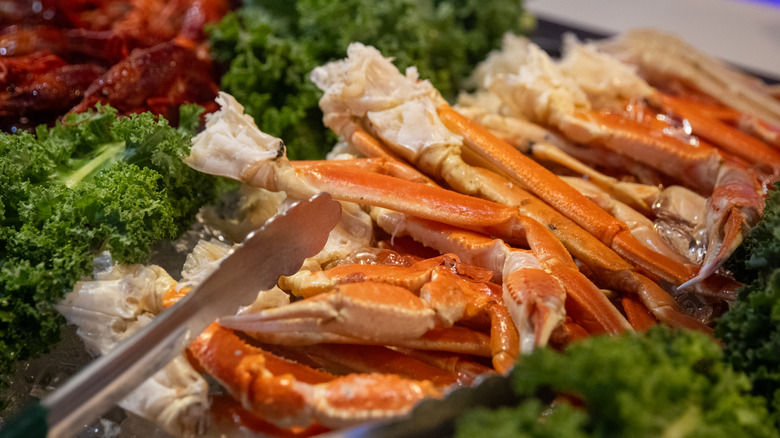
Seafood can be pricey, and to a certain extent, it should be. That old maxim of "you get what you pay for" is accurate when it comes to seafood. Joel Hammond, Chef de Cuisine at Uchi West Hollywood, warns, "Avoid any dishes where the price seems too good to be true." Danny Viers agrees, adding that if you find an unbelievable deal on bluefin tuna (one of the world's most highly prized), don't believe it. All-you-can-eat crab legs? Quality could be an issue.
Whether the seafood is cheap due to overstock, was purchased through questionable channels, or is being sold as fraudulently mislabeled fish, it really only matters if you decide to eat it. One thing's for sure: you can't trust your food if you don't know what it is or where it came from. Sometimes, a great deal is a good way to get food poisoning — which will cost you more than buying good quality, properly sourced seafood to begin with.
4. Endangered and overfished species
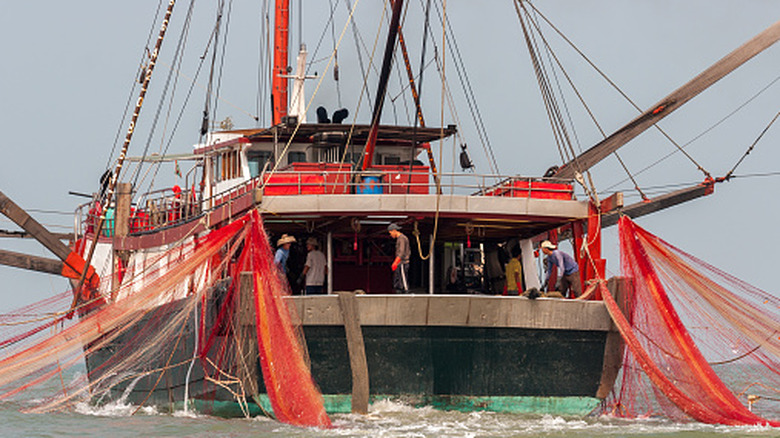
Our oceans are vital to survival, no matter where in the world you live. Guidance from publications like Seafood Watch helps make purchasing decisions easier for wholesalers, restaurants, and markets. The guide monitors how species are being fished or farmed, and how those practices affect — and protect — ocean health. It's a simple rating system of green (best choice), yellow (good choice), and red (avoid).
Chef Timothy Paroulek says, "It's important to choose fish that has been certified as a sustainable option. If a restaurant or business showcases that they are utilizing sustainably sourced seafood, it is normally a good sign that they care. They care about the environment and their communities, as well as their guests and what they are putting on the plate."
As a consumer, choosing what you eat and where it comes from is one of the most important things you can do to support seafood sustainability. "Follow the Monterey Bay Seafood Watch," Joel Hammond recommends, "Learn what is sustainable and what is not. Avoid anything in the red at all costs!"
5. Out-of-season items
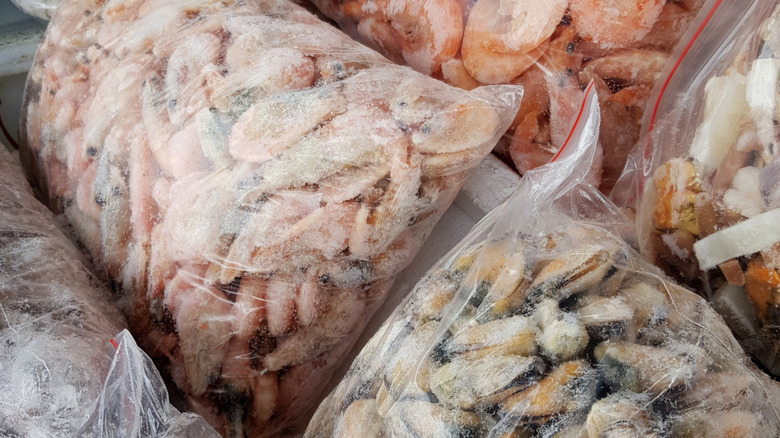
Chef Timothy Paroulek says the maxim to eat oysters only in months that contain the letter "R" is still a rule of sorts, but suggests asking before eating whether what is being served is in season. Paroulek notes that some species are spawning in warmer months, but not in all regions, so it's important to consider seasonality and location when deciding which dishes to order from a menu.
Paroulek adds that in addition to quality, seasonality affects sustainability, availability, and price. He doesn't limit that suggestion to just seafood, noting that any dish featuring a quality seasonal ingredient would be worthwhile to try. "Wild Pacific salmon, arctic char, and steelhead are all much better when in season if they can be procured fresh instead of frozen. Spot prawns are in season for a very short time in May and June and offer an amazing quality during this period only," the chef adds.
6. Seafood dishes with vague descriptions
We might not be at our most observant or detail-oriented when we're hungry. Entranced by hypnotic aromas wafting from the kitchen, our inclination is generally to request whatever first strikes our fancy on the menu. This, of course, might not be the best practice, according to Danny Viers, who considers it a red flag if the menu says "seafood medley" or "fish of the day" without specifying exactly what the seafood is. "Quality kitchens are proud of what they're buying," he points out.
"Scallops also deserve scrutiny," Viers says. If the menu isn't absolutely clear about sourcing, it's important to ask where they came from. "Wet-packed scallops (treated with preservatives to retain water) can look large and glossy but won't sear properly and often taste bland," he explained. Viers added that some items advertised as scallops are actually fish paste shaped into a deceptive form. Luckily, there are ways to tell if you're eating fake scallops. Unfortunately, you won't likely be able to pick out the frauds until after you've made the mistake of ordering them.
7. Desert fish
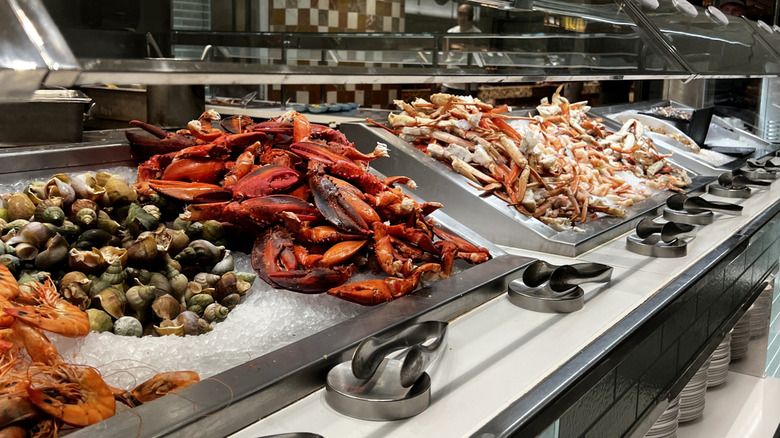
As Chef Joel Hammond points out, "You can get pretty much anything anywhere nowadays — it's the price tag that will usually deter you." However, seafood is also prepared differently in various regions, so the taste you are used to might not be what you get — especially if it's not from the area. In the desert, that pretty much applies to almost all seafood on the menu, which has likely been imported from another state or even another country.
Even with today's refrigerated transportation infrastructure and environmentally controlled processing facilities, geography matters. Chef Timothy Paroulek advises that the closer to the source, the better quality and safer the seafood tends to be. "The largest preventable category of food-borne illness caused by seafood (scombroid) can be controlled by how the fish is handled from the boat to the plate [...] Fishermen from different parts of the world prepare the seafood differently after it is caught, which can drastically change the quality."
8. Reef fish such as barracuda
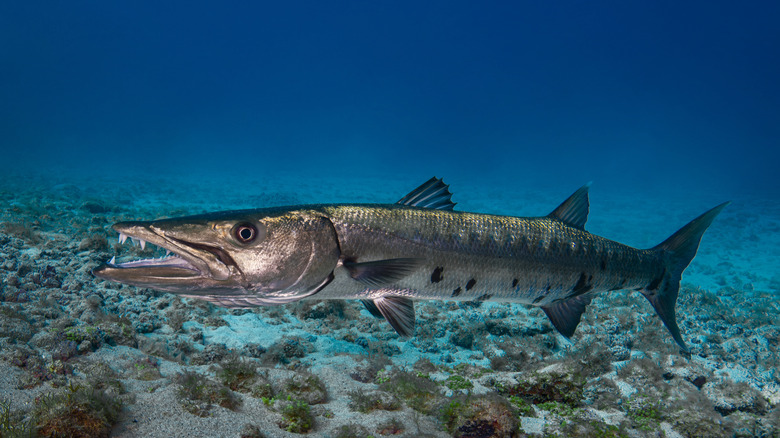
Eating reef fish may sound exotic, but it does come with the risk of a common seafood-borne illness called Ciguatera Fish Poisoning. Unfortunately, the tasteless toxins in contaminated fish cannot be destroyed by cooking or freezing, leaving consumers susceptible without warning.
It's not usually fatal, but the symptoms might have you convinced otherwise. Ciguatoxins accumulate in larger reef fish as they consume smaller fish, which feed on algae that produce the stuff. It's the larger fish that end up on our plates.
Onset generally happens anywhere from thirty minutes to two days after consumption — and there's no antidote. Of course, you could skip the waiting game entirely by taking Chef Timothy Paroulek's advice and just abstain from eating tropical reef fish. Common culprits include lionfish, barracuda, red snapper (when honestly labeled), and eel.