

8 Fast Food Recipe Changes That Went Over Horribly With Customers
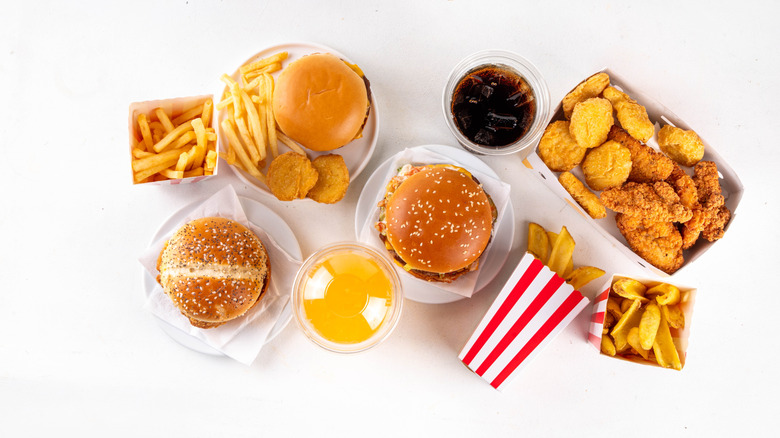
When it comes to fast food, possibly the only thing worse than your favorite item disappearing from the menu is the company changing the recipe so it's no longer as good. Sure, that item still looks tempting, but you know you'll just end up disappointed because it's not what it used to be.
Fast food favorites become beloved for a reason, so when a chain decides to switch up a recipe, even slightly, it's a big deal. Companies usually have a reason for these changes, like health concerns, supply chain issues, cost-cutting, or just a change in customer preferences. And sometimes, these changes pay off in a big way — one of the most well-known success stories is Domino's, which completely overhauled its pizza recipe in 2009 to great success.
But while there are sometimes successful reinventions, there are also plenty that don't go over nearly as well. Fast food fans can be fiercely loyal, and when a much-loved item tastes different, the backlash can be immediate and loud. Even when brands insist that the new version is better, customers don't always agree ... and sometimes hold grudges for years (even decades). From fries that lost their signature flavor to sauces that became completely unrecognizable, we've highlighted the fast food recipe changes that went over horribly with customers.
1. McDonald's changed its fries in 1990
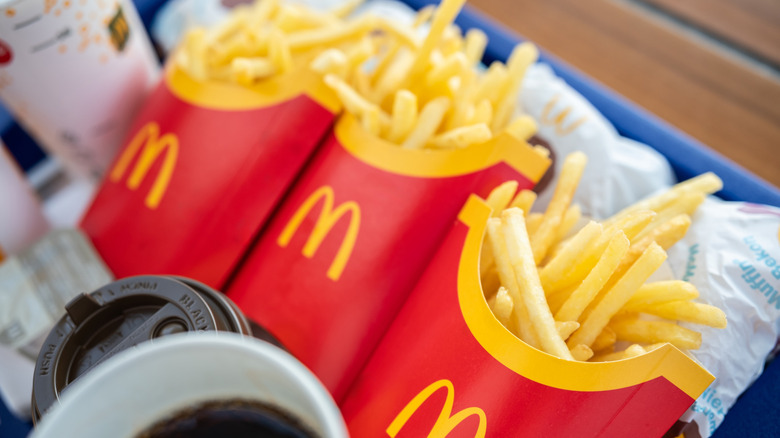
McDonald's is one of the largest fast food chains in the world, with over 40,000 locations across the globe. It was founded in 1940, and since then, the menu has undergone several changes, from various discontinued items to the recent Big Arch Burger. French fries, however, have pretty much always been a mainstay. But if you were of fry-eating age before the 1990s, you may remember a very different experience.
Up until then, McDonald's fries were famous for their rich, unique flavor. A big reason for that was the cooking method: The brand fried its potatoes in an oil blend that included beef tallow. This gave the fries a savory taste that helped make them some of the most iconic fast food sides in the world. However, in the late '80s, there was growing pressure from health advocates who argued that the beef fat used for frying was high in saturated fat and bad for heart health.
In response, McDonald's switched to using vegetable oil in 1990. However, longtime fans weren't impressed with this "healthier" option. Many said the fries lost their distinctive flavor and haven't quite tasted the same since. To try to restore some of the flavor, McDonald's eventually started adding "natural beef flavor" to the vegetable oil to help mimic the taste of the old recipe. Despite this, many customers still argue that the old way was better, and the change remains one of the most debated recipe tweaks in fast food history.
2. And its apple pies in 1992
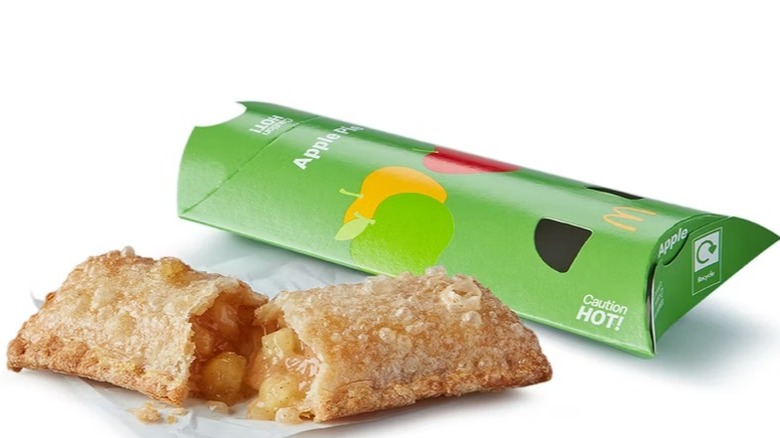
McDonald's has launched several different desserts over the years, but the apple pie is a longtime staple that consistently lands toward the top of McDonald's dessert rankings. For years, the pie was made from a sweet apple filling inside a crispy crust – and it was served blisteringly hot, as they used to be deep-fried, creating a molten center that made it a cult favorite.
But if you remember the health crazes of the early '90s at all, you probably see where this is going. Fast food companies at the time faced mounting pressure to reduce the fat on their menus, so not long after swapping beef tallow for olive oil for its fries, McDonald's also replaced its deep-fried apple pies with a baked version. To say that fans of the original pie weren't happy is putting it mildly. Many say that the baked pie doesn't have the same crispy texture and indulgent flavor as the original fried version. Folks have even tried to recreate the pies, with various levels of success.
Now, it's important to note that McDonald's is made up primarily of franchised restaurants. This means that locations are owned by individuals or smaller companies rather than McDonald's itself. As a result, while most restaurants offer the same basic menu, some may offer different products (and prices) from others. Rumor has it that there are some McDonald's locations in the U.S. that still offer the deep-fried apple pie, and though we can't confirm, it's possible that those craving the original crispy goodness aren't completely out of luck.
3. In 2013, Burger King launched Satisfries
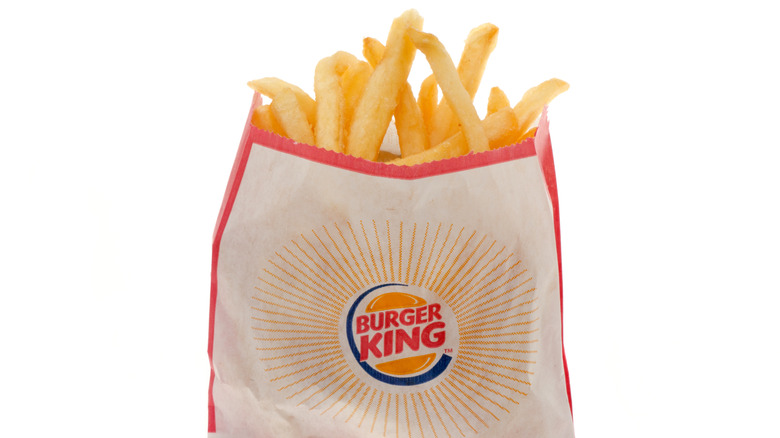
If the public backlash to McDonald's changing its fries and apple pie shows anything, it's that people aren't necessarily looking for their fast food favorites to be uber healthy, especially at the expense of an already beloved recipe. Regardless, in 2013, Burger King attempted a pivot toward a healthier menu by switching its original fries to its new Satisfries. These were crinkle-cut fries made with a special batter meant to absorb less oil when frying. The company advertised them as a healthier option with 40% less fat and 20% fewer calories than the old recipe.
While there was initially some excitement for the new product, it faded pretty quickly due to lackluster customer reviews. Some people appreciated the low-fat option, but many complained that the new fries just didn't taste as good as the old ones. Folks were also a little baffled as to why a place like Burger King was trying to focus on healthier options, and weren't happy that the new fries also came with a price hike.
The new Satisfries were a massive flop, and within a year, Burger King had phased them out and began replacing them with the fries it offered before. Today, Burger King fries fall somewhere in the middle of fast food fry rankings, but they're still far more popular than the Satisfries were.
4. KFC swapped potato wedges for fries in 2020
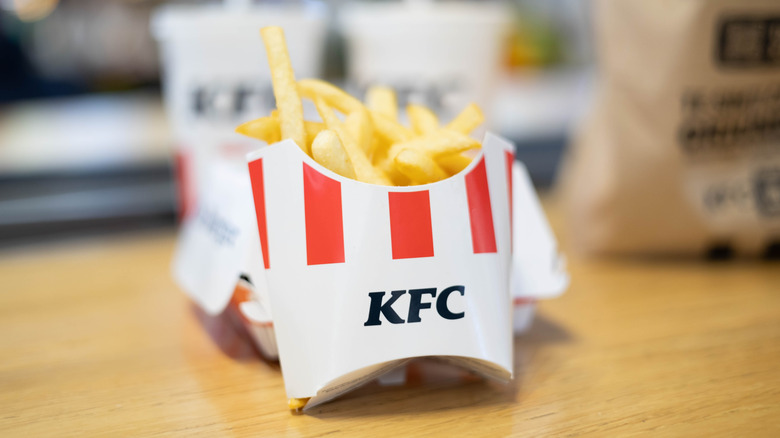
While a few brands on this list got pushback for changing their fries, KFC took a little bit of a different route when it added them to the menu in 2020. The problem? These fries were meant to replace the fan-favorite potato wedges. While famous for its chicken, KFC's potato wedges were one of the chain's best-known side dishes. These thick-cut potatoes were seasoned, breaded, then fried, creating a crispy coating and soft interior that was pretty different from the standard fast food fry.
So, it was pretty surprising when, in 2020, KFC decided to replace the wedges with a new item called Secret Recipe Fries. This was an odd name, since the fries were seasoned with the same blend of spices used in KFC's famous fried chicken, and the ingredients aren't really a secret at all. KFC framed this as a way to modernize the menu and deliver a bolder flavor that paired more consistently with the rest of the food on offer.
But customers didn't care why KFC did it, they just wanted their beloved potato wedges back. Social media was flooded with posts from customers who loved the wedges, claiming that they were not just better but were more unique, making KFC stand out in a sea of fast food chains. However, enough customers liked the new fries that the company decided to keep them, and has refused to bring back the wedges full-time. But the keyword here is "full time," as the wedges still make an appearance on the menu every so often.
5. In 2021, Wendy's also changed its french fries
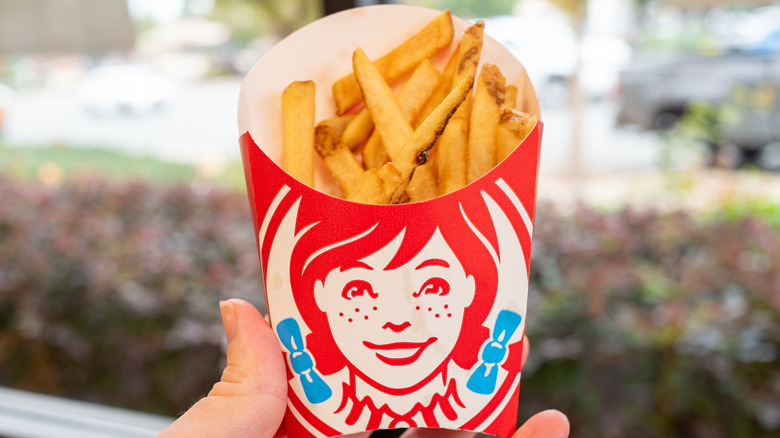
"If it ain't broke, don't fix it," can apply to a lot of things, including, as evidenced by this list, fast food french fries. In 2021, Wendy's became the latest chain to try to revamp its french fry formula by introducing the Hot & Crispy fries. With an increase in takeout and delivery, especially during the pandemic, these new Hot & Crispy fries were meant to stay, well, hot and crispy, longer — for up to 30 minutes after leaving the fryer. Wendy's accomplished this by changing the shape of the fries to be a little more square and adding a thin coating of batter.
Wendy's put a lot of work into promoting the new fries, even offering a "Hot & Crispy Fry Guarantee," which promised a replacement order if customers found their fries to be lacking heat or crispiness. Regardless, the reaction from loyal customers ended up being lukewarm at best. Some customers said they liked the improved crisp texture, while others argued that the flavor wasn't as good as the old version. Customers also said the fries were oversalted or tasted overly processed. Wendy's didn't let the negativity affect its decision, though, and the Hot & Crispy fries are still the default fry on the menu today.
6. Taco John's changed its sauce in 2022
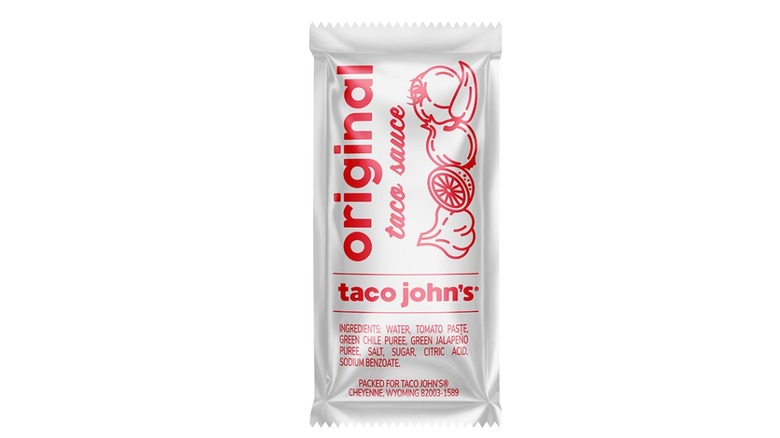
Potato Olés are possibly the most well-known menu item at Taco John's, but if you plan to order yours with sauce, proceed with caution. In 2022, the chain quietly rolled out new recipes for its mild and hot taco sauces, with the intention of giving them a bolder and more complex flavor profile. Unfortunately, "complex" doesn't always mean "good," and the change didn't go over well with customers.
There were a number of different complaints made online about the change. Customers said that the mild was now too spicy, and that the new sauce didn't complement Taco John's other seasonings, leading to a clash of flavors. Others were simply upset because the original sauce had been a staple for decades. In fact, some customers were so incensed that they wrote to the company to express their displeasure. One even started a Change.org petition.
Unlike some of the companies on this list, however, Taco John's did acknowledge the complaints. Recently, it put the Original Taco Sauce back on the menu, which it describes as having a tomato base with a hint of jalapeño. This is just the mild version, however, and fans will have to wait and see if Taco John's rolls out the original hot taco sauce as well.
7. In 2022, Taco Bell brought back the Mexican Pizza ... or did it?
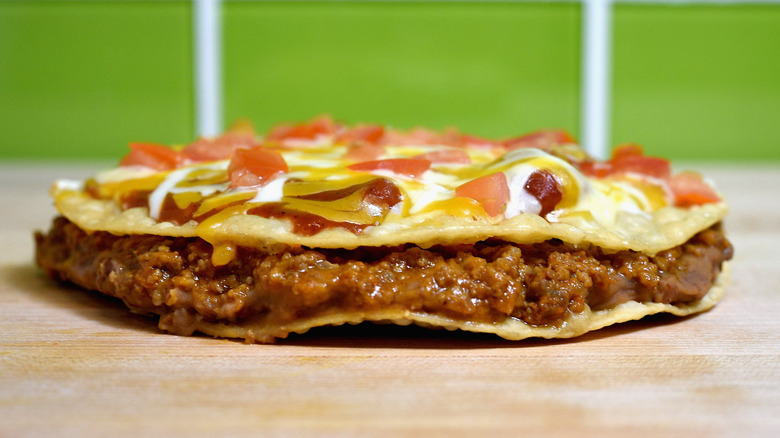
The Mexican Pizza might not have been one of Taco Bell's bestselling items, but it still had a pretty loyal following. As a result, many customers were disappointed when the chain, while trimming down its menu, chose to discontinue it in 2020. Fans launched petitions and social media campaigns to bring the dish back, and their hard work paid off when, in 2022, the chain announced that the Mexican Pizza was going back on the menu.
The relaunch was met with a lot of excitement, but for some, this was short-lived. Many customers trying the returned item were convinced the recipe had been changed, saying the sauce tasted different, there was less filling, the shells weren't as crispy, and even citing a chemical taste. As one Redditor said, "I ordered it for the first time in years, and it was inedible. Tastes completely different."
Now, Taco Bell has never confirmed or denied that the Mexican Pizza is any different this time around. And, as the pizza is still on the menu, plenty of people must be ordering it and enjoying it. Perhaps this was a case of a hyped item not living up to nostalgia or expectations ... or maybe some people have sharper taste buds or just really know their Mexican Pizza.
8. Subway has changed its bread a few times
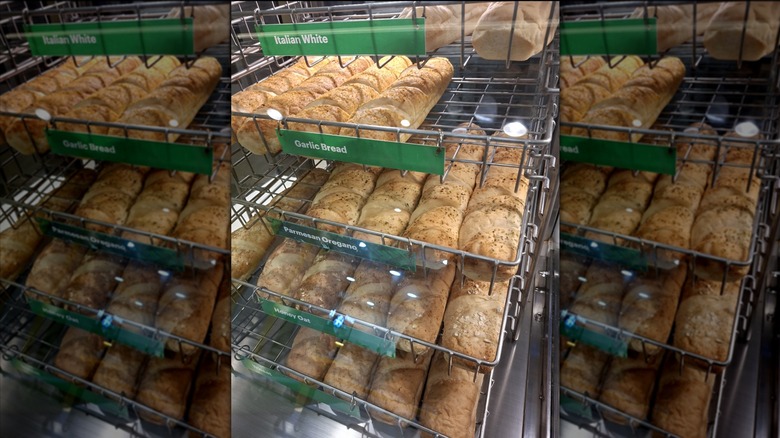
For a long time, Subway's bread was known to be uniquely delicious. Unfortunately, it's also been at the center of several controversies over the years, typically because of health concerns, and the chain has had to adjust its recipe a few times.
One of the most well-known issues came in the mid-2010s, when customers learned that the chain's bread contained the chemical compound azodicarbonamide. This compound acts as a dough conditioner in bread, making it light and spongy, but is also used in products like yoga mats. It's one of many additives banned in Europe but legal in the U.S., and there was a lot of outrage from customers who didn't want the same chemicals found in yoga mats in their bread. In 2014, Subway announced it was adjusting its recipe to exclude the compound.
The company took another hit in 2020 when an Irish court ruled that Subway's bread contained too much sugar to legally be considered bread. Subway pushed back, but the case drew widespread attention.
Over the years, Subway has continued to tweak its bread recipe to maintain the brand's image as a healthier, fresher alternative to traditional fast food. And while the goal of healthier bread is a good one, many customers feel that the bread has lost what made it special. Customers on social media say it's no longer the fresh, fluffy bread they remember, but is instead tough, dry, or tastes funny. Some folks point out it could be due to cost-cutting measures, but the slow recipe changes over time likely don't help either.