

The 10 Most Underrated Fish You Need To Try Tonight
Fish consumption has risen in recent years. A 2024 U.S. Department of Agriculture report noted that in 2021, people across the country ate an average of almost 21 pounds of seafood. However, the lean toward a more pescetarian diet wasn't a single-year anomaly. Over the three decades prior to that stat, per capita, fresh and frozen fish and seafood consumption rose by 30%. The kinds of fish that people were eating were the usual suspects: shrimp, salmon, and canned tuna. Perhaps coming as a shock to no one, more underrated fish such as monkfish or pompano didn't even break the top 10.
Seeing as how you can't beat trying something new to wake up your taste buds, we wanted to know which fish are the most underrated, as well as the best ways to prepare and enjoy them. To find out, we asked the experts, namely, Tim Paroulek, executive chef at Grand Hyatt Grand Cayman Resort & Spa; Luke Joseph, executive chef-partner at Current Charcoal Grill in Birmingham, Alabama; Rob McDaniel, chef at Bayonet in Birmingham, Alabama; and Raphael Lunetta, owner/partner and chef proprietor of Lunetta in Santa Monica, California.
If you count yourself among the pesce-curious, you're in luck. Here's a look at 10 underrated fish that deserve a place on your plate or tinned fish snack board tonight.
1. Red mullet
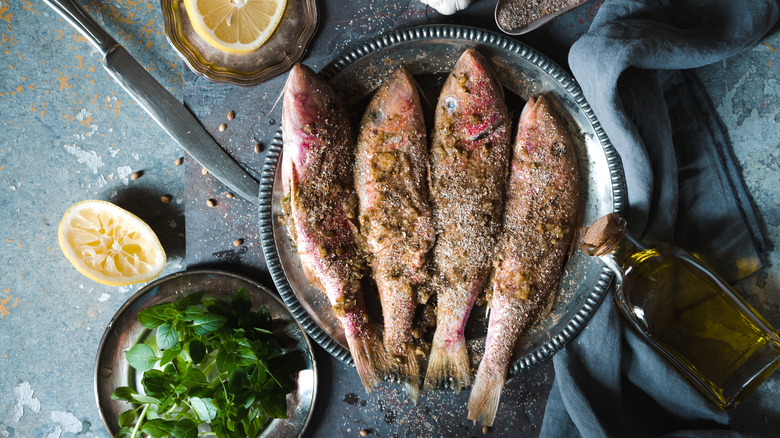
Red mullet subsists on a diet of mostly zooplankton -– read microscopic shrimp-like animals –- so it's no wonder that Tim Paroulek says they have "a rich flavor sometimes compared to shellfish." In other words, a red mullet tastes like what it primarily feasts on. It's a fatty fish that is "...most often grilled or pan-fried whole with garlic and olive oil," explains Paroulek. He adds, "They can also be added to soups and stews at the end of cooking." Red mullet also happens to be among the best fish for frying, thanks to its dense flesh and crispy skin.
When it comes time to shopping for it, look for red mullet fish with meat that is firm and boasts a sweet sea breeze scent to guarantee yourself a tasty meal. When it's in season -– May through July –- red mullet is typically fairly inexpensive -– around 3 pounds for $3, making it an affordable option.
2. Monkfish
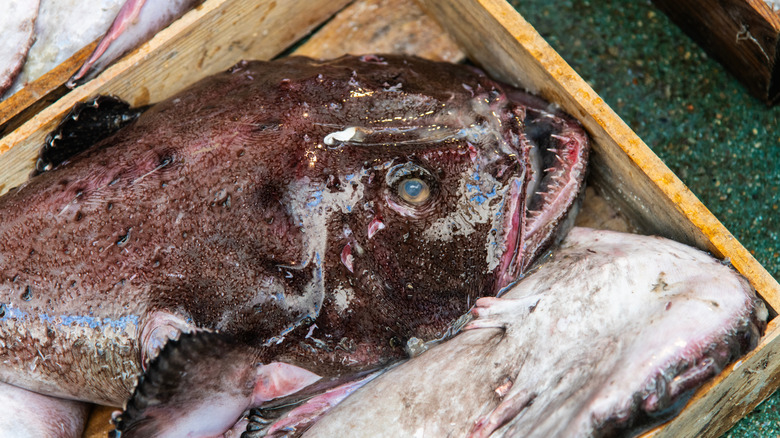
There's a reason why people call monkfish a monster: It's one ugly fish. What its ghastly appearance doesn't affect is its taste. Throughout the years, fans of this sea monster have christened it a "'poor man's lobster' due to its texture," notes Tim Paroulek, saying, it is "white and meaty with a delicate sweet flavor."
Thanks to the firm texture, monkfish can be prepared in a variety of ways, such as roasting, braising, and grilling. Additionally, "The flavor holds up well to other flavors such as chili or curry," explains Paroulek. If you're looking for a wow factor, he adds that "It is popular to wrap the filet with prosciutto or pancetta before roasting [it], which can make for a beautiful presentation." You can even use the monkfish's liver as a substitute for foie gras.
Paroulek does offer a word of caution for first-time monkfish preparers, however. "I would recommend purchasing the tail or cheeks directly [from the store] instead of purchasing the whole fish," he says. The reason? It's difficult to cut up without a good bit of practice.
3. Catfish
While many equate the price of the fish with its quality, that kind of thinking is misguided. According to Luke Joseph, "It's less about the species and more about the quality and technique." Enter, the affordable catfish.
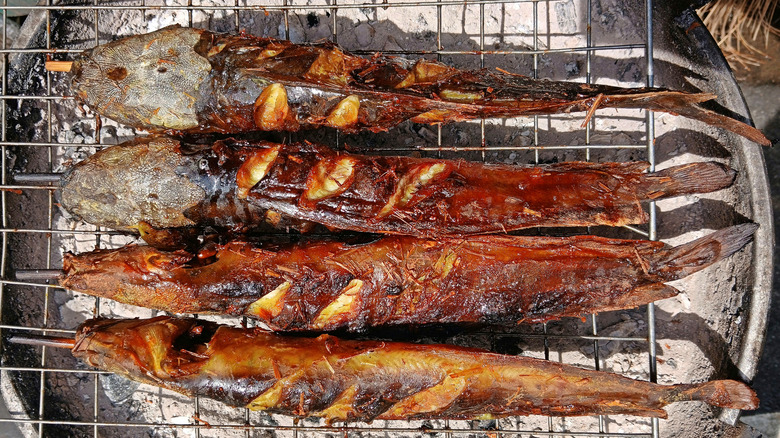
As it turns out, there are about as many techniques for cooking catfish as there are types of catfish in the world. Many of the delicious recipes we have for catfish today can be traced back to the diaspora of enslaved people from West Africa, who brought their catfish recipes with them to America. Those meals, in turn, influenced the soul food cuisine from the American South, including dishes that brine catfish in buttermilk before frying.
Prep for this pescetarian staple commonly includes catfish that's dipped in a batter of mustard, buttermilk, and cornmeal before being cooked to a golden crisp and served with a side of fries and hushpuppies. You can also find fried catfish served alongside spaghetti and meatless sauce. However, recipes like boiled catfish curry or Creole curry catfish prove that this seafood option doesn't need to be fried to taste delish.
4. Dotted gizzard shad
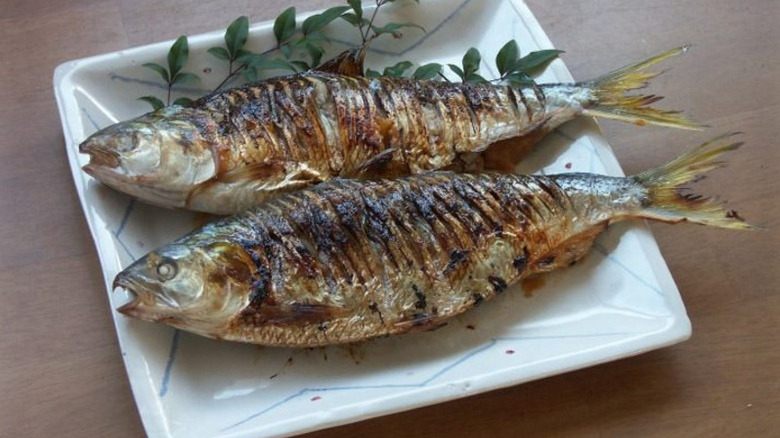
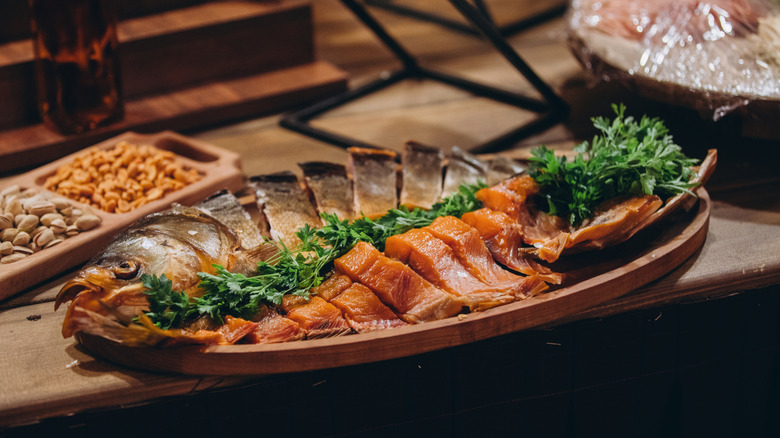
Coming in at 9 to 14 inches long, the dotted gizzard shad is a cousin of the sardine and they have one feature that makes them extra tasty: They're fatty. The fish has a rich and oily flavor profile, and the bones are so small that they are edible as well. Tim Paroulek explains that they "are generally grilled whole, and the head is sometimes eaten, bones and all." He notes that, "...cooked over a wood or charcoal fire and eaten [...] beside a warm fire is a unique experience that adds to the quality of the fish."
In addition to being delicious grilled, dotted gizzard shad is also often eaten as sushi. When marinated in vinegar and given a good dose of salt, the fish becomes the divine complement to the sweet sushi rice it's often served with. It also happens to be a sparkly silver fish, making it a good-looking addition to any platter of sushi or sashimi.
5. Pompano
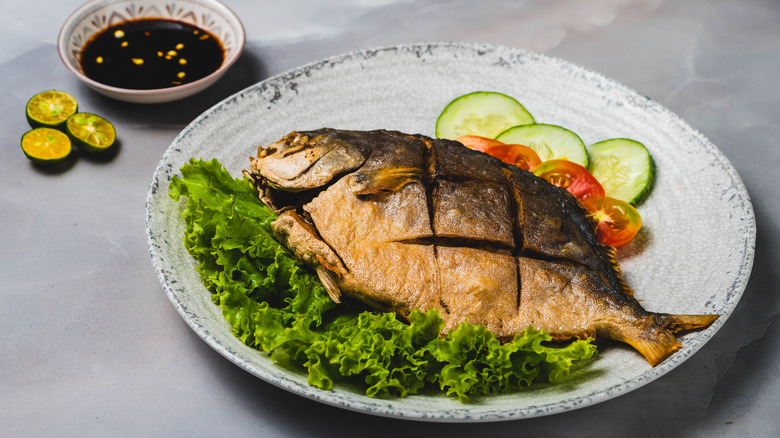
If you had to guess which fish has been christened "the world's most edible fish," what would you say? Tuna? Halibut? Smoked salmon with cream cheese and lox? Would you be surprised to learn that none of the above earned that title, as popular as they are? Instead, pompano takes those honors, per The Fish Site. Luke Joseph elaborates, saying, "Pompano doesn't get enough credit," calling it a "fantastic Gulf fish." He even goes so far as to say, "When it's fresh, it's one of the best fish you can eat."
And while it's possible to fish for one at the local market when you're around the Gulf of Mexico (renamed the Gulf of America in 2025 by U.S. President Donald Trump), it's probably even more fun to try to catch one yourself. The good chef assures us that "you can even catch them off the beach in Destin, Florida."
If you do go fishing for this beauty, be prepared to cast your line in the broken waters of the surf zone. The rolling and crashing waves dig up dinner for hungry pompano, which love a meal of saltwater crustaceans now and again. Despite the work that may be involved in bringing your supper shoreside, you'll find that its rich, buttery taste and abundant fattiness make the effort worth it. Joseph suggests grilling it whole and says that, "Because it's naturally rich, it pairs great with acidity, citrus, pickles, and herbs — anything that balances and highlights that richness."
6. Triggerfish
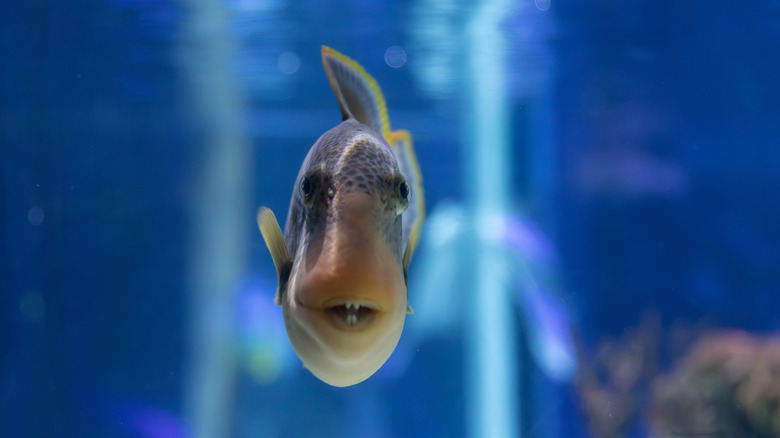
For those of us who grew up fishing in the local reservoir for perch or catfish, seeing the triggerfish with its toothy grin takes some getting used to. Unlike the aforementioned fish, which do, indeed, have tiny teeth, the triggerfish has a megawatt smile. It's made more pronounced by a set of lips that look like the animal got a few injections at Plastic-Surgery-R-Us.
The teeth aren't for cosmetic purposes, (though the species' pretty appearance -– teeth and all -– does make them popular in aquariums.) The fish need those tough bicuspids to break the shells of the crustaceans they nosh on as part of their regular diet. Like many of the game fish that make shellfish their meals, the triggerfish boasts a flavor that's reminiscent of crab. Despite this, it's a fish that's "almost always overlooked when sitting next to American Red Snapper or Black Grouper on a menu," says Rob McDaniel.
The triggerfish have a reputation for being a bully to others in the water. However, McDaniel assures the I-don't-eat-fish crowd that the triggerfish's meat is as mild and sweet as it is temperamental. As such, it's a good option to include on a non-traditional surf-n-turf plate. In fact, McDaniel suggests enjoying grilled triggerfish that has been basted with dry age beef tallow.
7. Redfish
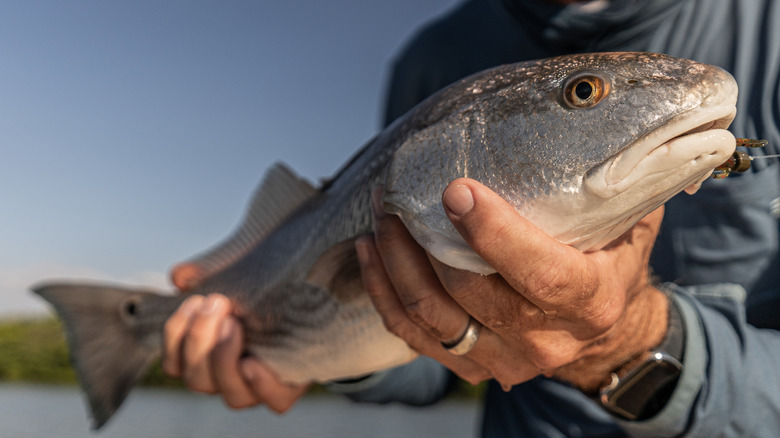
Redfish, also known as red drum, are bottom-feeders and would have largely gone unnoticed in fine-dining circles were it not for the late chef Paul Prudhomme's blackened redfish recipe that he created in the early 1980s. That dish saw the fish's firm flesh get a good dunking in butter before being seasoned and then tossed in a hot skillet until it was black. The technique was supposed to help the celebrity chef mimic the smoky-flavored campfire food that he grew up eating. Blackened redfish put Cajun cooking on the cuisine map faster than any modern Instagram influencer probably ever could have.
Despite the notoriety the fish has gotten from the Prudhomme treatment, "Redfish is incredibly underrated [...] It doesn't always get the attention of snapper or salmon, but it has great flavor and texture — mildly sweet, slightly nutty, with a firm, meaty-like flake," explains Luke Joseph. For his part, he uses it "across the menu because it's so versatile." This includes cooking it over hot coals with red curry paste and makrut lime, but one of his favorite methods is, "on the half shell, cooked skin-side down with the scales left on." He explains that the skin acts as a natural barrier that protects the flesh and keeps the fish moist without overcooking it.
8. Blowfish
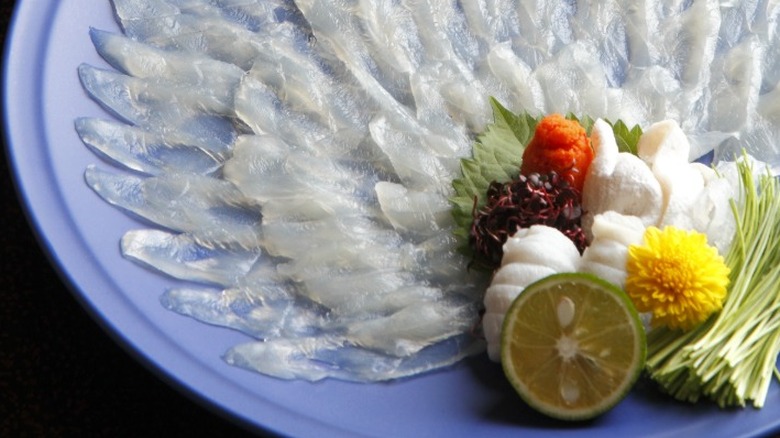
For the uninitiated, the blowfish's protective defenses include a neurotoxin — tetrodotoxin – which is so poisonous that it is the main cause of death by food poisoning in Japan. Chefs in Japan train for years to build the skill set required to work with the meat of the blowfish, also known as fugu. This is no small feat. The fish's neurotoxin is nearly 1,000 times more deadly than cyanide. Just 2 milligrams of it is lethal. And the unused portions of the animal can't be just thrown out once the fish has been prepared for serving. In Japan, it must be handled by a special toxic facility in fish markets. There's a reason why you don't see blowfish on sushi menus much of the time.
Yet, for people like Raphael Lunetta, owner/partner and chef proprietor of Lunetta in Santa Monica, California, it's the delicacy and "definitely a memorable experience" for the foodie adventurous. It's typically sliced thin and flavored with spring onions, soy sauce, and vinegar. The fish may also be fried or served in hot pots. Still, given the fish's reputation, Lunetta offers a word of caution, "[It] Could be your last bite if not prepared by the best Japanese training."
9. Trevally
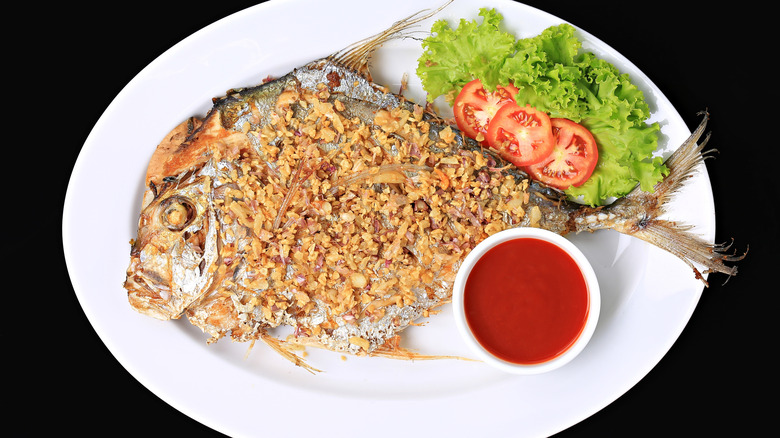
As a species, trevally are more eager than selective and are prone to biting at pretty much anything that even looks like it might make a good lunch. Some even act like buzzards, following other fish around and eating their leftovers. Perhaps unsurprisingly, some fishers think they're best used as bait instead of delicacies on the human plate.
You'd think that all of that would make their meat taste icky. Not so. Luke Joseph describes the flavor of trevally as, "mild, clean, slightly sweet, with a good amount of fat," noting that it's, " Fantastic for sashimi."
Trevally also take just fine to baking and broiling, too. To prepare it this way, put a whole fish into a roasting pan with carrots, leeks, and mushrooms and season it with salt, pepper, and garlic. In 20 minutes, a fragrant, delicious dinner will come out of your oven, with the flavor never once revealing the trevally's proclivity for nomming on birds and animal scraps.
10. Tilefish
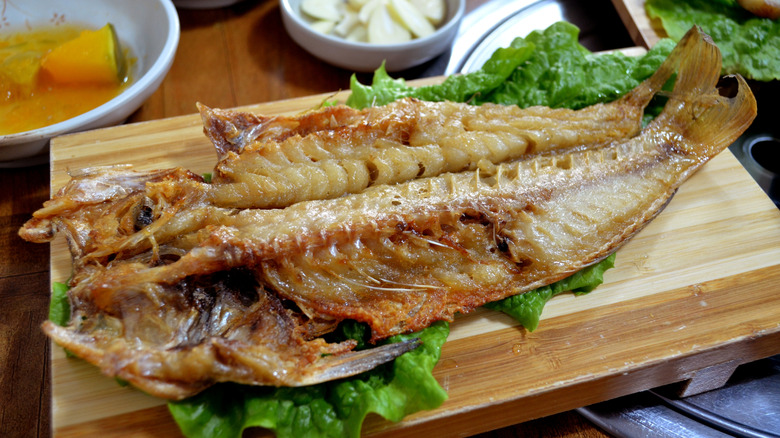
Deep in Davy Jones's locker lives a burrowing animal called the tilefish. It hides its bobbled head and long body in burrows deep in the ocean floor. Turns out, the fish's sea-floor hiding spots put them on the same level as the crabs, sea cucumbers, and shrimp they eat. This bottom-dwelling fish need only to dash out of their burrows and pounce on the unsuspecting critters that crawl by their burrows to set their breakfasts in motion.
Due to how deeply they dive, catching them can prove difficult, forcing anglers to use deep-dropping fishing equipment to reach the sometimes 1,500-foot depths that the tilefish can be found in. However, it's likely that the gourmands who eat them appreciate all the fishers' efforts because they turn up a fish that Luke Joseph describes as having a "subtle shellfish, almost lobster-like sweetness and flavor."
Additionally, the fish meat's texture and substance are on par with its flavor. It boasts a thick, lean flesh that breaks easily under the pressure of the fork into large, melt-in-your-mouth bites. Joseph notes that fried tilefish is particularly good in tacos.