

These Are Reese's Cups' Original Ingredients — See How They Changed From 1928 To 2026
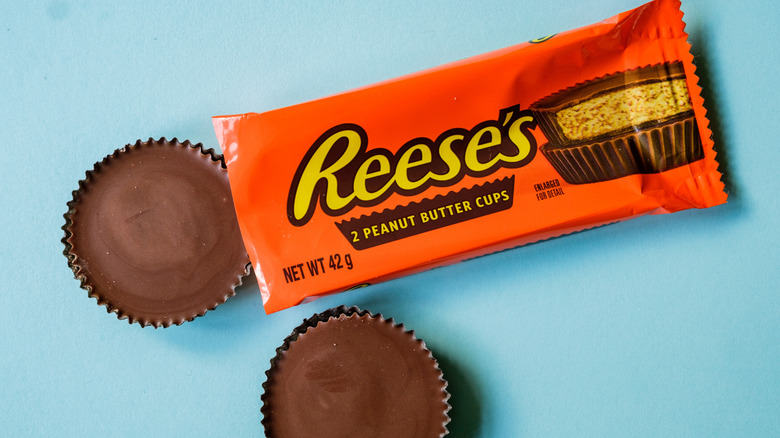
Arguably the world's most famous peanut butter candy, Reese's Peanut Butter Cups first hit shelves almost 100 years ago. I'm sure you don't need them explained to you, but just in case, they are little cups of milk chocolate filled with sweetened peanut butter.
You may not be too surprised to learn that today the ingredients list is pretty long. According to the Hershey website, the company that makes Reese's Cups, just the milk chocolate alone contains sugar, cocoa butter, chocolate, skim milk, milk fat, lactose, lecithin, and PGPR. Then in addition to the chocolate, the cups also contain peanuts, sugar, dextrose, salt, and some preservatives — TBHQ and citric acid. Compared to the modern version, the original ingredients list from 1928 was much more minimal. While the trademark orange label remained the same, the ingredients just included chocolate, peanut butter, sugar, dextrose, salt, and lecithin.
Back in the 1920s, the rules about listing ingredients weren't as detailed as today, but regulations still existed, so we can assume that list is accurate. It's an almost quaint ingredients list by today's standards, however, it makes sense given that production would have been happening at a fraction of today's scale, with smaller supply chains and shorter shelf stability. It would be as consumer demand grew and the chocolates began to be exported around the world that the ingredients list had to evolve.
What to know about the ingredients in today's Reese's Peanut Butter Cups
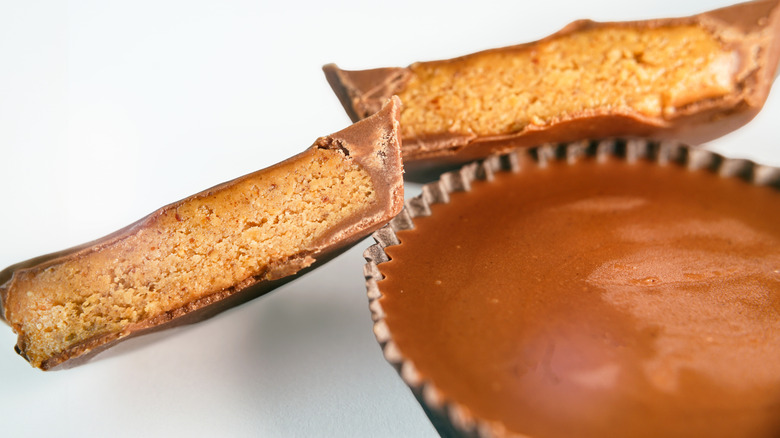
The Reese's Peanut Butter Cup's iconic flavor probably hasn't changed too much, but the ingredients listed in one certainly have. This could be because ingredients that once could have just been referred to as "milk chocolate" now need to be listed out in detail or because there have been genuine alterations to the recipe. It's hard to know for certain, but the grandson of the original candy's creator has accused Hershey of making changes.
What we do know is that many of the newer additions are ingredients we often see in modern food production, including preservatives that improve texture, stability, and shelf life that have become increasingly common as manufacturing has advanced. The scary-sounding additions of PGPR and TBHQ are actually very common in confectionery production in the 21st century. PGPR, for example, has been used since the 1950s to keep cocoa butter costs down without ruining chocolate's silky texture. TBHQ is a common (albeit slightly controversial) ingredient in fast food and other processed foods that acts as a preservative. And these extra ingredients are also what helps make it possible to ship this beloved chocolate around the globe and keep it relatively inexpensive.
But if you're put off by the long list, you can make your own Reese's-inspired peanut butter cups with just three ingredients at home, 1920s style. It may not taste exactly like the beloved candy, but nothing really does. And that is why they're one of the highest grossing candies in the world, nearly 100 years after first hitting the market.